

The Annealing Way: The Dynavector 20X2A
/This month, Matt from our Cardiff store returns to the analogue side of things once more. Following on from last month’s look at his new Cyrus 40 series phono stage and Dynavector’s moving coil range — particularly the 20X2A — Matt’s been chasing even greater sonic perfection from his turntable. Much like swapping pickups in an electric guitar, changing your cartridge can transform the character of your system. As Matt puts it, less noise equals more music — so let’s find out what he’s discovered this time, and whether it’s led to his next upgrade…
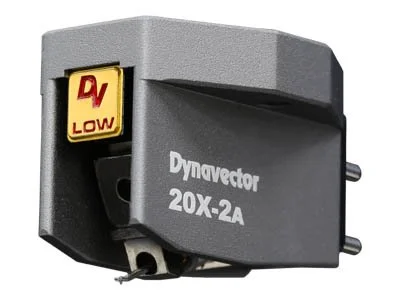
dynavector 20x-2a low output
Why am I looking at a new cartridge ?
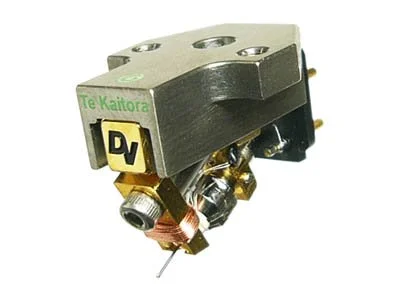
te kaitora rua low output moving coil cartridge
Well, this comes down to something that has always excited me in Hi-Fi — the advancement and development of components, especially when it comes to cartridge design. As you all know, I’m a big fan of Dynavector cartridges. I currently own a Dynavector 10X5 Mk2, which is fitted to my Rega Planar 6. One of my real favourite models in the Dynavector catalogue is the Te Kaitora RUA, but to me that cartridge is somewhat out of reach — until now! By God, I think I’ve found the answer for my wallet and my ears: the Dynavector 20X2A.
This all-new model has now landed at Audio T Cardiff, replacing the long-running 20X2 XX2. The big question is — what does the “A” stand for? It stands for Annealing. In this case, the cartridge has an annealed magnetic circuit.
Before we talk about this fantastic cartridge’s spec and how good it sounds, let’s take a deep breath and dive into what the annealing process is — and, more importantly, what the guys at Dynavector have to say about this process and what it does for this marvel of a cartridge.
“An exceptional vibration system is essential for a high-performance MC cartridge. We emphasise the critical role of the magnetic circuit. The cartridge’s output signal is intricately tied to the movement of the vibration system within the magnetic circuit, where electricity is generated as the coil vibrates amidst the magnetic flux. To ensure optimal output, it is imperative that the magnetic flux maintains high density and stability. We employ pure iron for our magnetic circuit due to its high magnetic permeability and exceptional stability, resulting in a distortion-free output. However, the processing of metal parts often distorts the crystal structure at the atomic level, leading to a loss of magnetic permeability.
Magnetic annealing is a process of heating and cooling processed parts. It is crucial for restoring the distorted metal crystal structure and regenerating magnetic permeability. However, a generic magnetic annealing cannot fully restore distortions in the crystal structure. The magnetic annealing conditions vary depending on the parts’ material, size, shape, etc. Our recent development focused on finding the best magnetic annealing process, including temperature, environment, duration, and heating and cooling rates. This meticulous approach has enabled us to unleash the full potential of pure iron’s unique magnetic performance.
The new magnetic circuit has significantly enhanced sound quality, delivering unrivalled resolution, smooth wide-range expression, and an expansive sound field. Experience the natural and dynamic sound of the Dynavector 20X2A cartridge, where an exceptional vibration system harmonises seamlessly with an optimised magnetic circuit.”
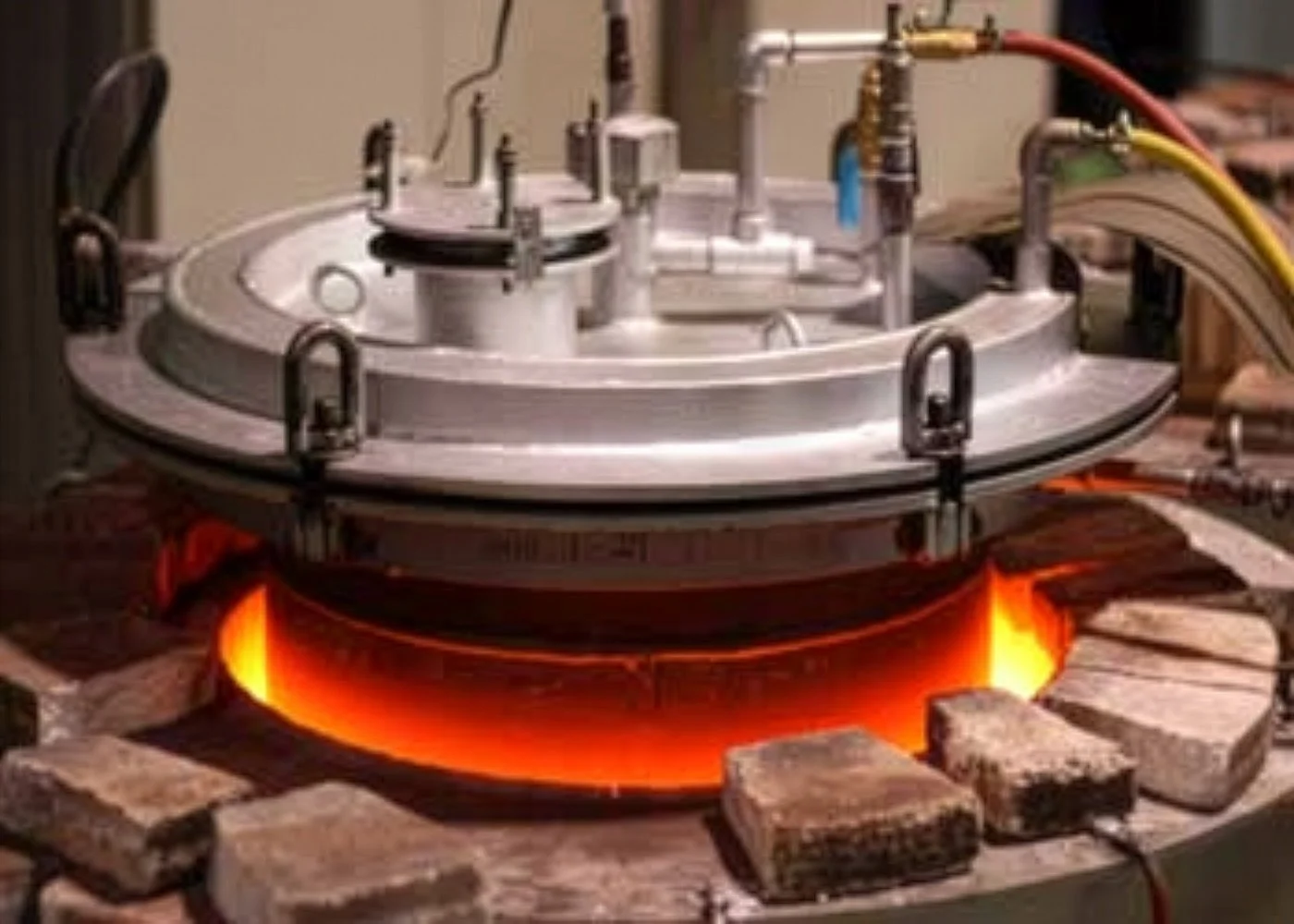
the annealing process
Let’s talk a little spec.
High output and low output models available.

The high-output model, 20X2A-H, achieves an output voltage of 2.8mV by using Dynavector’s legendary coil technology. A Micro-Ridge stylus is used for the stylus tip. Although the part that contacts the record groove has a minute radius curvature of only 2 microns, the band-like shape of the tip makes it resistant to abrasion and will provide ideal performance over a long period of time. By winding the coil many times with ultra-fine wire, the cartridge can obtain a high output equivalent to an MM cartridge, thus allowing the MC cartridge to be connected to a phono terminal for MM input without the need for a head amplifier or step-up transformer.
The low-output model, 20X2A-L, has a 0.3mV output voltage, using the same PCOCC wires as the higher-end models for the coil. The recommended load impedance of the head amplifier is 30Ω or more, making it compatible with most head amplifiers and MC step-up transformers.
Special annealing magnetic circuit
The magnetic circuit, which is the core of an MC cartridge, uses pure iron that has stable magnetic properties with minimal distortion. Furthermore, by performing special annealing that focuses on optimising the magnetic annealing process — such as temperature, environment, heating duration, and heating/cooling rates — we have succeeded in delivering expansive, resonant sound without distortion and with unrivalled resolution.
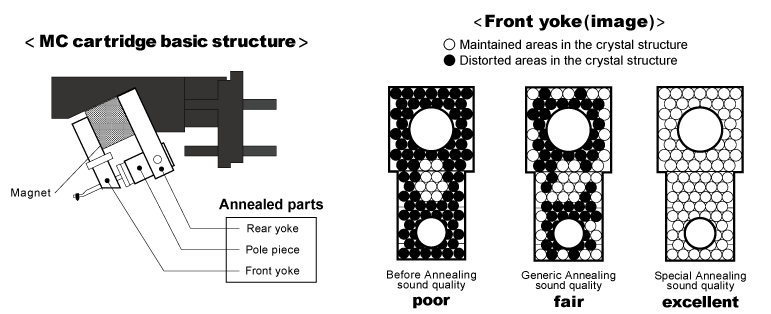
MC cartridge basic structure diagram
Neodymium magnets
The series employs patented softened magnets developed to reduce distortion and harsh, irritating, edgy sounds caused by rare earth magnets, while still achieving high output from powerful neodymium magnets. While taking advantage of the powerful magnetic force of neodymium magnets, the cartridge achieves a clear separation of sound.
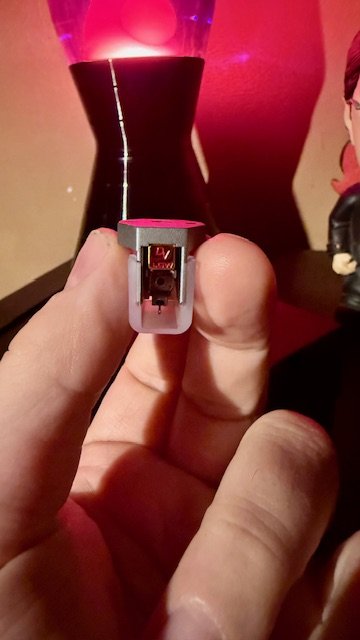
close up 20x-2a
Hard pipe aluminium cantilever
The hollow hard aluminium pipe cantilever reduces the vibration system mass, achieving a wide bandwidth with clear high frequencies.
Micro-Ridge stylus
A Micro-Ridge stylus is used for the stylus tip. Although the part that contacts the record groove has a minute radius curvature of only 2 microns, the band-like shape of the tip makes it resistant to abrasion and provides ideal performance over a long period of time.
Specifications
Output Voltage: 2.8 mV / 0.3 mV (at 1kHz, 5cm/sec.)
Channel Separation: 25 dB (at 1kHz)
Channel Balance: 1.0 dB (at 1kHz)
Frequency Response: 20–20,000 Hz (±2dB)
Compliance: 12 mm/N
Tracking Force: 1.8–2.2 g
Impedance: 150 ohms / 5 ohms
Recommended Load Impedance: 1,000 ohms / >30 ohms
Cantilever: 6mm length hard aluminium pipe
Stylus Tip: Micro-Ridge nude diamond
Weight: 9.2 g
The Listening
But before I talk your ears off about how good the cartridge sounds — what records and tracks did I use?
Jerry Cantrell – Afterglow – “I Want Blood” (2024)
Living Colour – Love Rears Its Ugly Head – Time’s Up (1990)
Mr Big – “Green-Tinted Sixties Mind” – Lean Into It (1991)
Before I sat myself down to listen, I switched out my Dynavector 10X5 high-output cartridge for the new 20X2A low-output. Then I set up my Cyrus 40 PPA — which, by the way, this is the first time I’ve set this phono stage up for a low-output moving coil cartridge — which is really easy to do via Cyrus’s remote control. My settings on the phono stage, if you guys want to know, are as follows: 1000 Ohms loading, 55dB gain, 100pF channel balance, also with the warp function set to “on”.
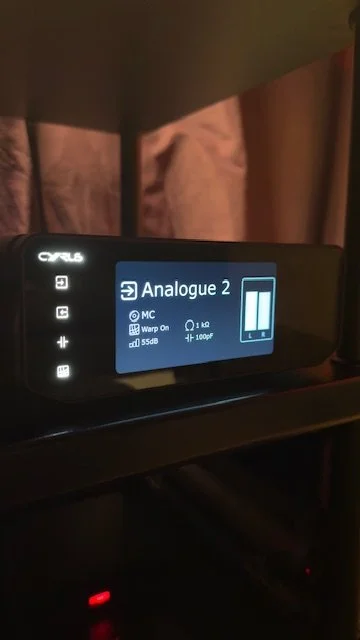
cyrus 40ppa settings
Now I’m all set up — amplifier warm and coffee at the ready — let the listening begin. One thing to add: before I changed the cartridge out, I listened to each record with my 10X5 fitted so I could familiarise myself with how each track sounds, and so I could hear the difference between the two cartridges and how they perform sonically.
Okay, back to it. First up, of course, Jerry Cantrell’s track Afterglow. This track in itself is quite atmospheric and open in its performance. With the 20X2A, I had a greater sense of this — there was better placement of Jerry’s vocals, rhythm, and lead guitars, which were a lot less muddled — clean and precise (as much as distorted guitars can be).
The second track, I personally feel, is where this cartridge really stood out from the crowd — Living Colour’s Love Rears Its Ugly Head. Will Calhoun’s drums were nothing short of astounding; I really got the feeling of his drum kit in the room. Vernon Reid’s cleaner guitar on this track really stood out — usually he’s flying up and down the neck with his amplifier cranked, but this track is a little more bluesy, which I really got a sense of.
Last but not least, Mr Big’s Green-Tinted Sixties Mind. In comparison to my 10X5’s performance with this track, it was streets apart. Paul Gilbert’s guitar riff had more presence, and Billy Sheehan’s bass seemed to have more feeling — and dare I say it — more groove.

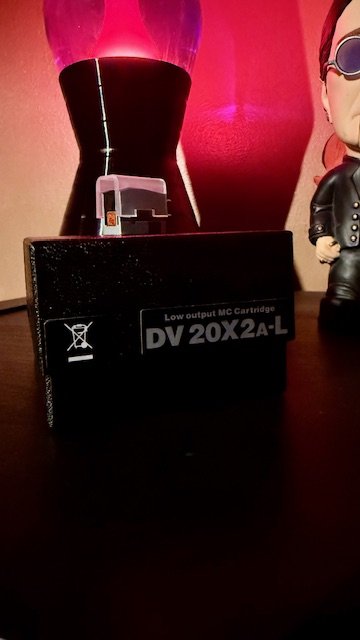
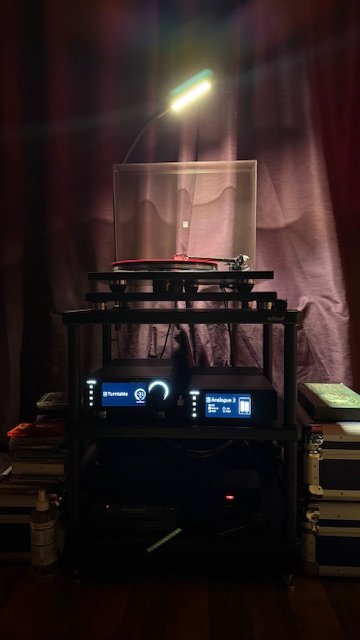

In Conclusion
I really feel that I was right to be excited about the Dynavector 20X2A. It really comes close to performing like their legendary Te Kaitora and is a huge improvement on its predecessor. I do feel it’s an endgame cartridge for me, and I highly recommend trying one out. But if you don’t want to stretch to the 20X2A, Dynavector have used the same annealed circuit in the new 10XA — which also sounds pretty phenomenal.
Thank you for taking the time to read my blog -
Matt Aaron - Audio T Cardiff
If you have any questions about the event featured in this article, or any other Hi-Fi or home cinema enquiries, be sure to Contact Us.
If you’ve enjoyed this, why not go ahead and read some more of our other blogs, and be sure to follow us on our social media channels below…
Dynavector can be found at the following Audio T stores