The Annealing Way: The Dynavector 20X2A

This month, Matt from our Cardiff store returns to the analogue side of things once more. Following on from last month’s look at his new Cyrus 40 series phono stage and Dynavector’s moving coil range — particularly the 20X2A — Matt’s been chasing even greater sonic perfection from his turntable. Much like swapping pickups in an electric guitar, changing your cartridge can transform the character of your system. As Matt puts it, less noise equals more music — so let’s find out what he’s discovered this time, and whether it’s led to his next upgrade…
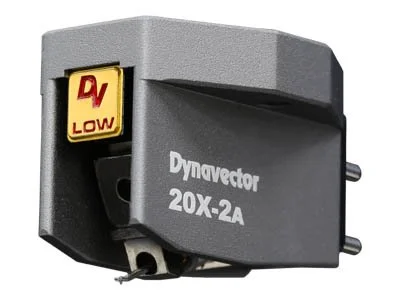
dynavector 20x-2a low output

Why am I looking at a new cartridge ?
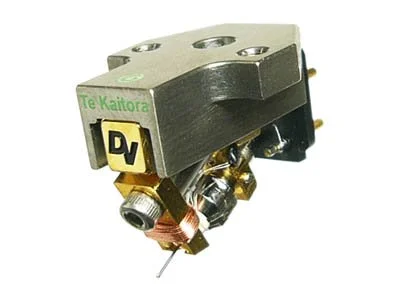
te kaitora rua low output moving coil cartridge

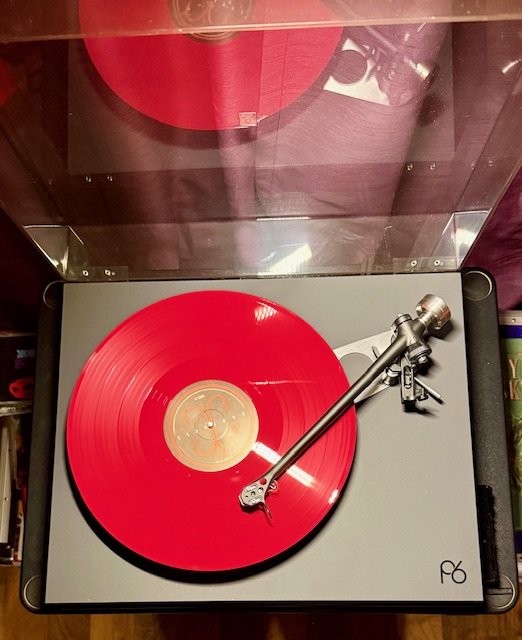
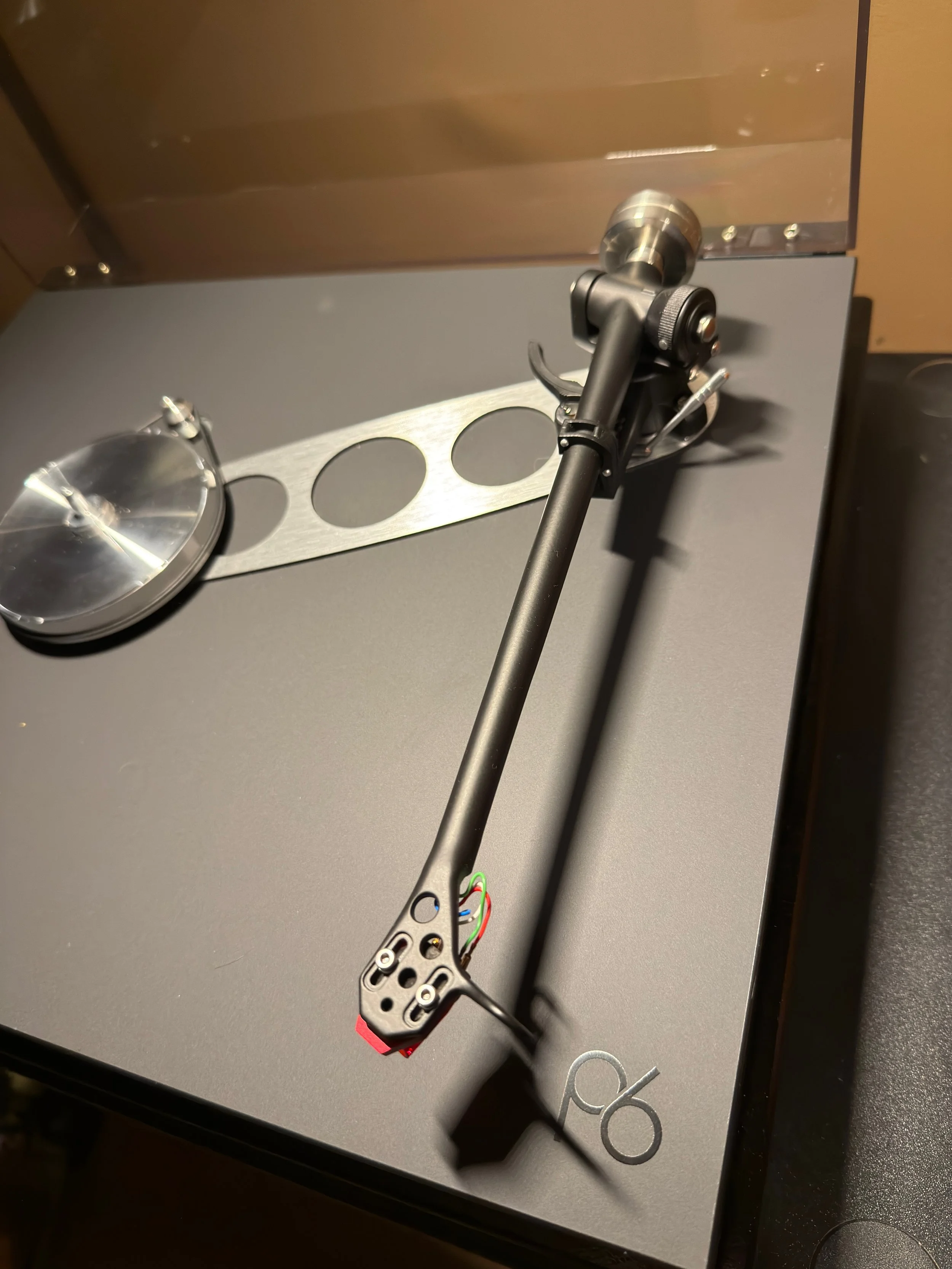
Well, this comes down to something that has always excited me in Hi-Fi — the advancement and development of components, especially when it comes to cartridge design. As you all know, I’m a big fan of Dynavector cartridges. I currently own a Dynavector 10X5 Mk2, which is fitted to my Rega Planar 6. One of my real favourite models in the Dynavector catalogue is the Te Kaitora RUA, but to me that cartridge is somewhat out of reach — until now! By God, I think I’ve found the answer for my wallet and my ears: the Dynavector 20X2A.

This all-new model has now landed at Audio T Cardiff, replacing the long-running 20X2 XX2. The big question is — what does the “A” stand for? It stands for Annealing. In this case, the cartridge has an annealed magnetic circuit.

Before we talk about this fantastic cartridge’s spec and how good it sounds, let’s take a deep breath and dive into what the annealing process is — and, more importantly, what the guys at Dynavector have to say about this process and what it does for this marvel of a cartridge.

An exceptional vibration system is essential for a high-performance MC cartridge. We emphasise the critical role of the magnetic circuit. The cartridge’s output signal is intricately tied to the movement of the vibration system within the magnetic circuit, where electricity is generated as the coil vibrates amidst the magnetic flux. To ensure optimal output, it is imperative that the magnetic flux maintains high density and stability. We employ pure iron for our magnetic circuit due to its high magnetic permeability and exceptional stability, resulting in a distortion-free output. However, the processing of metal parts often distorts the crystal structure at the atomic level, leading to a loss of magnetic permeability.

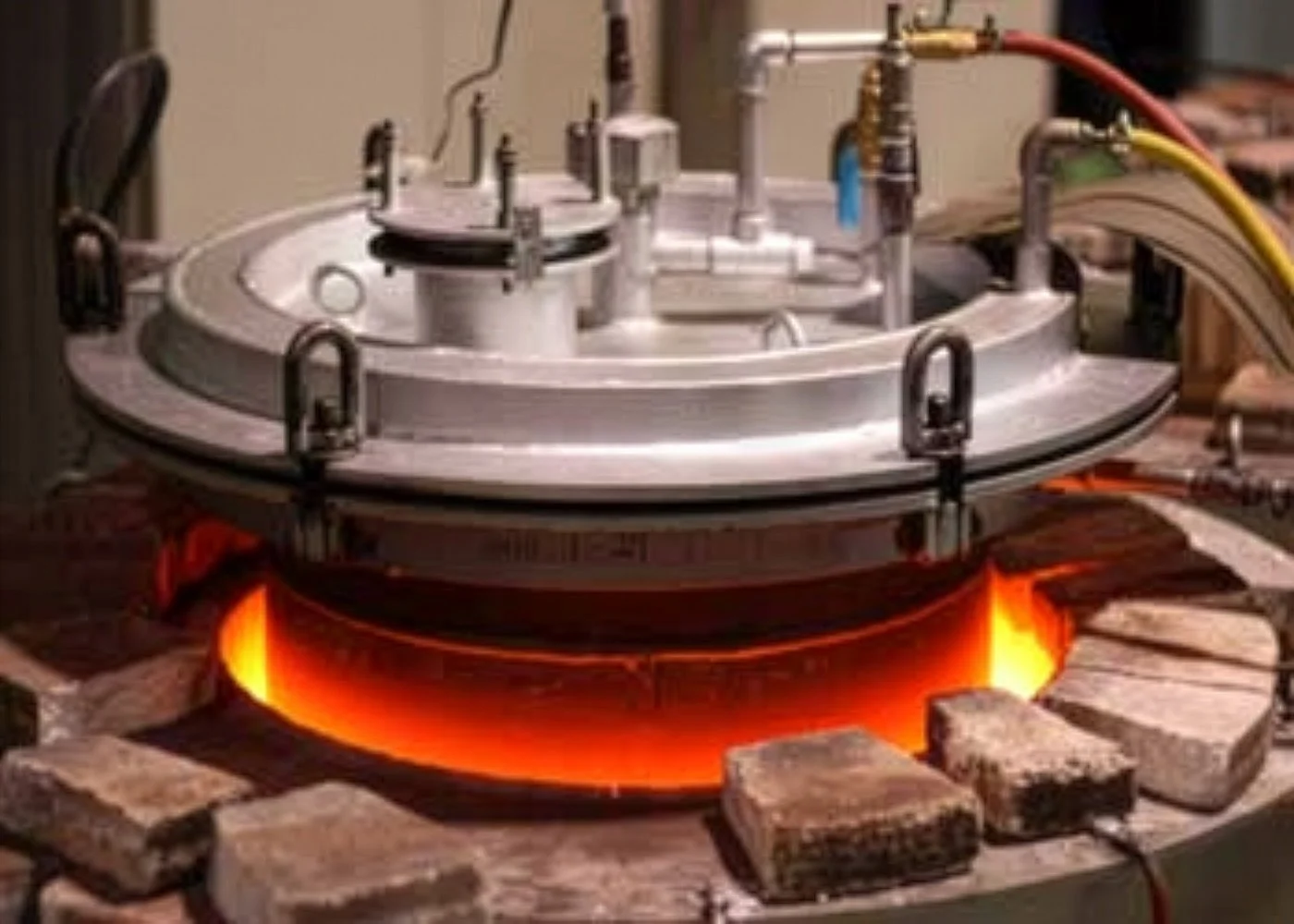
Magnetic annealing is a process of heating and cooling processed parts. It is crucial for restoring the distorted metal crystal structure and regenerating magnetic permeability. However, a generic magnetic annealing cannot fully restore distortions in the crystal structure. The magnetic annealing conditions vary depending on the parts’ material, size, shape, etc. Our recent development focused on finding the best magnetic annealing process, including temperature, environment, duration, and heating and cooling rates. This meticulous approach has enabled us to unleash the full potential of pure iron’s unique magnetic performance.

The new magnetic circuit has significantly enhanced sound quality, delivering unrivalled resolution, smooth wide-range expression, and an expansive sound field. Experience the natural and dynamic sound of the Dynavector 20X2A cartridge, where an exceptional vibration system harmonises seamlessly with an optimised magnetic circuit.
— Dynavector

the annealing process

Let’s talk a little spec.

High output and low output models available.
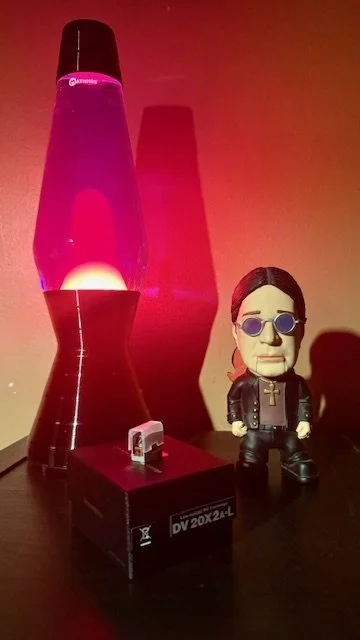
The high-output model, 20X2A-H, achieves an output voltage of 2.8mV by using Dynavector’s legendary coil technology. A Micro-Ridge stylus is used for the stylus tip. Although the part that contacts the record groove has a minute radius curvature of only 2 microns, the band-like shape of the tip makes it resistant to abrasion and will provide ideal performance over a long period of time. By winding the coil many times with ultra-fine wire, the cartridge can obtain a high output equivalent to an MM cartridge, thus allowing the MC cartridge to be connected to a phono terminal for MM input without the need for a head amplifier or step-up transformer.

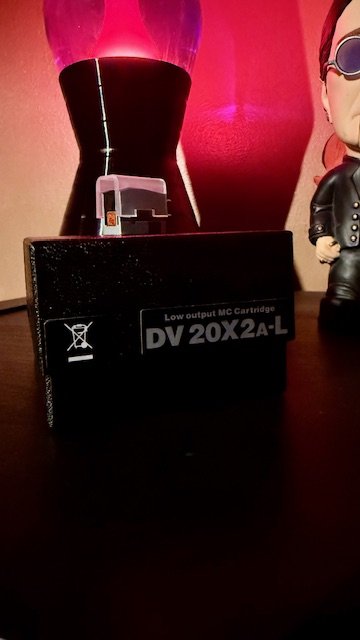
The low-output model, 20X2A-L, has a 0.3mV output voltage, using the same PCOCC wires as the higher-end models for the coil. The recommended load impedance of the head amplifier is 30Ω or more, making it compatible with most head amplifiers and MC step-up transformers.

Special annealing magnetic circuit

The magnetic circuit, which is the core of an MC cartridge, uses pure iron that has stable magnetic properties with minimal distortion. Furthermore, by performing special annealing that focuses on optimising the magnetic annealing process — such as temperature, environment, heating duration, and heating/cooling rates — we have succeeded in delivering expansive, resonant sound without distortion and with unrivalled resolution.
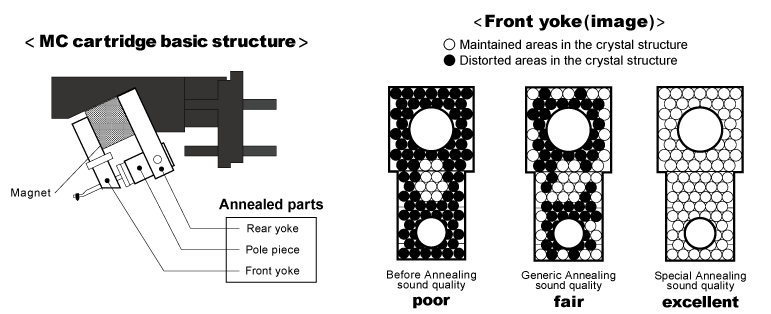
MC cartridge basic structure diagram

Neodymium magnets

The series employs patented softened magnets developed to reduce distortion and harsh, irritating, edgy sounds caused by rare earth magnets, while still achieving high output from powerful neodymium magnets. While taking advantage of the powerful magnetic force of neodymium magnets, the cartridge achieves a clear separation of sound.
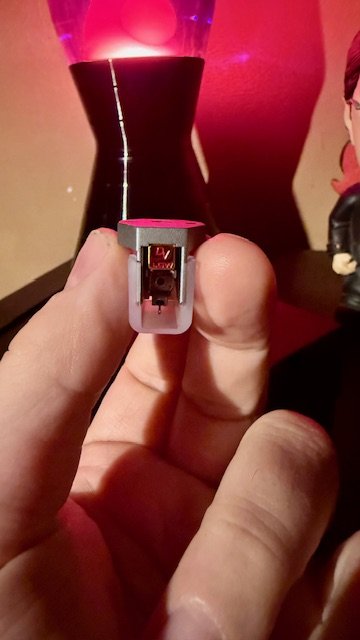
close up 20x-2a

Hard pipe aluminium cantilever

The hollow hard aluminium pipe cantilever reduces the vibration system mass, achieving a wide bandwidth with clear high frequencies.

Micro-Ridge stylus

A Micro-Ridge stylus is used for the stylus tip. Although the part that contacts the record groove has a minute radius curvature of only 2 microns, the band-like shape of the tip makes it resistant to abrasion and provides ideal performance over a long period of time.

Specifications

  • Output Voltage: 2.8 mV / 0.3 mV (at 1kHz, 5cm/sec.)

  • Channel Separation: 25 dB (at 1kHz)

  • Channel Balance: 1.0 dB (at 1kHz)

  • Frequency Response: 20–20,000 Hz (±2dB)

  • Compliance: 12 mm/N

  • Tracking Force: 1.8–2.2 g

  • Impedance: 150 ohms / 5 ohms

  • Recommended Load Impedance: 1,000 ohms / >30 ohms

  • Cantilever: 6mm length hard aluminium pipe

  • Stylus Tip: Micro-Ridge nude diamond

  • Weight: 9.2 g

The Listening

But before I talk your ears off about how good the cartridge sounds — what records and tracks did I use?

  • Jerry Cantrell – Afterglow – “I Want Blood” (2024)

  • Living Colour – Love Rears Its Ugly HeadTime’s Up (1990)

  • Mr Big – “Green-Tinted Sixties Mind” – Lean Into It (1991)

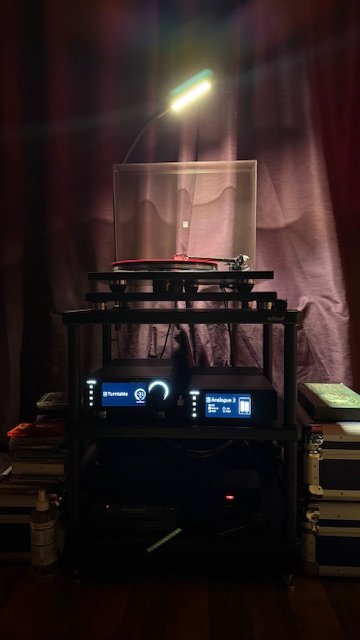
Before I sat myself down to listen, I switched out my Dynavector 10X5 high-output cartridge for the new 20X2A low-output. Then I set up my Cyrus 40 PPA — which, by the way, this is the first time I’ve set this phono stage up for a low-output moving coil cartridge — which is really easy to do via Cyrus’s remote control. My settings on the phono stage, if you guys want to know, are as follows: 1000 Ohms loading, 55dB gain, 100pF channel balance, also with the warp function set to “on”.
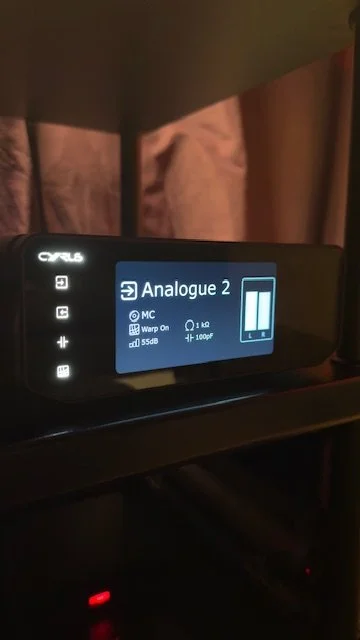
cyrus 40ppa settings

Now I’m all set up — amplifier warm and coffee at the ready — let the listening begin. One thing to add: before I changed the cartridge out, I listened to each record with my 10X5 fitted so I could familiarise myself with how each track sounds, and so I could hear the difference between the two cartridges and how they perform sonically.

Okay, back to it. First up, of course, Jerry Cantrell’s track Afterglow. This track in itself is quite atmospheric and open in its performance. With the 20X2A, I had a greater sense of this — there was better placement of Jerry’s vocals, rhythm, and lead guitars, which were a lot less muddled — clean and precise (as much as distorted guitars can be).

The second track, I personally feel, is where this cartridge really stood out from the crowd — Living Colour’s Love Rears Its Ugly Head. Will Calhoun’s drums were nothing short of astounding; I really got the feeling of his drum kit in the room. Vernon Reid’s cleaner guitar on this track really stood out — usually he’s flying up and down the neck with his amplifier cranked, but this track is a little more bluesy, which I really got a sense of.

Last but not least, Mr Big’s Green-Tinted Sixties Mind. In comparison to my 10X5’s performance with this track, it was streets apart. Paul Gilbert’s guitar riff had more presence, and Billy Sheehan’s bass seemed to have more feeling — and dare I say it — more groove.

In Conclusion

I really feel that I was right to be excited about the Dynavector 20X2A. It really comes close to performing like their legendary Te Kaitora and is a huge improvement on its predecessor. I do feel it’s an endgame cartridge for me, and I highly recommend trying one out. But if you don’t want to stretch to the 20X2A, Dynavector have used the same annealed circuit in the new 10XA — which also sounds pretty phenomenal.

Thank you for taking the time to read my blog -

Matt Aaron - Audio T Cardiff

If you have any questions about the event featured in this article, or any other Hi-Fi or home cinema enquiries, be sure to Contact Us.

If you’ve enjoyed this, why not go ahead and read some more of our other blogs, and be sure to follow us on our social media channels below…


Rega Planar 6 vs Planar 8 – Is the Upgrade Worth It?

Matt from Audio T Cardiff goes deep into the Rega turntable lineup, comparing his trusted Planar 6 with the higher-end Planar 8. Is the jump worth it? Let’s find out.

rega logo

Hi again folks. As the title suggests, I’m once more exploring changes to the beating heart of my home Hi-Fi system. It’s been almost four years since I bought my beloved Rega Planar 6 turntable, which has never skipped a beat or let me down. If you’ve read my blogs before, you’ll know my passion for vinyl and its uniquely musical way of reproducing sound. To me – and maybe to many of you out there – vinyl remains the ultimate way to listen to music.

I’m writing this while cranking Ozzy Osbourne’s Mr Crowley from Blizzard of Ozz. There’s only one way to listen to the Prince of Darkness – LOUD. Anyway, let’s get back to business.

Why the Upgrade Question Came Up

Lately, I’ve been wrestling with one big question: should I upgrade from my Planar 6 to the Rega Planar 8?

The Planar 10 – and the flagship Naia – are a step too far for me at the moment. But on paper, the Planar 8 looks like a meaningful step up from the P6. So before we dive into listening impressions, let's take a look at the specs of both decks.

For this comparison, I’ve removed the cartridge variable by using my own Dynavector 10X5 Mk2 high-output moving coil.

Starting with my current turntable, let’s have a look at their respective specifidcations:

Planar 6 in black

Rega Planar 6 Specifications

  • RB330 tonearm with stainless steel balance weight

  • Dual-layered float glass platter

  • Double brace technology

  • Tancast 8 foam-core plinth

  • Custom-matched Neo PSU

  • EBLT reference drive belt fitted as standard


planar 8 in white

Rega Planar 8 Specifications

  • RB880 precision tonearm

  • Super flywheel-effect triple-layer glass platter

  • Double brace technology

  • Tancast 8 foam-core plinth

  • Custom-matched Neo PSU

  • 24-volt low-noise motor assembly

  • Two EBLT reference drive belts as standard


Looking Back – Why I Chose the Planar 6

It feels like time has flown since I picked up the P6. I remember the exact demo setup I used in our shop at the time: a Rega Planar 3 with an Exact cartridge, a Planar 6 with an Ania Pro, a Nytech CDP 122 phono stage, a Rega Elex-R amplifier, and a pair of Acoustic Energy AE300 speakers. Some of you might recall this system from when I first joined Audio T.

The Planar 3 was fantastic, but the P6 brought something extra. Beyond the cartridge differences, I immediately noticed a lower noise floor and a more refined overall presentation – I remember spinning Iron Maiden’s then-new album Senjutsu and being properly wowed.

planar 6 black with neo psu

Even now, I think the P6 stands tall among turntables in its class. The combination of Tancast foam-core plinth, advanced motor assembly, and overall design detail gives it a real sense of musicality. These are the reasons I’ve held onto it for so long – but something recently nudged me to reconsider.

So, Why Change?

If I’m so happy with the Planar 6, why even entertain the idea of switching?

Well, as you might’ve guessed I’m always chasing that next level of sonic performance. The turning point came during a demo I set up for a customer using the Planar 8. As I sat back and listened, I thought: this deck has something special. That moment planted the seed. I had to hear it for myself at home, using my own cartridge, in my own system.

Design Evolution – What Makes the Planar 8 Special?

Rega drew clear inspiration for the Planar 8 from their no-compromise Naiad turntable, and it really shows in the design. The plinth is strikingly skeletal, saving mass without sacrificing rigidity.

A major upgrade is the RB880 tonearm, with a redesigned vertical bearing assembly made from aluminium and stainless steel. It offers vastly improved rigidity and tracking stability over the RB330. Then there's the 24V motor and twin-belt drive on the sub-platter, which delivers more consistent torque.

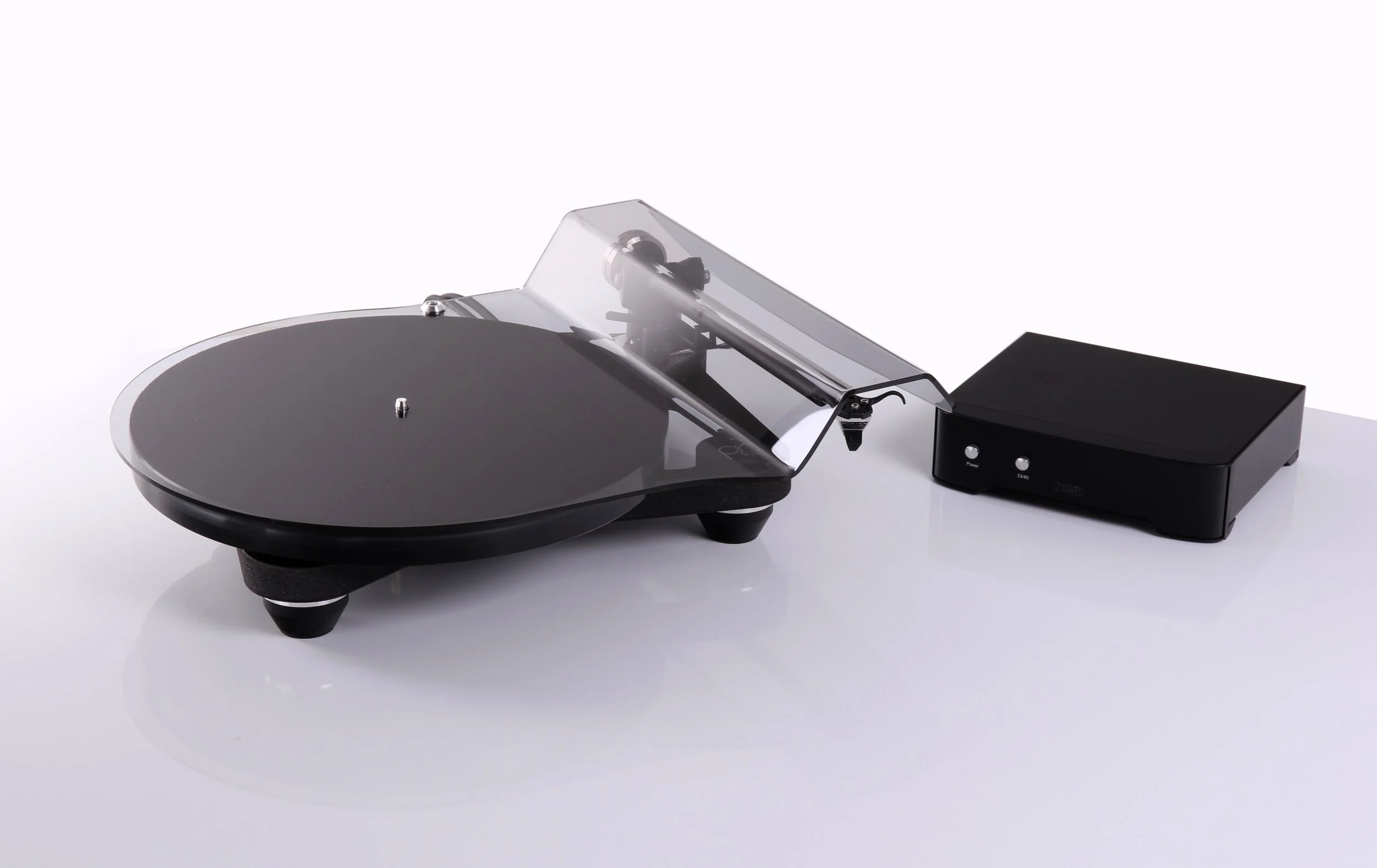
planar 8 black with neo psu

One of the biggest innovations is the super flywheel triple-layer glass platter, developed in collaboration with a UK glass engineering company to Rega’s exact specs. It offers improved speed stability – and, in my opinion, a noticeable sonic gain.

The Listening Session Begins

Right – coffee in hand – time for the fun part…

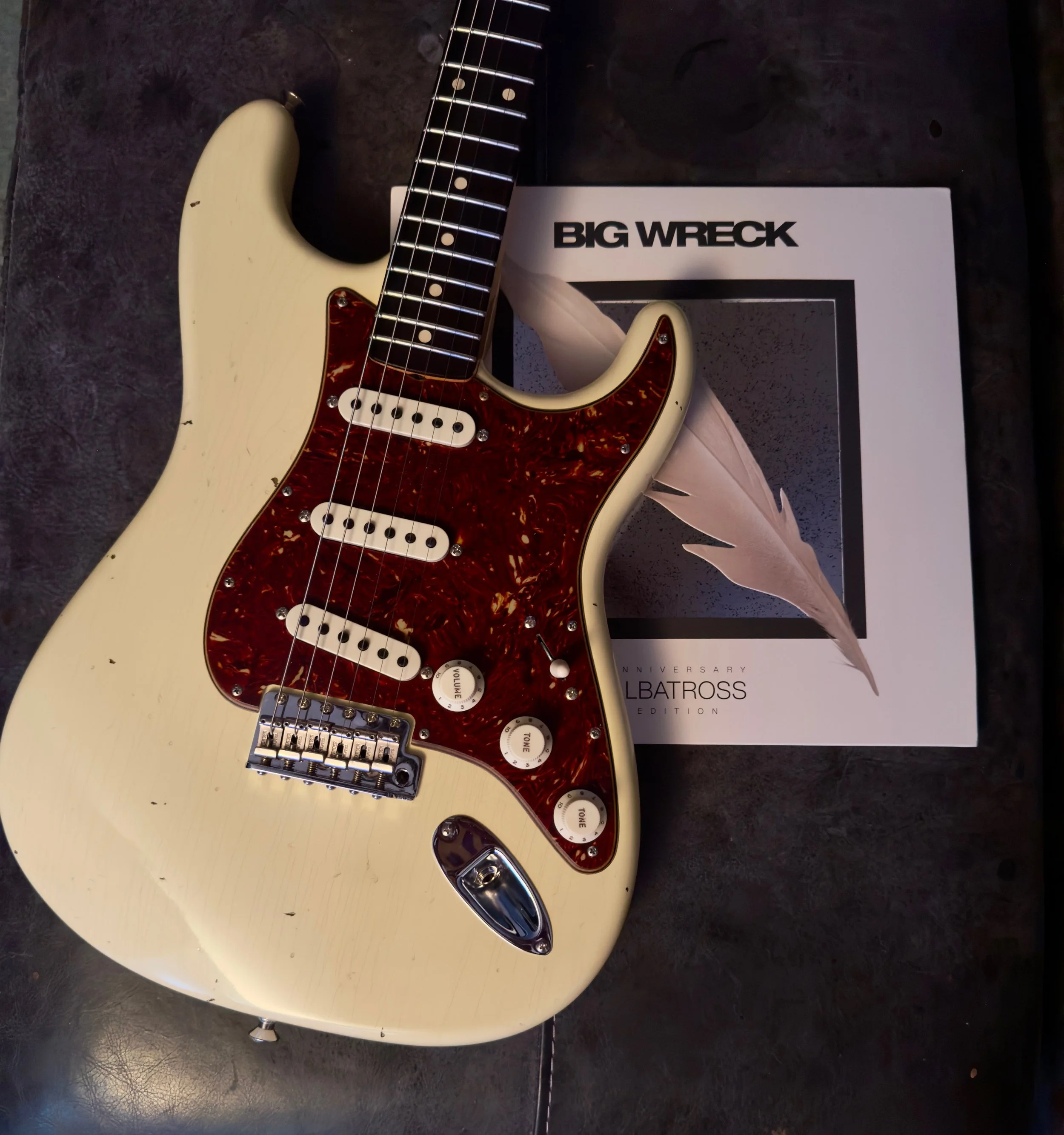
big wreck lp displayed with matts very own strat

My Test Tracks

  • Ozzy Osbourne – Blizzard of Ozz (1980)Mr Crowley

  • Iron Maiden – The Final Frontier (2015)El Dorado

  • Big Wreck – Albatross (2025)Albatross

Let the evening of guitar-driven vinyl madness commence 🤟 (Apologies in advance for the nerdy detail. You’ve been warned.)

Planar 6 Listening Impressions

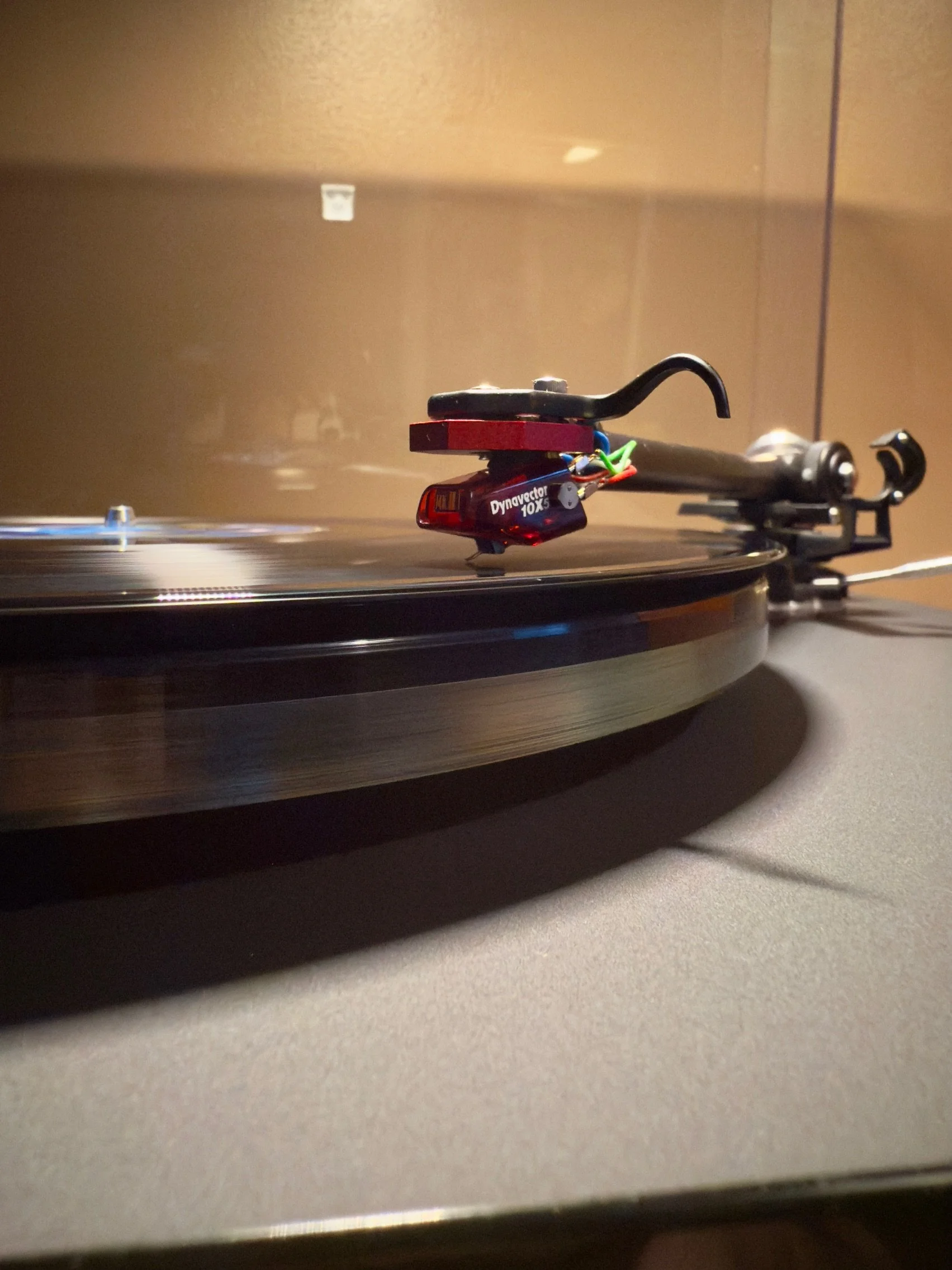
planar 6 fitted with dynavector 10×5

Kicking off with Mr Crowley, the Planar 6 delivers a powerful sense of presence. Don Airey’s keyboard intro sounds huge, with great clarity between notes. Then Randy Rhoads’ iconic riff cuts through – full of grit and character. You can really sense that gear combo: his Sandoval polka-dot Flying V with DiMarzio Super Distortion pickups through the Marshall 1959 Super Lead. It’s the kind of track you just have to crank.

Planar 8 Listening Impressions

Cartridge transferred. Planar 8 powered up. Let’s go.

Calling the P8 "a bit better" than the P6 just doesn’t cut it. While it retains Rega’s signature sound, the differences are more than subtle. Right away, the RB880 feels smoother and more precise in tracking. While the RB330 is excellent – and something of a Hi-Fi icon – the RB880 takes things up a notch.

the essential tools for swapping the cartrdige over

Back to Mr Crowley – Rhoads’ guitar had even more texture and bite, and Ozzy’s vocals were better placed within the soundstage. Everything felt more alive. With Albatross by Big Wreck, there was greater clarity between notes and more space in the mix. Ian Thornley’s guitar tone was richer, and his vocals seemed more dynamic – made me want to grab a guitar and jam (emphasis on try).

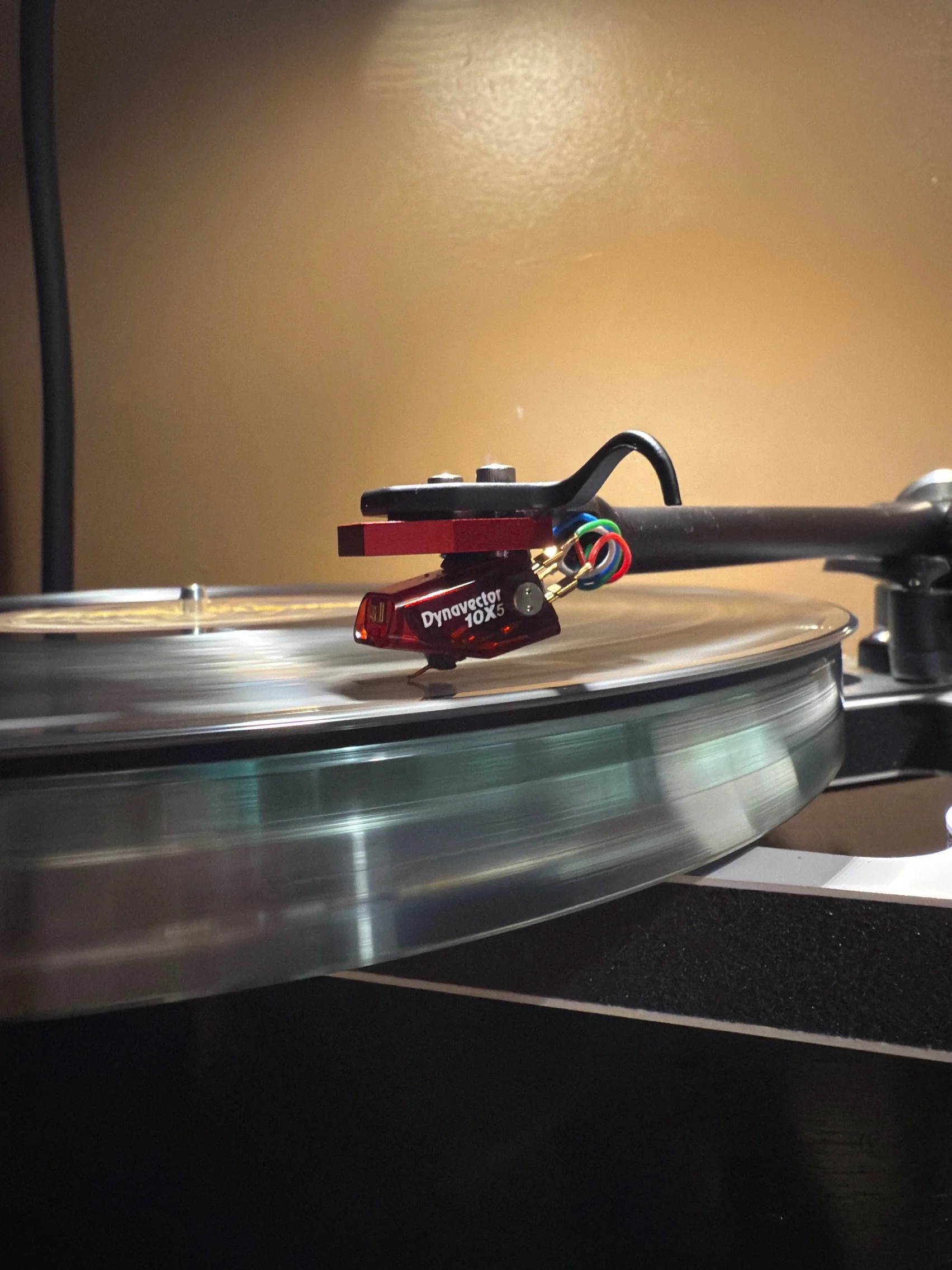
planar 8 fitted with dynavector 10×5 high output

El Dorado by Iron Maiden was the biggest surprise. With three guitarists in the mix – Dave Murray, Adrian Smith and Janick Gers – there’s a lot going on. Around three minutes in, there's a blistering guitar battle between all three, and the P8 gave each player their own space in the mix. It sounded spectacular.

Final Verdict

As much as I love my Rega Planar 6 – and always will – the Planar 8 has definitely got me thinking. It builds on everything the P6 does well and pushes it further. I can easily see myself ordering one before the year’s out.

But before that, I’ve got another exciting upgrade on the way – the new Cyrus 40 PPA phono stage. I’ll be writing all about it when it arrives next month.

Try It Yourself

This weekend’s turntable shootout was eye-opening, and I highly recommend doing the same if you're curious. If you’re considering a step up from the P6, come in for a demo – hear the difference for yourself and let me know what you think.

Thanks for Reading

Matt Aaron - Audio T Cardiff


Riffs and Revolutions: A Very Different Kind of Vinyl Listening Event!

As many of you know, Matt from Audio T Cardiff is a keen musician. Recently he hosted a vinyl event in Pontypridd, one of our home counties, alongside the fantastic team at A Strings guitar shop and with sponsorship from Rega. The event took place on Saturday, 28th September. If you were lucky enough to attend, you’ll know what a fantastic day it was—but if you missed out, here’s an account of what went down."

Over the years, our branches have traditionally hosted in-store events that have been highly successful, giving us the chance to showcase and demonstrate our featured brands at their best. These events have always been a real pleasure. But how do we reach a wider, more diverse, and perhaps younger audience, you may ask?

Personally, I wholeheartedly believe that music fans and musicians alike deserve access to a great-sounding hi-fi. Am I right? Of course, I am! Everyone should have a hi-fi that truly engages them—making you smile, even shed a tear, but most importantly, gets your feet tapping. Some of us even know that special piece of music that inspires us to pick up a guitar and master that riff or solo. (Thank you, Eddie Van Halen.)

As many of you know, I’ve previously organised Audio T Cardiff vinyl events outside the store at MEC Coffee, which were fantastic. This time, though, I thought it was time for something a little different.

Time for a little time travel! No, it doesn't involve a DeLorean.

When I talk about time travel, I’m really talking about this event. As most of you know, before my days with Audio T, I worked at a local guitar shop in Cardiff for 17 years. Being a guitarist, I started thinking about organising an event that combines my three biggest passions: music, hi-fi, and, of course, guitars. Musicians are often overlooked when it comes to hi-fi, which got me wondering—how can we bridge the gap between musicians and audiophiles?

Reflecting on my childhood, I feel lucky to have experienced music in such quality, thanks to my dad’s studio days. Everyone deserves access to great hi-fi, and I wanted to show that you don’t need to spend over £10,000 to enjoy a high-quality system, especially for vinyl playback—my favourite way to listen. How could I best demonstrate this? That’s when it hit me—I should reach out to my favourite guitar shop, A Strings.

In the hi-fi world, everyone knows everyone, and I’ve known the guys at A Strings, Andrew and Adam, for years as both friends and a customer (keeping my guitar addiction alive). I asked if they’d like to co-host an event with us in their store, and they were thrilled to say yes. We set the date, and both the A Strings team and I couldn’t have been more excited!

How about a little history about A Strings?

A Strings was founded in Cardiff back in 2006 by Andrew Morgan, originally specialising in guitar strings and accessories. Stocking over 1,000 varieties of strings—ranging from the popular to the obscure—they quickly built a loyal customer base, with many of their original customers still returning to this day. Over time, they expanded to stock a range of leading guitar brands, including Fender, Gretsch, and Gibson.

Fast-forward to the present, and A Strings is now located at 66 Broadway, Treforest, Pontypridd, where they’ve been for the past 15 years. In fact, they celebrated their 15th anniversary at this location on the day of the event.

An interesting fact about A Strings: they have supplied strings and gear to legendary musicians such as Brian May of Queen, Eric Clapton, the Manic Street Preachers, Motörhead, Killing Joke, and Mark Knopfler, to name just a few.

Reaching out to the turntable kings – Rega, that is.

With a good idea of the system I wanted to bring to the event—mainly Rega equipment—I reached out to our fantastic Rega representative, Rob Noble, about promoting the event on their website as well as ours and A Strings’. I also enquired about the possibility of a turntable giveaway, and Rega went above and beyond by generously donating a Rega Planar 1 Eco deck for the event’s prize draw.

Rega Planar 2 with nd3 cartridge

Rega’s God of amplification.

With everything in full swing—the advertising sorted and nearly everything ready to rock—I received an email from Rega’s amplification guru, Mr Terry Bateman, which was a real honour. Terry and I discussed how unique this event was compared to typical hi-fi events and how it bridges the gap between audiophiles and musicians. We also talked about amp design, especially the renowned Rega Brio, which Terry designed and voiced much like a guitar amplifier. It’s known for that rich analogue class AB warmth, reminiscent of solid-state guitar amps.

Terry shared his experiences before joining Rega, when he worked as an amp repairman for guitar amplification, focusing on brands like Fender, Marshall, and Vox. Like me, Terry has roots in the guitar industry and has even worked with notable musicians, including Robin Trower (if you haven’t heard Bridge of Sighs, give it a listen), The Hamsters, and many others. After our chat about amps, music, and classic rock, Terry said he would come along to the event. It’s a true privilege to have someone of his stature attending—as I said at the start, an amp legend!

What equipment did I bring to the event, I hear you ask?

Starting with the sources:

On the amplification front:

On the speaker front:

Cabling: Black Rhodium Intro speaker cables and interconnects.

Hi-Fi rack and stands:

On the vinyl cleaning side of things:

And now the fun really begins.

With the system set up and ready to go in what I can only call ‘guitar heaven,’ we were all set to rock. I spoke with many people about their records, collections, and equipment, and we even did several A-B tests, playing records before and after they’d been cleaned. One rare gem was Andrew’s original pressing of Queen II, and we played March of the Black Queen. Hearing the difference post-cleaning was incredible—the improvement was, as they say, night and day.

We also put the Rega system through its paces; to say it sounded fantastic doesn’t quite do it justice. The system truly demonstrated that you can build a great hi-fi setup without breaking the bank. The event itself had an amazing atmosphere, with rock tracks from every genre filling the space. Chatting with new faces about hi-fi, music, and guitars (my three favourite subjects), spending the afternoon with Andrew and the fantastic team at A Strings, meeting their customers, and having Terry from Rega there made for an absolute joy—a perfect afternoon of rock & roll and hi-fi.

And we have a winner!

A week had passed since the fantastic event at A Strings, and it was time to announce the lucky winner of a Rega turntable! I headed back to A Strings to reveal the winner on Fear’s Friday update. Yes, I did this live, and it went well—it was an honour to be part of their regular Friday video. So, who’s the winner? Drum roll, please... congratulations to Kris Morris!

Kris came by our store to collect his brilliant new Rega Planar 1 Eco deck. While he was here, I took him through a few amplification and speaker options to help him get set up and ready to enjoy his new system.

Are there more events like this on the way, you ask?

The short answer is a big, resounding yes! The event had such a fantastic vibe that it’s definitely worth doing again. In fact, I’ve spoken with Andrew and the team, and they’re keen to host another event with us at Audio T in the near future—so watch this space!

Thank you

A huge thank you once again to Andrew, Adam, and the team at A Strings for co-hosting the event with us, and to Terry and his lovely wife for attending—it was a real honour to have them there. Most importantly, a big thank you to everyone who came to the event; it was a genuine pleasure to meet you all, and I hope to see you again soon!

Thank you all for taking the time to read my blog.

Matt - Audio T Cardiff

Matt and the A String Team


SUMIKO Has Landed at Audio T Southampton

Here at Audio T Southampton, we like to think we have a pretty good knowledge of the brands available in the Hi-Fi market, but once in a very rare while, we’re caught off guard and get introduced to something completely new…

We first came across SUMIKO here in the Southampton store when a customer walked through the door and asked if we could supply them with one of their cartridges. We were initially a bit taken aback as we had not heard of SUMIKO before, but boy are we glad we do now.

We were intrigued by this ellusive brand and ordered in three products from their range - Two moving magnet and one moving coil.

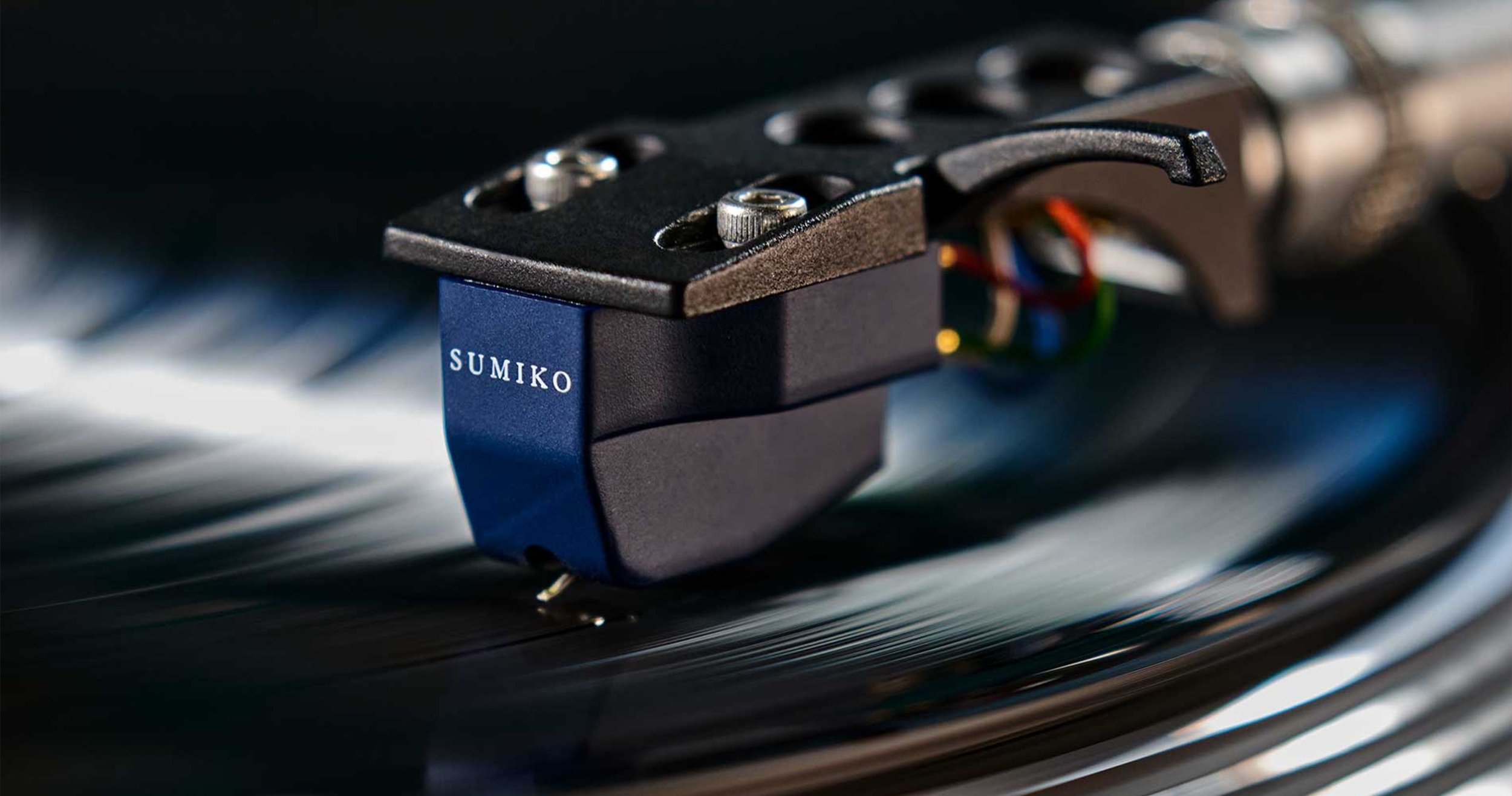
I went out to a customers house with the Blue Point No3 Moving Coil model in hand to put it up against his current cartridge on his Michell Gyrodec. It’s safe to say that the SUMIKO blew his cartridge away! I was amazed at how much detail and depth it had in comparison. It changed the whole soundstage of his Gyrodec. It sounded much more open and you could hear every note cleanly. We tried a few different albums from Elvis and The Beach Boys to classics like Pink Floyd’s Dark Side Of The Moon and Dire Straight's’ Brothers In Arms.

I left the customer with a new cartridge and huge smile on his face, and in all honesty, I couldn’t hide my large grin either.

I have since tried different SUMIKO cartridges on a few different turntables in store, and each time I am amazed at the way it breathes new life into each one!

A brief history of SUMIKO

For over 40 years, SUMIKO have provided an array of phono pick-up cartridges to discerning audio enthusiasts around the world. Boasting a portfolio of products that touches all price points and technologies.

David Fletcher with “the arm”

SUMIKO was founded in 1972 in Japan by three people, notably of which was American theoretical physicist David Fletcher. Before he co-founded SUMIKO he used to work for the Lawrence Berkeley National Laboratory in California, working on various different research projects. Unfortunately David Fletcher passed away early into 2021 at the age of 81.

Fun Fact: SUMIKO was named after one of the founders' wives.

MDC 800 Tonearm and Talisman A Cartridge

In the early days of SUMIKO they used to provide two services; the first being the import side of the business with introducing new and different brands to North America, ranging from Koetsu, Grace and many more. The other aspect of SUMIKO company is what they are primarily known for these days; that being, their spectacular cartridges, starting with the Talisman MC cartridges of which there were four: A, B, S and the Virtuoso. Another one of their founding products was the MDC 800 Tonearm, appropriately nicknamed "The Arm".

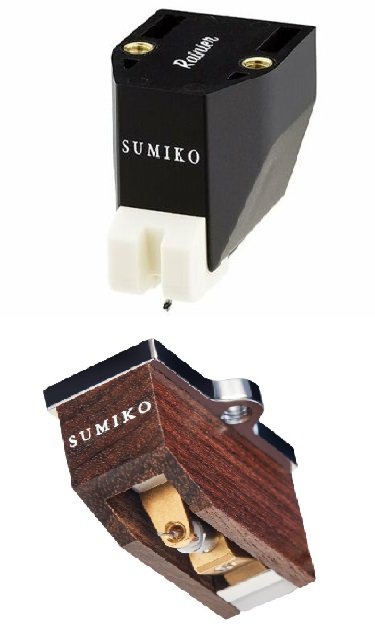
The RAINIER MM and Palo Santos MC Cartridges

Nowadays SUMIKO focus on their range of cartridges, with them now producing two different ranges, from the Oyster Series featuring the Rainier MM cartridges, all the way to the phenomenal Reference Series and the stunning Palo Santos Presentation Moving Coil Cartridge.

It really is a travesty that SUMIKO is not as well known here in the UK as they deserve to be. Superb quality at a lower price than a lot of their competitors. For us it was a no brainer to start stocking these and absolutely sing their praises.

If you’re interested in hearing one of these great cartridges or want to know more about their range please don't hesitate to give us a call and arrange a demonstration.

Thanks for Reading

Wayne - Audio T Southampton.

If you have any questions about any of the equipment featured in this article, or any other Hi-Fi or home cinema enquiries, be sure to Contact Us.

If you’ve enjoyed this, why not go ahead and read some more of our other blogs, and be sure to follow us on our social media channels below…


SUMIKO can be found at the following Audio T stores