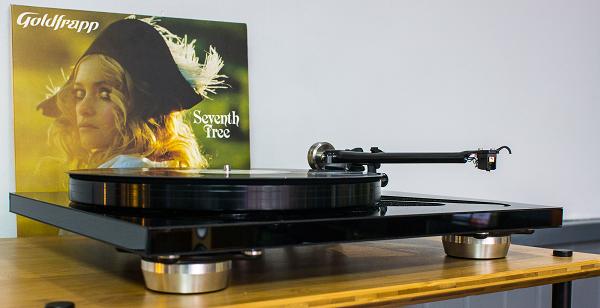
The Annealing Way: The Dynavector 20X2A

This month, Matt from our Cardiff store returns to the analogue side of things once more. Following on from last month’s look at his new Cyrus 40 series phono stage and Dynavector’s moving coil range — particularly the 20X2A — Matt’s been chasing even greater sonic perfection from his turntable. Much like swapping pickups in an electric guitar, changing your cartridge can transform the character of your system. As Matt puts it, less noise equals more music — so let’s find out what he’s discovered this time, and whether it’s led to his next upgrade…
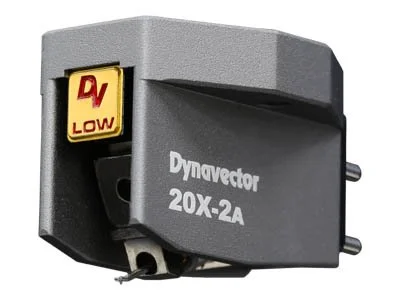
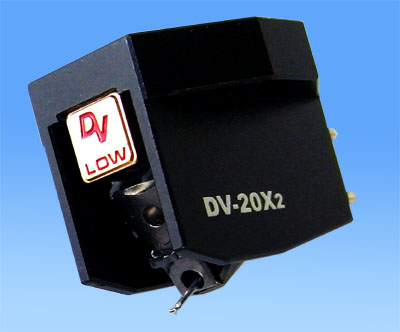
dynavector 20x-2a low output

Why am I looking at a new cartridge ?
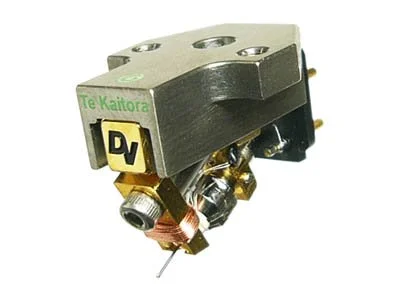
te kaitora rua low output moving coil cartridge

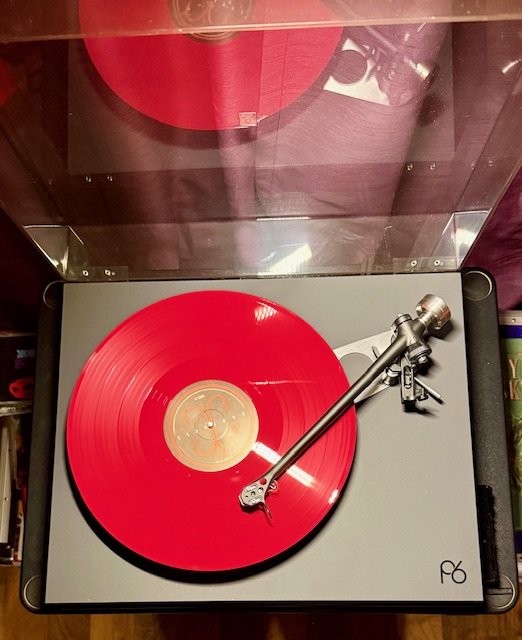
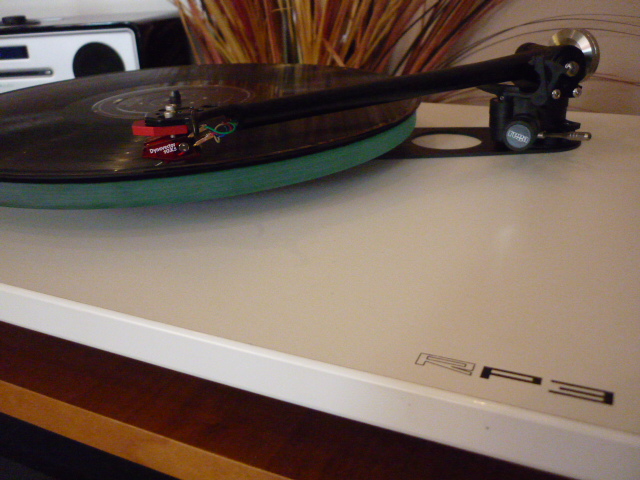
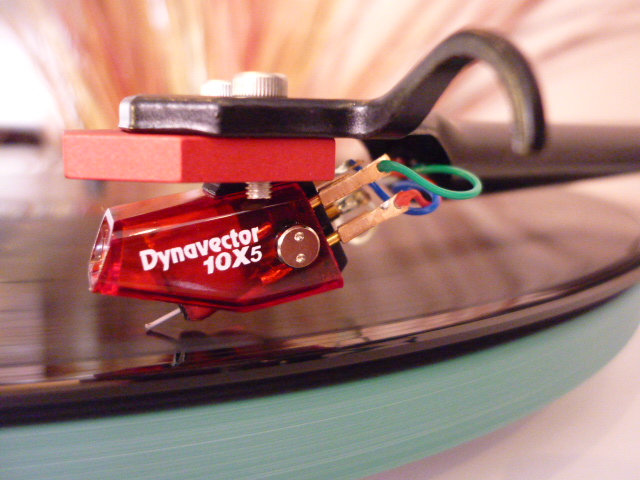
Well, this comes down to something that has always excited me in Hi-Fi — the advancement and development of components, especially when it comes to cartridge design. As you all know, I’m a big fan of Dynavector cartridges. I currently own a Dynavector 10X5 Mk2, which is fitted to my Rega Planar 6. One of my real favourite models in the Dynavector catalogue is the Te Kaitora RUA, but to me that cartridge is somewhat out of reach — until now! By God, I think I’ve found the answer for my wallet and my ears: the Dynavector 20X2A.

This all-new model has now landed at Audio T Cardiff, replacing the long-running 20X2 XX2. The big question is — what does the “A” stand for? It stands for Annealing. In this case, the cartridge has an annealed magnetic circuit.

Before we talk about this fantastic cartridge’s spec and how good it sounds, let’s take a deep breath and dive into what the annealing process is — and, more importantly, what the guys at Dynavector have to say about this process and what it does for this marvel of a cartridge.

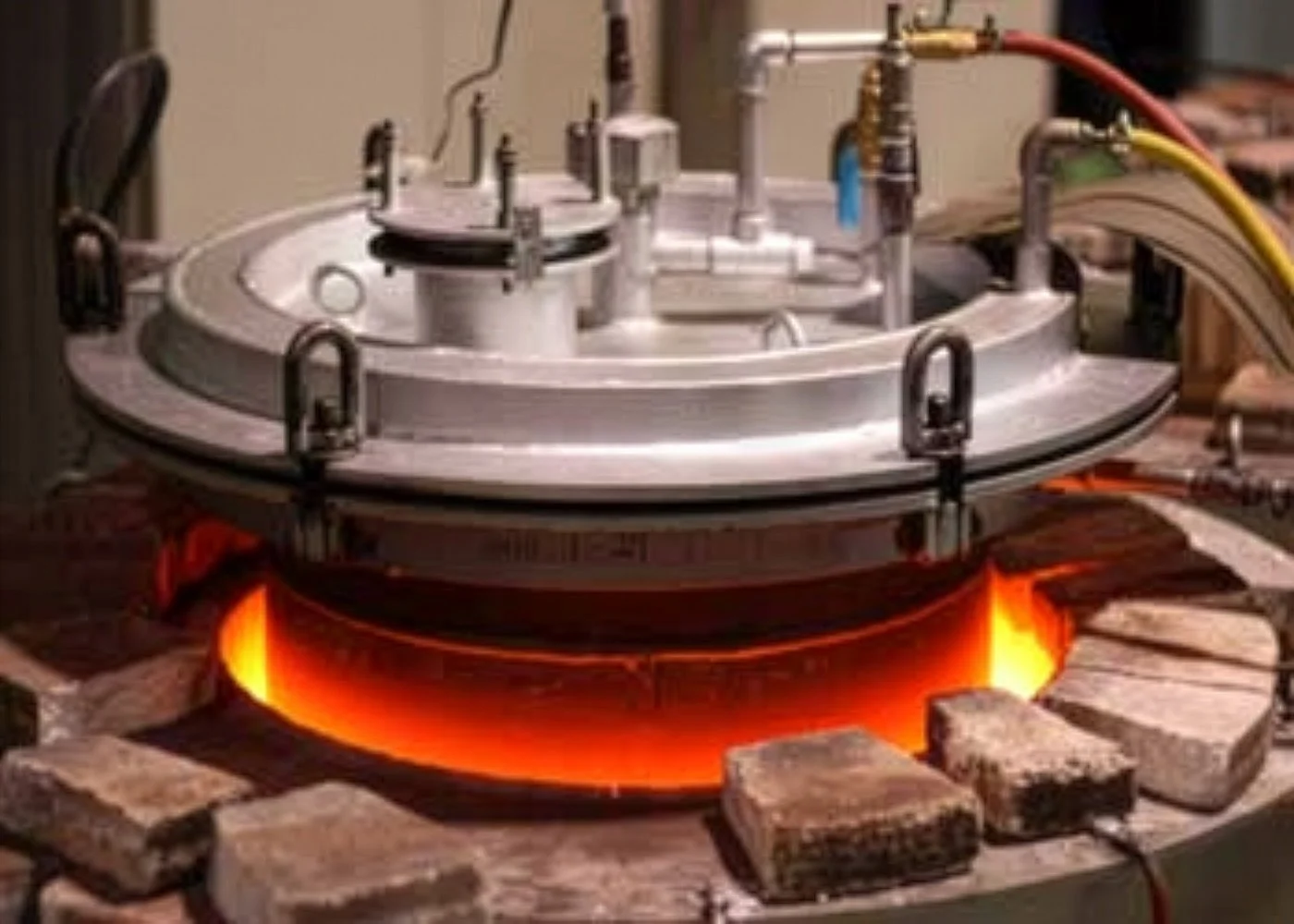
An exceptional vibration system is essential for a high-performance MC cartridge. We emphasise the critical role of the magnetic circuit. The cartridge’s output signal is intricately tied to the movement of the vibration system within the magnetic circuit, where electricity is generated as the coil vibrates amidst the magnetic flux. To ensure optimal output, it is imperative that the magnetic flux maintains high density and stability. We employ pure iron for our magnetic circuit due to its high magnetic permeability and exceptional stability, resulting in a distortion-free output. However, the processing of metal parts often distorts the crystal structure at the atomic level, leading to a loss of magnetic permeability.

Magnetic annealing is a process of heating and cooling processed parts. It is crucial for restoring the distorted metal crystal structure and regenerating magnetic permeability. However, a generic magnetic annealing cannot fully restore distortions in the crystal structure. The magnetic annealing conditions vary depending on the parts’ material, size, shape, etc. Our recent development focused on finding the best magnetic annealing process, including temperature, environment, duration, and heating and cooling rates. This meticulous approach has enabled us to unleash the full potential of pure iron’s unique magnetic performance.

The new magnetic circuit has significantly enhanced sound quality, delivering unrivalled resolution, smooth wide-range expression, and an expansive sound field. Experience the natural and dynamic sound of the Dynavector 20X2A cartridge, where an exceptional vibration system harmonises seamlessly with an optimised magnetic circuit.
— Dynavector

the annealing process

Let’s talk a little spec.

High output and low output models available.

The high-output model, 20X2A-H, achieves an output voltage of 2.8mV by using Dynavector’s legendary coil technology. A Micro-Ridge stylus is used for the stylus tip. Although the part that contacts the record groove has a minute radius curvature of only 2 microns, the band-like shape of the tip makes it resistant to abrasion and will provide ideal performance over a long period of time. By winding the coil many times with ultra-fine wire, the cartridge can obtain a high output equivalent to an MM cartridge, thus allowing the MC cartridge to be connected to a phono terminal for MM input without the need for a head amplifier or step-up transformer.

The low-output model, 20X2A-L, has a 0.3mV output voltage, using the same PCOCC wires as the higher-end models for the coil. The recommended load impedance of the head amplifier is 30Ω or more, making it compatible with most head amplifiers and MC step-up transformers.

Special annealing magnetic circuit

The magnetic circuit, which is the core of an MC cartridge, uses pure iron that has stable magnetic properties with minimal distortion. Furthermore, by performing special annealing that focuses on optimising the magnetic annealing process — such as temperature, environment, heating duration, and heating/cooling rates — we have succeeded in delivering expansive, resonant sound without distortion and with unrivalled resolution.
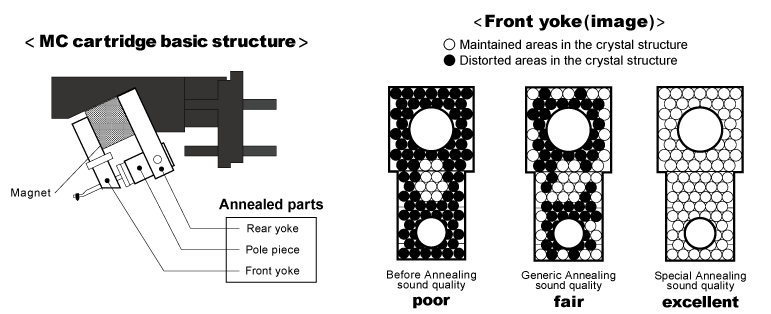
MC cartridge basic structure diagram

Neodymium magnets

The series employs patented softened magnets developed to reduce distortion and harsh, irritating, edgy sounds caused by rare earth magnets, while still achieving high output from powerful neodymium magnets. While taking advantage of the powerful magnetic force of neodymium magnets, the cartridge achieves a clear separation of sound.
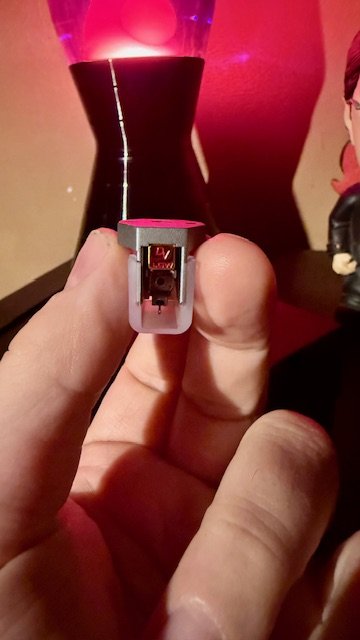
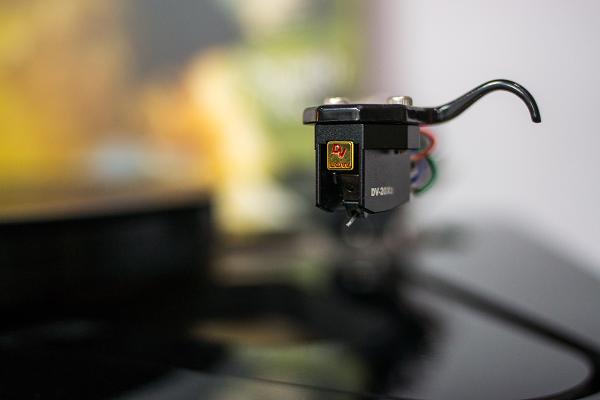
close up 20x-2a

Hard pipe aluminium cantilever

The hollow hard aluminium pipe cantilever reduces the vibration system mass, achieving a wide bandwidth with clear high frequencies.

Micro-Ridge stylus

A Micro-Ridge stylus is used for the stylus tip. Although the part that contacts the record groove has a minute radius curvature of only 2 microns, the band-like shape of the tip makes it resistant to abrasion and provides ideal performance over a long period of time.

Specifications

  • Output Voltage: 2.8 mV / 0.3 mV (at 1kHz, 5cm/sec.)

  • Channel Separation: 25 dB (at 1kHz)

  • Channel Balance: 1.0 dB (at 1kHz)

  • Frequency Response: 20–20,000 Hz (±2dB)

  • Compliance: 12 mm/N

  • Tracking Force: 1.8–2.2 g

  • Impedance: 150 ohms / 5 ohms

  • Recommended Load Impedance: 1,000 ohms / >30 ohms

  • Cantilever: 6mm length hard aluminium pipe

  • Stylus Tip: Micro-Ridge nude diamond

  • Weight: 9.2 g

The Listening

But before I talk your ears off about how good the cartridge sounds — what records and tracks did I use?

  • Jerry Cantrell – Afterglow – “I Want Blood” (2024)

  • Living Colour – Love Rears Its Ugly HeadTime’s Up (1990)

  • Mr Big – “Green-Tinted Sixties Mind” – Lean Into It (1991)

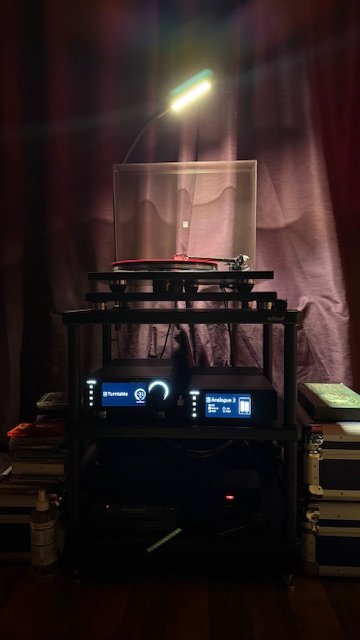
Before I sat myself down to listen, I switched out my Dynavector 10X5 high-output cartridge for the new 20X2A low-output. Then I set up my Cyrus 40 PPA — which, by the way, this is the first time I’ve set this phono stage up for a low-output moving coil cartridge — which is really easy to do via Cyrus’s remote control. My settings on the phono stage, if you guys want to know, are as follows: 1000 Ohms loading, 55dB gain, 100pF channel balance, also with the warp function set to “on”.
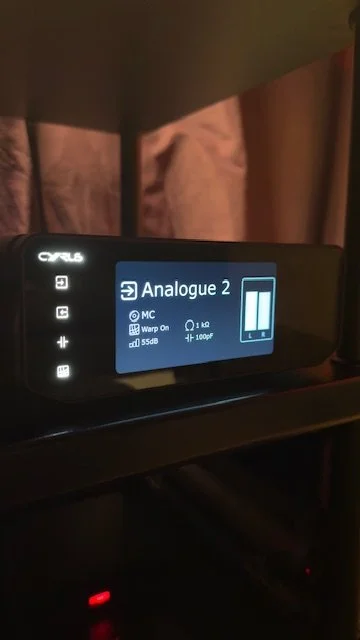
cyrus 40ppa settings

Now I’m all set up — amplifier warm and coffee at the ready — let the listening begin. One thing to add: before I changed the cartridge out, I listened to each record with my 10X5 fitted so I could familiarise myself with how each track sounds, and so I could hear the difference between the two cartridges and how they perform sonically.

Okay, back to it. First up, of course, Jerry Cantrell’s track Afterglow. This track in itself is quite atmospheric and open in its performance. With the 20X2A, I had a greater sense of this — there was better placement of Jerry’s vocals, rhythm, and lead guitars, which were a lot less muddled — clean and precise (as much as distorted guitars can be).

The second track, I personally feel, is where this cartridge really stood out from the crowd — Living Colour’s Love Rears Its Ugly Head. Will Calhoun’s drums were nothing short of astounding; I really got the feeling of his drum kit in the room. Vernon Reid’s cleaner guitar on this track really stood out — usually he’s flying up and down the neck with his amplifier cranked, but this track is a little more bluesy, which I really got a sense of.

Last but not least, Mr Big’s Green-Tinted Sixties Mind. In comparison to my 10X5’s performance with this track, it was streets apart. Paul Gilbert’s guitar riff had more presence, and Billy Sheehan’s bass seemed to have more feeling — and dare I say it — more groove.


In Conclusion

I really feel that I was right to be excited about the Dynavector 20X2A. It really comes close to performing like their legendary Te Kaitora and is a huge improvement on its predecessor. I do feel it’s an endgame cartridge for me, and I highly recommend trying one out. But if you don’t want to stretch to the 20X2A, Dynavector have used the same annealed circuit in the new 10XA — which also sounds pretty phenomenal.

Thank you for taking the time to read my blog -

Matt Aaron - Audio T Cardiff

If you have any questions about the event featured in this article, or any other Hi-Fi or home cinema enquiries, be sure to Contact Us.

If you’ve enjoyed this, why not go ahead and read some more of our other blogs, and be sure to follow us on our social media channels below…


From Italy Sonus Faber to Fine Sounds UK - Sonetto I Speakers

A few months back we wrote a blog to introduce the new Sonus Faber ranges, distributed by Fine Sounds UK. This month we thought we would delve a little deeper into Sonus Faber, and take a closer look at the the Sonetto I bookshelf speakers.

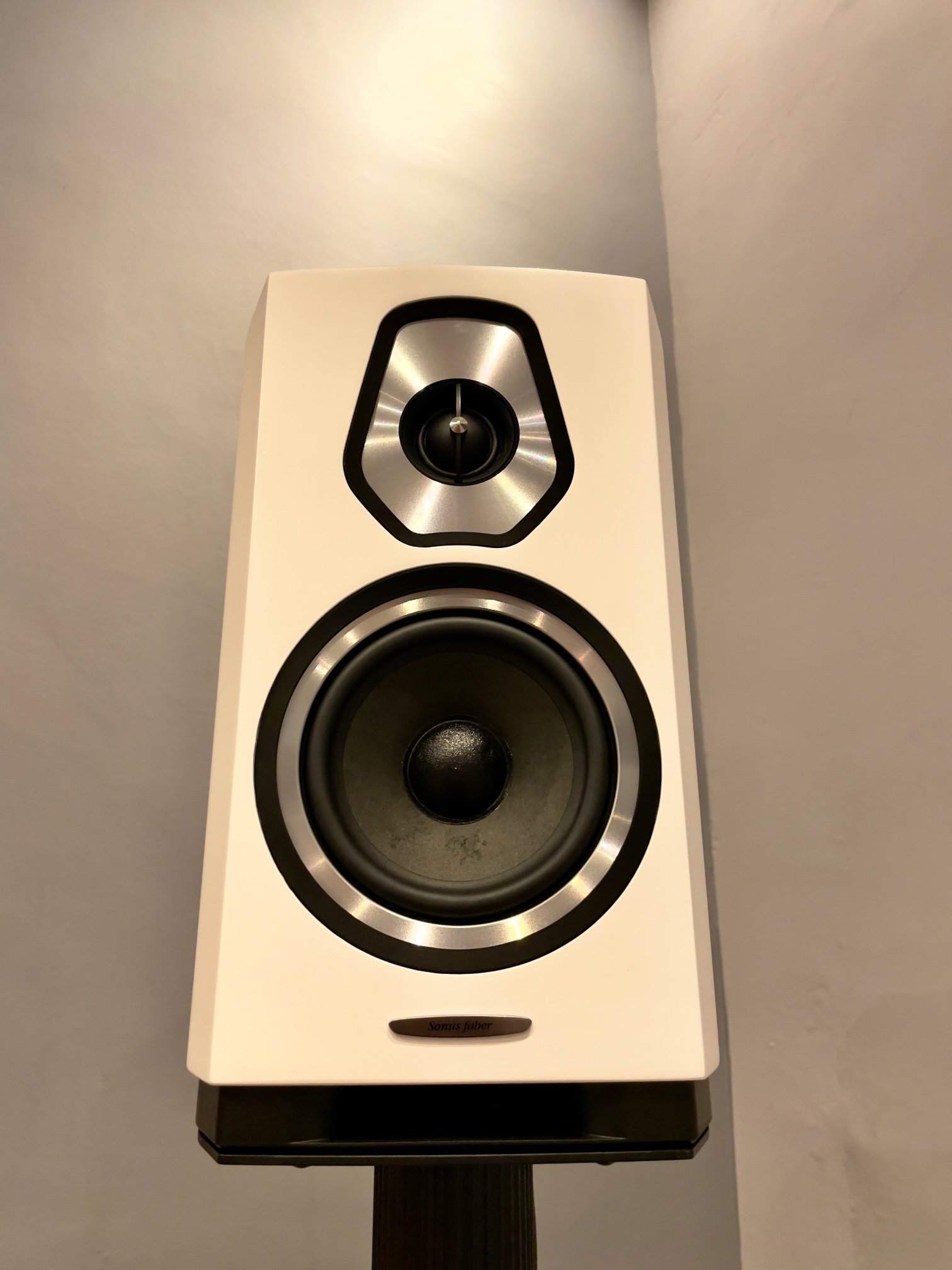
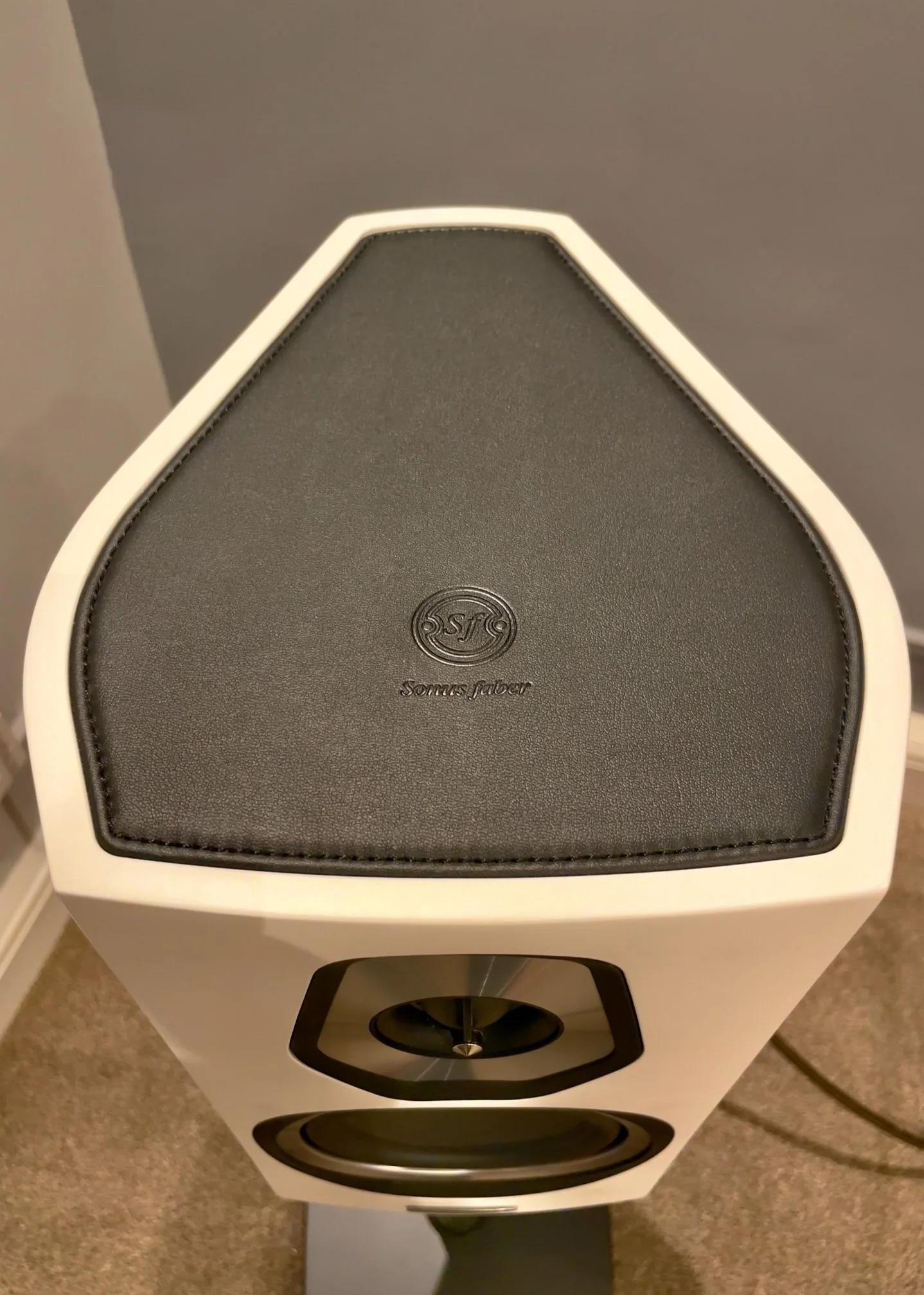
Sonus Faber Sonetto1 (white)

Hand-sewn leather top

The Sonus Faber Sonetto 1 is a very pretty loudspeaker with some some fantastic finishes available to compliment your home décor. Gloss Black, Wenge, Wood or Satin White as featured here are the available finishes. These slick cabinet colours are teamed with a hand-sewn leather top, a designed feature filtered down form the Olympica range.

All of the Sonetto range incorporates the Lute shaped cabinet that is not only pleasing to the eye but sonically important. This shape ensures that there are no parallel surfaces in the internal construction, offering perfect control over the internal resonances.

Lute shape cabinet

Bespoke Accessories

Sonetto stand

To complete the stylish look of the Sonetto I, Sonus Faber have created a bespoke pair of Sonetto Stands, manufactured from extruded aluminium to give it the rigidity needed for the performance expected from such a standmount loudspeaker. A nice touch to give piece of mind is the bolt on system for the top plate to the base of the speaker. The Soft velour on the base of the speaker and the top of the stand give a perfect seat for placement before bolting down. A nice extra is the cut out in the back of the stand upright for cable management.

Performance

Now let’s take a look at the sonic performance of the Sonetto I. Sonus Faber talk of the "voice" of its loudspeaker ranges and this voice is provided by the combination of cabinet construction, silk dome tweeter and natural fibre midwoofer and the front reflex port.

The silk dome tweeter is constructed with D.A.D (damped apex dome) technology and the mid-woofer with its natural fibre air dried diaphragm delivers high end performance at an affordable price. This technology has filtered down from their flagship Reference and Olympica ranges to achieve such high sonic presentation.

Tweeter

Tweeter

Midwoofer

If asked, we would describe the Sonetto range as incredibly smooth without lacking punch or detail. The bass is defined, tight and tuneful and the treble is smooth, sweet and not fatiguing. The midrange offers detail in vocals that other loudspeakers at this price struggle to achieve. I think I could put my feet up and listen to these speakers all day and I wouldn’t get tired.

We have found the Sonetto I easy to place in most rooms. If space is tight it is surprising how well they perform close to the wall due to the shape of cabinet and the front mounted bass reflex port .

The System

For the purpose of this demonstration we used a system consisting of -

Made in Italy

Demo tracks we've enjoyed on the Sonetto 1 include

  • Pearl Jam - Yield - Vinyl

  • Jessie Ware - Mirage (Don't Stop) - Tidal Streaming

  • Little Simz - Point and Kill - Qobuz Hi-Res Audio

Pearl Jam’s , Yield, is an album recorded in the 90s and when played on vinyl can be a little on the loose side in the bass, but the Sonetto I has no problem in controlling this and offers an immersive experience. Jessie Ware - Mirage offers a disco style with some pace. The vocal reproduction on these speakers is superb, along with the presence and timing of the modulated rhythm guitar. If you are looking to improve your stereo hi-fi or expand on your home cinema the Sonus Faber Sonetto I is a must to audition and are exceptional contenders in their price range.

Thanks for reading.

Nick, Kerrin & Matt - Audio T Cardiff

Keep up to date with everything going on at Audio T Cardiff by following us on Facebook and Instagram

Sonus faber can be found at the following Audio-T stores

Well Tempered Versalex Turntable: A whole new beginning.

We are thrilled to announce the arrival of the Well Tempered Versalex turntable to our range.

 Looks can be deceptive: read on

The Versalex is the new range-topping brainchild of William Firebaugh. He’s been designing unique turntables for decades and the Versalex is the pinnacle of his radical thinking. Read his philosophy here. Where most alternatives follow a well trodden path of design and are essentially therefore variations of popular themes, William started afresh.

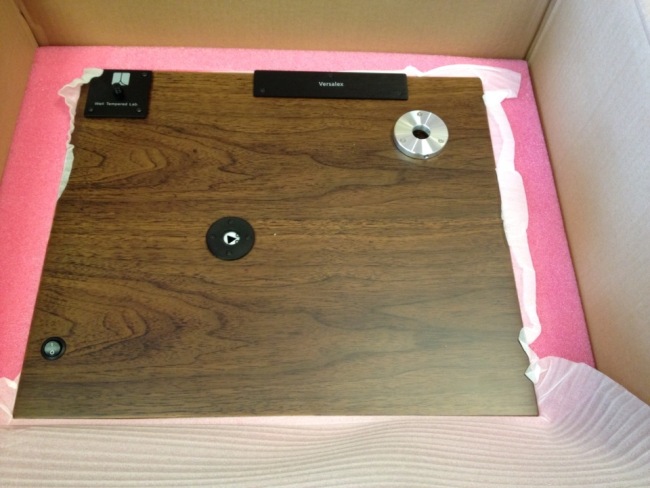
First off, the plinth is wood but not just any wood to look pretty, no, its 30mm solid Baltic birch ply and veneered on top with a most pleasing walnut. This not only gives this un-suspended deck weight but is naturally damped too, something close to the designer’s heart, more later.

Turntable designers the world over, have striven to design better decks spending considerable amounts on more exotic materials to allow the machining of ever finer bearing tolerances. William’s solution was to remove ALL arm bearings. Yes you did read that correctly, his arms have no bearings whatsoever. The problem as he sees it is no matter how fine the tolerances there must always be some free-play as a perfect fit would mean they could not move at all. This free-play manifests itself as ‘chatter’ that the cartridge easily picks up.

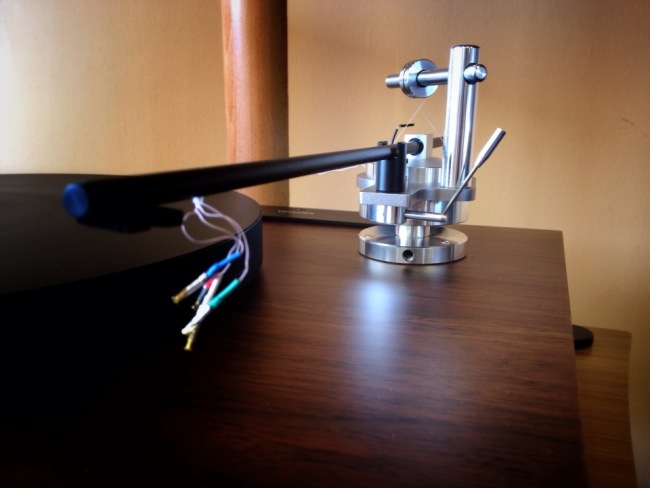
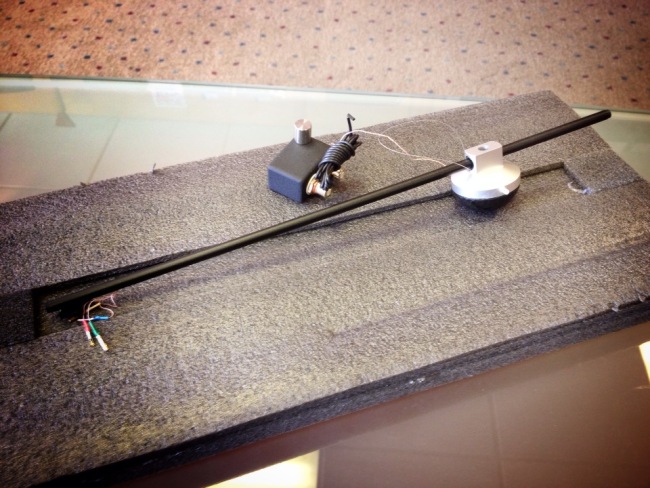
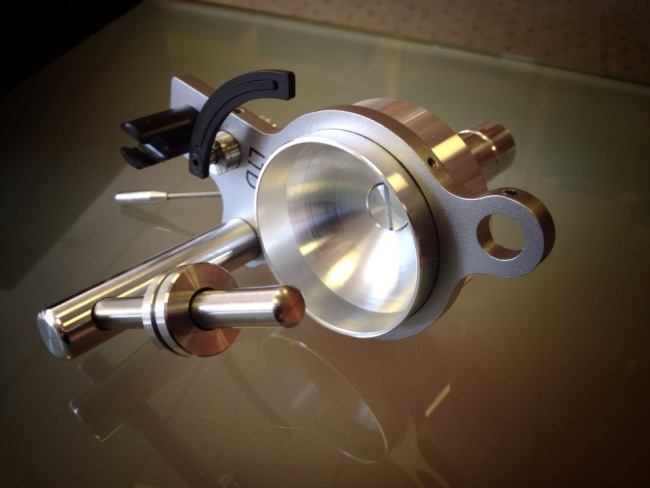
Atop this deck is mounted what appears to be a quite conventional looking tonearm but closer inspection shows that’s far from the truth. The all-new LTD tonearm is now an all-in-one unit rather than three separate components mounted on the plinth of previous designs which makes it easier to set up and use. It even has a built-in cue lever! 

Note the twist in the suspending filament. It's also the variable bias, clever.

From the ‘sharp end’ the arm features a fixed unique geometry headshell mounted on a soft sand filled aluminium tube (more damping). This is attached to an aluminium mount on top of what may look like to you a half of a golf ball. That’s because that’s exactly what it is. William realised he didn’t need to re-invent what has already been perfected at the cost of millions, a sphere, although for his purposes, half of one. The first units used a whole ball as seen here but the arm has recently been redesigned with the machined metal top.

If you look closely you should spot half of a golf ball

This sphere is a qualitative step up from the previous ‘paddle’ of the original design. Underneath that, lies the next innovative aspect of the design, thick silicone damping fluid. The whole tonearm assembly is suspended from a gallows above by a filament with one half twist. Another stroke of genius, this half twist provides the necessary bias or antiskate but what’s more, it’s variable as in theory it should be, such is the force to untwist which increases towards end of side. Brilliantly simple. The sphere is part submerged in the damping fluid cup which can be raised or lowered to alter the amount of damping to suit the partnering system. It is then left with no further set-up required.

The stainless steel ring atop the gallows from which the suspension filament is hung rotates to allow for on-the-fly azimuth or HTA (horizontal tracking angle) adjustment, this just gets more logical as it continues. What’s more by dint of the damping fluid the VTF (vertical tracking force) is also automatic ie as the groove forces the arm to raise the VTF increases slightly to maintain full and perfect contact with the groove wall. It works too; you’ll hear NO mistracking on even the most tortuous records.

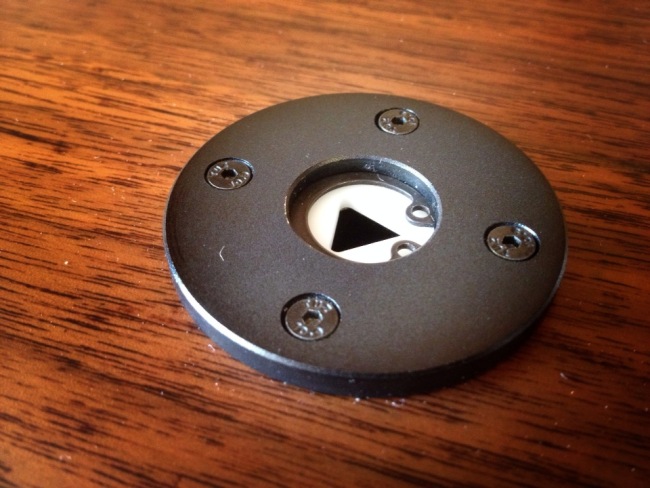
The next unique aspect of Well Tempered turntables is the main bearing design. Well Tempered call it a Zero Tolerance design. Unlike the arm, the platter needs a main bearing upon which to rotate but again unlike ANY other it is NOT a sleeve design. As with arm bearings, William argues a sleeve with any tolerance is still imperfect, it will inevitably still ‘chatter’ to some extent and the pick-up will resolve this as unwanted noise. The solution is his next stroke of lateral thinking. A round spindle in a triangular hole. Yes, again you read that correctly. The bearing spindle tip rests in a Teflon cup and against just two sides of the triangular Teflon opening in a tube filled with a very light oil. What you have here is a three-point mount in constant contact so no ‘chatter’, zero tolerance.

 Like a round peg in a triangular hole, no, it is a round peg in a triangular hole!

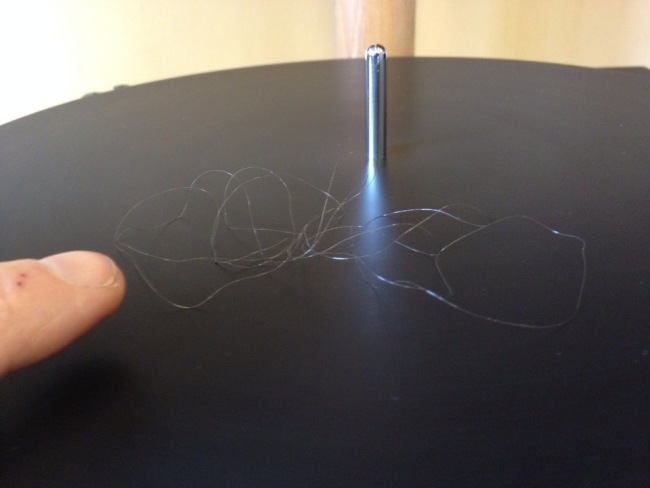
 The last of the unique design features is the belt. When I say belt, that’s not strictly correct. Surely at this point you didn’t expect the designer to settle for a rubber band did you? That would simply transfer motor vibration, however small to the platter. No, no rubber band here. Instead we have a 0.004" non-elastic mono-filament. This ensures perfect isolation and prevents the bearing spindle from ‘falling over’ and making contact with the third side of the triangular opening. The platter is solid acrylic and over-sized for better rotational stability. The matt is of a fine foam which is easier to keep clean than the usual felt mats.

'Belt' If you drop it you'll stuggle to find it. Don't worry, there's more in the box and they're free for life.

Phew! I think I’ve covered everything. No? Oh yes, how does all this design translate into its sound?

Well none of us here have experienced quite what a Well Tempered is capable of until now. Each of us here use markedly different decks and there is some friendly banter and ribbing but on this we are as one. The very first thought is of total stability. Everything is absolutely rock solid in its soundscape and where it should be. Pitch and timing appear perfect. No harshness whatsoever, even on some pretty old vinyl. Dynamics are out of this world. Backgrounds optimise what we refer to as inky blackness and vinyl roar seems remarkably absent. The music simply flows.

The detail and resolution are a revelation but not in a overtly 'HiFi' or analytical way, just totally natural and unforced. There's not a trace of bloom or excess of any part of the audio spectrum but the bass plumbs the depths like few others whilst managing to articulate each and every note with ease.There's real pace and drive without it sounding artificial or contrived.

Voices such as Joni Mitchell's sound hauntingly present whilst piano has real scale and resonance. Listening to Richard and Linda Thompson's 'Poor Little Beggar Girl' from their 'I Want To See The Bright Lights Tonight' album, both guitar and mandolin sounded better than I've ever heard them before, missing was the added warmth other decks render but at the same time the bass guitar and drums remained with driving force.

It’s like listening to the source tape with all of the emotion of the performance flooding through.

Lastly, this is not a deck to fret over. It requires no servicing. There are no upgrades, tweaks or third party mods to spend your hard-earned cash on, you’ll just be buying a LOT of records. The output is via a pair of phono sockets allowing options for arm-lead and naturally you can upgrade your cartridge. We are reliably informed it can take anything at any quality, right up to the truly exotic. Your cartridge is in for 'the ride of its life!' John at Pear Audio uses a Dynavector XV-1t at £5,500. Replacement belts are free for life too.

If that’s not enough to whet your appetite, then bring in a record or two, as it’s on front of house alongside other favourites, and judge for yourselves.

I’ve been using another very well known deck at home at various spec levels for exactly twenty-nine years but will I get to thirty?

£3495 excl. cartridge.

(Cartridge shown is a Dynavector XX2 @ £1049)

Simon

Unboxing

Packaging quality. Bottom left is the tin for the free electronic stylus force gauge

Plinth with beautiful walnut veneer

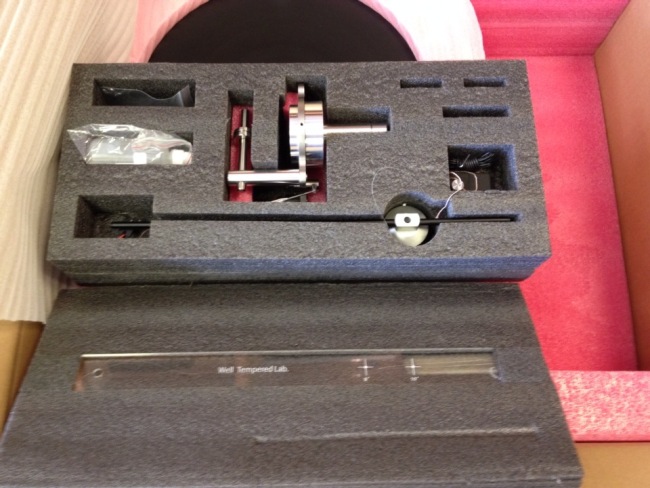
Tonearm componets

Precision made tonearm component detailing 'gallows pole' and damping fluid trough

Cartridge option: Dynavector XX2 on our demo deck

An old classic plays a lovely tune on the latest and greatest.

The Classic.

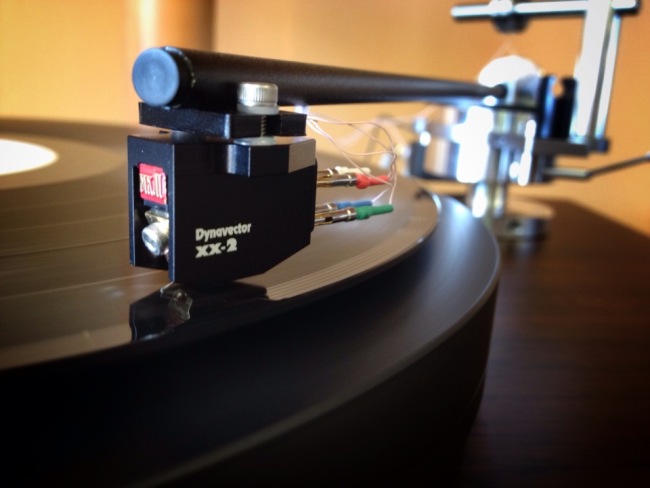
Dynavector 20X2L.


The latest and greatest.

The Rega RP8 / RB 808.


Our Dynavector 20X2L mounted on RP8 RB 808 combination.


In a meeting of old and new, this particular combination forms a formidable partnership. 

Coming across as completely natural and detailed the 20X2L delivers big soundstages with aplomb.  

As it stands this combination would cost £2167, and quite frankly, it's worth every penny.


It's set up and playing on our showroom floor, you won't miss it when you come in.

Just give Dave, Munir, Kevin or our Mike a shout when you pop in. 


Thanks

Munir

Tel: 0161 839 8869
email: manchester@audio-t.co.uk
web: www.audio-t.co.uk
We are open Monday to Saturday 9:30 - 17:30
and Sunday 11:30 - 16:30