
Centre Stage: The Speaker That Holds It All Together
/When we talk about home cinema the conversation often starts with surround speakers, subwoofers or the latest tech in AV Receivers. But ask anyone who’s spent time dialling in a surround system, and they’ll likely tell you: the centre channel is the most important component in the system.
Whether you’re watching a gripping drama, a fast-paced action film, or simply following Attenborough’s iconic narration, the centre channel is doing more work than any other part of your setup. In fact, between 60% and 80% of movie and TV audio is routed through the centre speaker, depending on the mix.
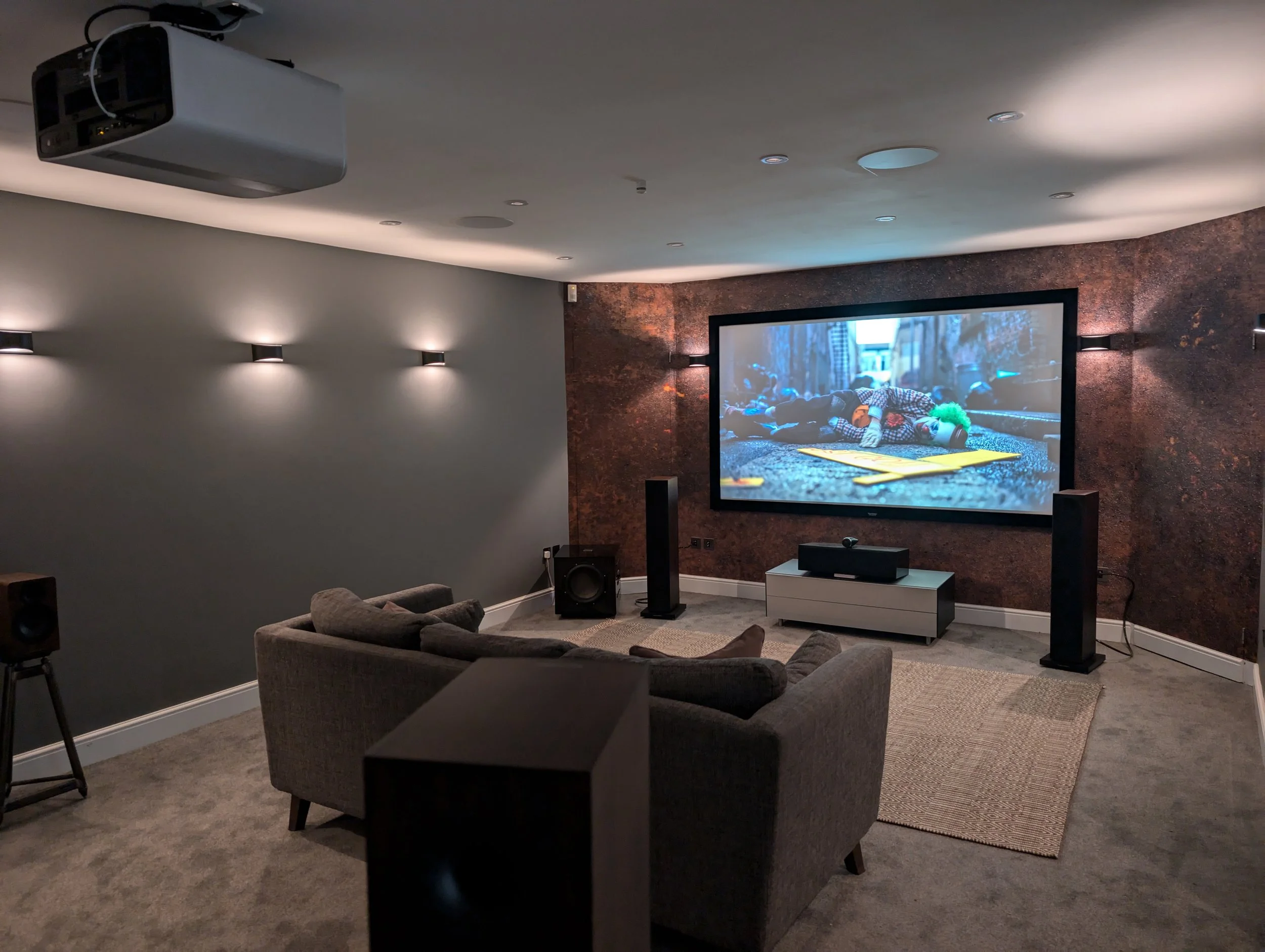
5.2.4 Dynaudio Evoke System in our demo room at audio t reading
The Role of the Centre Channel
In a surround setup, the centre channel keeps everything anchored. It’s what makes voices feel like they’re coming from the screen rather than some vague point below or too far in-front. It delivers realism, clarity, and intimacy — and without it, immersion breaks down.
While stereo setups use a “phantom centre” created by two speakers, home theatre systems give the centre its own speaker to lock sound to the screen, improving vocal clarity and keeping everything balanced across the front stage.
Positioning: Getting the Fundamentals Right
The ideal centre channel setup is simple in theory: place it at ear height, in the middle, and as close to the screen as possible. But in real rooms, especially where TVs or furniture limit placement, things aren’t always that easy.
If the speaker sits below the screen, it’s essential to tilt it upward so that it fires toward your ears. If it’s placed above the screen, tilt it downward. Even a few degrees can make a huge difference in clarity and immersion, especially when it comes to dialogue.
Treat your centre speaker with the same care you’d give your main left and right speakers. Don’t just drop it on a stand and hope for the best. Consider the angle, the height, and its relationship to your listening position.
When testing positioning, it’s important to disable all other channels and listen to the centre in isolation. A great track we use is “I Was Made for Loving You” by Maria Mena. Her voice should feel perfectly centred, not floating too high, too low, or drifting to one side. If she doesn’t sound like she’s singing from the screen itself, you’ve got more work to do.
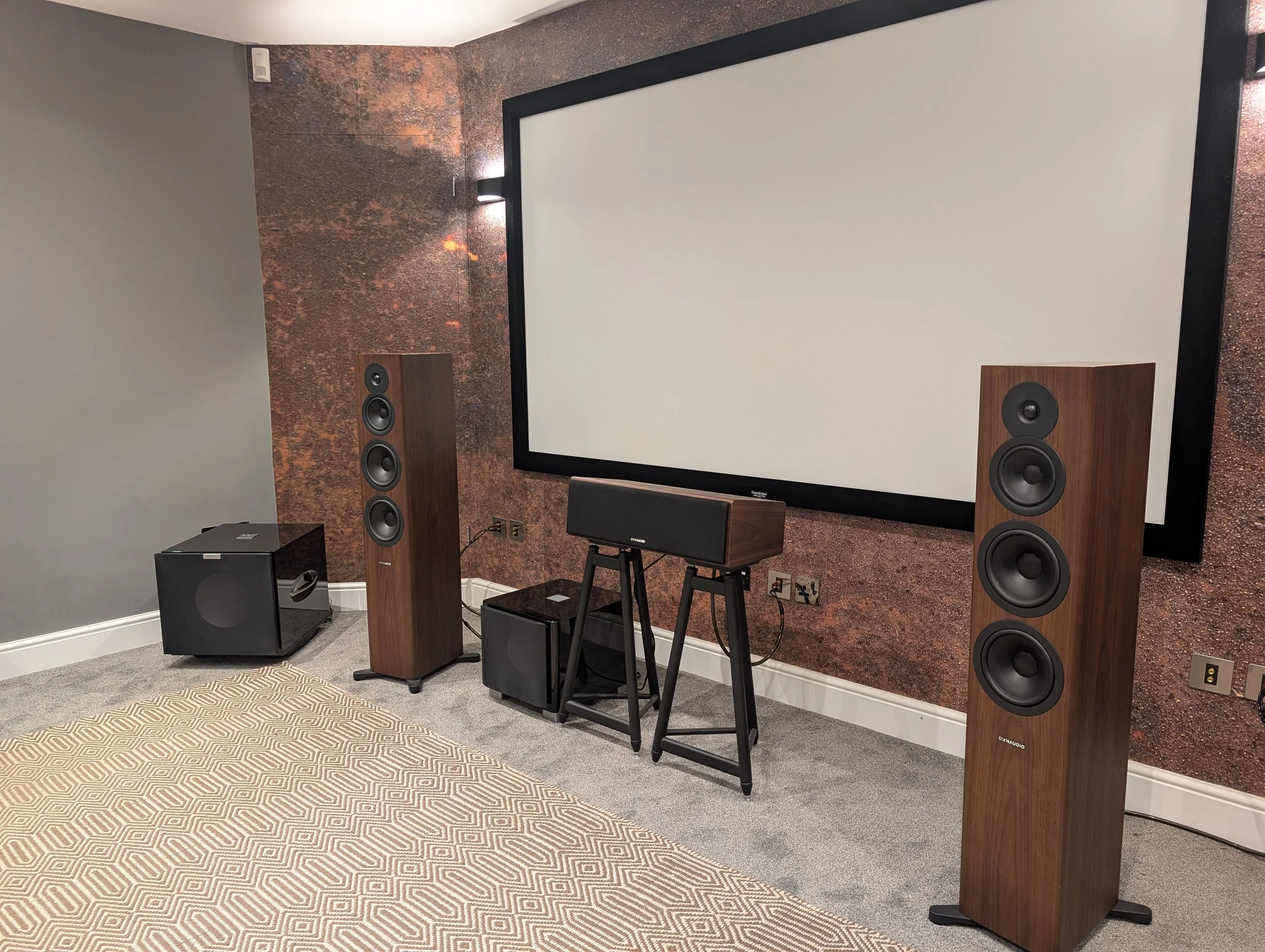
Evoke 25c Angled to be at ear level for the front seat
Why Matching Matters — and What to Do If It Doesn’t
To really make a home cinema system sing, your centre speaker should match your front left and right speakers — ideally from the same series, using the same drivers and voicing.
This ensures that sounds pan smoothly across the front stage, and that dialogue or vocal effects maintain a consistent tone. Mismatched centres can sound disjointed, tinny, or out of place, especially with distinctive voices or music-focused content.
But we understand that perfect matches aren’t always possible, whether that’s because of space constraints or if the manufacturer of your front speakers doesn’t produce a matching centre channel.
If you’re forced to use a centre from a different brand or range, there are ways to minimise the tonal mismatch:
• Use multichannel stereo mode to play familiar music and dialogue scenes through all three front speakers
• Unplug or mute the surrounds, and rotate between the front left/right and the centre
• Listen carefully: does the centre sound thinner, brighter, or duller?
• Use your AV Receiver’s EQ settings to tweak the centre — maybe a touch more midrange, or slightly less top-end
• For more advanced users, consider using Room EQ Wizard (REW) and a calibrated microphone to run frequency sweeps to see what frequency response you’re getting, helping to match the frequency response more precisely.
It’s not a perfect fix, but it gets you a lot closer, and sometimes that’s all you need.
Adjusting multiple frequencies at more than around 4db can destroy the sound altogether, having to push the EQ above these values usually means the centre isn’t a right match. Worth noting that’s it’s not about getting them equal, but closer together. Particularly in the low-end, floor-standing fronts are going to exceed the capability of most centres, so focus on the midrange, upper midrange and high-frequencies
Common Issues to Listen For:
Too little 500–1kHz: voices sound hollow, recessed, or unnatural
Too much 2–4kHz: dialogue becomes sharp or harsh, especially at high volumes
Too much 100–300Hz: vocals sound bloated or “chesty”
Not enough 4–6kHz: loss of crispness or consonants in speech
Best Case Scenario: The LCR Fronts
For those building serious home cinema rooms, there is one setup that takes matching to the next level: LCR (Left–Centre–Right) with identical speakers.
This is the industry standard in professional theatres, and in high-end residential installs where the system often sits behind an acoustically transparent screen. Each speaker: left, centre, and right, is the exact same model, giving equal performance capability throughout.
This means perfectly matched tonal balance, seamless panning, and a true sense of scale — whether the sound is coming from the far left, the right, or dead centre.
While this isn’t always practical in traditional living rooms, it’s absolutely achievable with on-wall or in-wall speakers, or even freestanding floorstanders in dedicated rooms. If you’re serious about cinematic accuracy, this setup is worth exploring.
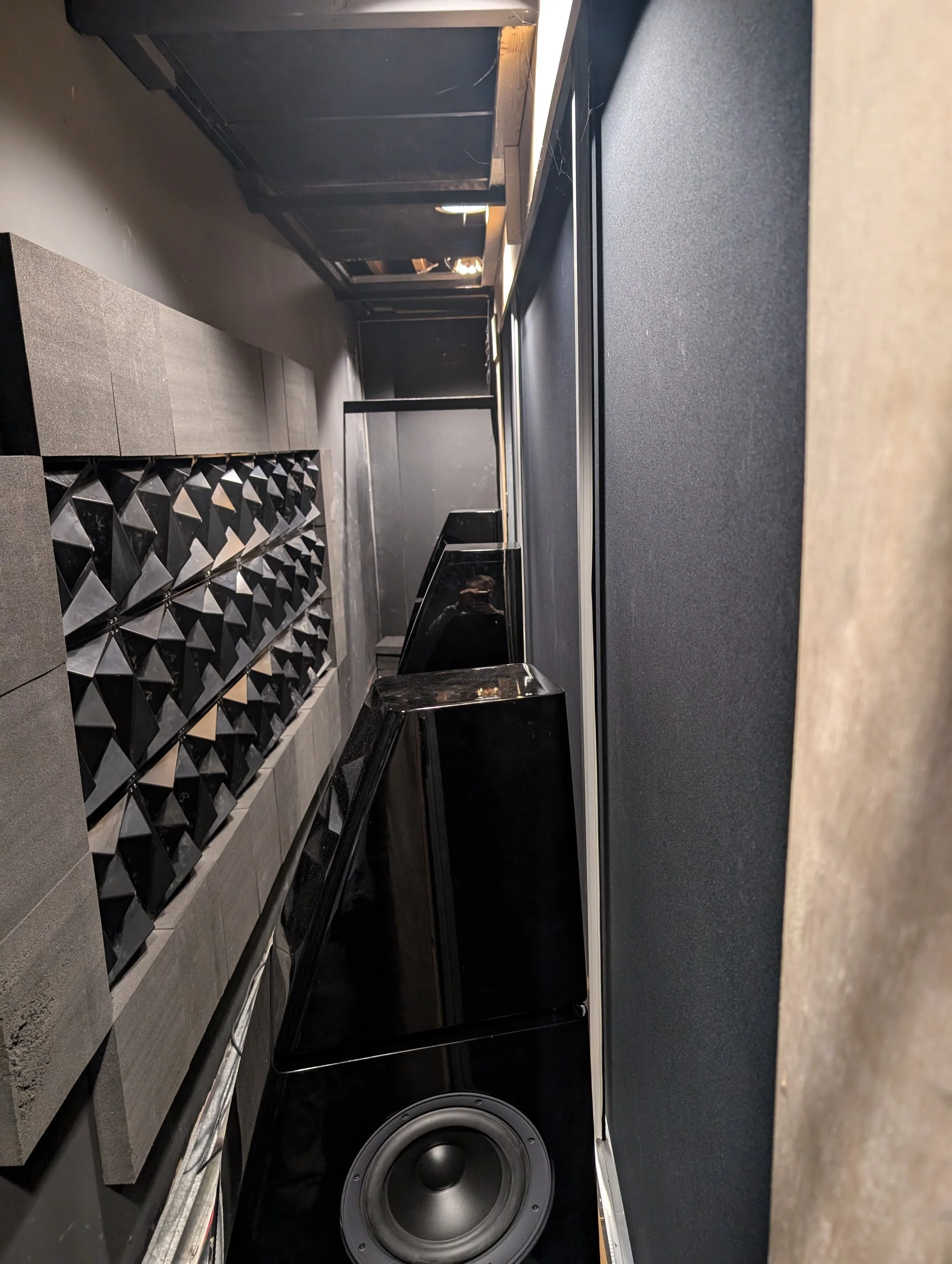
Meridian LCR Solution - DSP8000 XE (X3) - Hidden behind a screen
Tested Centre Speakers: A Quick Comparison
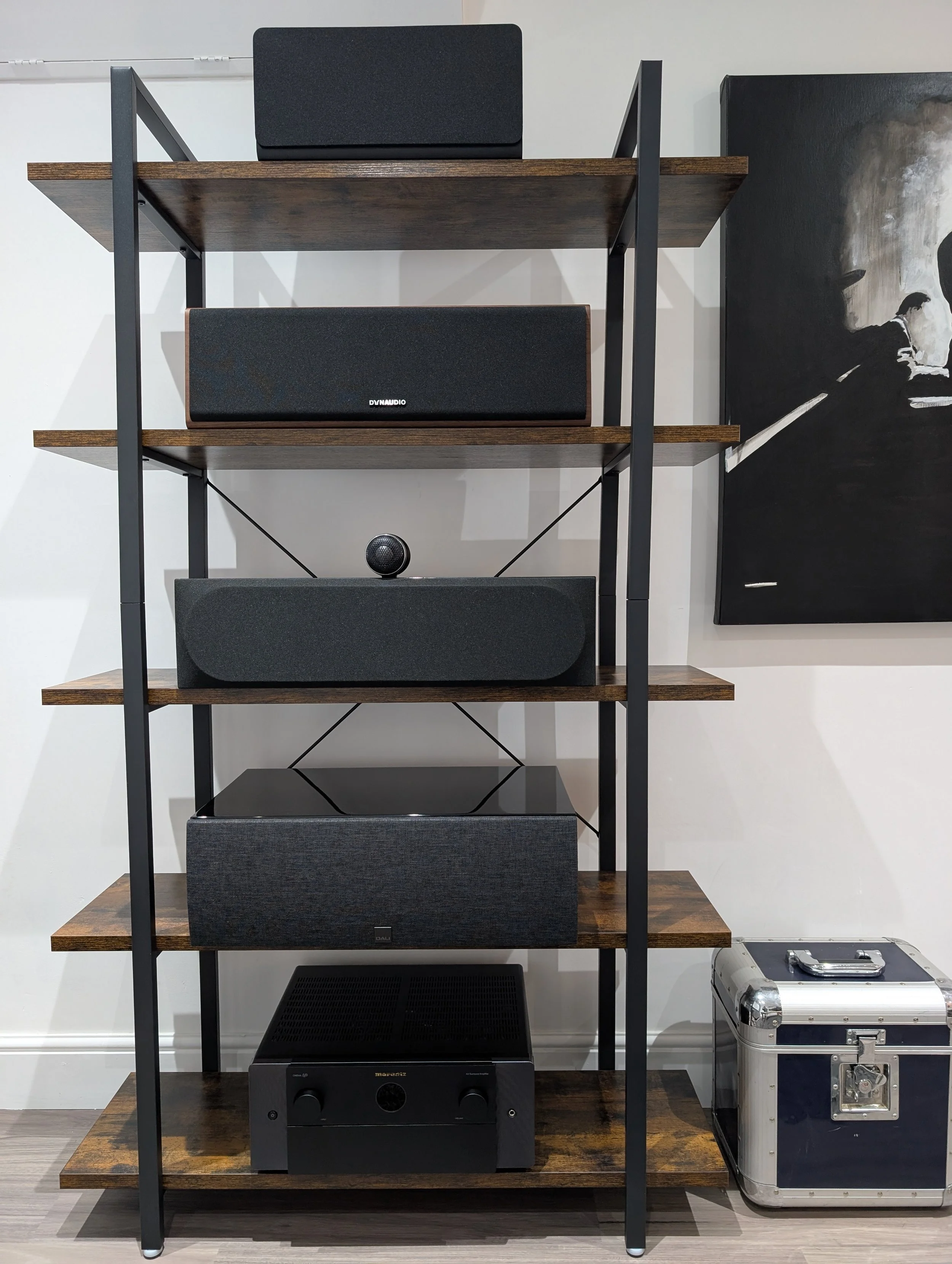
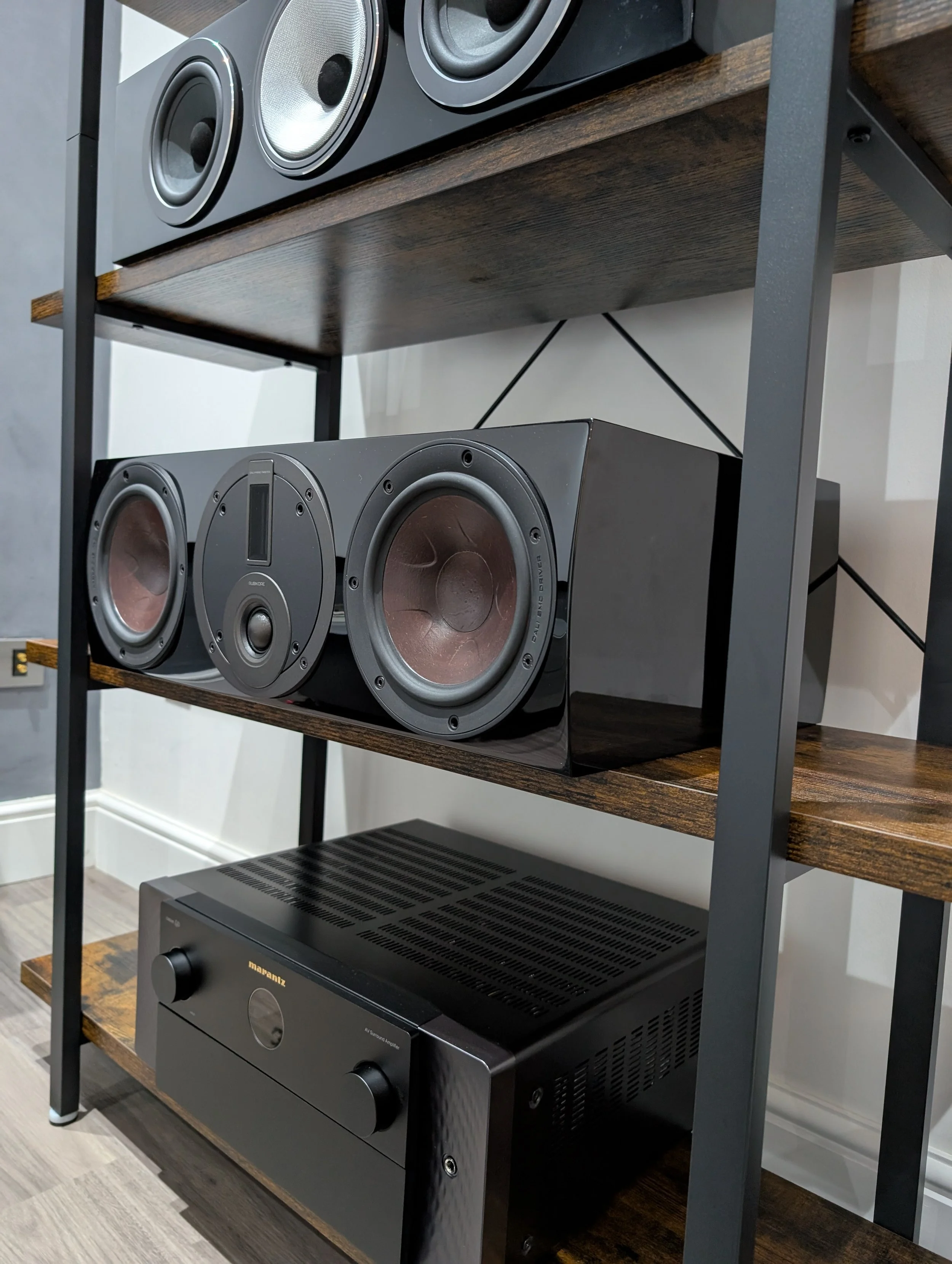
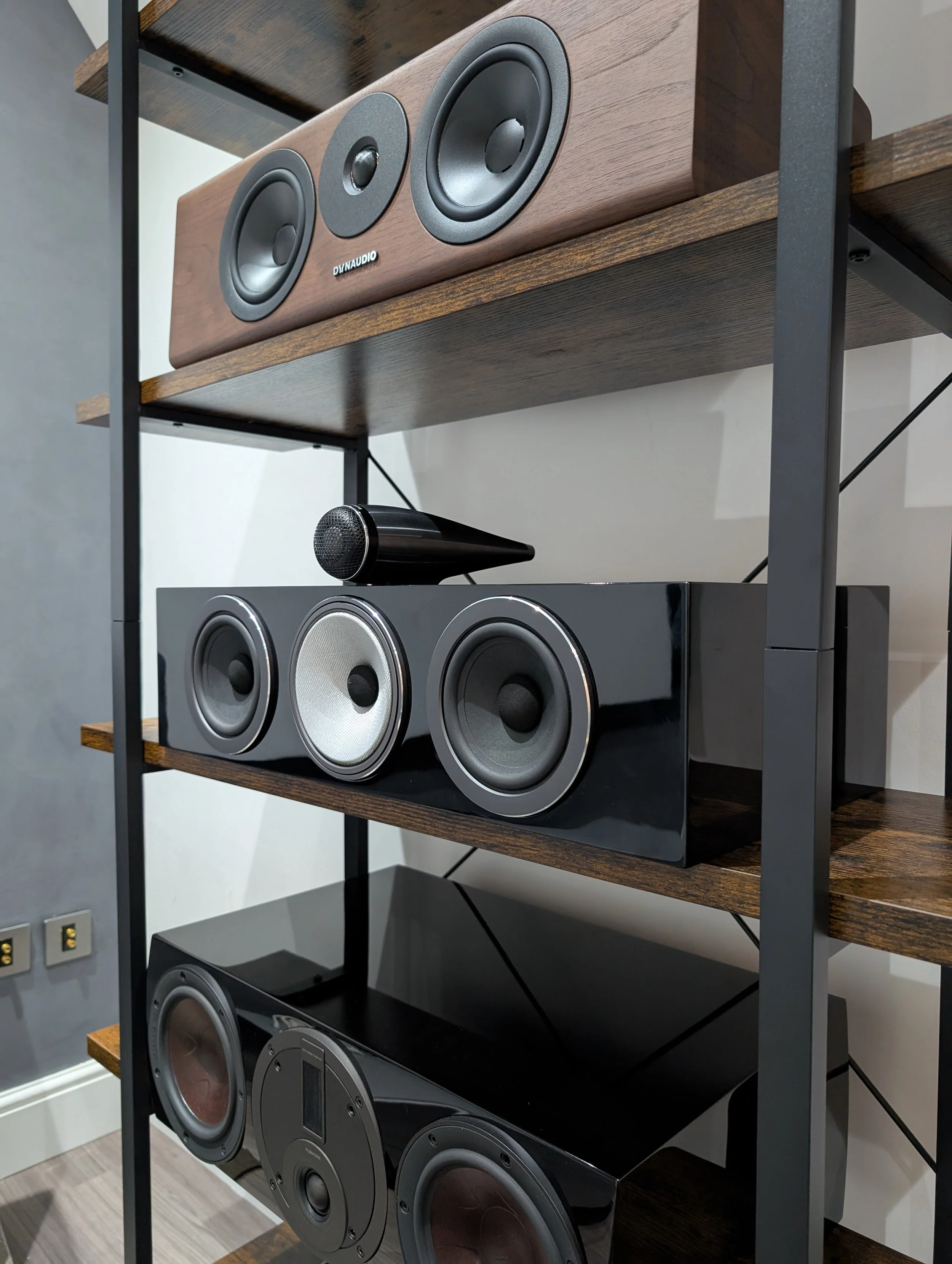
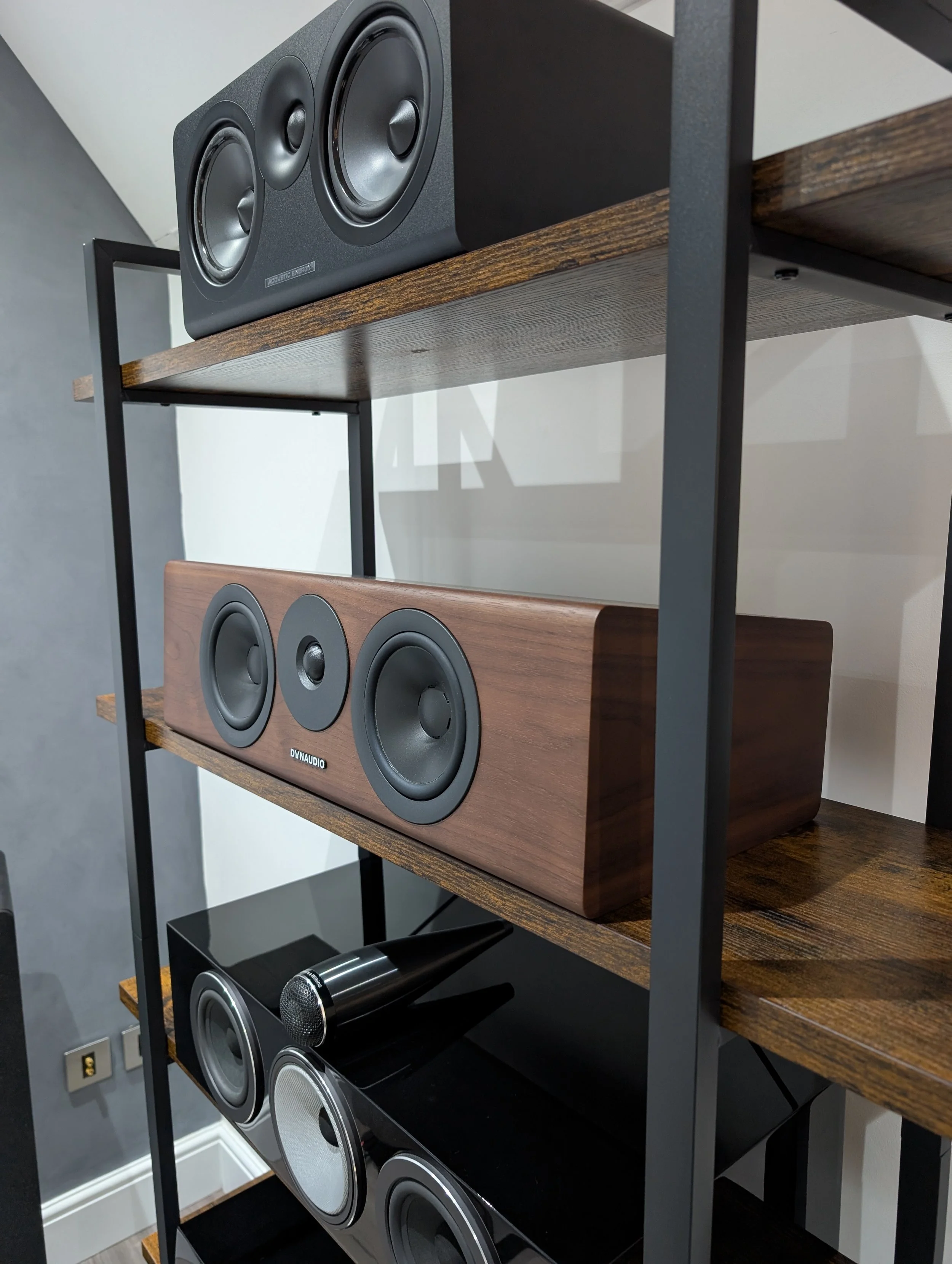
Here are some of the standout centre channels we’ve recently spent time with, from compact value options to premium performers.
A decent budget pick. It’s compact, affordable, and surprisingly clear for the money. Great for smaller spaces or entry-level systems.
Warm and forgiving, with a wide sweet spot. The soft dome tweeter and good dispersion make it very room-friendly. Ideal for mid-range systems.
Neutral and nuanced, with superb dialogue clarity. Needs quality amplification to truly come alive, but rewards you with beautiful balance and realism.
Big, bold, and authoritative. Offers serious impact for home theatre with strong dynamics and clarity, especially when paired with the matching 700 S3 series.
A wide, immersive soundstage with detailed mids and a slightly airy treble thanks to the hybrid tweeter. Horizontal layout with architectural flair, ideal for dedicated rooms. Can be used in an LCR Configuration.
Rich, textured, and refined. A true high-end option with stunning vocal presence and tonal accuracy. Requires high-quality electronics to perform at its best.
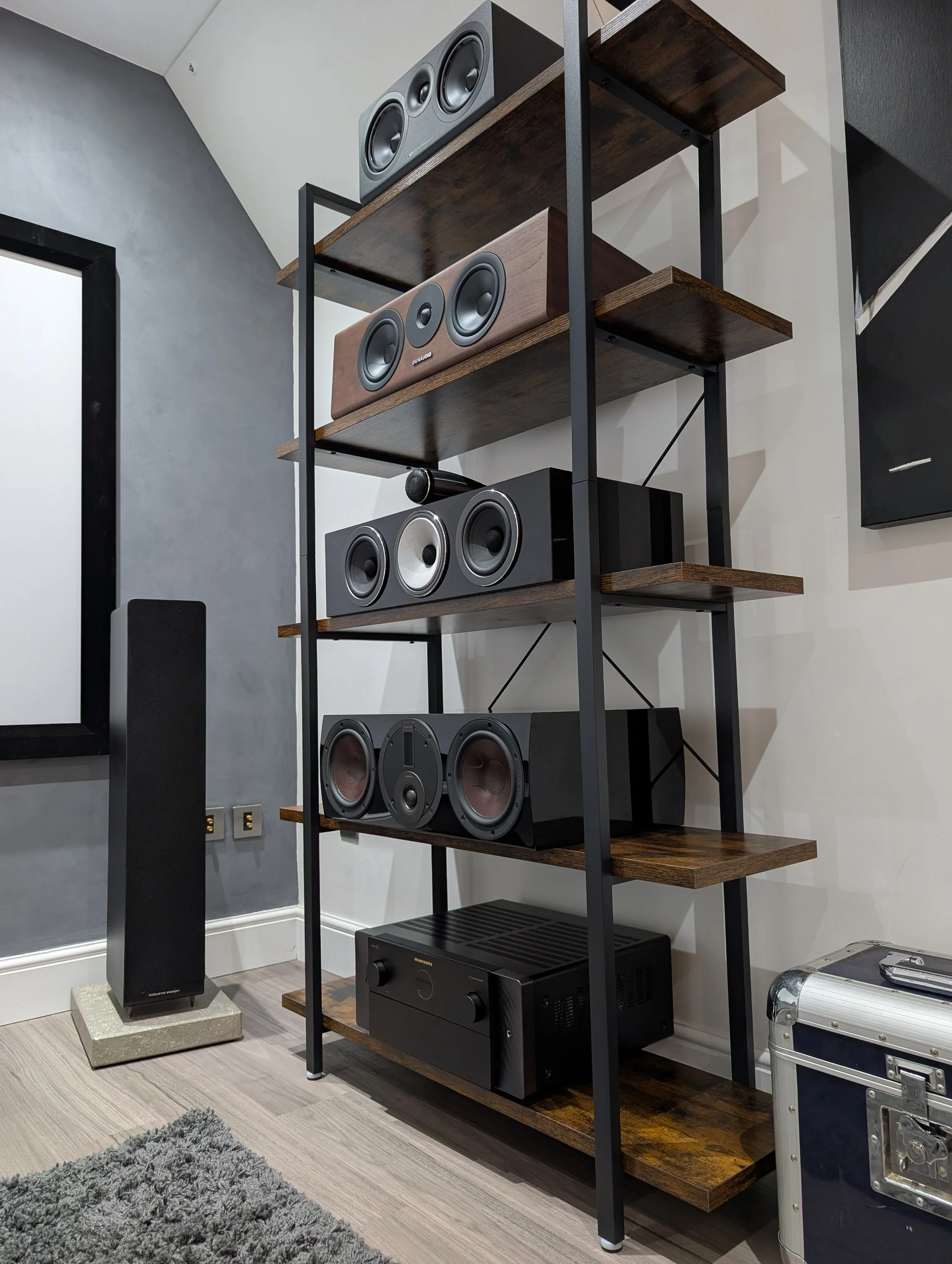
Top to Bottom: AE107 MK2, Dynaudio Evoke 25c, B&W HTM71 s3, Dali Rubikore Cinema, Marantz Cinema 30

Final Thoughts
A good centre channel doesn’t just improve your system, it unlocks it. When it’s set up right, dialogue becomes lifelike, voices are locked to the screen, and you stop thinking about the system, and just enjoy the show.
A favourite test of ours is watching David Attenborough’s Planet Earth. His voice is so distinctive, so full of subtle rasp and warmth, that when your centre channel gets it right, it’s instantly recognisable and almost intimate. Should any EQ adjustments be needed, this is a good one to use as reference.
So whether you’re upgrading your system or just getting started, don’t underestimate the importance of the centre speaker. Come visit us in-store and hear the difference for yourself. We’re happy to demo any of the speakers mentioned above, help fine-tune your existing setup, or guide you through building a system that is well-matched, delivering the experience you’re after.
Once you’ve experienced the difference a well-integrated centre channel makes, it’s hard to settle for anything less.
Thanks for reading – Dan, Gareth & Rishi – Audio T Reading
If you have any questions about any of the equipment featured in this article, or any other Hi-Fi or home cinema enquiries, be sure to Contact Us.
If you’ve enjoyed this, why not go ahead and read more of our other blogs, and be sure to follow us on our social media channels below…
For any AV/Home Theatre or general audio related queries contact your local Audio T store -