

AV receivers in 2026: Inside the Marantz Cinema Series (Part 1)
/Our stance on AVRs in 2026
In an era dominated by soundbars, wireless speakers, and “good enough” audio solutions, it’s easy to assume that the traditional AV receiver has had its day. In reality, the opposite is true. As home entertainment continues to evolve with larger screens, better projectors, immersive audio formats, and more demanding rooms and applications, the AVR remains the beating heart of a serious home cinema system.
Modern home cinemas demand more than just power. They require intelligent processing, flexibility, seamless streaming integration, intuitive control, and above all, sound quality that brings films, music, and games to life.

AV 20 & AMP 20
The Marantz Cinema Series represents a clear statement of intent. AV receivers can be beautifully designed, technically advanced, and emotionally engaging without becoming complicated or intimidating to use. In this article, we’ll take a clear, model-by-model look at the current Marantz Cinema lineup, explaining what each model is designed to do, how performance scales as you move up the range, and where it makes sense to step into full separates.
Whether you’re upgrading an older system, taking your first step into proper surround sound, or refining an already serious home theatre, the Marantz Cinema Series offers a solution that can fit within your room, your system, and your expectations. Now, with the newly announced AV30 and AMP 30 separates, the gap between reference-level and high-end home cinema systems has narrowed even further.
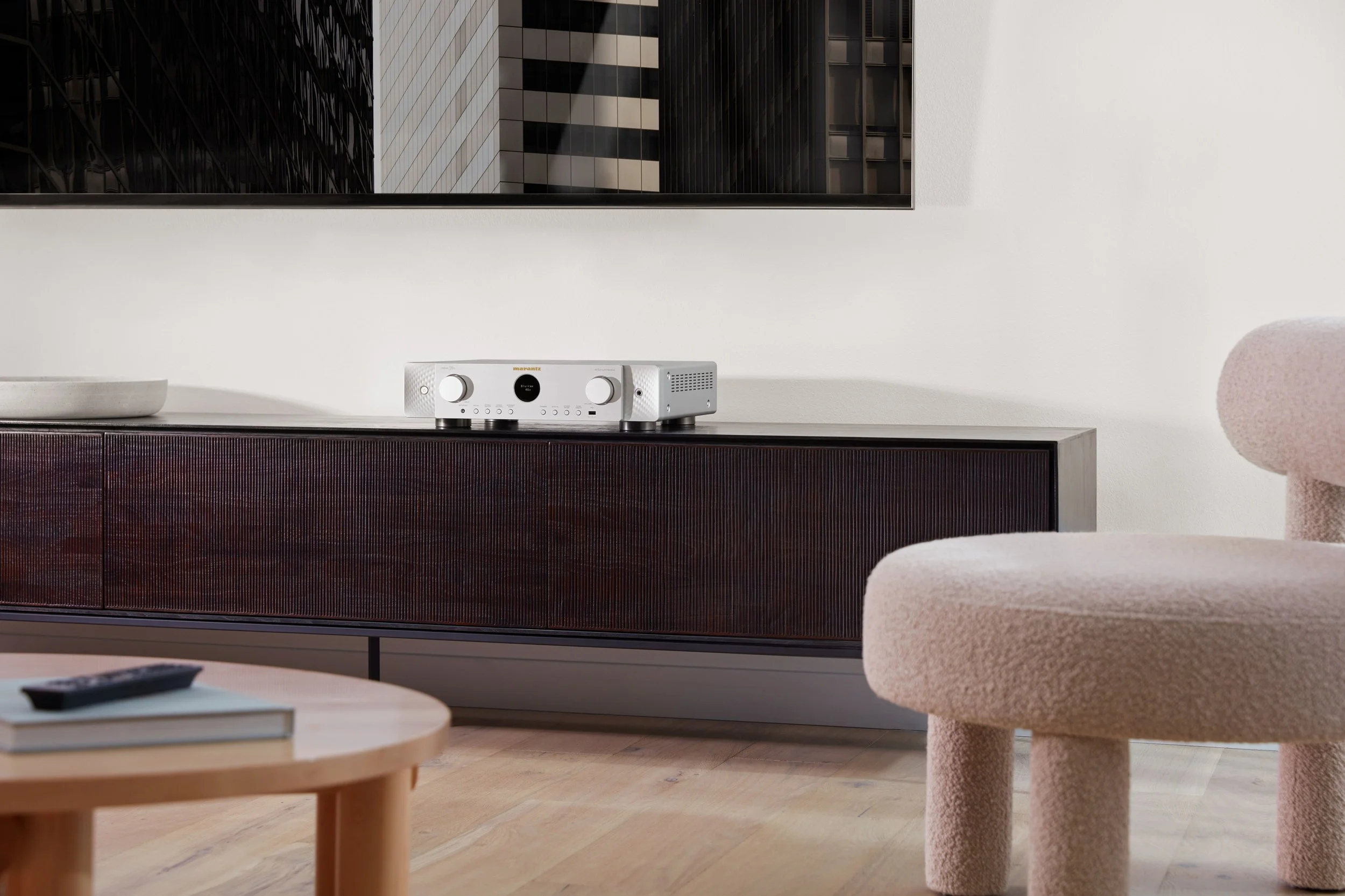
Cinema 70s (Silver)
The Marantz Cinema Series Philosophy
The Marantz Cinema Series was designed from the ground up to rethink what a modern AV receiver should be. It isn’t just a refresh of the previous Marantz range. It’s a complete reset in terms of design language, user experience, and sonic ambition.
Luxury Design, Built to Be Seen
One of the most immediate changes is visual. The Cinema Series moves away from traditional button-heavy AVRs and adopts a more refined, architectural aesthetic. Curved aluminium front panels, symmetrical layouts, subtle illumination, and the signature porthole display give these units a premium, considered look that feels closer to high-end Hi-Fi than traditional home cinema electronics.
Crucially, this design evolution isn’t just cosmetic. Chassis rigidity, internal shielding, vibration control, and thermal management all improve as you move up the range. This forms the foundation for lower noise floors, better channel separation, and more stable performance under load.

The Marantz Sound
At the heart of every Cinema model is the unmistakable Marantz sound signature: warm, rich, and emotionally engaging, yet controlled and detailed. Dialogue remains natural and intelligible, soundtracks feel expansive without becoming aggressive, and music playback retains a sense of flow and musicality that many AVRs struggle to deliver.
As you climb the Cinema range, improvements in power supply design, analogue stages, HDAM implementation, and channel separation allow that signature sound to scale naturally. The result is greater openness, improved image focus, stronger dynamics, and a more convincing sense of atmosphere — without losing the character that defines Marantz.

Modern User Experience
In 2026, performance alone isn’t enough. AVRs must be powerful and easy to live with.
The Cinema Series introduces a modern HD GUI (Graphical User Interface), a refined setup assistant, and logical system organisation that makes even complex speaker layouts approachable. Day-to-day use is simplified through Smart Select buttons, as well as app and web-based control.
Built-in HEOS (Home Entertainment Operating System) provides access to major streaming services (Tidal, Qobuz and Spotify Connect), multi-room audio, high-resolution playback, AirPlay 2, and voice control compatibility — allowing the Cinema Series to integrate naturally into modern homes rather than feeling like a standalone black box.
Designed to Grow With You
Perhaps most importantly, the Cinema Series is designed with longevity in mind. HDMI 2.1 connectivity, immersive audio formats, room calibration options, and flexible pre-out configurations ensure these AVRs can evolve alongside your system — whether you’re starting with a simple surround setup or planning a fully immersive Atmos installation.
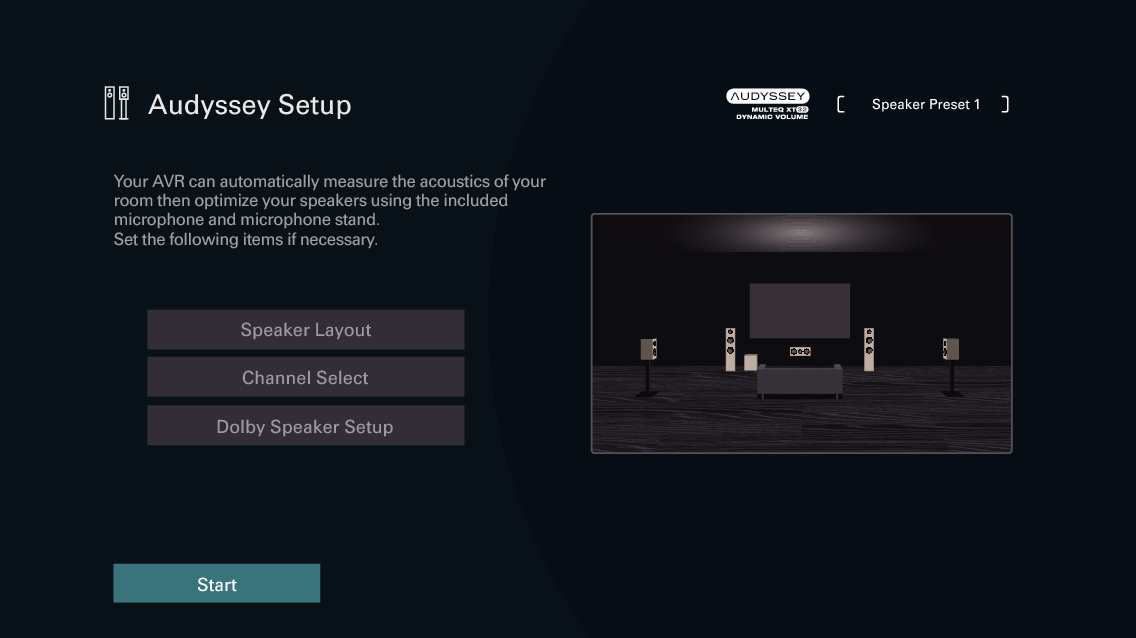
Easy to use setup Gui
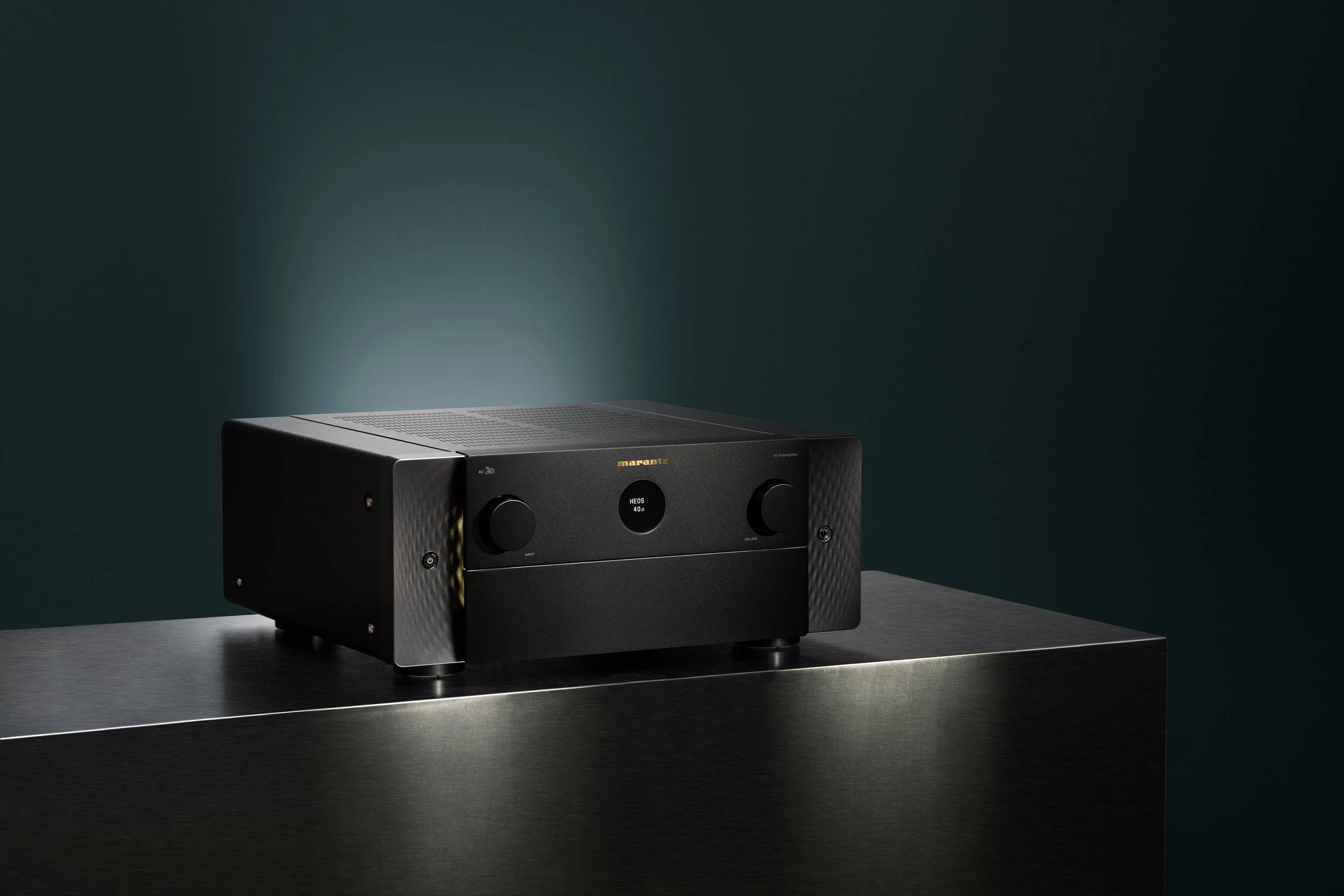
AV 20
Cinema AVR Range: From Entry to Flagship
With the Cinema Series philosophy established, the next question is simple. Which model is right for your room and your system goals? While every Cinema AVR carries the Marantz design language and signature sound, performance and capability scale clearly as you move up the range. Not just in power, but in processing, refinement, and the sense of realism you can achieve in a properly set up home theatre.
Cinema 70s (RRP £649): Slimline Design for Modern Living Spaces
The Cinema 70s is the perfect entry point for customers who want immersive sound and premium Marantz usability, but in a system designed to suit real homes.
It features 7 channels of onboard amplification, delivering 50W per channel (8Ω, 2ch driven), and supports modern surround formats including Dolby Atmos and DTS:X. Its slimline chassis makes it ideal for modern living rooms, TV cabinets with limited height, and smaller spaces where a full-size AVR isn’t practical.
Despite its size, the Cinema 70s still delivers a genuinely modern AV experience. HDMI 2.1 support, the Cinema Series HD GUI, and the full HEOS streaming ecosystem are all there. If you’re looking for a refined solution that comfortably outperforms a soundbar without taking over the room, this is where the Cinema range begins.
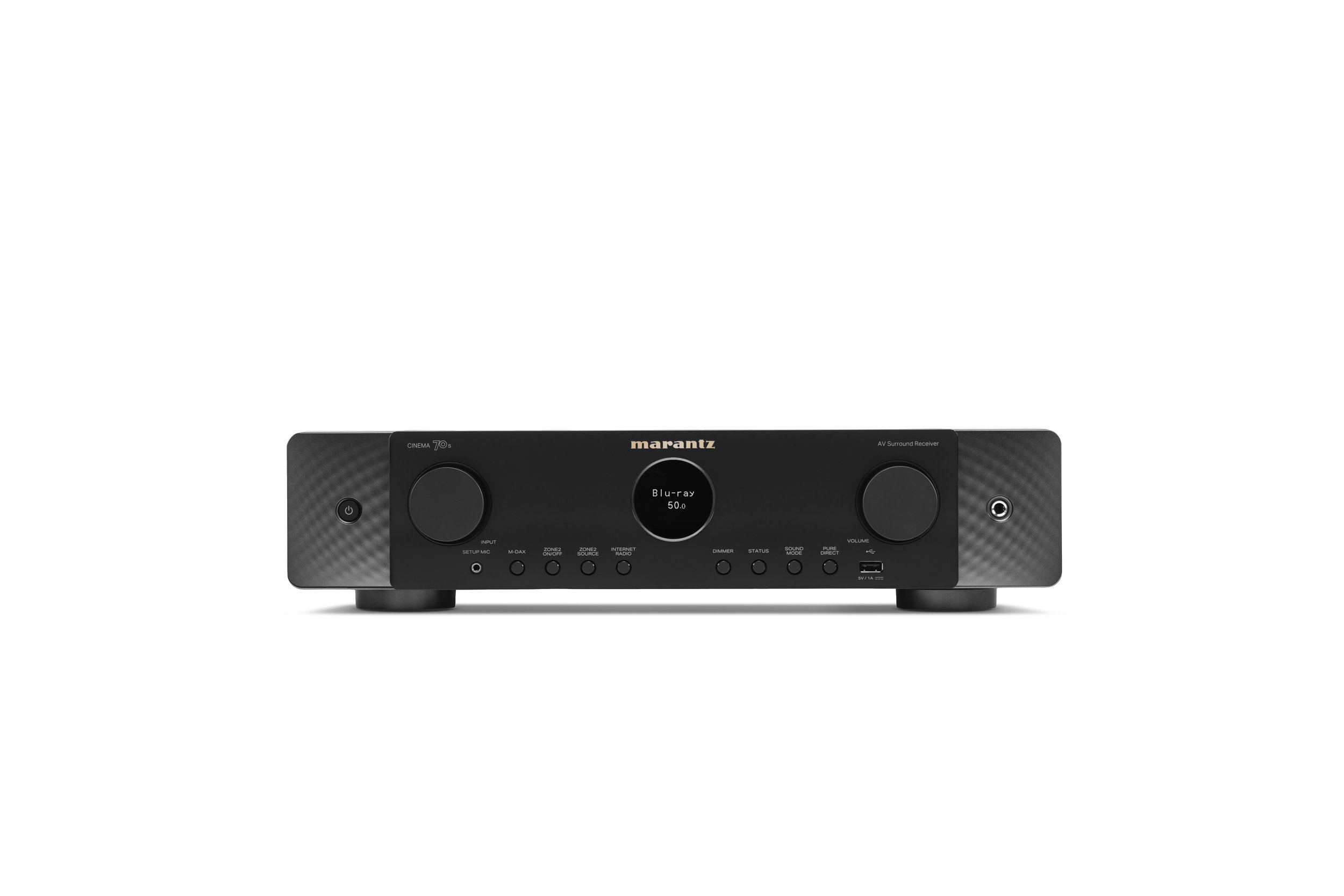
Cinema 70s
Cinema 60 (RRP £1,099): The First Serious Step Up
Moving up to the Cinema 60 brings a noticeable step forward in authority and flexibility. This is the model that starts to make sense for customers building a more traditional home cinema setup. Larger speakers, more demanding rooms, and systems that aren’t just built around the TV.
The Cinema 60 offers 7 channels of amplification, rated at 100W per channel (8Ω, 2ch driven), giving it the extra control and headroom needed for fuller-range speakers and larger rooms. It retains the same Cinema Series approach to usability with the HD GUI, guided setup, and HEOS integration, while offering a stronger foundation for larger 5.1 setups, entry Atmos systems, and living rooms where you want proper scale and weight.
It’s a great “do it once, do it properly” choice for customers wanting longevity without over-specifying.
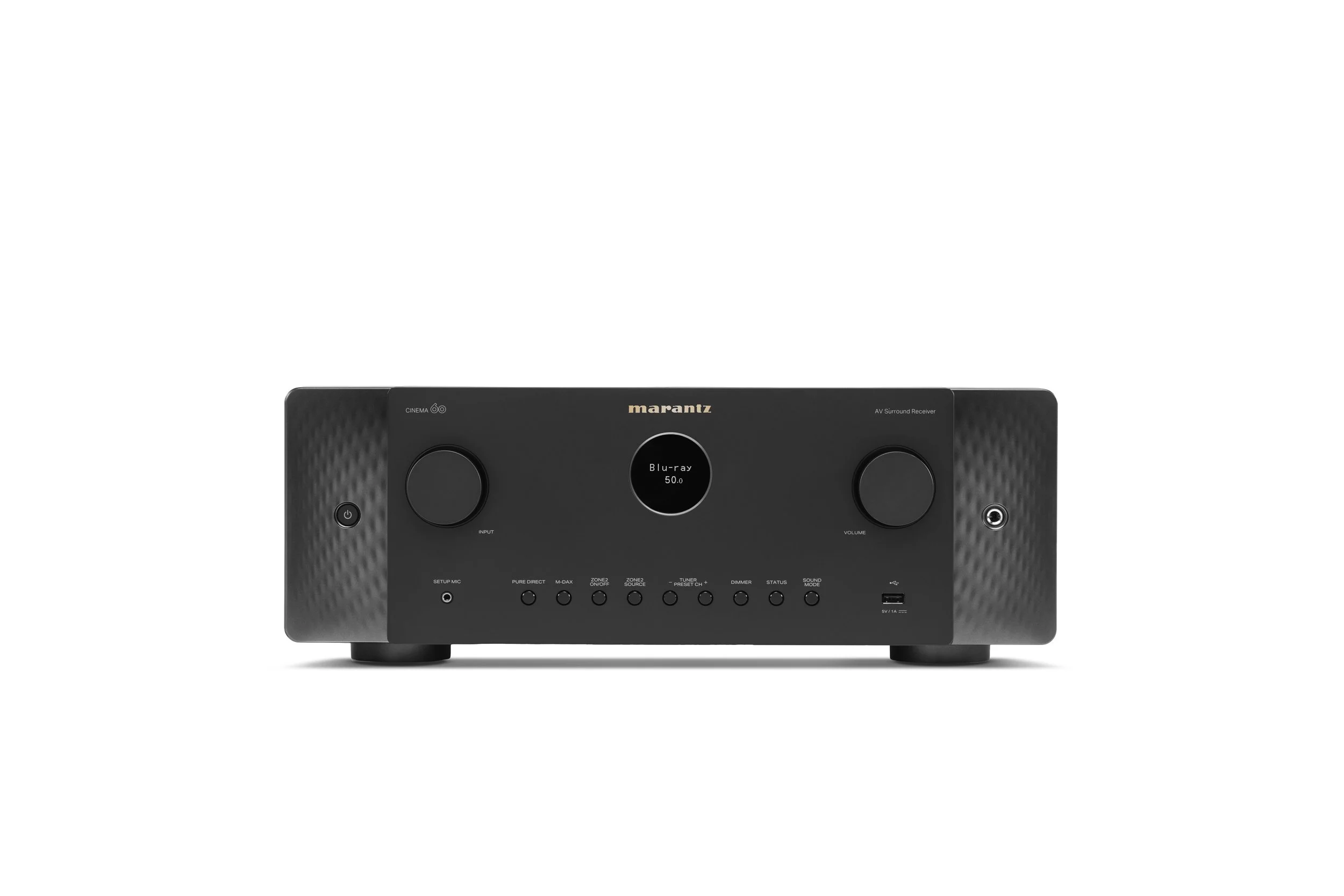
Cinema 60
Cinema 50 (RRP £1,499): Entering True Home Cinema Territory
The Cinema 50 is where the Cinema Series begins to feel like a serious home theatre engine. For customers stepping up from older AVRs, this is typically the model where the improvements aren’t subtle. Sound becomes larger, better controlled, and more convincing at higher listening levels.
With 9 channels of onboard amplification and 110W per channel (8Ω, 2ch driven), the Cinema 50 provides the power and scaling required for more ambitious speaker layouts. It suits mid-size to larger rooms, more demanding speaker packages, and customers who want headroom for the future.
This is the point where a home system starts feeling less like “TV audio” and more like cinema at home. Not only because of output capability, but because the AVR has the stability and control to hold everything together cleanly when the system gets busy.
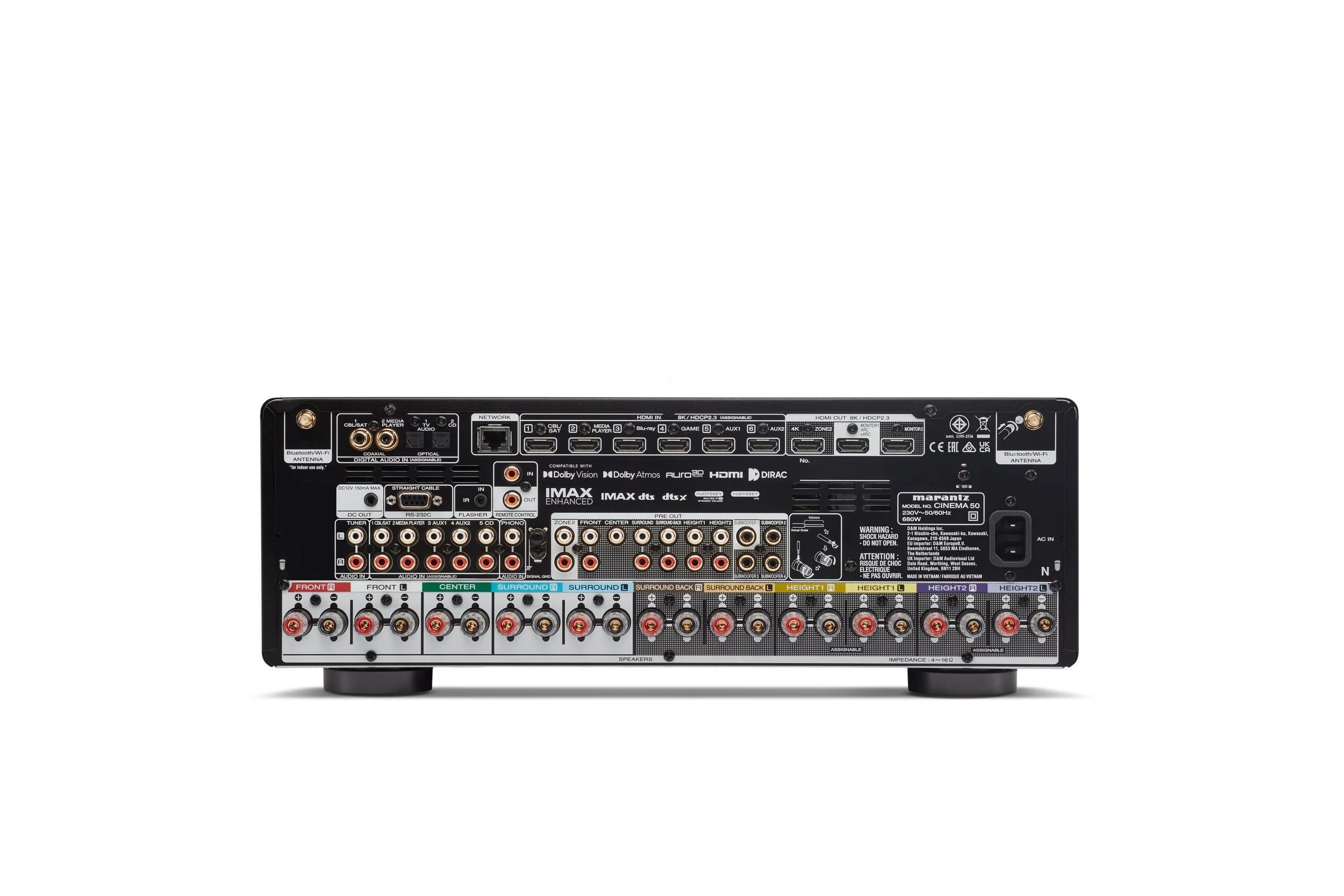
Cinema 50 (Rear)
Cinema 40 (RRP £1,999): The Performance Sweet Spot
For many enthusiasts, the Cinema 40 is the standout model in the range. A true sweet spot where the Cinema Series moves beyond features and into serious internal engineering.
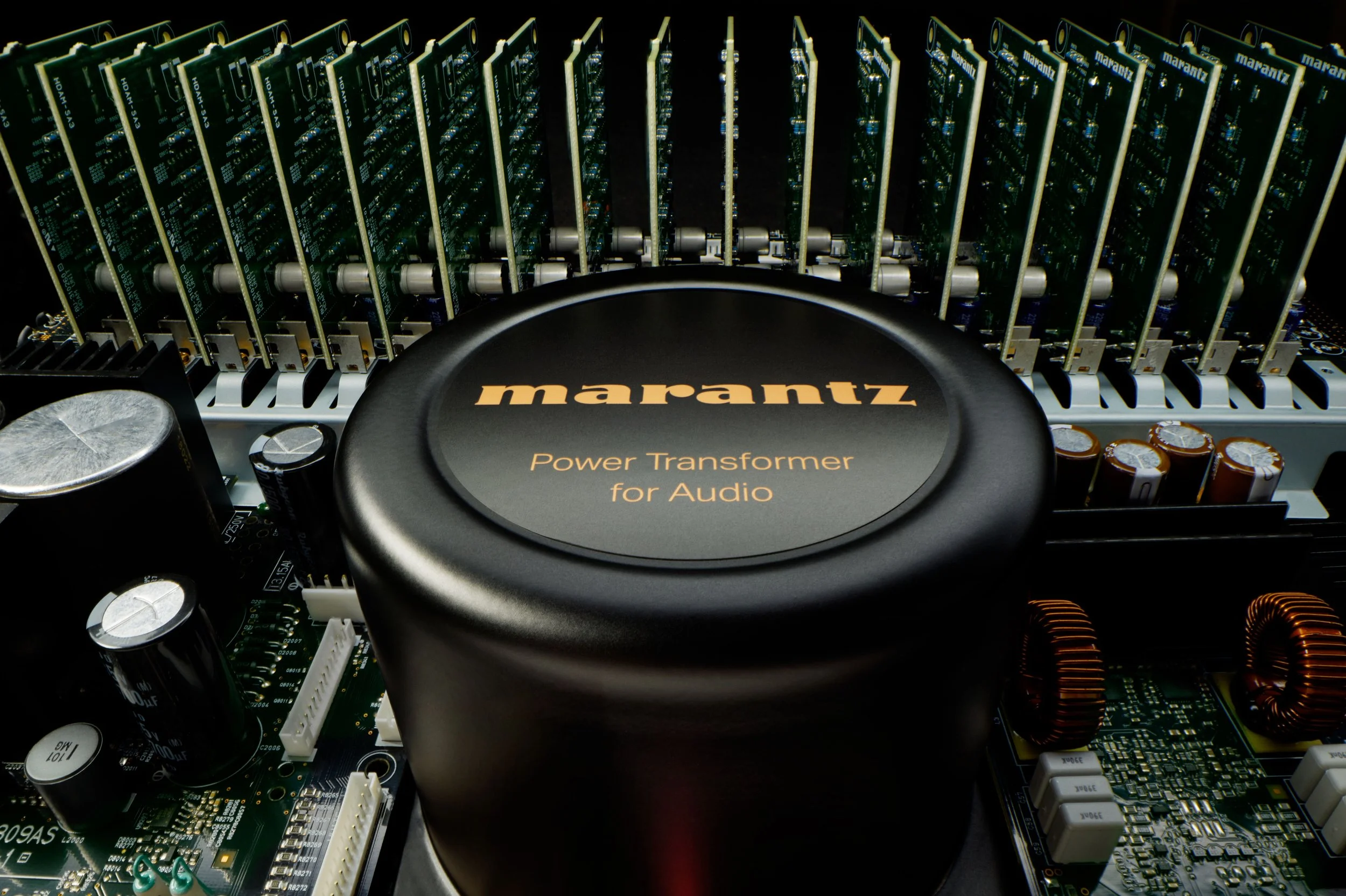
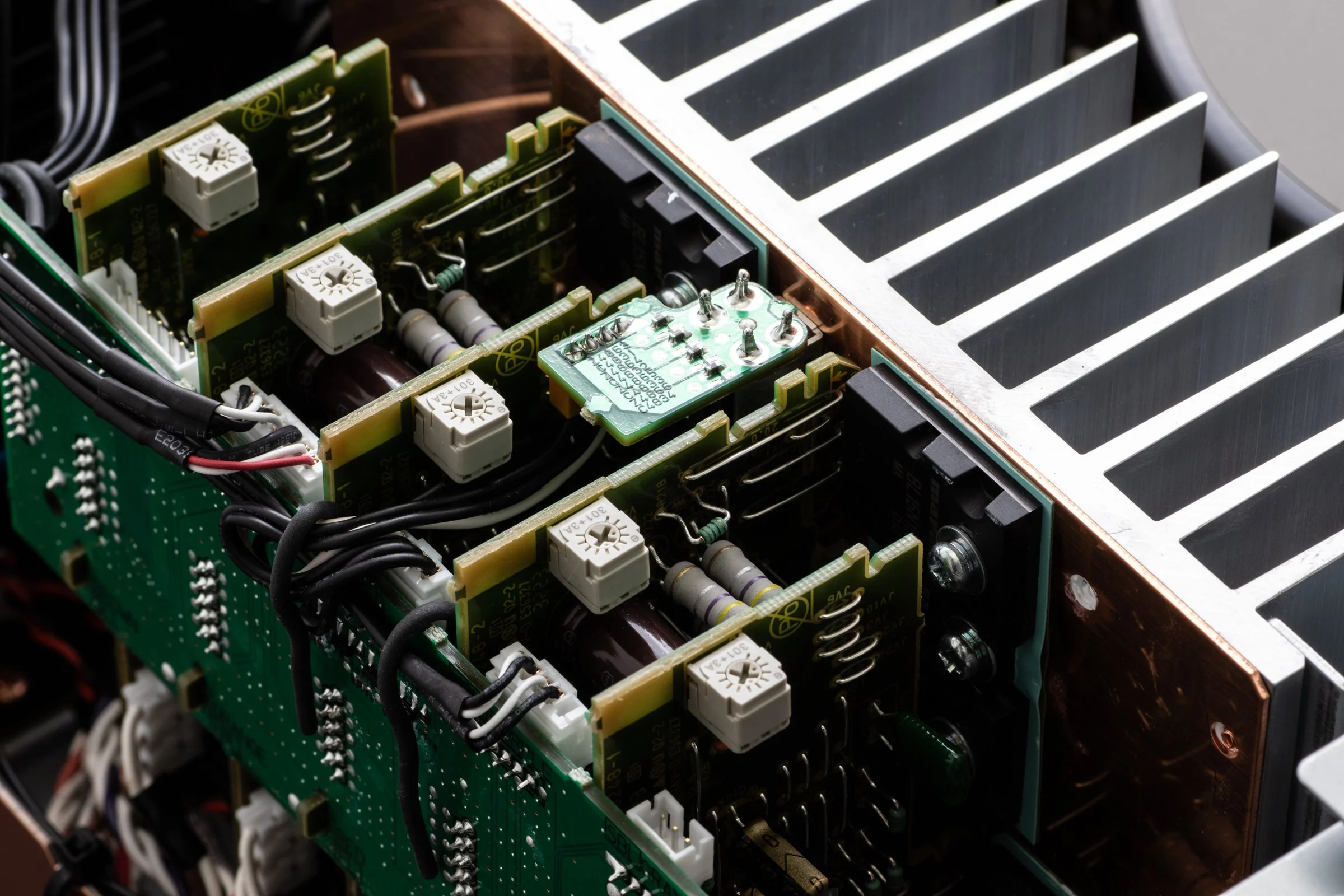
A key difference is how it’s built. Instead of shared amplifier stages, the Cinema 40 uses nine separate amplifier boards, each dedicated to its own channel and mounted on a substantial aluminium heatsink. That physical separation improves thermal stability and helps reduce unwanted interaction between channels, especially valuable in Dolby Atmos playback where multiple channels are active at once.
At its core is the Griffin Lite XP processor, providing the computing headroom needed for modern immersive decoding, system management, and stable multi-channel control. This matters more than ever in 2026, as room correction, bass management and high channel counts place increasing demands on processing power.
Marantz also places heavy emphasis on analogue performance. The Cinema 40 benefits from the brand’s proprietary HDAM technology, discrete modules used in place of typical integrated op-amps, designed to increase speed, reduce noise, and preserve musical realism. Positioned at the end of the pre-amp stage, this helps maintain signal integrity as the system transitions into amplification.
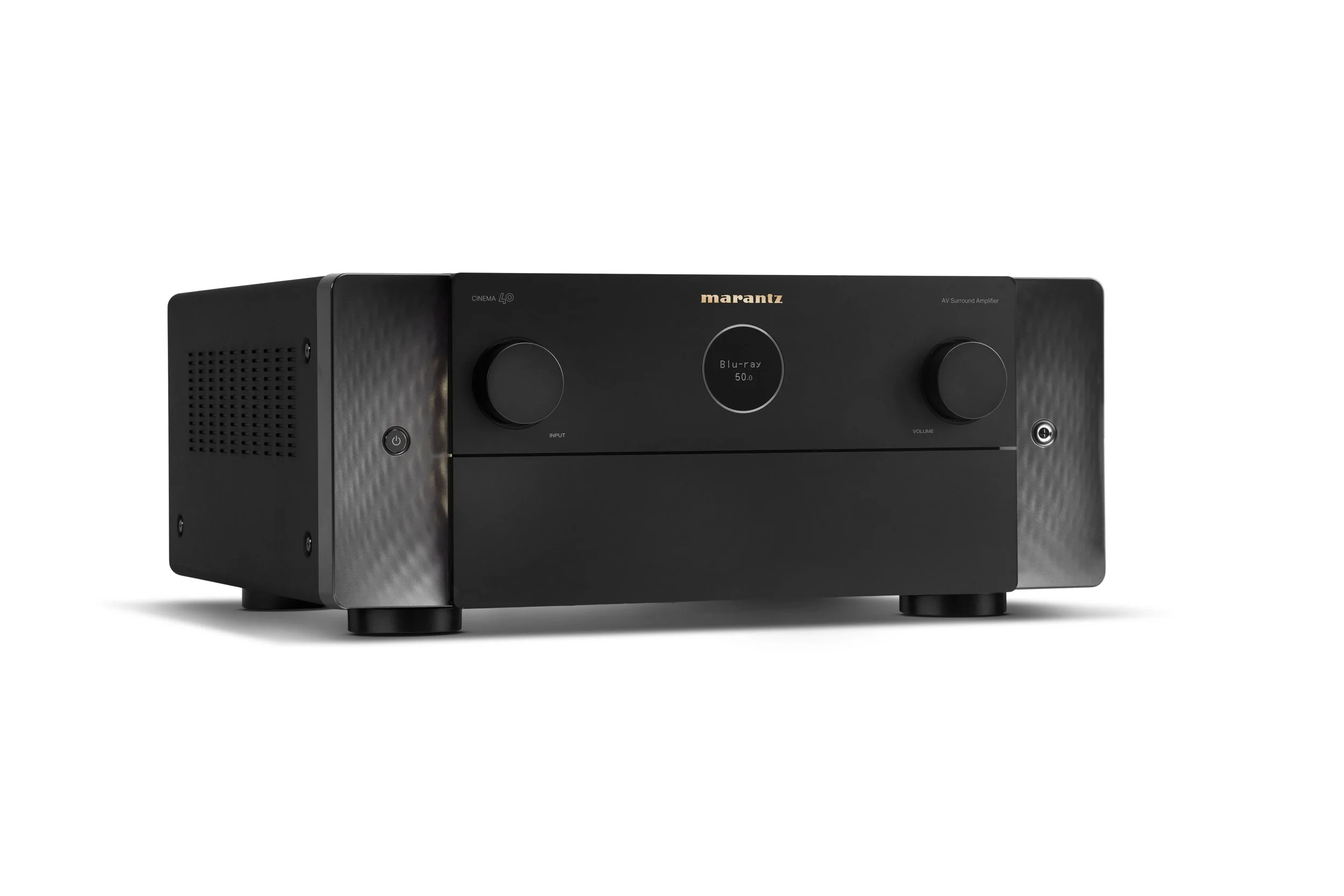
Cinema 40
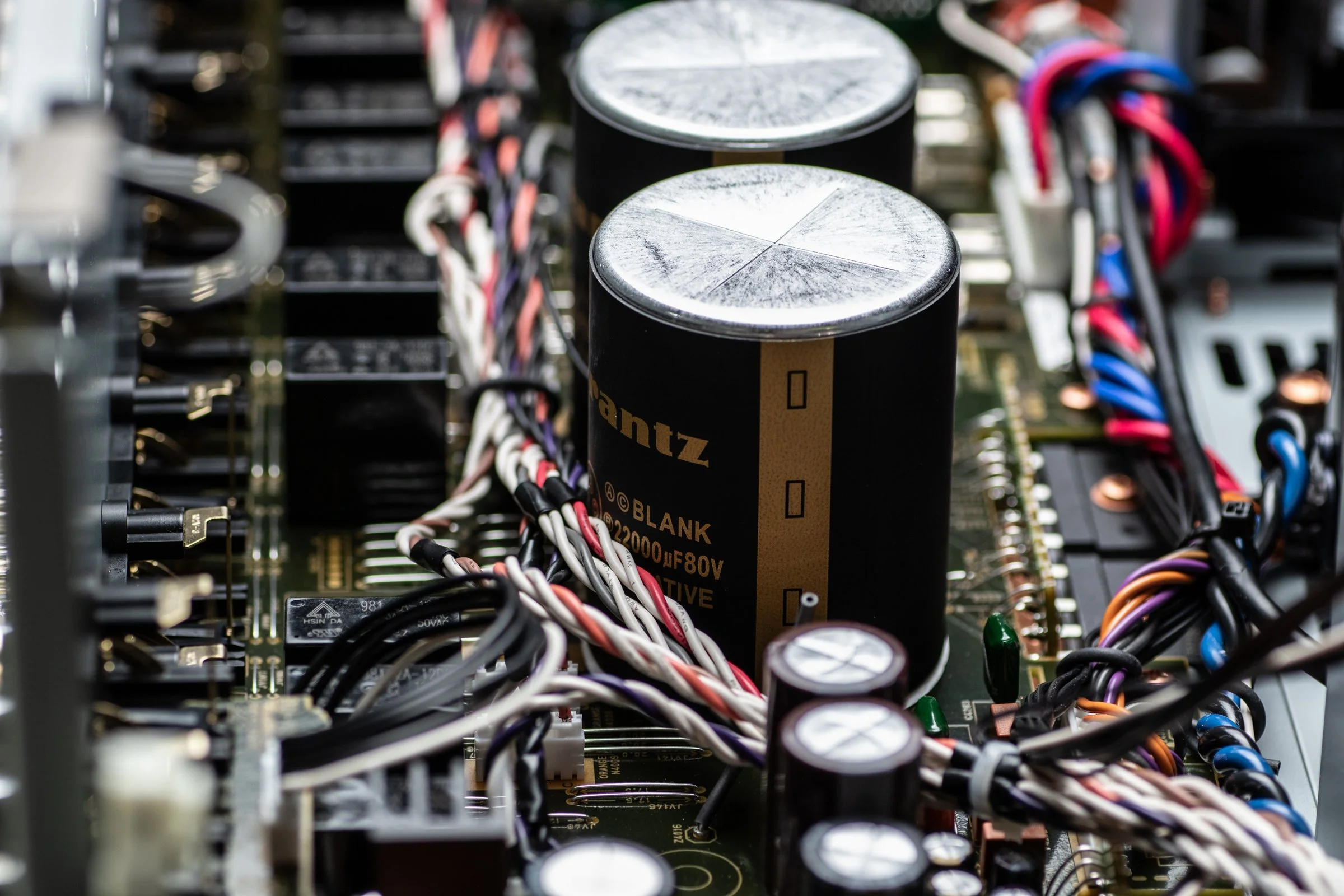
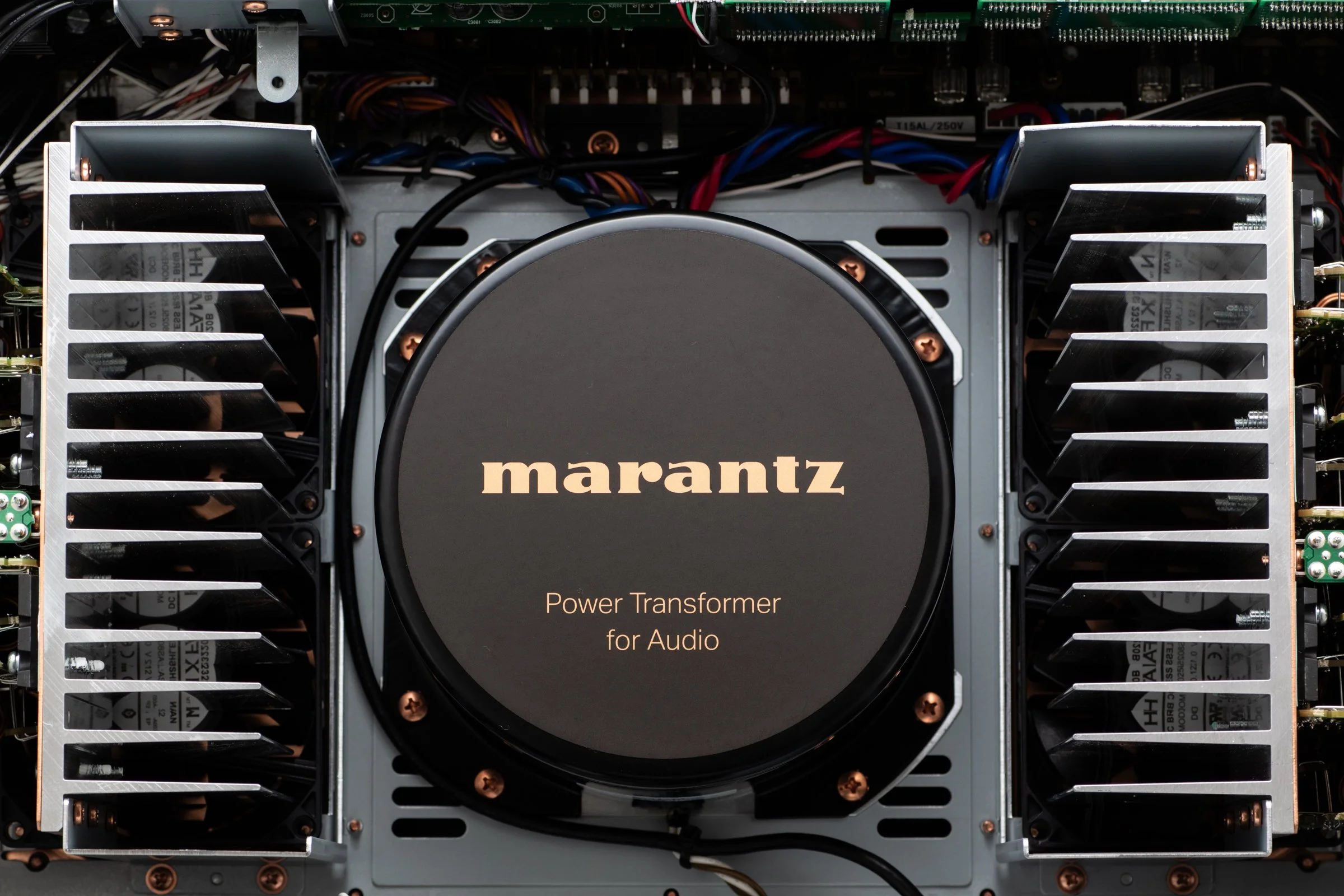
Power supply design is another cornerstone. Cinema 40 features Marantz’ “Made for Audio” power transformer, engineered for fast current delivery and accurate impulse response. In real listening terms this supports cleaner transients, stronger bass control, and better composure during demanding scenes. It also aligns with Marantz’ aim of minimising distortion even under multi-channel load.
It is capable of supporting 11.4 channels of processing and has 9-channels of amplification. Rated at 125W per channel (2 channels driven) and backed by the brand’s 70% power guarantee, the Cinema 40 is designed to deliver convincing real-world output too. Effectively around 87.5W per channel even when all channels are driven. Combined with its Made-in-Japan build quality and the voicing of Marantz Sound Master Ogata-san, the result is a receiver that sounds more open, more dynamic, and more refined than its position in the range might suggest.
The Cinema 40 will handle mid to highly complex home theatre systems, driving a wide range of complex speakers to a very good standard, most users will hear and feel the scope of this unit and not feel the need to go up another notch.
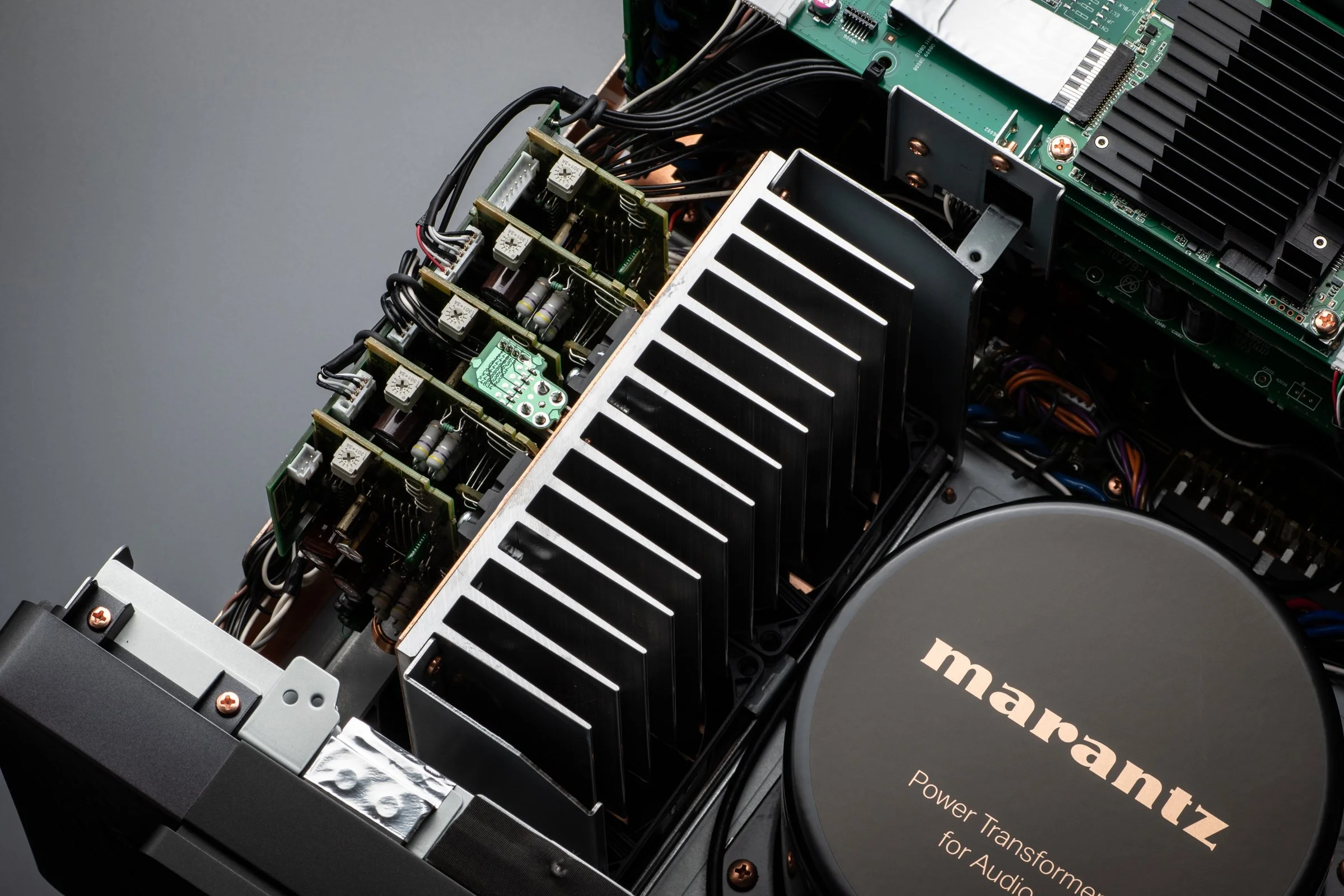
Power Amlification

MARANTZ BLOCK CAPACITORS
Cinema 30 (RRP £3,499): The Flagship AVR
At the top of the AVR range sits the Cinema 30. Marantz’ flagship receiver and the model designed to deliver the closest thing to separates-level performance without stepping into a multi-box system.
While Cinema 40 is already a serious piece of engineering, Cinema 30 takes a meaningful leap in the areas that directly affect sound quality. Power supply design, internal isolation, component quality, and noise control.
At the heart of Cinema 30 is an original Marantz shielded toroidal transformer. Larger in capacity and better protected against electrical noise than the EI transformer used in Cinema 40. This improved shielding reduces the chance of noise leaking into sensitive processing and analogue stages, and it provides the current delivery needed to maintain composure when the system becomes demanding.
Cinema 30 also benefits from newly developed power supply capacitors, upgraded power transistors, and improved power amp shielding, all aimed at lowering distortion and improving control under real multi-channel load. Thermal management is enhanced too, with copper internal plates for heat dissipation, alongside a copper-plated outer chassis layer and improved vibration-resistant feet. All helping to stabilise performance and reduce mechanical interference.
TOROIDAL TRANSFORMER
From a signal perspective, Cinema 30 steps up with a revised digital stage including an ESS DAC board, and a higher-spec analogue section featuring HDAM-SA2 modules. These are designed to reduce background noise and improve amplification speed and accuracy. This contributes to the Cinema 30’s more effortless presentation, stronger image focus, and increased dynamic expression.
POWER AMPLIFIER MODULES
With 13.4-channel processing and 11 channels of onboard amplification, Cinema 30 is built not just to power ambitious immersive speaker layouts, but to do so with the kind of refinement and authority normally associated with processor-and-power-amp separates.
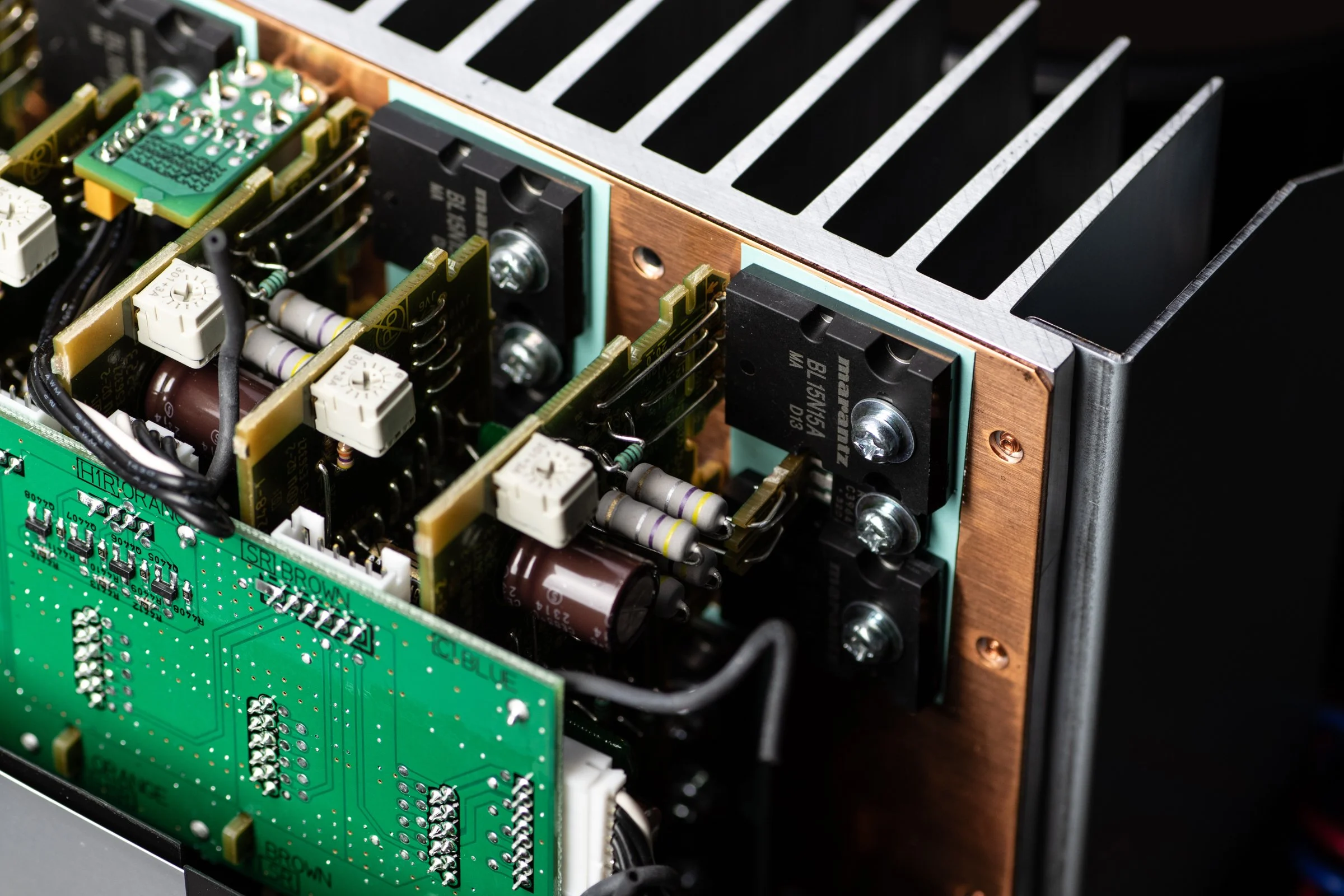
MARANTZ TRANSISTORS
In real-world use, the Cinema 30 has become our go-to AVR in this price bracket. It’s one of the rare receivers that can genuinely bring more challenging speakers to life with authority and control while still sounding refined and musical. It delivers a presentation that feels much like a dedicated Hi-Fi amplifier, without needing to add an external stereo power amp just to unlock performance from the front left and right channels. As a true one-box solution, that is immensely impressive and a must-hear for anyone who wants great results with both music and films.
End of Part 1: The Limits of One-Box Performance
That’s where we’ll pause for now. From the slimline Cinema 70s through to the flagship Cinema 30, Marantz has created a range of AVRs that scale in a genuinely meaningful way — not just in features, but in authority, refinement, and overall presentation.
For many systems, one of these receivers will be all you ever need. But there is a point where even the best AVR architecture begins to give way to something more specialised.
In the next instalment, we’ll step beyond the all-in-one approach and explore Marantz’s processor and power amplifier solutions — where system flexibility, channel scalability, and outright performance move into a different league altogether.
Thanks for reading.
Dan, Gareth & Rishi - Audio T Reading
If you have any questions about any of the equipment featured in this article, or any other hi-fi or home cinema enquiries, be sure to Contact Us
If you’ve enjoyed this, why not go ahead and read some more of our other blogs, and be sure to follow us on our social media channels below…