

From Celef to ProAc: The Story Behind a Great British Loudspeaker Name
/This month, your favourite Hi-Fi enthusiast and all-round music nerd is back once again. This time, I’m hot on the trail of one of our industry’s oldest, most historic and most beloved loudspeaker brands: ProAc.
In this blog, we’ll take a look at the history behind the company, explore how Celef eventually became ProAc, look at where the brand sits today, and, most importantly, spend some proper listening time with the rather lovely ProAc Response D20R loudspeakers in their stunning Liquid Amber finish.
So, without further ado, kettle on, volume up, and let’s dive into the story of ProAc.
Why ProAc?
Over the past few years, I’ve had the opportunity to hear and enjoy a great many loudspeaker brands, particularly through my work at Audio T Cardiff and my visits to The Bristol Hi-Fi Show.
One thing has always stood out to me: British-manufactured loudspeakers often have a certain character that really appeals to my ears. There is something about the way many of them balance musicality, timing, detail and long-term listenability that just seems to strike a chord with me.
One brand that has consistently impressed me is ProAc. Interestingly, ProAc is actually an abbreviation of “Professional Acoustics”, which is a little-known fact among many Hi-Fi enthusiasts. Although, I have to admit, “ProAc” certainly rolls off the tongue a little easier.
What Led Me to Write This Blog?
At this year’s Bristol Hi-Fi Show, I had the pleasure of meeting David Johnston, our representative from ProAc. We spent some time discussing the current loudspeaker range and listening to the newly released DB1R stand-mounted speakers from the renowned Response series.
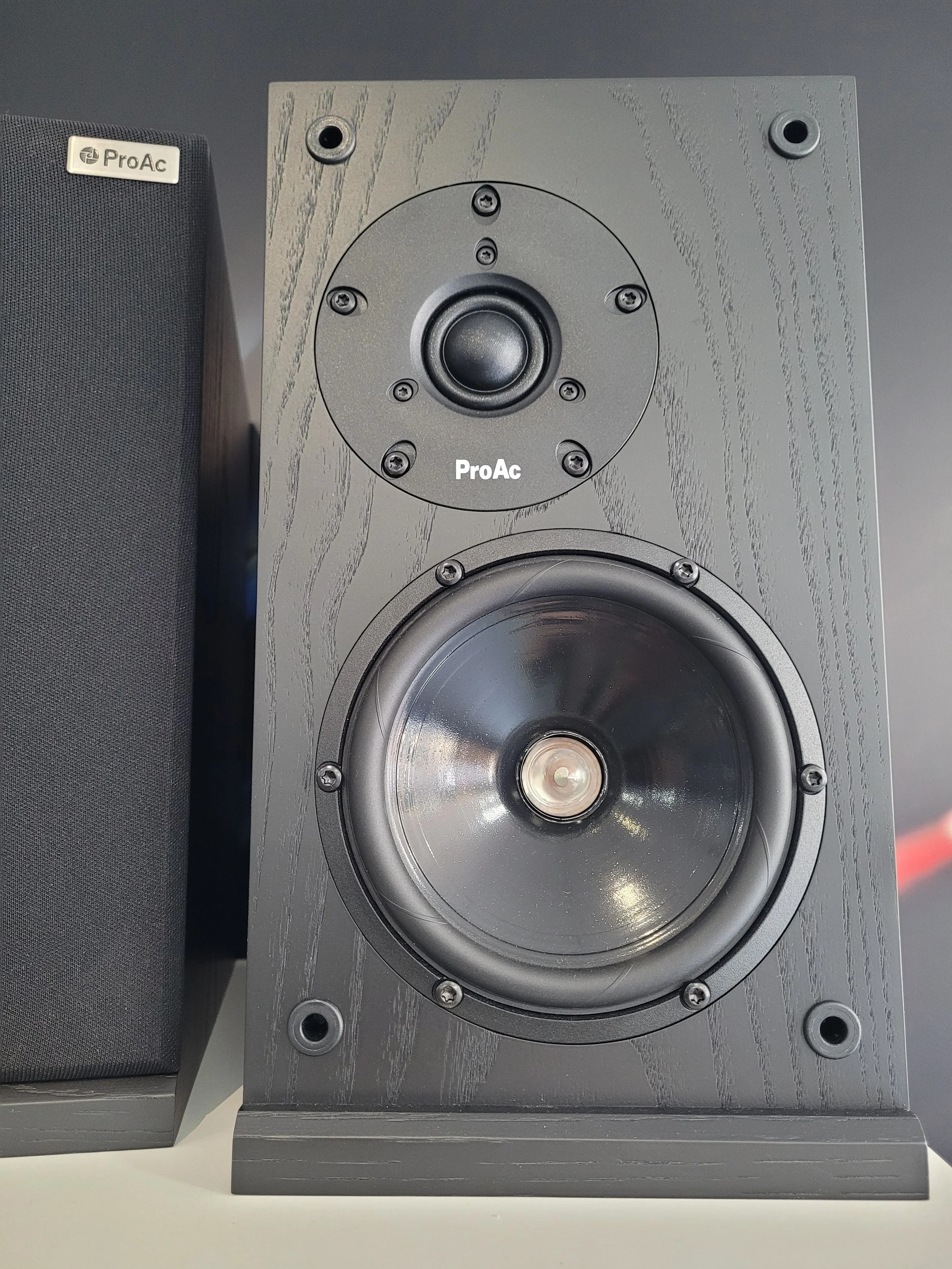
PROAC DB1 D BLACK FINISH
I have to say, these compact speakers truly lived up to the phrase “small appearance, large presence”. Despite their modest size, they delivered a remarkably expansive and engaging performance, with a sense of scale that really caught me off guard.
Shortly after the show, we placed an order for a pair of ProAc Response D20R floorstanding loudspeakers. Having these fantastic speakers in the store gave me the perfect opportunity to dive deeper into this historic loudspeaker manufacturer and learn more about what makes ProAc so special.
When the D20R arrived in the beautiful Liquid Amber finish, I knew it was the perfect time to write about both the speakers themselves and the company behind them.
Before we get into how they sound, however, let’s first take a look at the fascinating history of Celef and ProAc.
The Origins of Celef
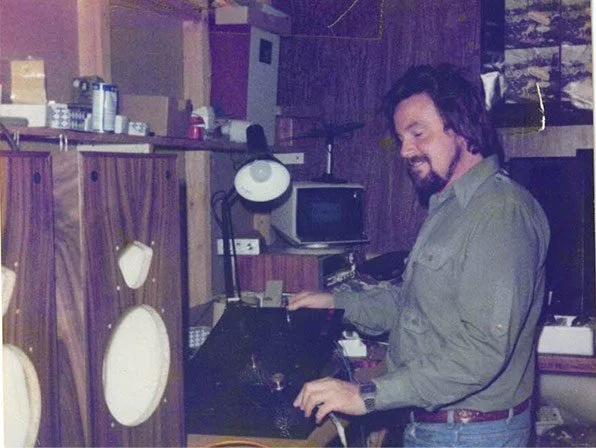
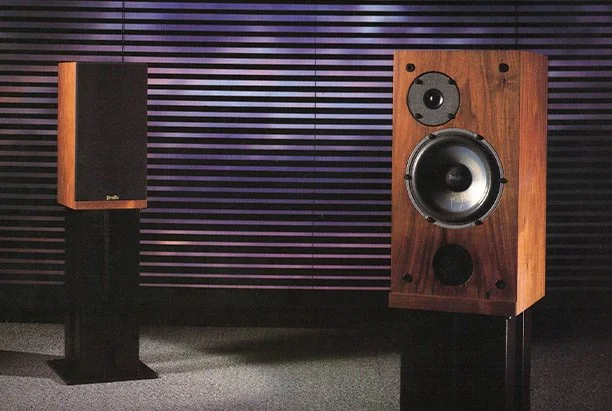
Celef was very much the brainchild of Stewart Tyler. As a young man, Stewart’s goal was simple but ambitious: to build a compact loudspeaker with deep bass extension, smooth and extended high frequencies, and a clear, uncoloured midrange.
That might sound straightforward enough, but anyone who has spent time around loudspeaker design will know that getting all of those qualities to work together is anything but easy.
Developing convincing bass performance while minimising cabinet colouration proved to be Stewart’s greatest challenge. He chose a two-way design because many three-way loudspeakers of the era suffered from phasing and integration issues. His chosen drive units consisted of an 8-inch plastic-cone bass/midrange driver and a 1¼-inch Melinex dome tweeter with phase correction.
Using an anechoic chamber for measurements, while also relying heavily on his own ears, Stewart developed a sophisticated nine-element crossover network. This dramatically reduced the break-up modes characteristic of the otherwise reliable 8-inch plastic cone driver.



Tackling Cabinet Colouration
To further combat cabinet colouration, Stewart experimented with extensive internal bracing. While this altered the frequency of the resonances, it did not eliminate them.
Eventually, he discovered that attaching bitumen-impregnated fibreboard to the interior cabinet walls effectively shifted these colourations into lower frequencies, where they were far less audible.
The most difficult challenge remained the bass system. A sealed enclosure provided excellent control but sounded somewhat artificial. Traditional reflex loading offered greater efficiency and a more natural character, but it struggled to control bass driver excursion at higher volumes.
After extensive experimentation, Stewart developed a unique solution: loading the reflex port with multiple small tubes, each contributing friction at high volume levels while remaining unobtrusive at lower listening levels.
The result was a revelation. The speakers sounded natural, controlled and remarkably free from colouration, while also delivering impressive bass performance and improved power handling.
Following further listening tests, Stewart eventually replaced the original tweeter with a 1-inch soft-fabric dome unit that offered even greater high-frequency performance.
Finally satisfied, he demonstrated the loudspeakers at the Hi-Fi store where he had purchased much of his own equipment. The staff were so impressed that the manager immediately offered to sell them, provided Stewart could build more.
Three additional pairs were delivered shortly afterwards.
All three sold within a single day.
Celef Audio was born.
From Celef to ProAc
The name “Celef” originated from the drive units used in those first speakers: a Celestion tweeter and a KEF bass driver. The Celef name quickly became synonymous with quality, accuracy and spacious soundstaging at a time when such qualities were rarely found together.
As demand increased, Stewart expanded the family business. His father took responsibility for production, while his mother oversaw quality control. Their dedication to consistency and craftsmanship became a cornerstone of the company’s growing reputation.
However, Stewart wanted to push performance even further. The turning point came in 1979 when he discovered ATC’s advanced bass and midrange drive units. Their performance was extraordinary, but so was their price.
Recognising that these premium loudspeakers represented something beyond the Celef range, Stewart established a new company: ProAc, short for Professional Acoustics.
Designed for both professional studio environments and discerning home listeners, ProAc’s first loudspeaker was the Studio Three, a three-way design that was quickly acclaimed as one of the finest box loudspeakers available.
As they say, the rest is history.
The ProAc Response D20R
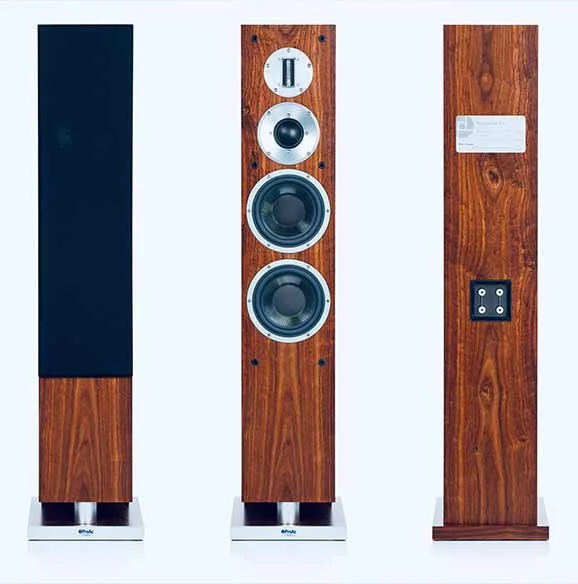
Moving into the present day, ProAc has produced some of the most respected domestic loudspeakers in Hi-Fi history, including the legendary Tablet series and the highly regarded Response range.
The model I’m focusing on today is the beautiful ProAc Response D20R in Liquid Amber.
The Response D20R sits in that sweet spot where serious performance, real-world room friendliness and proper musical enjoyment all come together. It is a two-way floorstanding loudspeaker, but as I found out during my listening, it certainly doesn’t sound small or restrained.
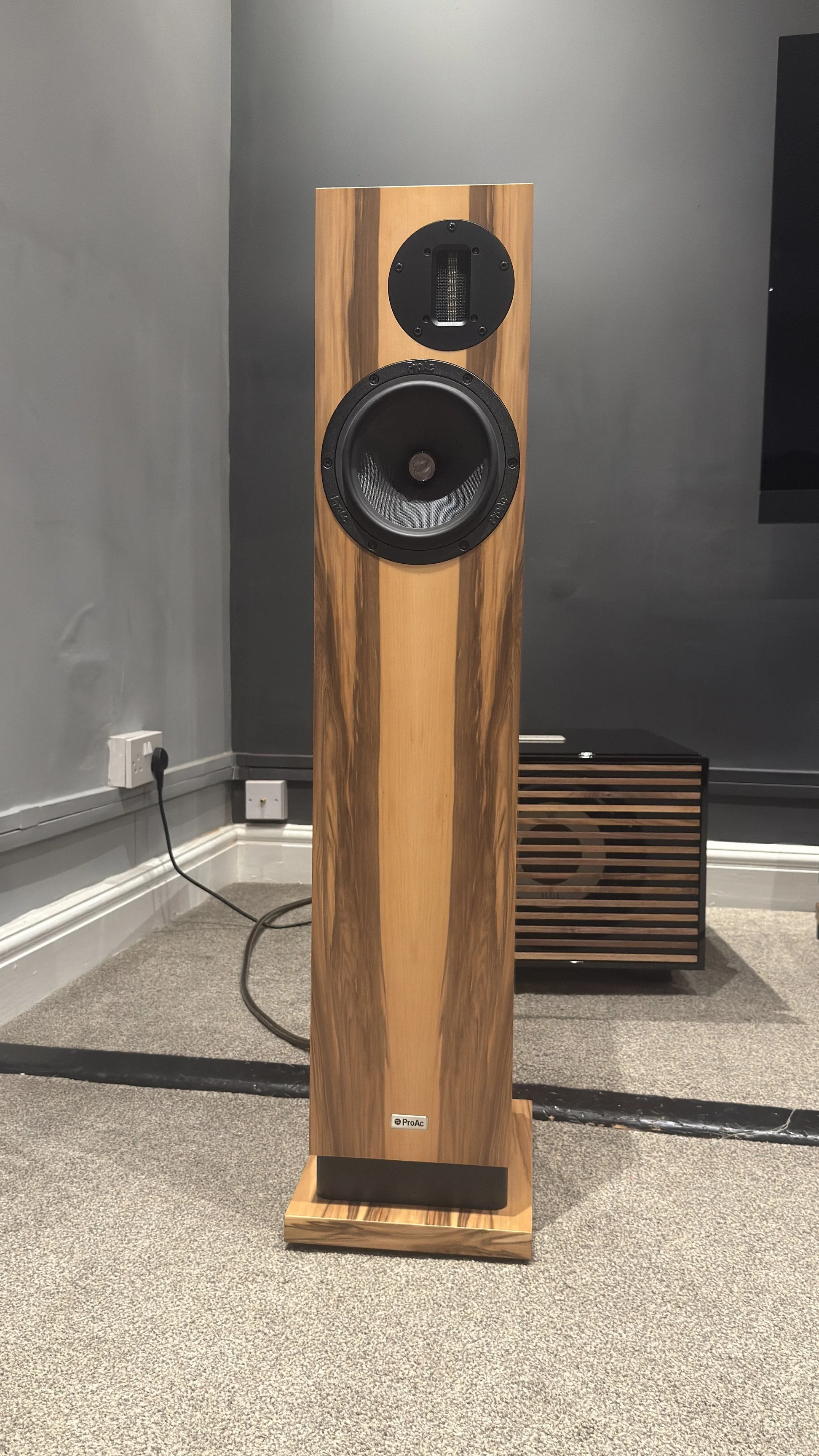
proac d20r liquid amber
Specifications
Nominal Impedance:
8 Ohms
Recommended Amplifier Power:
20–180 Watts
Frequency Response:
28Hz–33kHz
Sensitivity:
88.5dB, 1 Watt at 1 metre
Bass/Midrange Driver:
ProAc 165mm glass-fibre weave cone driver, featuring an Excel magnet system and acrylic damping phase plug.
D20D Tweeter Option:
25mm silk-dome tweeter with air cooling and internal damping.
D20R Tweeter Option:
ProAc ribbon tweeter featuring a ribbon lighter than a human hair, rear-chamber damping and Alnico magnet assembly.
Crossover:
Premium components mounted on a dedicated circuit board, with multi-strand oxygen-free copper cabling throughout. The speakers also support bi-wiring and bi-amplification.
The System Used for Listening
Before discussing the speakers in detail, I should explain a few changes I had to make to my usual listening setup.
Some of you may notice from the photographs that this is not my music room at home. Due to the size of the D20R, getting them into my own listening space was not practical. Instead, I set them up in our large demonstration room while preparing for our ‘Built For Better Sound’ event.
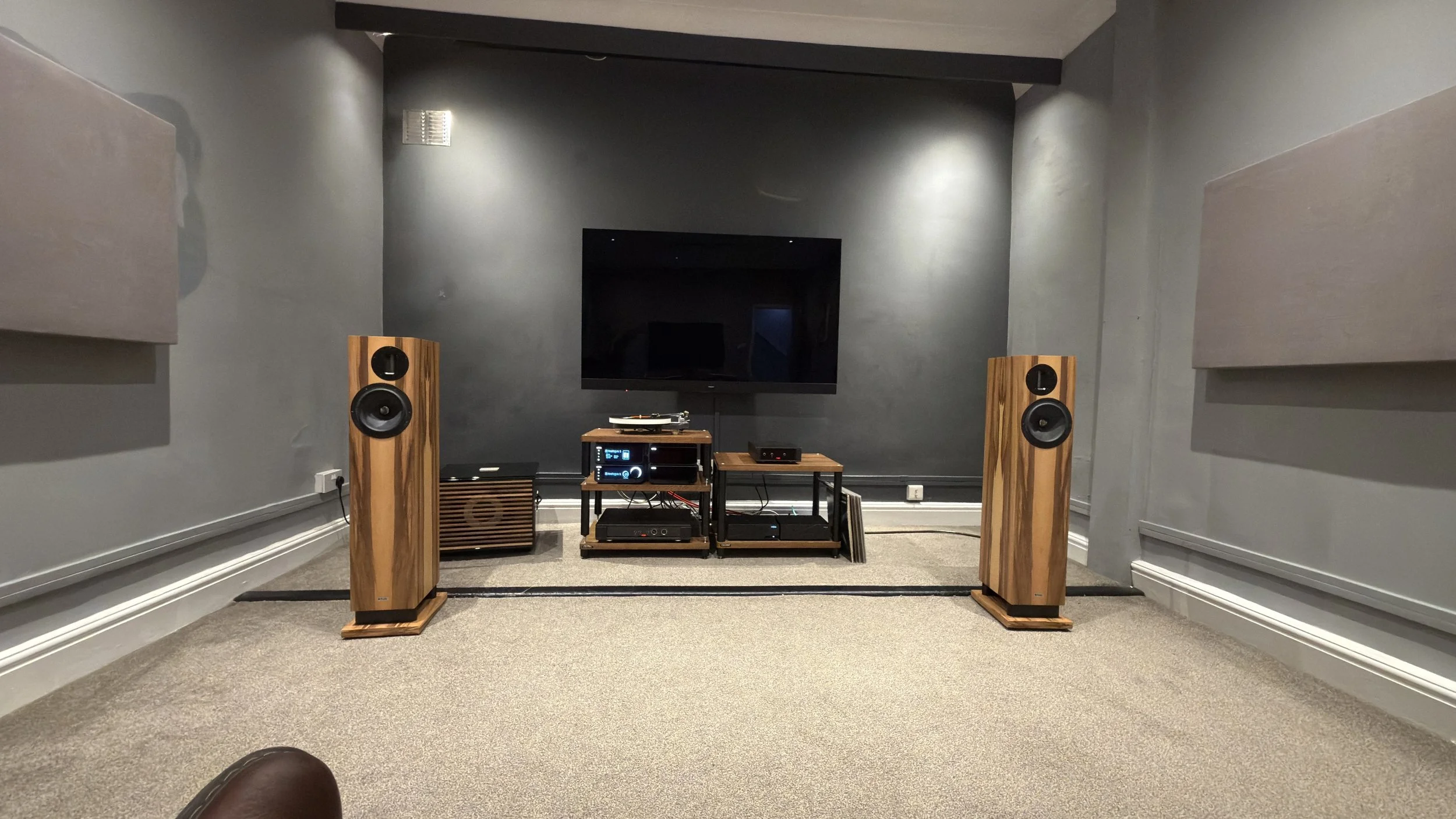
Demonstration room at Audio t cardiff
In many ways, this allowed me to create something of a dream Hi-Fi system while still retaining some familiar elements from my own setup.
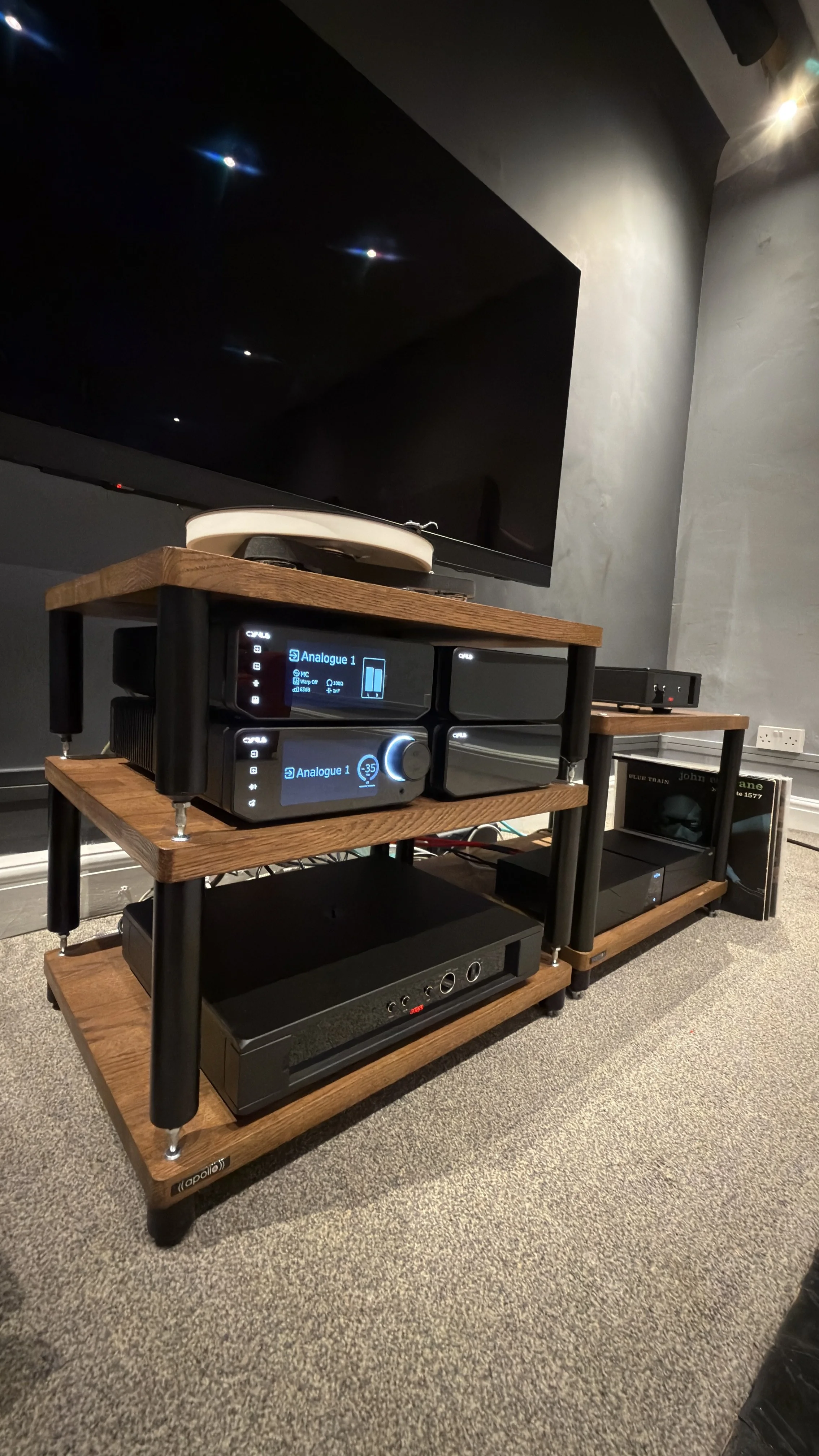
system setup on the apollo rack
Source
Turntable:
Rega Naia
Cartridge:
Dynavector 20X2A Low Output Moving Coil
Phono Stage
Amplification
Loudspeakers
ProAc Response D20R in Liquid Amber finish
Test Music
Rory Gallagher
Album: Rory Gallagher
50th Anniversary Edition
Track: Laundromat
Clutch
Album: Earth Rocker
2026 Remaster
Track: The Face
Incubus
Album: If Not Now, When?
Track: Thieves
The Listening
Now for my favourite part of any blog: listening to the equipment and, of course, the coffee.
This time, I didn’t make the coffee myself. Instead, it came from our friends just up the road, Mec Coffee. (Yes, I cheated, but their coffee is excellent and well worth trying). But then again, you might already be aware from our very popular Coffee & Vinyl Nights we’ve hosted there in the past.
With the Hi-Fi warmed up and coffee in hand, it was time to begin.
Rory Gallagher – Laundromat
First up on the magnificent Rega Naia was Rory Gallagher’s classic track Laundromat.
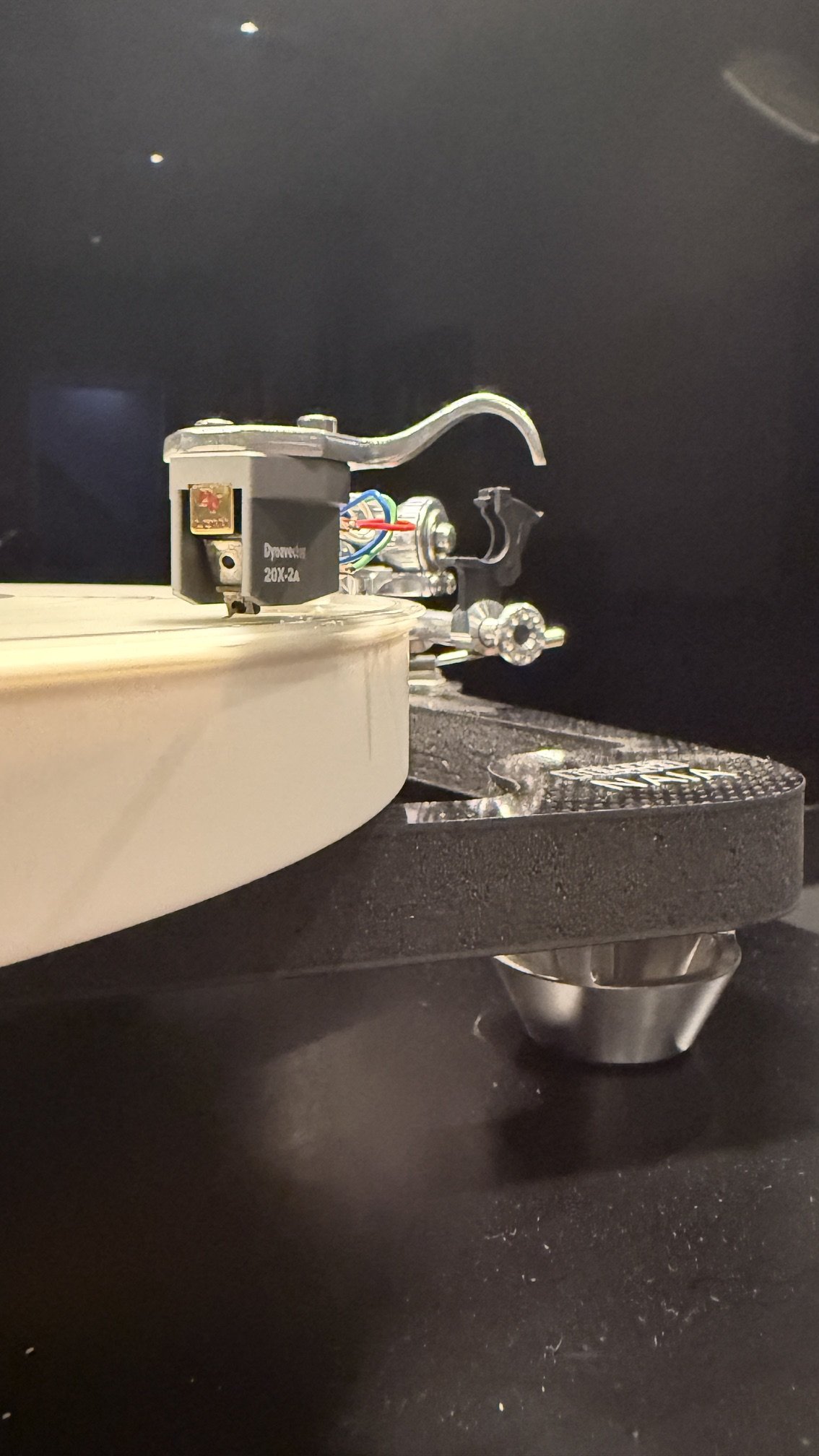
rega naia with dynavector 20x2a fitted
This was the track that impressed me most. As many Hi-Fi fans will tell you, when you know a piece of music intimately, you start to notice every little detail. You know where the guitar should sit, how the vocal should feel, where the drums should land, and whether the whole thing is drawing you in or just playing politely in the background.
The D20R brought those details into sharp focus.
Rory’s pick attack on the strings of his famously worn 1961 Fender Stratocaster was rendered beautifully. There was bite, texture and energy, but without it becoming sharp or fatiguing. His vocals sat perfectly centred within the stereo image, locked in place and presented with real presence.
More importantly, these speakers conveyed a genuine sense of scale and depth. As the rhythm section joined in, the performance felt less like a recording being reproduced and more like a live band playing in front of me.
That is something we all strive for in a great Hi-Fi system. Not just detail for detail’s sake, but the ability to make you forget about the equipment and get properly absorbed in the performance.
Clutch – The Face
Moving on to Clutch and The Face, the first thing that struck me was the sheer size of Jean-Paul Gaster’s drum kit.
From the very first snare hit, there was an enormous sense of scale and authority. The D20R did a superb job of giving the drums real weight and impact, but without letting the bass become loose or overblown.
The next moment genuinely caught me by surprise. Neil Fallon’s first vocal line arrived with such presence and realism that it perfectly embodied the classic Hi-Fi phrase: “It sounds like they’re in the room.”
Now, that phrase gets thrown around a lot, but this was one of those moments where it really did apply.
His voice carried tremendous weight and authority, reminding me of seeing Clutch perform live, where Fallon often commands the stage like a charismatic preacher addressing a congregation. The D20R managed to capture that commanding vocal character brilliantly, while still keeping the rest of the band organised and easy to follow.
The track had power, drive and scale, but it also had control. That combination is not always easy to achieve.
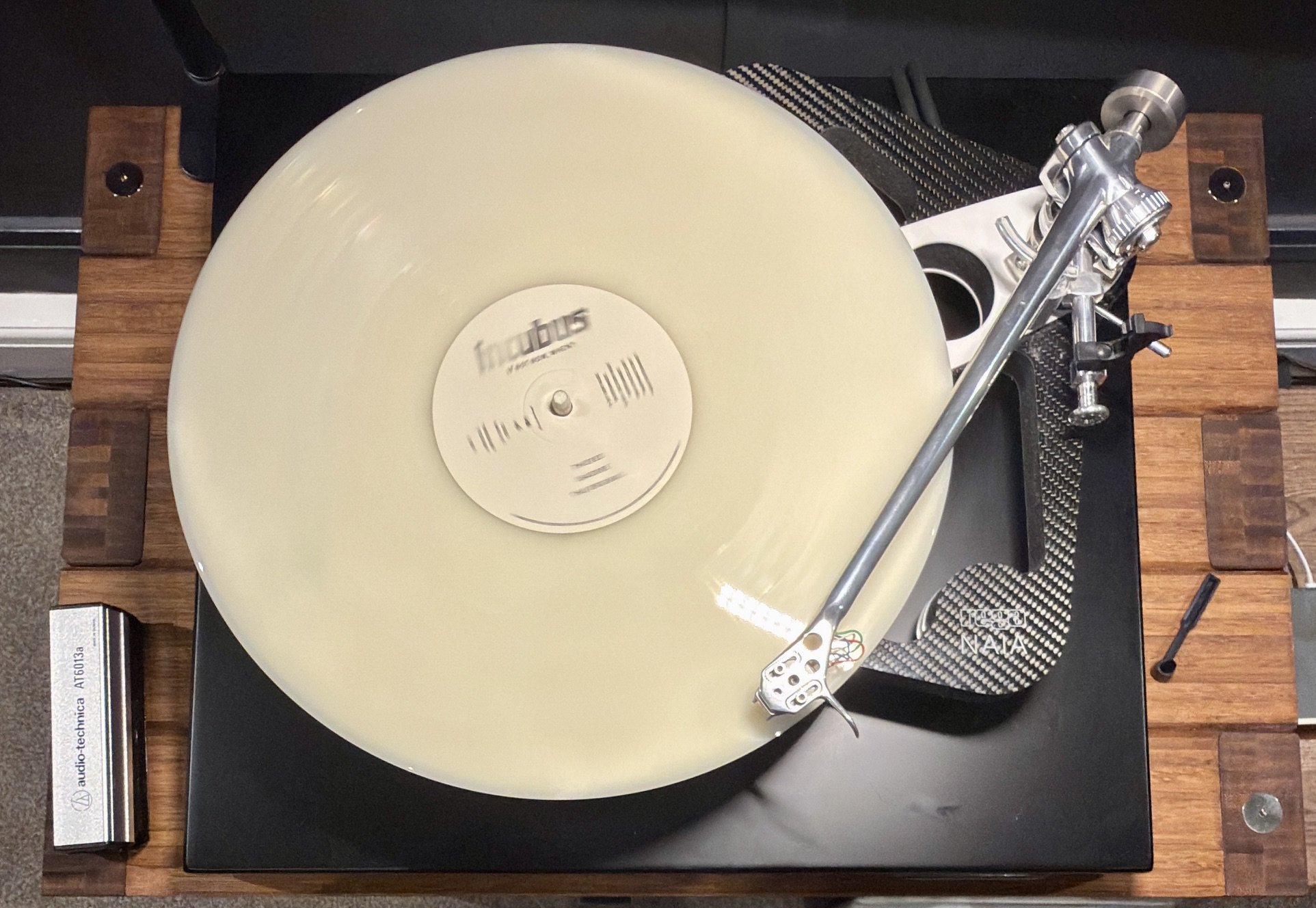
icubus lp playing on the rega naia
Incubus – Thieves
The final track was Incubus with Thieves, and the opening keyboard work from DJ Kilmore immediately filled the room, creating a captivating left-to-right sweep between the speakers.
This is where the D20R’s imaging really came into its own. The soundstage stretched well beyond the physical position of the loudspeakers, while still keeping individual instruments and effects clearly placed within the mix.
As Mike Einziger’s guitar entered, I could clearly hear the distinctive character of his 1968 Fender Telecaster Thinline combined with the spacious ambience of his Mesa/Boogie amplification and tape echo effects.
When José Pasillas’ drums joined the performance, everything came together beautifully. The whole presentation felt expansive, open and exceptionally well organised, delivering a wonderfully convincing stereo image.
The D20R did not pull the music apart or over-analyse it. Instead, it allowed each element to breathe while keeping the performance connected and enjoyable. That balance is one of the things I enjoyed most about these speakers.
Final Thoughts
As I mentioned at the beginning of this blog, I have come to know and appreciate ProAc over the years for what the company has contributed to the world of Hi-Fi.
The ProAc Response D20R may well be one of the finest two-way floorstanding loudspeakers I have heard. Its ability to reveal fine musical detail while remaining engaging and natural is deeply impressive.
Much of this performance can be attributed to ProAc’s ribbon tweeter technology, which the company has spent many years refining and integrating seamlessly with its bass/midrange drivers. It gives the D20R a wonderfully open and detailed top end, but without making the speaker sound bright, forced or tiring.
Another standout feature is the speaker’s bottom-firing port design. Not only does it deliver excellent bass performance and control, but it also makes room placement significantly easier than many traditional rear-ported designs. That is a major benefit for real-world listening rooms, where loudspeakers often have to work around furniture, fireplaces, awkward corners and the general realities of domestic life.
The D20R combines musicality, scale, detail and ease of use in a way that few loudspeakers manage. It is revealing enough to show what a great system can do, but it does not lose sight of the reason we all got into this hobby in the first place: enjoying music.
For anyone seeking a premium British loudspeaker that delivers both emotional engagement and serious performance, the ProAc Response D20R deserves serious consideration.
If you would like to hear the ProAc Response D20R for yourself, please feel free to get in touch with us at Audio T Cardiff. We’ll be more than happy to arrange a demonstration, put the kettle on, and help you find out whether these rather special loudspeakers are the right fit for your system.
Thank you for reading.
Matt Aaron - Audio T Cardiff
If you have any questions about any of the equipment featured in this article, or any other Hi-Fi or home cinema enquiries, be sure to contact us.
If you’ve enjoyed this, why not go ahead and read some more of our other blogs, and be sure to follow us on our social media channels below…