
A Day at Chord Company: My Journey to Cable Enlightenment
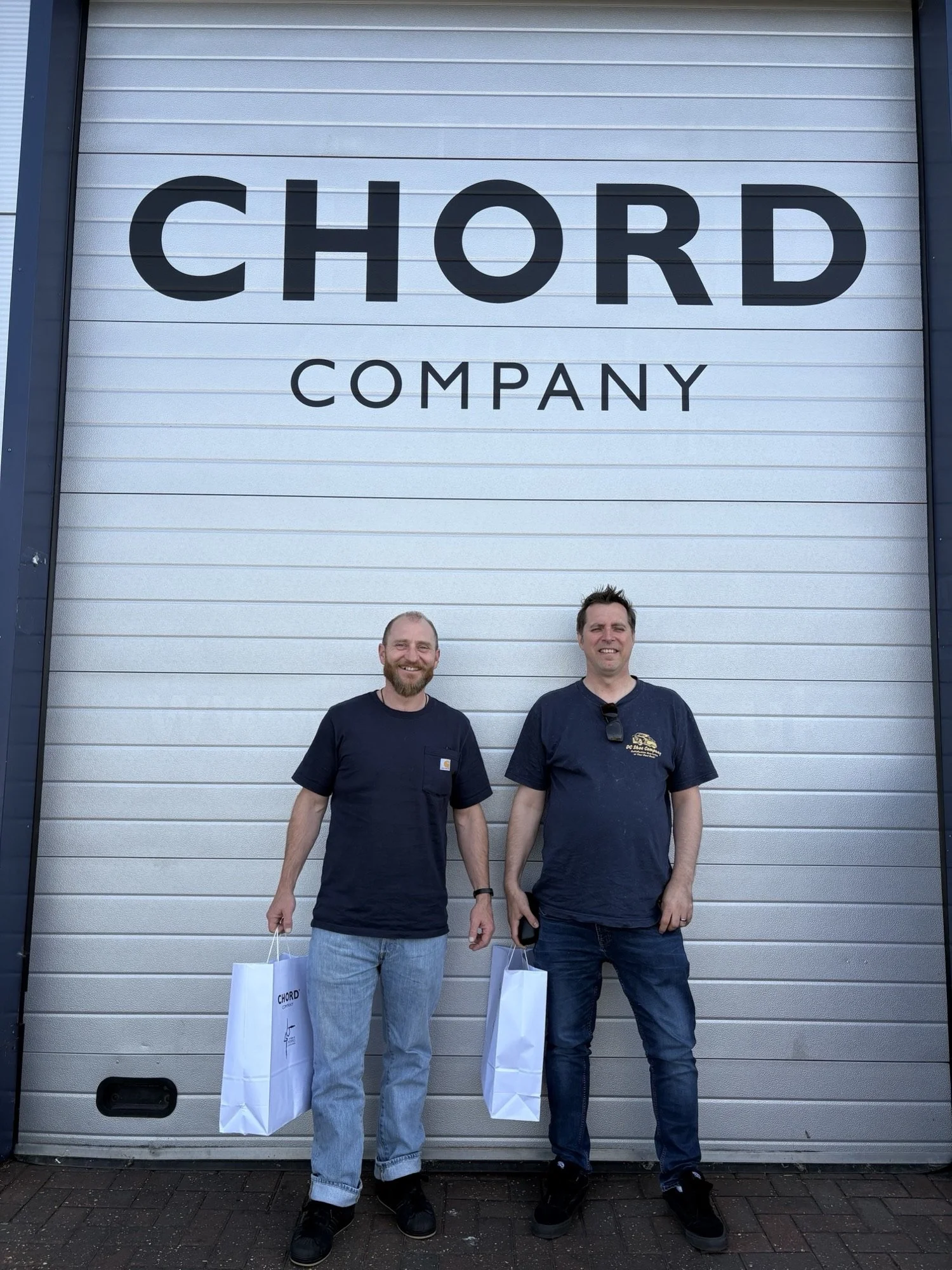
/Nick and I took a trip from Audio T Cardiff to Chord Company’s headquarters in Wiltshire. We wanted to see how its cables are made, learn a few things from the people who make them and, naturally, find out what we could hear in the listening room.
Hello again, all you wonderful folk in the beautiful world of hi-fi. It’s me again, here to talk your ears off about something I’ve touched on in a few of my blogs: the cables connecting our systems together. From the source to the amplifier and on to the speakers, every connection has a job to do. I’ve spent plenty of time listening to different cables at home and in the shop, but I’d never seen how they were made. That seemed like a good reason to ask Ian Booth at Chord Company if I could pay them a visit.
When I mentioned the trip to Nick, our Cardiff store manager, he was keen to come along. Nick wanted to refresh his cable knowledge, and I was looking forward to getting behind the scenes and hearing some of the higher ranges in a system we don’t encounter every day. Ian kindly arranged the visit, so off to Wiltshire we went. Before I tell you how we got on, though, I think this story deserves a little trip back in time.
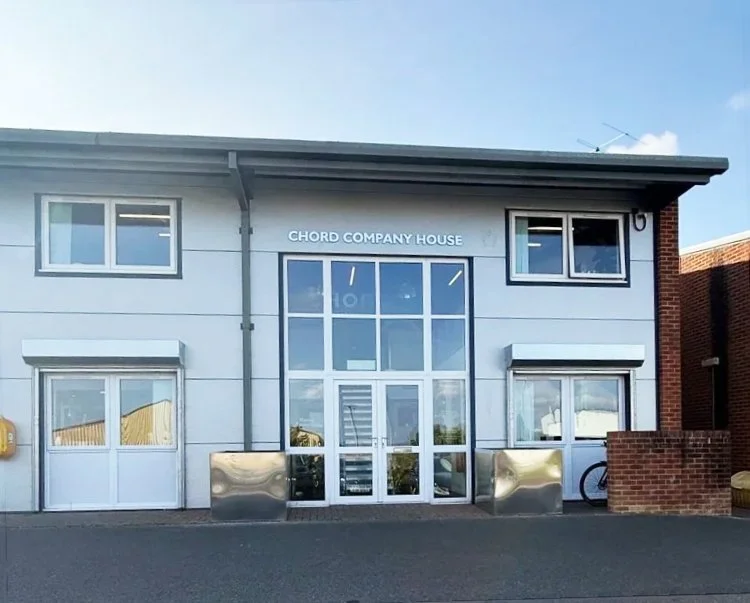
Chord Company HQ
From a dinner-table idea to a cable company
The story begins in 1985. I was still at school and remember seeing Van Halen’s Jump on television, which probably tells you quite a lot about where my musical interests were heading. Over in Salisbury, a conversation over dinner was setting something else in motion. A group of visiting Naim Audio retailers from America had asked the people at Naim UK for a good quality DIN-to-RCA interconnect. Sally Gibb, who was at the table, suggested she could make the cable and maybe start a business. With Naim’s blessing, she set about doing exactly that.
Sally didn’t stop at making a cable. She designed the logo and packaging, tested the early prototypes and helped turn that initial request into a company. The first prototype was called Chrysalis, and an order from the American retailers gave the fledgling business its start. I love stories like that. What began as a practical answer to somebody’s problem became a brand we now know throughout the hi-fi world.
The company has grown well beyond that first interconnect. Alongside its speaker, analogue, digital and mains cables, it makes power distribution and noise reduction products. There’s also English Electric, whose network switch many of you will know from streaming systems. What struck me on our visit was that the interest in music isn’t confined to a design department. We met people across the business who love listening to music, and quite a few who make it themselves. As a guitarist, I felt I was among my own people.
A look around the factory
We arrived with the sun shining and were greeted by Ian, whom we know well from his days working at Audio T. He introduced us to some of the team before taking us through the shipping and export area and into the production rooms. When you see a finished cable in a box, it’s easy to overlook how much work goes into selecting the materials, preparing it, fitting the connectors and checking the result. Walking through the factory put the finished product into a different perspective for both Nick and me.
One of the more unexpected things I learned concerned Taylon, the insulation used in the flagship ChordMusic range. Ian told us about the material’s origins in demanding military applications. You may be wondering what the hell that has to do with a hi-fi cable, and I had much the same thought. The important point for the cable designers is its phase stability, which is why Chord Company chose to use it in some of its most ambitious cables. It was fascinating to hear about the thought that goes into something most of us only ever see disappearing behind a rack.
Then we reached what, for me, was the beating heart of the visit: the area where cables are built. We saw work on everything from more familiar ranges such as ClearwayX through to cables at the very top of the range. I also discovered that the company makes instrument cables. As you can imagine, that caught my attention immediately. I’m just as bad for looking at guitar gear as I am for looking at h
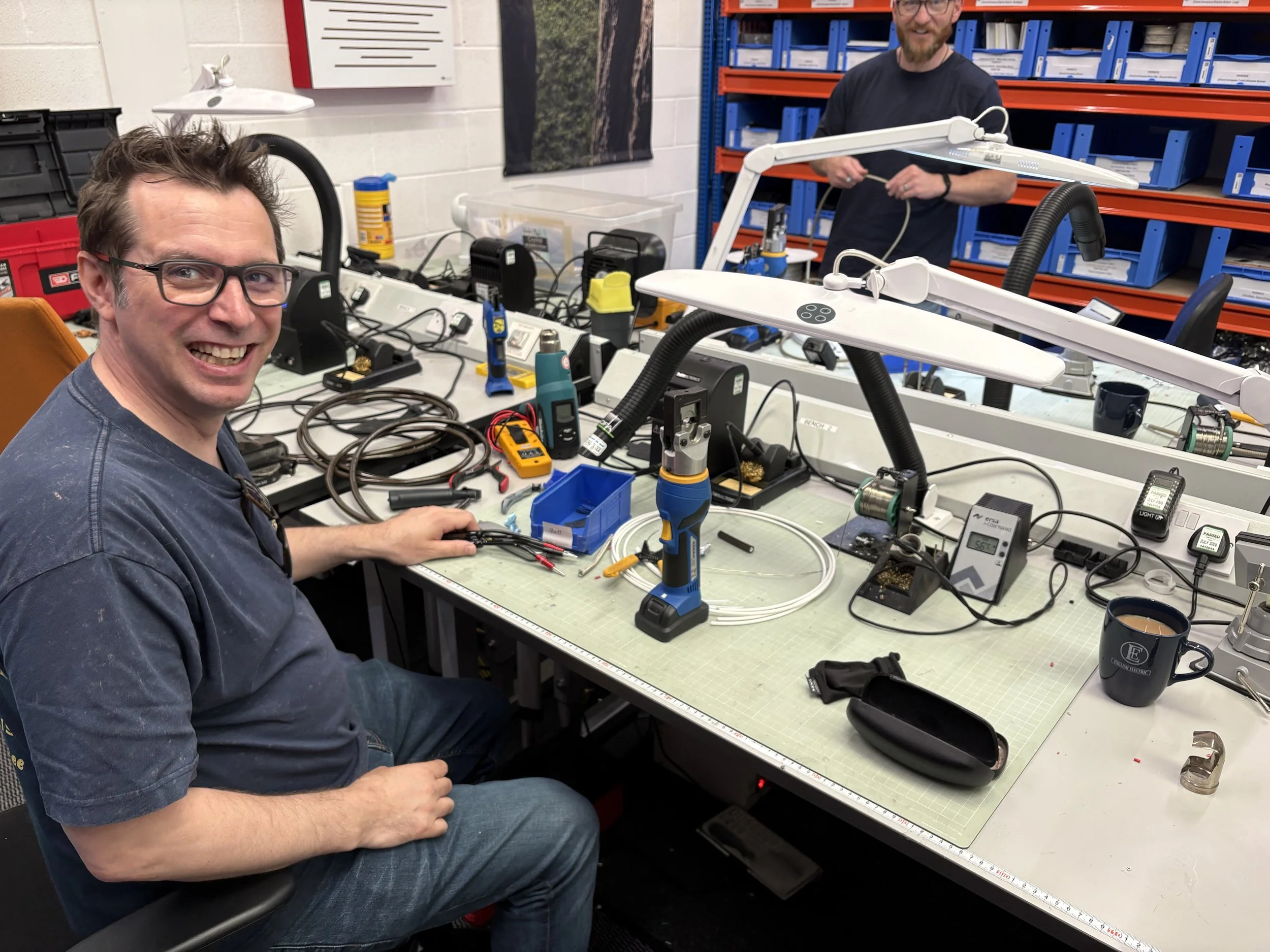
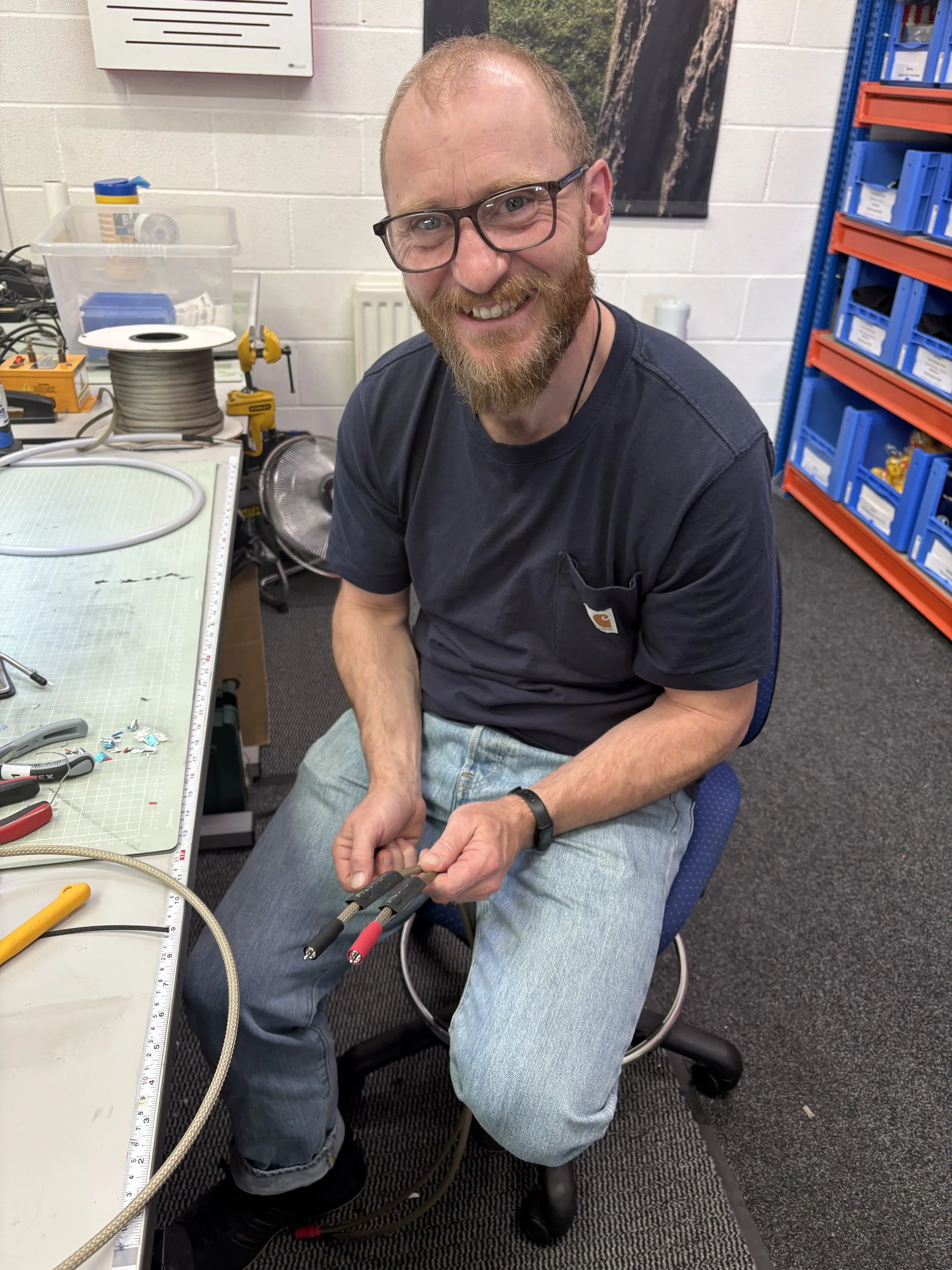
Nick and I get to work
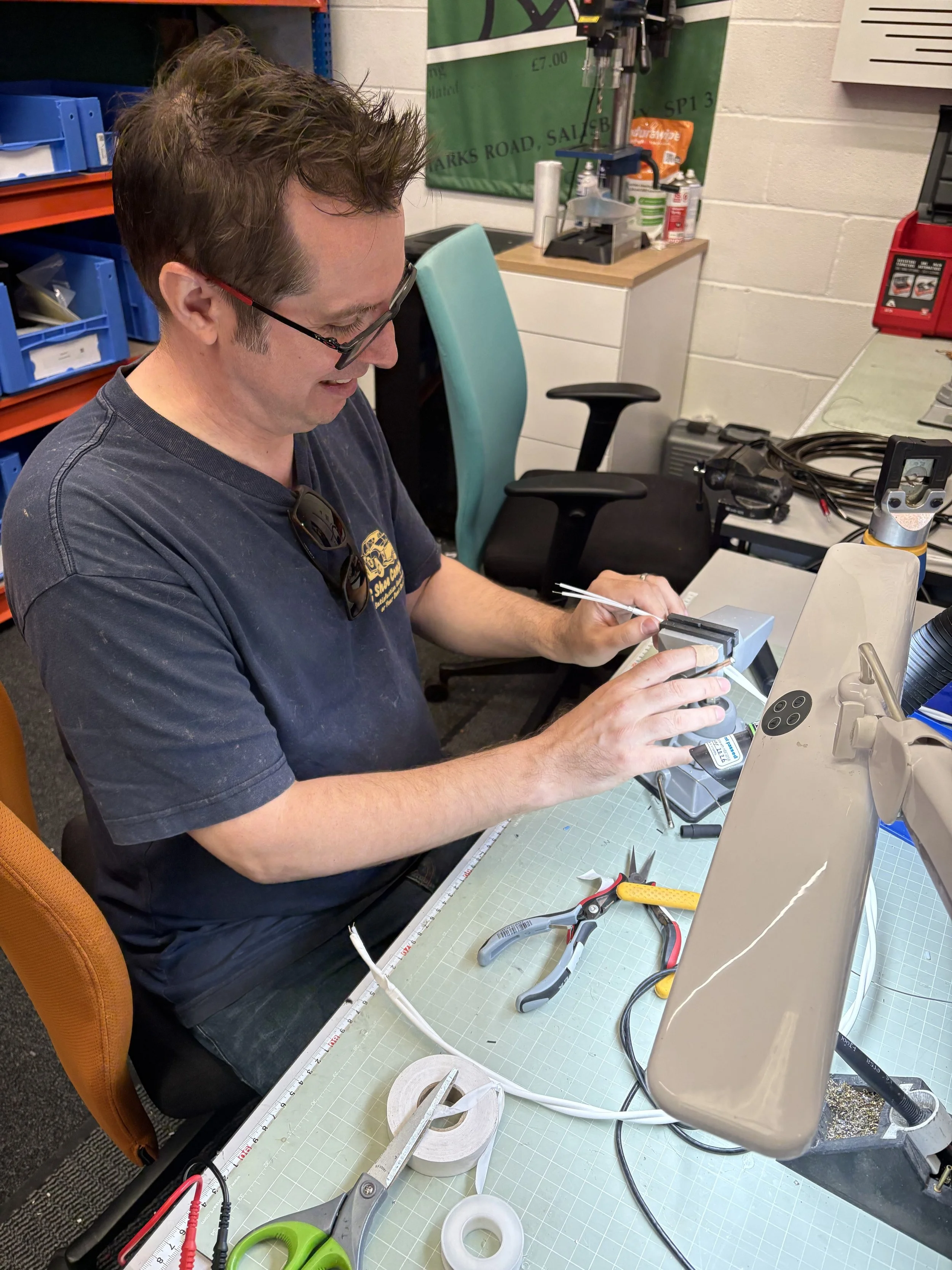
After a lovely lunch with the team, we were taken to a pair of workbenches and introduced to Hayley, who would guide us through building our own cables. This was the part I’d really been looking forward to. Watching somebody work is interesting, but having a soldering iron and crimpers in your own hands gives you a much better idea of the skill involved. It also makes you appreciate how easy the production team makes it look.
I made a pair of EpicX speaker cables and an Epic Digital coaxial cable. Nick made a pair of EpicX ARAY RCA interconnects and a mains cable from the Epic range. Hayley talked us through each stage, from preparing the cable to making the connections and finishing it properly. There’s a satisfying point in the process where it begins to look like the cable you recognise from the shop, although getting there takes more care than you might think.
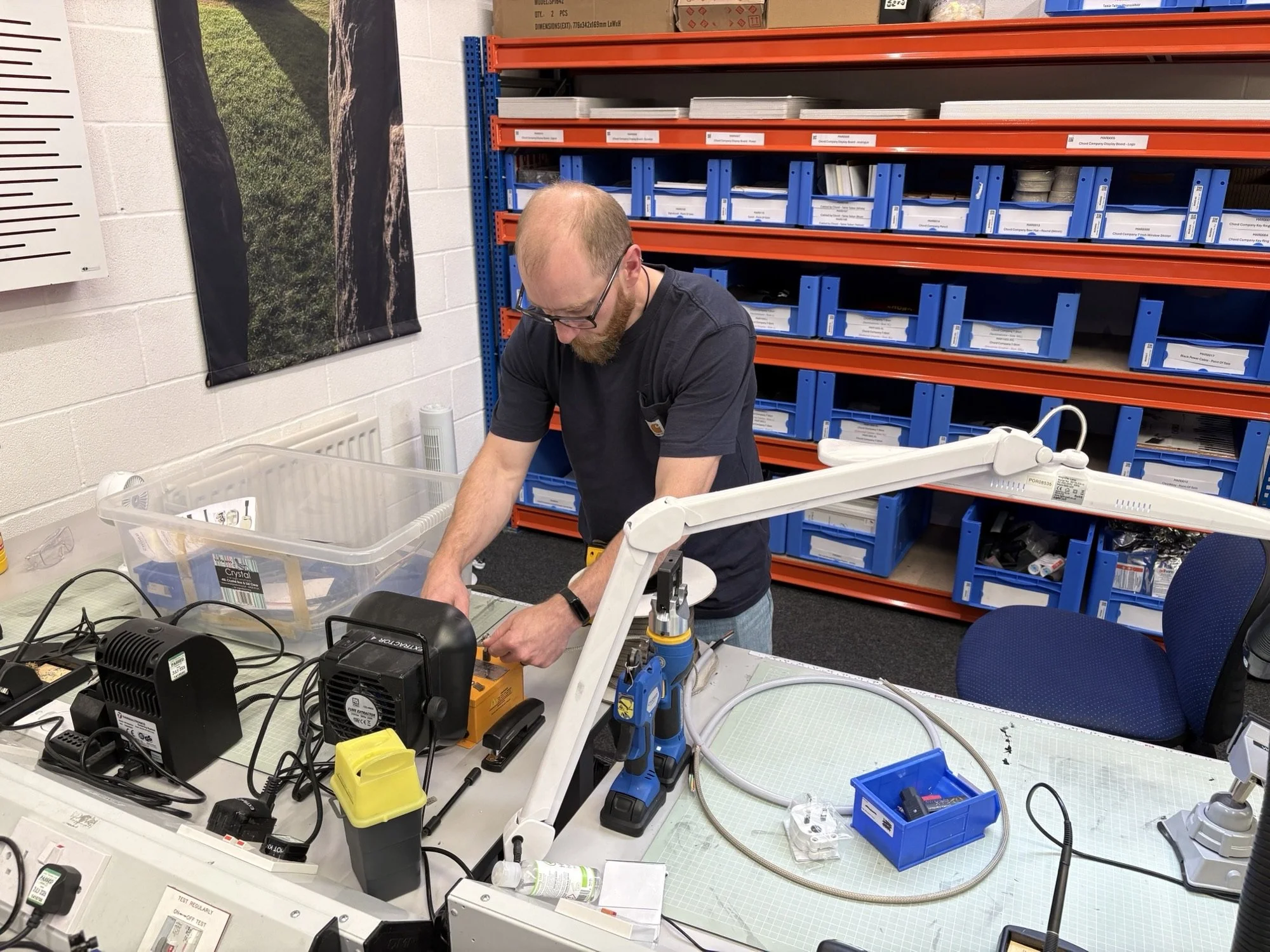
I used to work as a guitar technician, so I went in feeling reasonably confident about my soldering. I soon realised I still had things to learn. Hayley showed me a few techniques that helped me get a much better result, and I picked up some useful tips while making the speaker cables as well. It was a proper hands-on lesson, rather than simply being allowed to put a connector on the end for a photograph. The nicest part was that Nick and I were able to take home the cables we’d made. At that point I would already have called the day a success, but Ian had something else waiting for us. And yes, there was more coffee.
Into the listening room
Ian and the team had put together a pretty serious streaming system for our listening session. The source was a MOON MiND 2 network player feeding a Chord Electronics DAVE DAC. There was CH Precision amplification driving a pair of Peak Consult Sonora floorstanding speakers. An English Electric network switch was part of the streaming set-up, and a PowerHAUS unit handled mains distribution. In other words, this was a system with plenty of ability to show us what was going on.
With everything warmed up and Nick and I settled in, Ian began with cables from the Epic range, including EpicX ARAY interconnects and EpicX speaker cables. He put on an acoustic track, and my first reaction was that it sounded pretty damn good already. The vocal sat nicely in the centre of the soundstage, the guitar had clear definition and the whole performance was easy to listen to. It’s an important starting point because, if you’re going to change something, you need to know what you were enjoying in the first place.
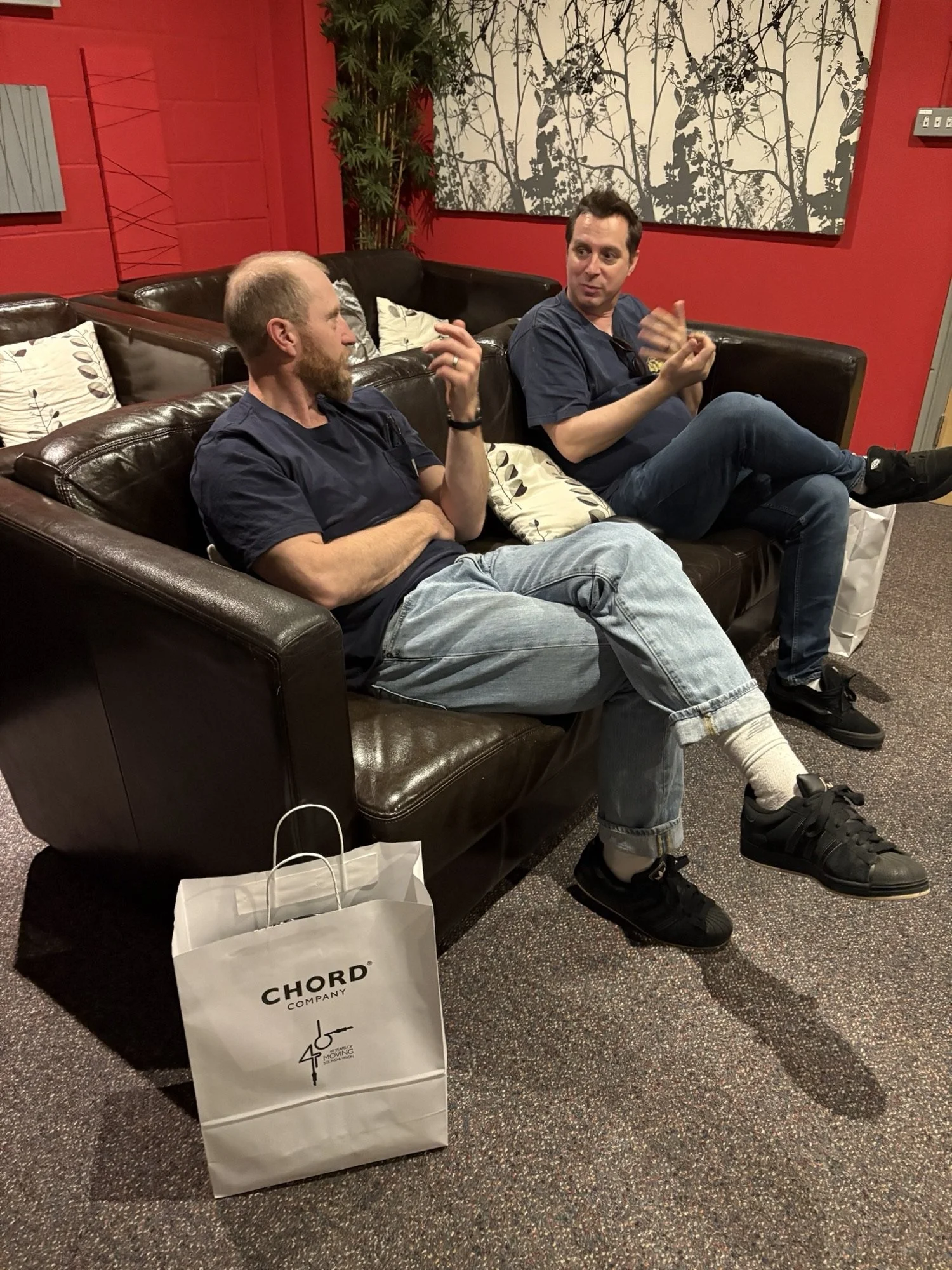
Ian then changed the speaker cables to EpicXL. Nick and I could both hear a change, although I’d describe this first step as subtle rather than dramatic. There was a little more to the presentation that drew my attention into the recording. That’s one reason I enjoy these sessions: sometimes a change announces itself straight away, while at other times you find yourself listening a bit longer before you can put your finger on what’s different.
Next, Ian moved the system on to Signature cables. This was familiar territory for me, as I’ve written before about trying Signature in my own system. Using another similar acoustic track, I heard a more substantial step. The vocal seemed to have greater presence, and there was more texture in the performance. One little detail that caught my ear was the drummer counting in on the hi-hat. I love moments like that. It’s a tiny part of the recording, but hearing it makes you feel closer to the people playing the music.
Just as I was thinking that things were sounding pretty much perfect, Ian changed the cables again, this time to Sarum T. This was a range I’d not had the chance to hear in a system before, and it made one of the biggest impressions on me during the session. There was more texture to the sound and a much bigger sense of space. Instead of hearing a group of instruments arranged between two speakers, I found it easier to picture the musicians occupying their own places. It had more of that “band in the room” feeling we’re always chasing.
Then, just when I thought Ian might let us catch our breath, he brought out the big guns: the flagship ChordMusic cables. This is the range I’d now love to get my hands on, although that may have to remain a dream for the time being. The presentation opened out further, and I could place what individual band members were doing with greater ease. I could hear the singer taking a breath near the microphone and the odd note from the guitarist that didn’t land quite where it was meant to. Being a guitarist myself, perhaps I notice those things more than most.
Those little imperfections are part of why I love listening to music. As I always say, there’s perfection in imperfection. If a system lets you hear the breath, the movement and the occasional fumbled note as well as the polished parts of a performance, the people making the music feel more human. That was what stayed with me about the listening session, beyond any particular cable change. I wanted to keep playing tracks and discovering what else was tucked away in recordings I thought I knew.
What I brought back to Cardiff
Nick and I learned a great deal that day, both from watching the production team and from having a go ourselves. The listening session gave us another way of understanding the ranges and what we might want to try in a customer’s system. It also reinforced something I’ve said in previous blogs: trust your ears. We can tell you what we heard, but the worthwhile test is to listen with your own equipment and music, then decide whether the change matters to you.
I didn’t wait long to follow my own advice. When I got home, I fitted the EpicX speaker cables I’d made and swapped the digital cable connected to my Cyrus CD player for my new Epic Digital coaxial cable. After spending the day making and listening to cables, there was no chance those were going to sit unopened in a bag. I suspect Nick was just as keen to try his when he got home.
If this has made you curious, I’d encourage you to try some cables for yourself. Chord Company has a cable library, and we can talk you through demonstration and home-loan options at your local Audio T store. Bring along some music you know well, have a listen and see what you notice. That’s much more enjoyable than taking my word for it.
Finally, a really big thank you to Ian Booth for organising our visit, and to Hayley and everyone at Chord Company for giving us so much of their time.
Thank you, too, for taking the time to read my article.
Matt - Audio T Cardiff
If you have any questions about anything covered in this article, or any other hi-fi or home cinema enquiries, be sure to contact us.
If you’ve enjoyed this, why not go ahead and read some more of our other blogs, and be sure to follow us on our social media channels below…
Chord Company can be found at the following Audio T stores