

The lowdown on the wonderful and sometimes weird world of bass
/Bass is one of the most debated and misunderstood aspects of audio reproduction. And it’s no wonder, because bass reproduction and our perception of it are more interesting, and stranger, than most of us realise.
It’s probably fair to say that no other aspect of audio reproduction grabs our attention as much as bass. Bass is the foundation of music, providing the rhythm, scale, tonal realism and much of its emotional power.
Bass can have us reaching for adjectives like immense, awesome and killer to describe what we experience. By comparison, the descriptors we apply to the midrange or treble tend to be altogether tamer: words like natural, sweet and open.
It captures the popular imagination in ways that mids and highs don’t. There was a reason why so many (often barely) portable music players from the 1970s and 1980s were called ‘boom boxes’ and featured ‘mega bass boost’.
You don’t have to be a ‘bass head’ to love bass. But how that bass is produced and how it interacts with our rooms and our ears is a complex and far from straightforward matter.
Bass basics
The first thing to note about bass is that the lowest frequencies can contain some of the largest amounts of energy in recorded music.
The energy in a kick drum, double bass, bass guitar, pipe organ or deep electronic note can be far greater than at higher frequencies. You only have to think of how bass can physically hit you in the chest to realise the energy involved.

Large pipe organs produce exceptionally low but high energy frequencies
Because of these large amounts of energy, bass is challenging for hi-fi systems to produce. It places significant demands on our equipment, especially amplifiers and speakers.
The biggest challenge is in producing and, just as importantly, controlling low-frequency sound.
For example, the wavelength, peak to peak, for a 100 Hz sound (typical bass guitar notes) is about 3.4 metres. At 40 Hz (think double bass), it is about 8.6 metres, and if you hit 20 Hz (a pipe organ or sub-bass synth note), it is about 17 metres, or more than 55 feet! By comparison, high-frequency wavelengths can be just a few centimetres long.
Large-diameter drivers are generally better at bass because they can move more air than small cones. But they need enough power and excursion to move the air required at low frequencies.
That’s not to say that a smaller-diameter driver cannot move a lot of air. With a strong motor assembly, a powerful amp and enough excursion or ‘throw’, it can. Some compact subwoofers have surprisingly small-diameter speaker cones.
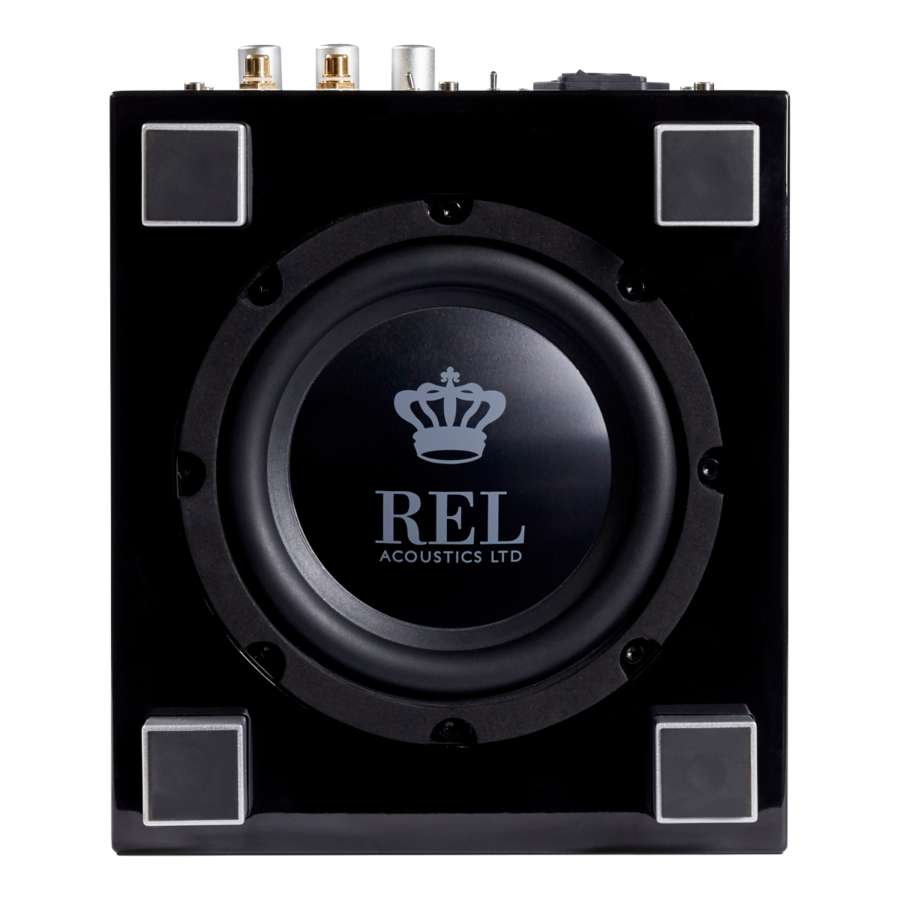
REL’s T Zero subwoofer is small but still packs a low end punch
The key question with any speaker, especially one with smaller cones, is how loudly it can play very low sounds without noticeable distortion.
Speaker cabinet design also has an impact on bass response, with larger-volume cabinets, which also usually have larger drivers and cones, tending to deliver more bass.
And ports are widely used in many speakers to augment bass reproduction.
A bass-reflex or ported enclosure uses a tuned resonant system to increase acoustic output around a particular frequency range. Other approaches, such as transmission lines, passive radiators and horn loading, use different acoustic principles to control the bass response of the speaker.
A sealed enclosure uses the trapped air inside the cabinet as part of the driver’s mechanical suspension. Its response typically rolls off progressively at low frequencies. Sealed designs tend to give less low bass than ported designs, but their bass response can sound tighter and faster.
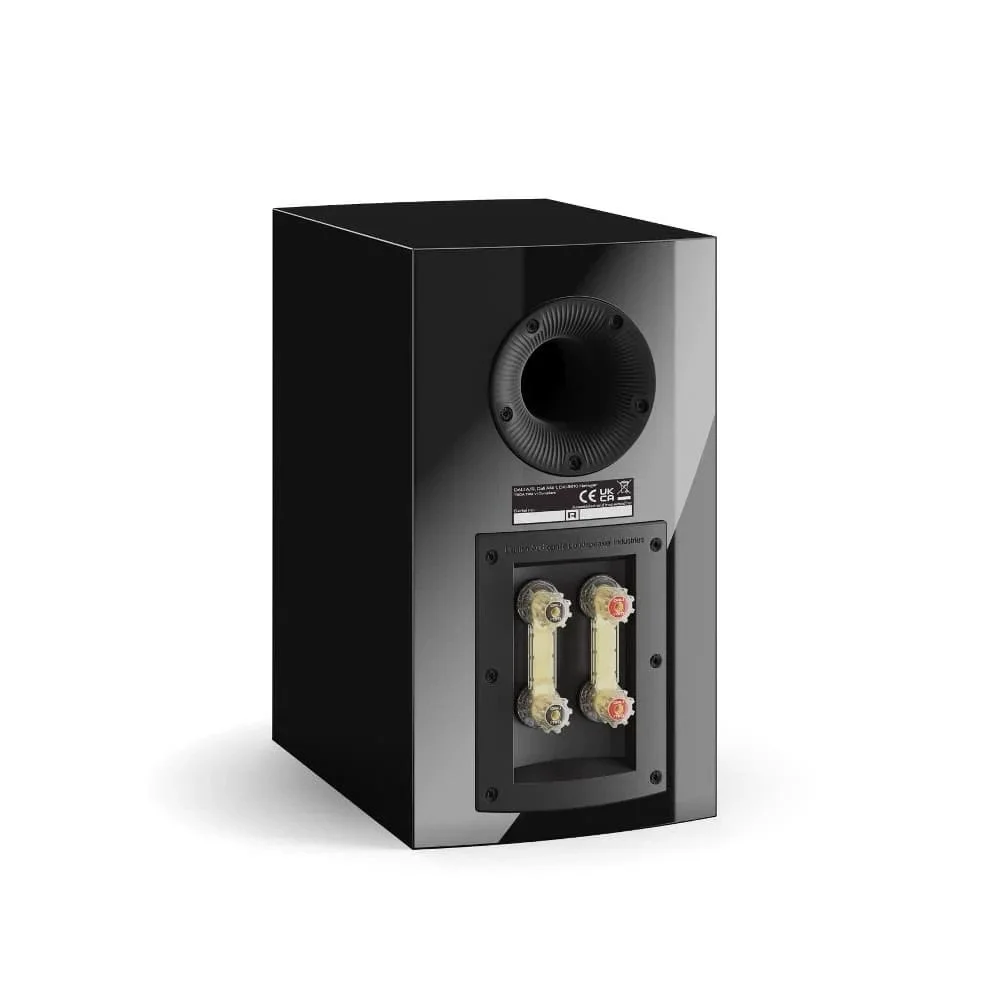
like many speakers the dali’s rubicore 2 uses a tuned bass reflect port
There is no universally correct cabinet type. Choose speakers that sound right to you.
Under pressure
All sound is a form of energy travelling in pressure waves. Our ears detect these pressure changes, usually in air, and turn the physical movements inside our ears into minute electrical signals. That is how we hear.
Human hearing tends to sit between 20 Hz and 20 kHz, although this can vary considerably, especially at higher frequencies as we age.
Our hearing evolved primarily around the frequencies that are important for speech and our awareness of our surroundings, like keeping an ear out for predators.
We are less good at hearing very high and very low sounds, such as the infrasound produced by elephants and whales or the ultrasound used by bats.
This relative insensitivity to very low frequencies partly explains why, when we turn the volume down on our hi-fi, we seem to hear the bass disappear. To make low frequencies clearly audible to us, they need to be played at a higher level.

human hearing has not evolved to pick up infrasound produced by animals like elephants
The phrase ‘Fletcher–Munson curve’ is often used to describe the phenomenon whereby the frequencies we hear and the balance we perceive between them depend on sound-pressure level.
At high playback levels, our hearing becomes relatively more sensitive to bass. At lower levels, the bass must be substantially stronger before it is perceived as equally loud.
Too little bass and our music will sound thin. Too much and bass can over-pressurise a room and our ears, creating overpowering and out-of-control bass.
The goal isn’t to hear more bass than the recording contains. The goal is to clearly and accurately hear the bass that is actually there.
Power hungry
Reproducing deep bass at volumes we can appreciate demands considerable electrical power from an amplifier.
Remember, a speaker’s bass driver has to move enough air at low frequencies and do it quickly and accurately enough for the bass to sound tight.
But as frequency falls, achieving sufficient bass output can require increasingly large excursions, all while maintaining speed and accuracy. That requires amplifier power and grip over the speakers. Bass output that lacks amp grip can sound loose and boomy.
A hi-fi system may sound effortless with vocals and cymbals but suddenly struggle if asked to reproduce a synthesised 20 Hz note or organ music. We have all heard systems where the lowest bass notes are pretty much absent.
So, not only must the speakers be up to reproducing low frequencies, but the amplifier driving them must supply the electrical energy necessary to ensure the drivers’ motor assemblies move accurately.
Timing
This is crucial for reproducing well-controlled bass. As mentioned, it is not just about how much a bass driver can move but how it starts and stops during its excursion.
Instruments have an attack, a sustained portion and a decay. If a speaker or amp is slow to capture the attack or allows low-frequency energy to linger after the musical event has ended, notes can blur together.
The effect is particularly noticeable with rhythmically complex music. When bass notes are reproduced with good timing, the listener can follow bass lines and drum patterns more easily. The result is a greater sense of rhythm and musical involvement.

bass is key to following complex rhythms like those created by the late, great neil peart
Perhaps surprisingly, bass quality has a significant effect on our perception of the midrange and treble. When bass is reproduced accurately, the entire frequency range rests on a solid foundation.
Well-controlled bass can make a system sound cleaner and more open. When low-frequency energy is properly reproduced, the rest of the music has space to breathe.
Harmonics
As most of us will know, a bass instrument does not produce just a single frequency or tone. When we hear a bass guitar, synth, double bass or organ, we are actually hearing a collection of low tones and harmonics.
A good hi-fi system should reproduce all of these elements rather than reducing bass to a single ill-defined rumble.
One of the most interesting aspects of bass perception is that the ear does not always need to receive the fundamental frequency, or lowest tone, to perceive the overall pitch of a note.
Effectively, our brains fill in the lowest or fundamental frequency, even if it is not actually produced by our speakers.
Consider a musical note with a fundamental frequency of 30 Hz.
Its harmonic series might contain:
30 Hz — fundamental
60 Hz — second harmonic
90 Hz — third harmonic
120 Hz — fourth harmonic
150 Hz — fifth harmonic
Even if the 30 Hz fundamental is weak or absent in a hi-fi system, we can sometimes infer the missing fundamental or lowest bass note from the harmonic relationships.
This effect even has a name: the missing fundamental phenomenon. It is extremely important to the perception of bass.
A small loudspeaker that cannot reproduce 30 Hz with any significant output can nevertheless produce a convincing impression of a 30 Hz bass note if it reproduces its higher harmonics accurately.
A lot of speaker manufacturers use this to make relatively small and often inexpensive speakers sound surprisingly bassy.
However, it should be remembered that the perception of deep bass is not the same as hearing the accurate reproduction of deep bass.
In the former scenario, the low-frequency pressure waveform is missing, but our brains ‘trick’ us into hearing what it ought to sound like. In the latter scenario, that low-frequency pressure wave is present and we are actually hearing it.
Room acoustics
Bass reproduction is also unusual because our listening rooms have an enormous influence on what we hear.
As we know, low-frequency wavelengths are long, and they interact strongly with room boundaries. Standing waves can create large peaks and dips in response, to the extent that we sometimes hear next to no bass in one part of a listening room but weighty bass just a few feet away.
So, when considering bass response, it is wise to spend some time experimenting with the positions of our speakers and our listening position until we achieve a good bass response.
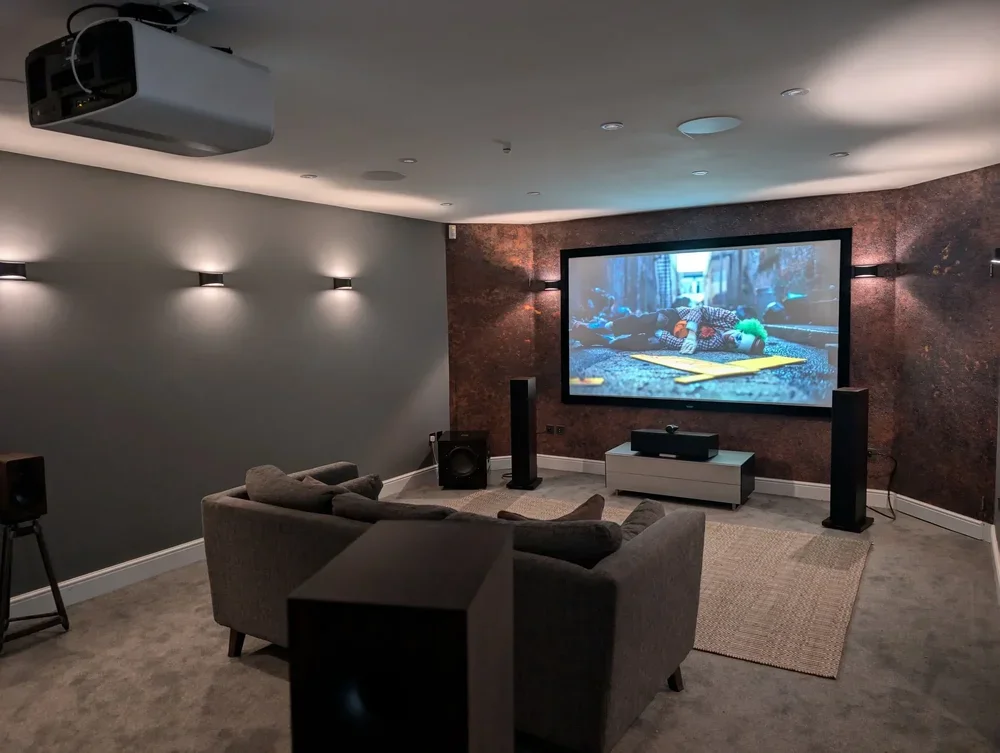
spending time sorting out speaker placement pays dividends in terms of sound quality
This can involve moving the speakers closer to or further away from rear or side walls, bearing in mind the fact that walls tend to reinforce bass response.
It is worth remembering, however, that speakers do not have to be equal distances from the boundary walls. Rooms are almost never perfectly acoustically symmetrical, and so using a tape measure to position both speakers equidistant from the walls is unlikely to yield the best sound. Better to position speakers using your ears.
Try to lock in one speaker first to get that sounding as you want it to, and then adjust the other until both are locked in and you have a focused sound stage and tight bass. You can also experiment with speaker angles or toe-in, as this can have an impact on the perceived bass response.
If you still have unruly bass, you may need to look at acoustic room treatments such as bass traps. Soft furnishings can help with other reflections, but they are less effective at taming deep bass.
That said, it is usually better to try to get a system sorted first, for instance by choosing the right source, amplification, speakers and cabling to deliver the bass response you like, then spending time setting up the speakers before immediately looking to room treatments.
Bring on the subs
A well-integrated subwoofer is a must in most home cinema systems to give weight and slam to sound effects. But it can also be a fantastic addition to a two-channel system, helping to resolve many bass issues and more besides.
The advantage isn’t simply its ability to reproduce very low notes at pressure levels most speakers cannot match.
While a speaker may nominally be capable of producing sound at 35 Hz, it may only be able to deliver that at such a low volume that we struggle to really hear it, and so it will do little or nothing for the music.
Because a sub provides plentiful low-frequency output, it gives the mids and highs a superb foundation on which to expand and breathe. Introducing a well-integrated sub can improve the mids and highs and likely expand the sound stage.
An added advantage is that subwoofers like those made by REL can be adjusted to deliver more or less bass and to blend in with your speakers.
That said, a poorly integrated subwoofer can over-pressurise a listening room, allowing the bass to swamp the music. A properly set-up sub should make your speakers sound bigger, bassier and more dynamic rather than hog the bass limelight for itself.
The bass paradox
Ultimately, the importance of bass in hi-fi is not about creating the bassiest possible sound. Leave that to the bass heads who show off their car audio systems at SPL (sound pressure level) car meets.
In hi-fi, the role of bass is to help reproduce recordings faithfully.
Excellent bass should make a system sound more natural, not merely more powerful. It should allow a double bass to sound like a double bass, a kick drum to have realistic impact, an organ to convey its enormous scale, and a bass guitar to have a clearly identified space and melody within the performance.
When bass is accurate, controlled and properly integrated with the rest of the system, it becomes almost invisible as a separate feature. Instead, it becomes part of the complete musical picture.
And that is the bass paradox. When the bass is just right, it disappears. We don’t notice it as a separate element within the music. All we hear is our music sounding natural and immersive.
And finally
Don’t forget that no hi-fi system can reproduce bass properly if the music we feed it has been recorded or mixed to have next to no bass.
A recording may contain little energy below 100 Hz because of the studio microphones used, other recording equipment, mixing decisions or mastering. Other recordings may contain oceans of sub-bass.
So bear in mind that, if you are auditioning new equipment (especially speakers or an amp), you should play at least one track with well-recorded, weighty low bass to test the response. The same applies if you are setting up your speakers at home.
Thanks for reading.
Alan – Audio T Southampton
If you have any questions about anything covered in this article, or any other hi-fi or home cinema enquiries, be sure to contact us.
If you’ve enjoyed this, why not go ahead and read some more of our other blogs, and be sure to follow us on our social media channels below…