
Do Expensive Music Streamers Really Sound Better?
/It is one of the most common questions in modern Hi-Fi. If two streamers are playing the same track from the same service, surely they should sound exactly the same?
After all, digital is just ones and zeroes. Job done. We can all go home.
Except, as ever with Hi-Fi, it is not quite that simple.
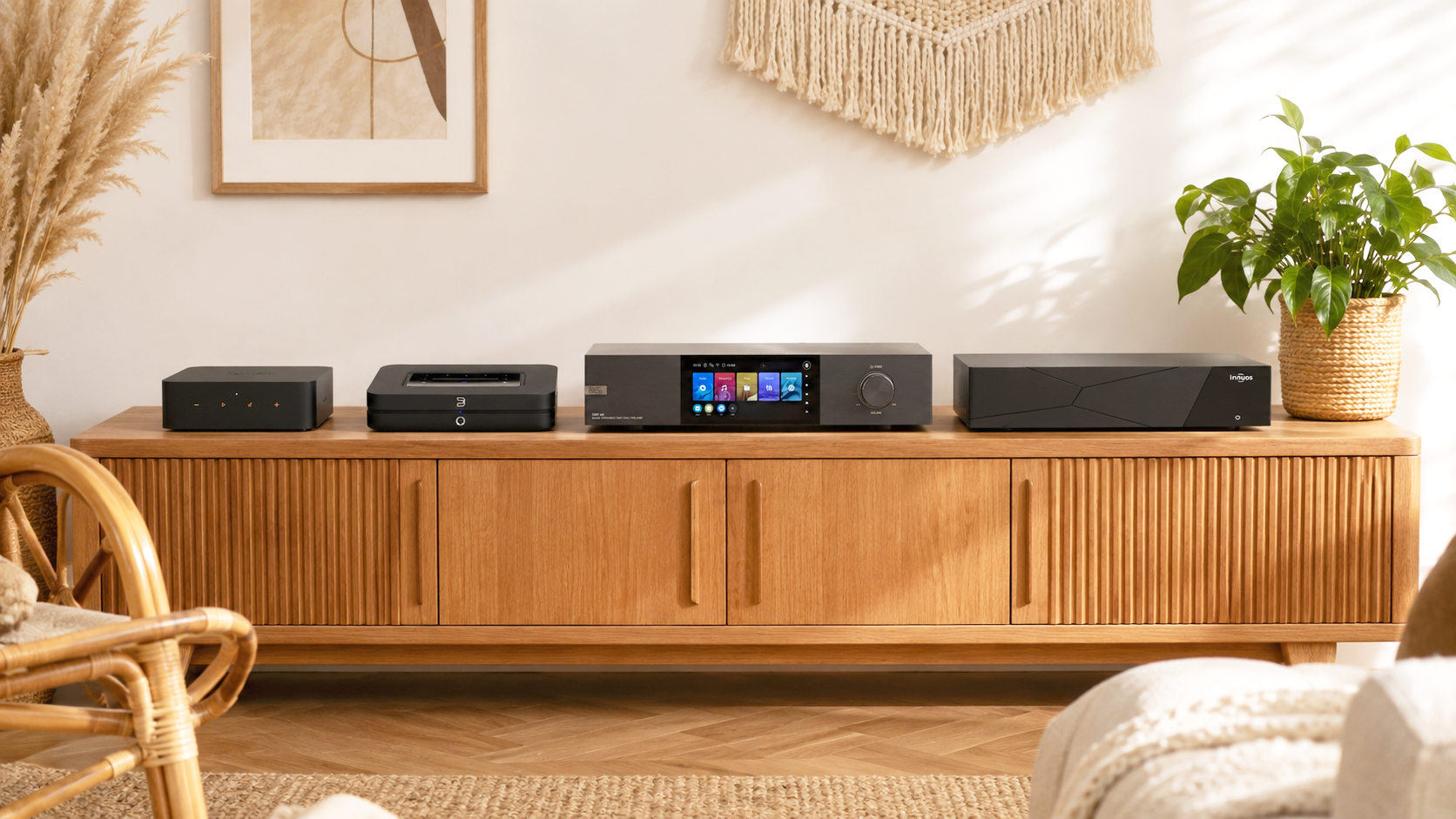
WiiM, Bluesound, Eversolo and Innuos are just Several brands of Streamer we stock at Audio T
The honest answer is that more expensive music streamers generally do sound better, particularly when connected to a system capable of revealing the difference. Better power supplies, lower electrical noise, more accurate clocking, improved digital processing and higher-quality analogue output stages can all help produce a cleaner, more natural and more involving performance.
That does not mean everyone needs a reference streamer to play a Spotify playlist. It does mean the streamer should be treated as a proper source component, rather than a glorified Wi-Fi adapter with ideas above its station.
The Source Starts Before the Streamer
Before comparing streamers, it is worth considering what you are actually asking them to play.
The streaming service is the first part of the chain. A beautifully engineered streamer cannot restore information that has already been removed, just as the world’s finest turntable cannot rescue a record badly mastered.
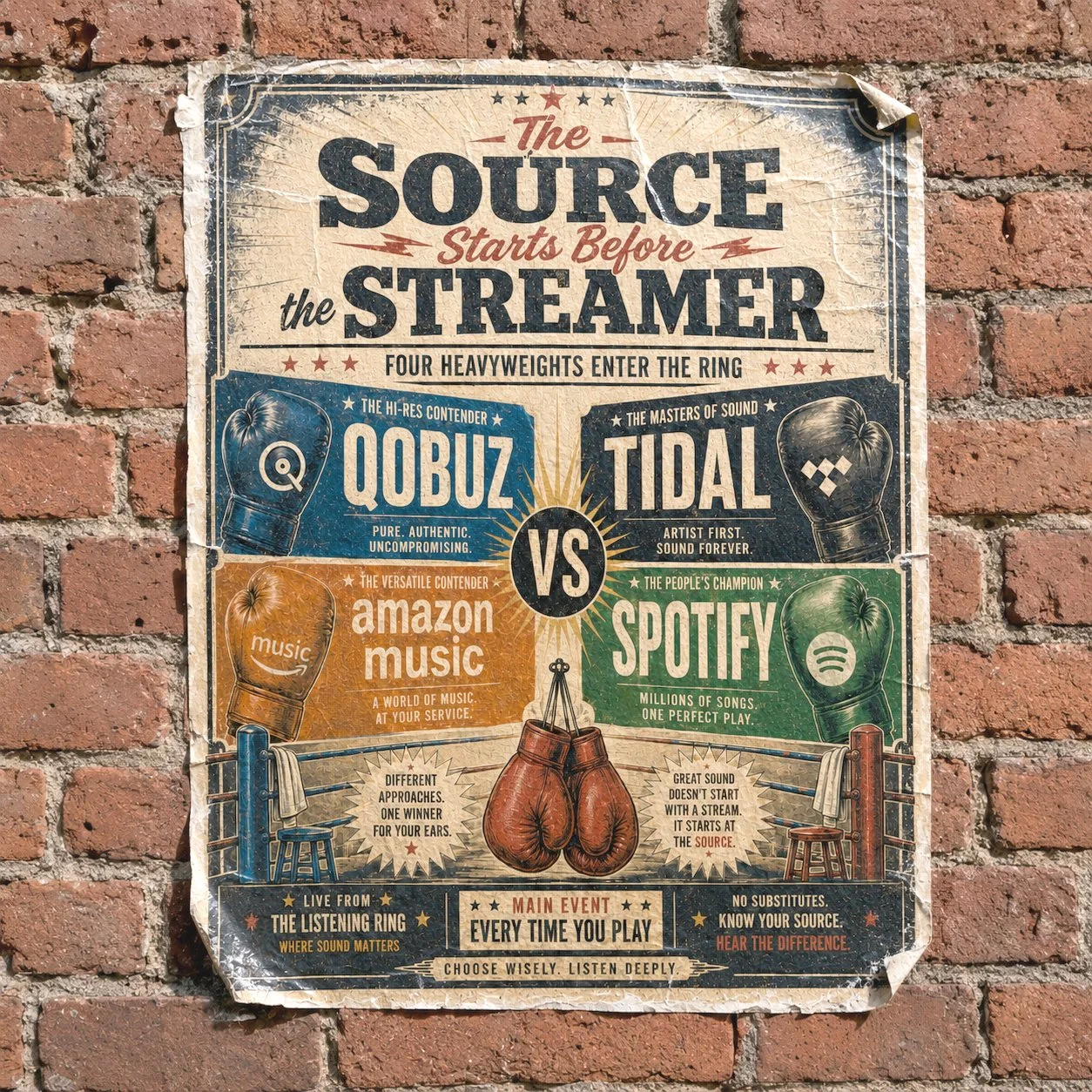
For listeners prioritising outright sound quality, Qobuz and Tidal remain among the strongest choices. Both offer lossless CD-quality streaming and Hi-Res music, while their Connect features allow compatible streamers to receive music directly from the service.
Amazon Music Unlimited can also sound extremely good and has an enormous catalogue, although its integration is not as universal across specialist Hi-Fi products. It is always worth checking that your chosen streamer supports it in the way you expect.
Spotify remains exceptionally strong for playlists, recommendations and ease of use. It is often the service that helps people discover the music they later buy on vinyl, CD or another platform. However, if ultimate sound quality is the main goal, Qobuz and Tidal would usually be our first ports of call.
Of course, the best streaming service is ultimately the one containing the music you actually want to hear. A technically perfect catalogue without your favourite albums is not tremendously useful. You will find that all of the aforementioned services offer free trial periods.
Are All Music Streamers Created Equal?
No. Not even slightly.
A music streamer is effectively a specialised computer, but the better models are designed to stop the less desirable behaviour of a computer from contaminating the audio signal.
Inside a streamer, manufacturers must manage network traffic, processing, digital timing, electrical noise, power regulation and, where fitted, digital-to-analogue conversion. Every stage presents an opportunity either to preserve the signal or give it a light kicking on the way through.
The biggest differences usually come down to:
The quality of the power supply
Clocking and digital timing
Electrical isolation
The quality of the digital outputs
The DAC and analogue output stage
Software and app development
Software matters more than some people realise. A streamer may sound heavenly, but if its app requires hand-to-hand combat every time you want to change album, it will soon become a very expensive ornament.
Even when two streamers are connected digitally to the same external DAC, differences may remain. Power noise, signal integrity and timing can still influence how the receiving DAC performs.
WiiM and Eversolo: The Newcomers Who Gatecrashed the Party
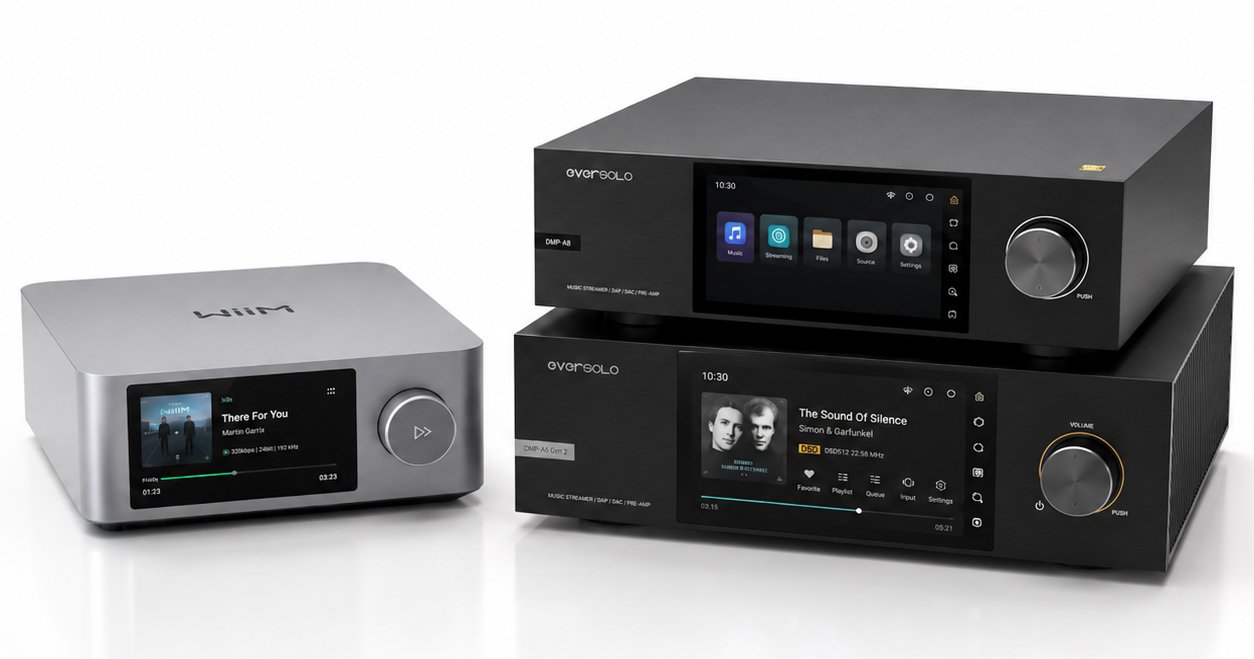
WiiM and Eversolo have arrived in the Hi-Fi industry with all the subtlety of someone bursting through the doors and asking why everything costs so much.
Products such as the WiiM Mini and WiiM Ultra have made proper music streaming accessible to a huge number of people.
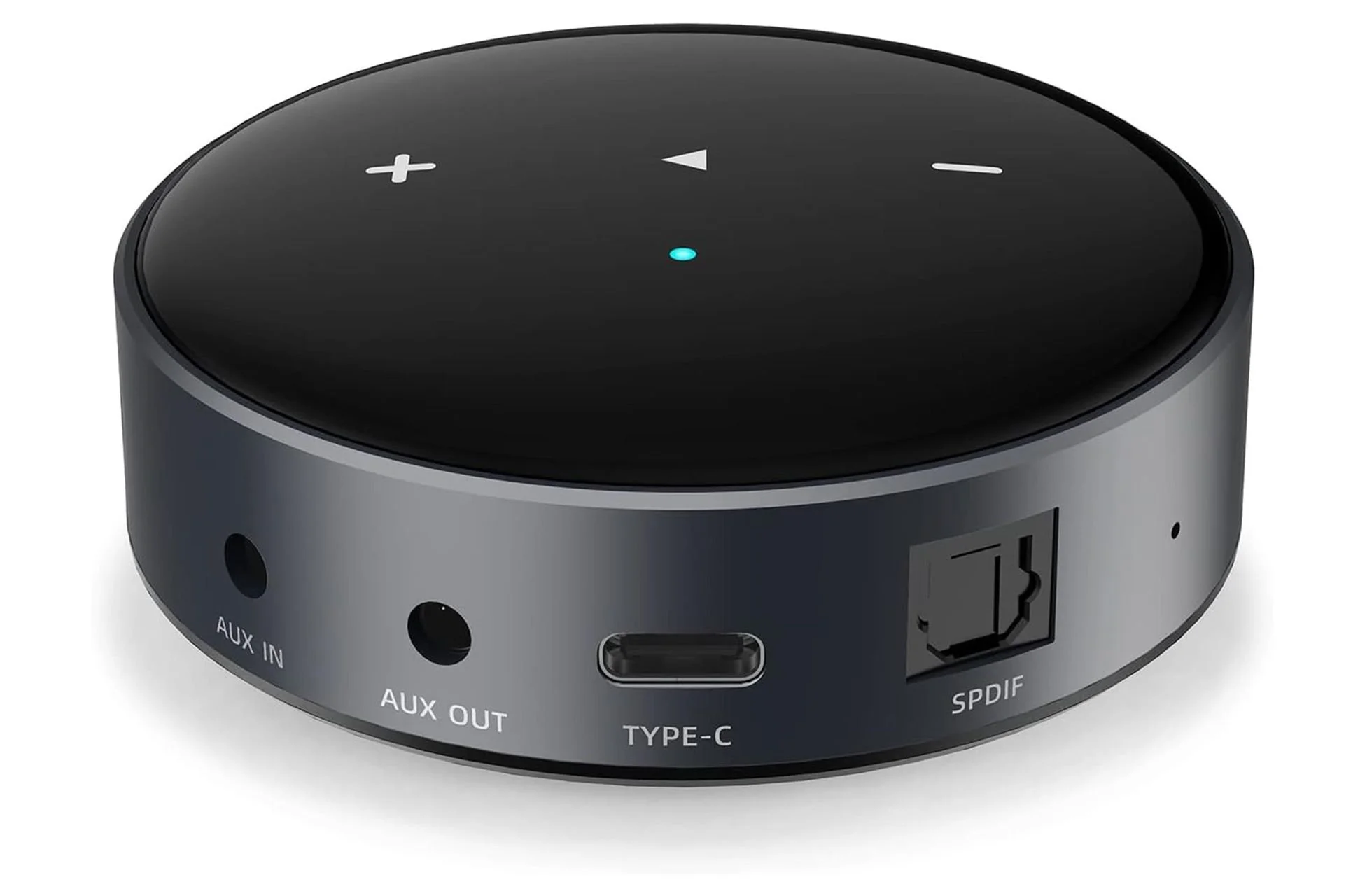
WiiM Mini Brings Streaming to Existing Systems
The compact WiiM Mini offers a simple and affordable route into network audio, while the WiiM Ultra adds a touchscreen, improved conversion and enough connectivity to make some traditional Hi-Fi components look rather underprepared.
Eversolo has performed a similar trick further up the ladder. The Eversolo DMP-A6 Gen 2 combines streaming, digital-to-analogue conversion, pre-amplification and music-server capabilities with a large touchscreen and excellent connectivity.
Moving up to the Eversolo DMP-A8 brings a more advanced power supply, conversion stage and analogue pre-amplifier section.
Both brands have wowed the industry by offering an enormous amount for the money, and established manufacturers have undoubtedly taken notice.
However, they are understandably limited by their budgets. A manufacturer cannot include the same power supply, clocking, isolation, casework and premium output circuitry as a reference product while charging a fraction of the price. That is not a criticism. It is simply fact.
The achievement of WiiM and Eversolo is not that they make high-end streamers redundant. It is that they offer a remarkable slice of the experience for considerably less money.
Streaming Amplifiers or Separate Components?
A streaming amplifier combines the streamer, DAC, pre-amplifier and power amplifier inside one enclosure. Connect a pair of speakers, open the app and away you go.
Products such as the WiiM Amp Ultra make a compelling case for this approach, particularly in smaller rooms, where simplicity matters or where budget is non-negotiable.
The Linn Majik DSM demonstrates how far the all-in-one concept can be taken, combining high-quality streaming, amplification, extensive connectivity and Linn’s Space Optimisation technology.
The advantages are obvious. There are fewer boxes and cables, installation is easier and every section has been designed to work together. In many cases, an all-in-one system also represents better value than purchasing each component separately.
A well-designed streaming amplifier is not automatically a compromise. For many listeners, it may be the most sensible and best-sounding option.
Separate streamers and amplifiers offer different benefits. Each component can have its own enclosure and power supply, reducing interference between sections. You can choose the streamer, DAC and amplifier that best suit your speakers, then upgrade each part independently.
Separates generally provide a higher ultimate performance ceiling. The downside is more cost, more cables and the possibility of ending up with seventeen boxes after originally deciding to simplify things.
Stepping Up to Innuos, Naim and Linn
At the upper end of the Audio T streaming range, Innuos, Naim and Linn show what becomes possible when the digital source is treated with the same seriousness as a high-end turntable or CD player.
The new Innuos STREAM1 is particularly interesting because it is modular. It can be configured as a streaming transport, music server or complete player with an internal DAC.
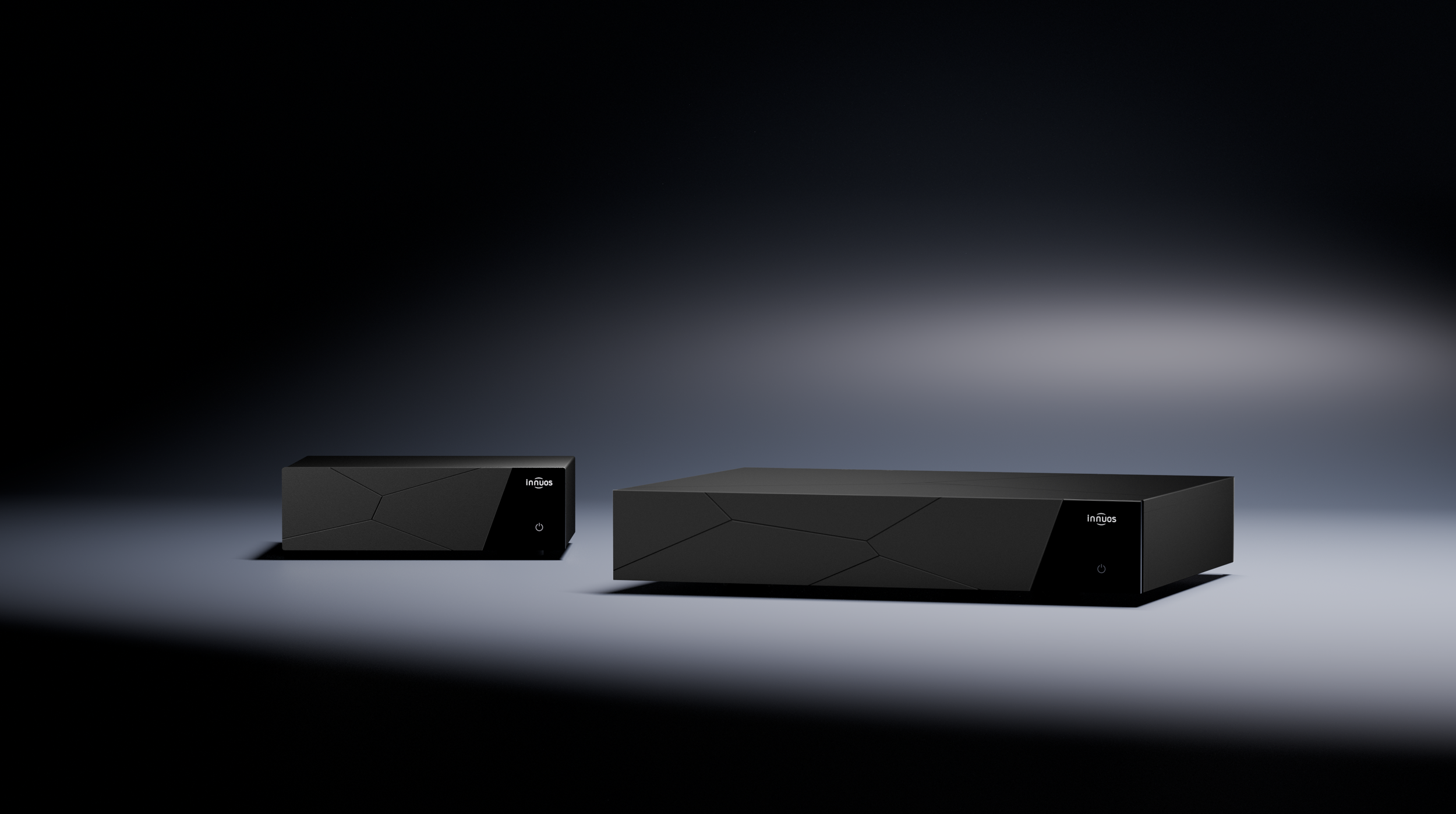
Innuos STREAM1 With matching LPS1 linear power supply
Optional storage allows a locally held music library to sit alongside online streaming services, while the matching LPS1 linear power supply provides a clear upgrade route.
The Innuos STREAM3 takes the same flexible approach considerably further. Its more substantial power architecture, advanced clocking, heavily engineered chassis and modular output options are designed to produce a quieter and more accurately timed digital signal.
It can feed a high-quality external DAC or become a complete source with one of Innuos’ optional DAC modules. This makes it equally relevant to someone building a new reference system and someone who already owns a favourite DAC.
The STREAM1 and STREAM3 are excellent examples of why streamers do not all sound alike. Innuos has treated the network, processor, power supply, chassis, software and audio output as parts of one complete source, rather than adding streaming as a convenient extra feature.
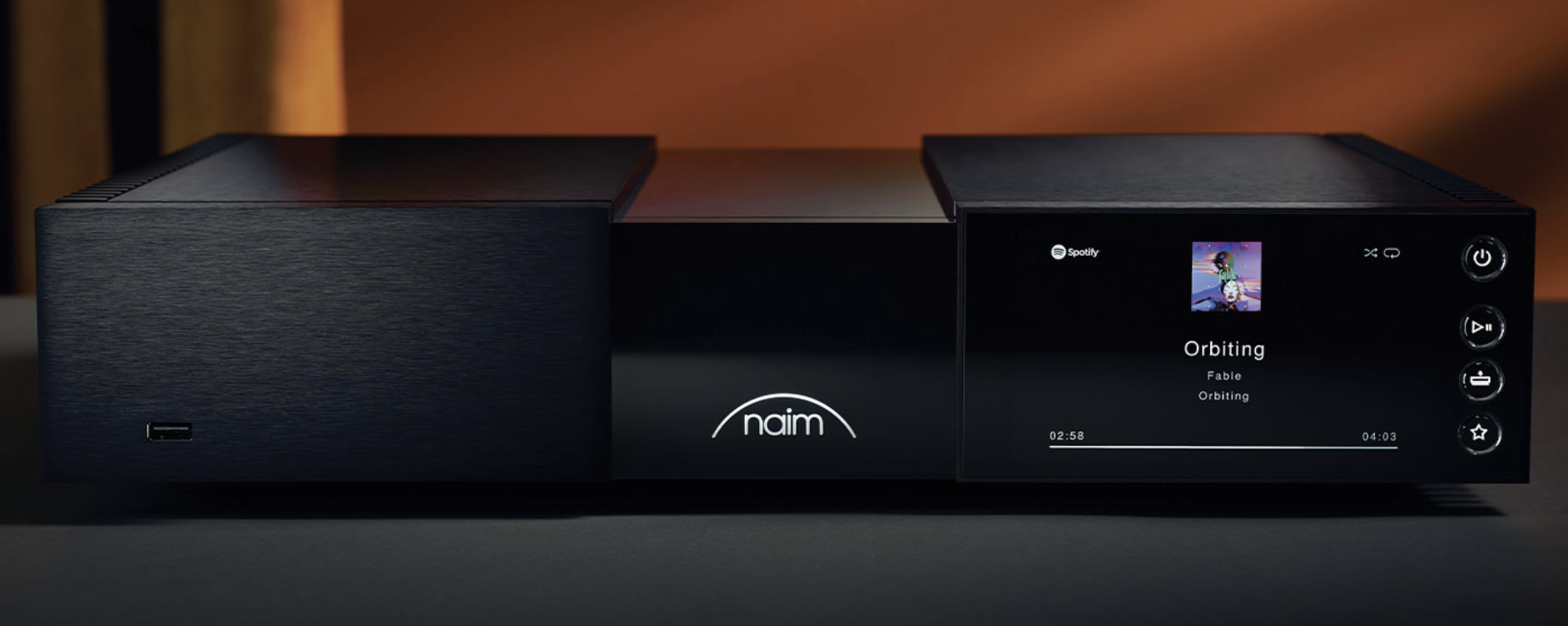
NAIM NSS 333
Naim takes a similarly serious approach with the NSS 333. It combines their streaming platform with carefully engineered digital processing, conversion and discrete analogue output circuitry.
It can also be upgraded with an NPX 300 external power supply, because this is Naim and there is almost always another box waiting patiently in the wings.
At the summit sits the Linn Klimax DSM. This is not simply a streamer, but a reference digital source, DAC and pre-amplifier built around Linn’s Organik DAC, Utopik power supply and precision-machined enclosure.
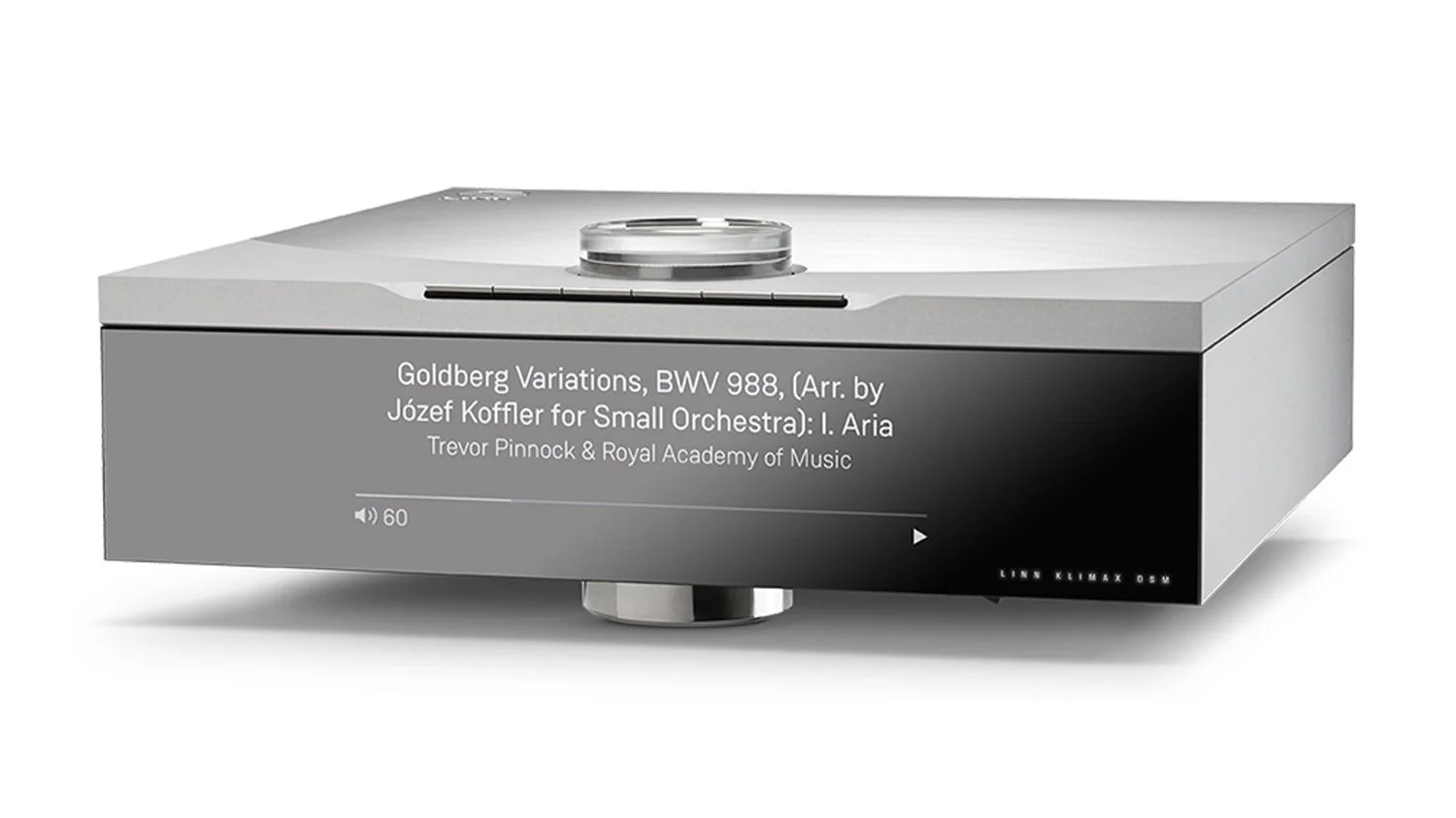
It can also improve connected digital and analogue sources while incorporating Linn’s Space Optimisation system.
These products cost considerably more because considerably more engineering has gone into controlling the conditions under which the music is received, processed, converted and passed to the amplifier.
So, Is Spending More Worth It?
Generally, yes.
The move from having no proper streamer to something like a WiiM Mini or WiiM Ultra can completely transform how often you use your Hi-Fi.
Moving to Eversolo can bring better build, broader functionality and a more accomplished performance. Stepping into Innuos, Naim or Linn territory will then uncover greater clarity, space, texture, timing and musical involvement that is worlds apart.
However, the improvement must be considered within the complete system.
Connecting a reference streamer to an entry-level amplifier and loudspeakers may produce an improvement, but it is unlikely to reveal everything the streamer can do. To use my go-to analogy when talking about these things - It would be rather like fitting Ferrari racing wheels to a go-kart. Technically impressive, but perhaps not the most balanced use of the budget.
As prices rise, improvements also become more expensive. The difference between a basic network adapter and a good budget streamer may be dramatic. The difference between two already excellent high-end sources can be subtler, although in a suitably revealing system it may still be musically significant.
The real question is therefore not simply:
“Does the expensive streamer sound better?”
It is:
“Does it sound sufficiently better in my system to justify the difference?”
That is why demonstrations matter. Use the same amplifier, speakers, streaming service and familiar music, then compare the streamers under controlled conditions.
A specification sheet can tell you how many bits are involved. Your ears must decide whether they are having more fun.
Thanks for reading.
Brad Tyler – Head of Marketing at Audio T
If you have any questions about any of the equipment featured in this article, or any other Hi-Fi or home cinema enquiries, be sure to contact your local Audio T.
If you’ve enjoyed this, why not go ahead and read some more of our other blogs, and be sure to follow us on our social media channels below…
WiiM and Eversolo can be found at the following Audio T stores
Naim, Innuos can be found at the following Audio T stores
Linn can be found at the following Audio T stores