
Chord Electronics Quartet: A New Era in Audio Upscaling
/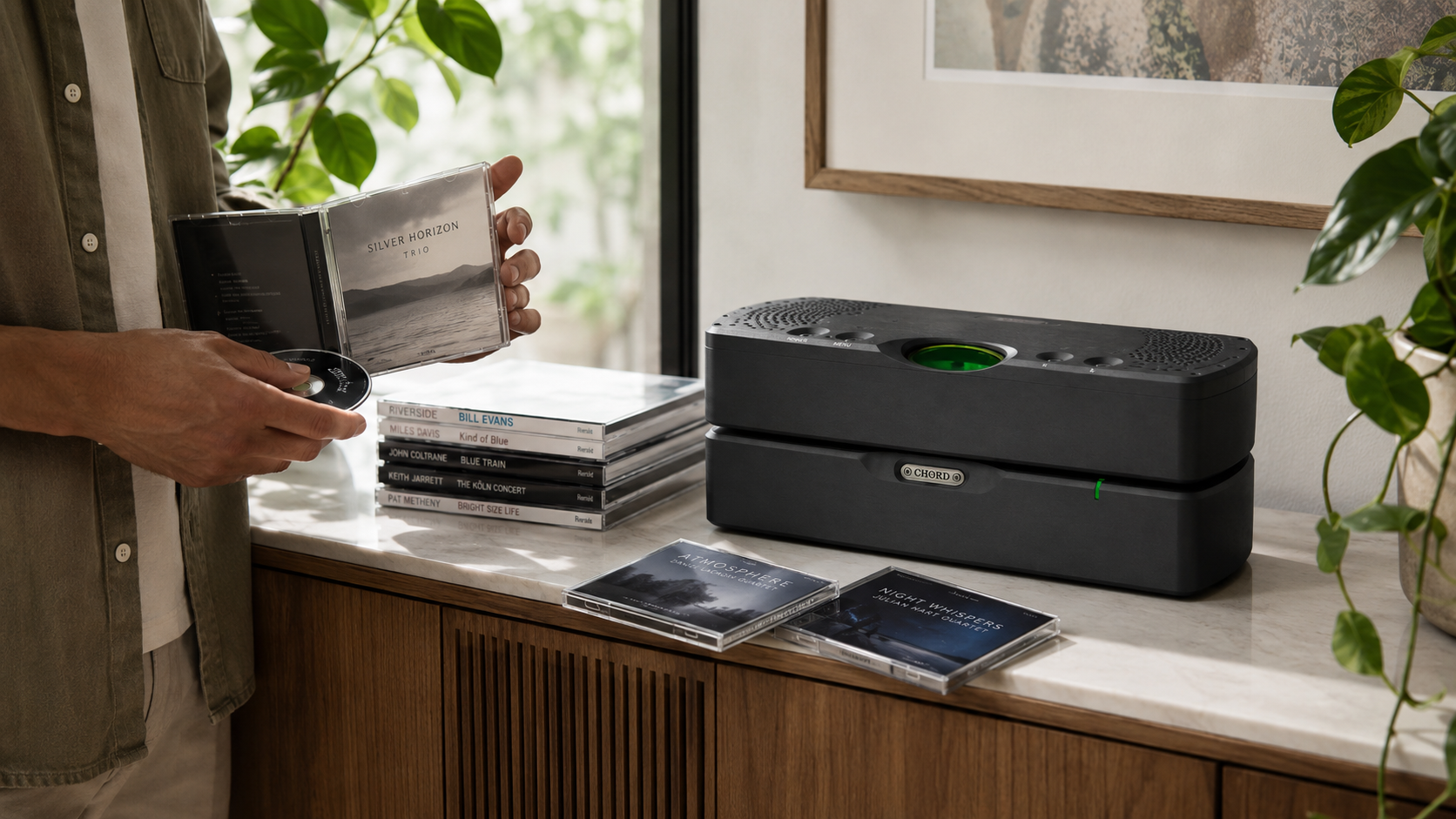
Many of us will be familiar with upscaling in relation to our TV pictures. But fewer will have heard audio upscaling in action, let alone the astonishing talents of the new Chord Electronics Quartet.
It is probably no exaggeration to say that it is products like the Quartet from Chord Electronics that help redefine the art of the possible in hi-fi.
This £25,000 box of electronic wizardry can, for example, take a standard CD 16-bit/44.1 kHz signal or a high-res 24-bit file and upscale it to a maximum of 768 kHz.
But then so can Chord’s own M Scaler, and for considerably less money. So what does the Quartet bring to the upscaling party that its less costly stablemate doesn’t? The answer is: a heck of a lot, actually.
Suffice to say at this point in the blog that the Quartet, which is housed in the familiar, beautifully machined aluminium Choral casework, offers a step change in terms of the processing power and talents it brings to the upscaling table.
The technical bit
When we play a CD or stream a piece of music, that digitised material has been created by taking snapshots or samples at regular intervals of the original analogue waveform. These snapshots are assembled to create a digital copy of the music.
While modern digital audio is very accurate, no digitisation process captures every point of the original analogue waveform. So a 16-bit/44.1 kHz CD, or even a 24-bit high-resolution stream with a higher sample rate of 96 kHz or even 192 kHz, will have tiny gaps in the music which, in turn, impact on the fidelity of the music we hear.
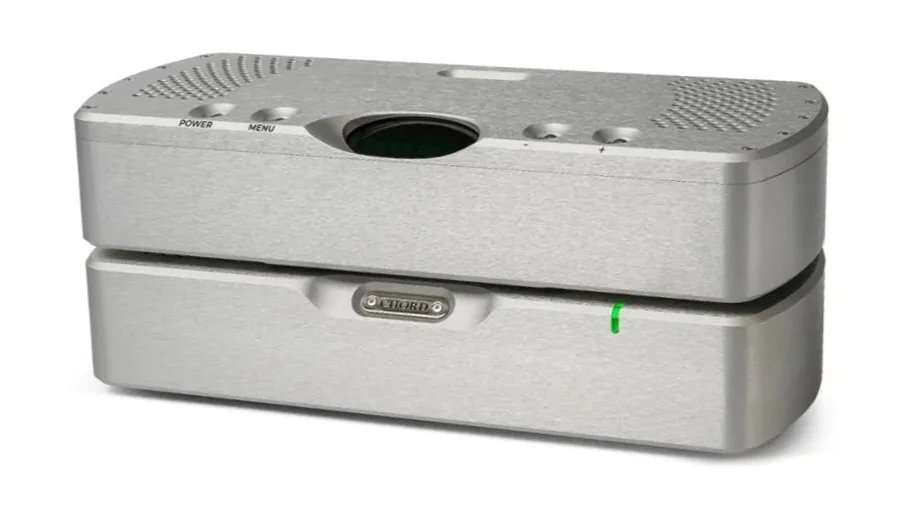
Chord electronics quartet with power supply
The more information missing in a music file, the less detail we hear. Less information also means, among other things, less dynamic range, a more two-dimensional soundstage, a less authentic tonality and looser timing.
An upscaler works by intelligently reconstructing the information between those sample points. The more accurately this reconstruction is performed, the more faithful the resulting waveform is to the original analogue signal.
Serious processing power
The Quartet, which is supplied with a dedicated off-board power supply, has taken this process of sampling to new heights and uses huge processing power to perform the reconstruction to an extremely high level of accuracy.
At its heart are five Xilinx FPGA (Field-Programmable Gate Array) chips. By way of comparison, Chord’s excellent DAVE DAC has one FPGA chip. Each FPGA is programmed to Chord’s exacting specifications and optimised for the tasks they are required to perform.
The enormous processing power allows the Quartet to run the Blackbird WTA (Watts Transient Aligned) filter, designed by Chord’s design guru Rob Watts.
In the simplest terms, this filter enables the Quartet to achieve a remarkable four million samples or ‘taps’ of an incoming signal, allowing it to build a very accurate picture of the music. It allows for more data points, less guesswork and fewer errors when reconstructing the waveform. Chord Electronics’ own highly regarded M Scaler manages a ‘mere’ 1 million taps.
By way of analogy, imagine trying to recreate a great work of art from a handful of blurry black and white photographs. It would be difficult, if not impossible, to do justice to the original work. But given hundreds of very high-definition photos of the same artwork, it becomes far more likely that any copy will more closely resemble the original.
The Quartet then applies all that processing power to those millions of taps, or sample points, to reconstruct a highly accurate, high-res waveform. The aim is to fill in those tiny gaps in the digital file and thereby deliver music with superb timing, transients, resolution and tonality.
Upscaling analogue sources
Not only that, but, for the first time in a Chord upscaler, the Quartet incorporates an integrated Pulse Array analogue-to-digital converter (ADC).
This allows analogue sources, including high-end turntables, to benefit from the same advanced upscaling technology, extending the Quartet's capabilities beyond purely digital playback.
Connectivity
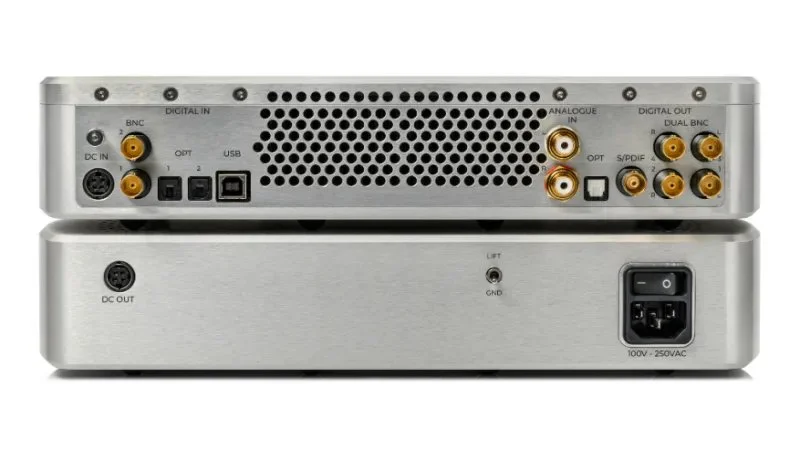
Includes USB, optical, BNC and dual-BNC outputs supporting resolutions up to 768 kHz, making the Quartet an ideal partner for Chord Electronics DACs – particularly the flagship DAVE DAC.
Impressive, but how does it sound?
According to Chord Electronics' design philosophy, improved transient timing is one of the most important aspects of realistic digital reproduction.
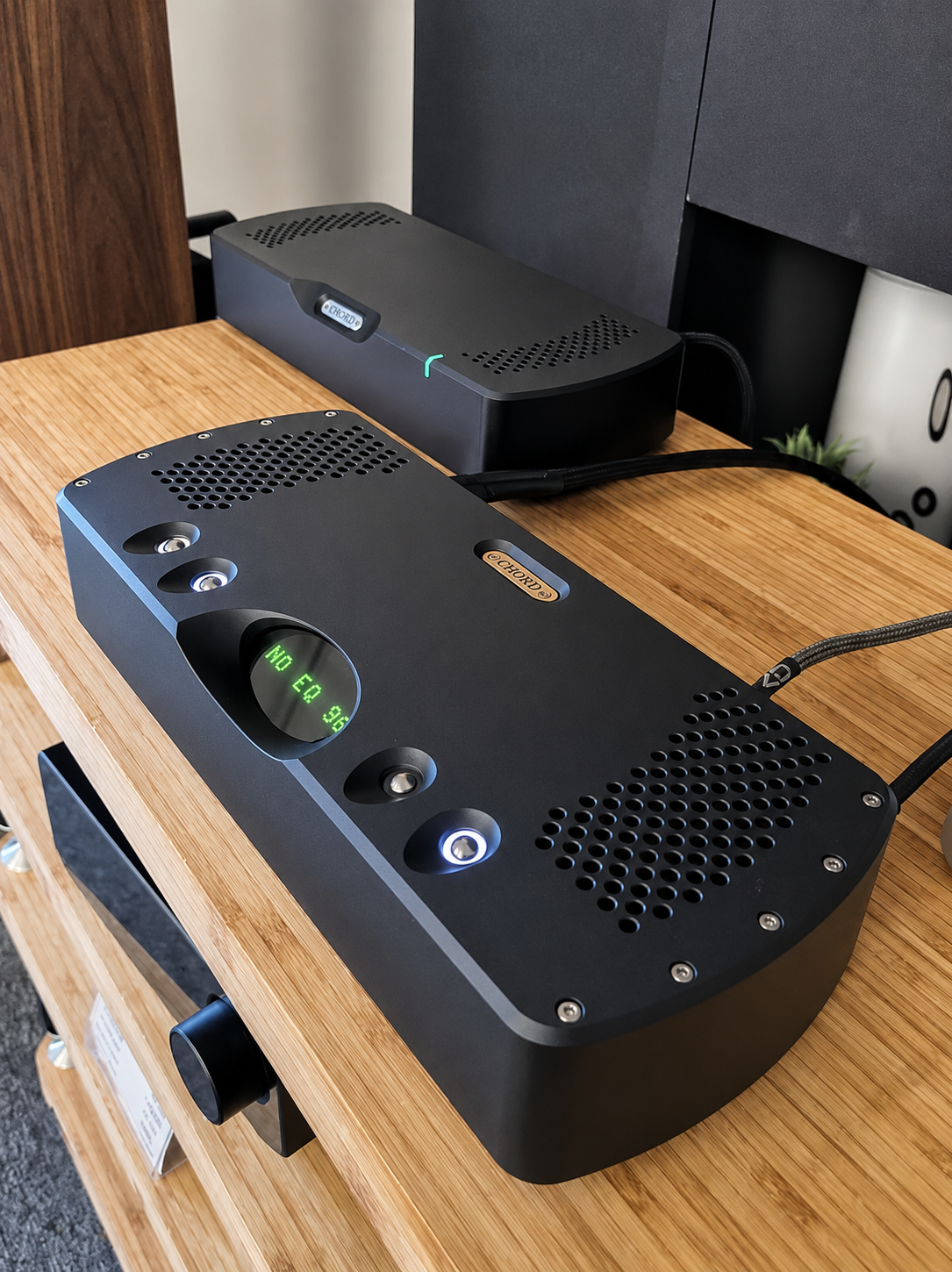
Listening to the Quartet in the Southampton demo room
Timing helps music sound coherent and, well, musical. The importance of timing is often overlooked when we talk about hi-fi simply because detail, soundstage and dynamics tend to grab our attention more when listening. But without accurate timing, all those wonderful details and all that dynamic sweep can be compromised and, in worst-case scenarios, can even begin to sound messy.
The Quartet’s ability to greatly reduce timing errors and accurately reconstruct the analogue waveform means it can more faithfully recreate all the good stuff we expect from top-notch hi-fi, such as the detail in the leading edge of notes, the space within the music, the natural decay of instruments and so on. All of that creates a more lifelike and immersive musical experience.
From our experience, Chord’s design philosophy translated beautifully into real-world listening in our demo session – and then some!
Putting the Quartet to the test
We played a number of tracks at 16-bit/44.1 kHz and higher resolutions using an Innuos Stream3 as a streaming transport straight into a DAVE DAC and into ATC SCM 50 ASL actives. All sounded hugely impressive, as you might expect from a streamer and DAC combination alone costing around £20,000, to say nothing of the excellent ATCs at over £16,000 a pair.
In fact, given the excellence of the Stream3 and DAVE DAC, we were all, with the exception of our Chord Electronics rep, wondering how much more the Quartet upscaler could realistically add.
We were prepared for a careful and critical listening session in which we would have to listen attentively to hear some subtle improvements in detail, etc.
However, on switching the Quartet from pass-through mode, which meant it did nothing to the signal, to ‘on’, the impact was immediate, obvious and unequivocal.
An immediate difference
Within the first few bars, it was obvious that detail and separation between instruments and vocals had improved dramatically. The music became clearer, more coherent and simply more present. This, we reckoned, was in significant part due to the improved transient timing.
The leading edge of instruments gained definition and texture, which gave greater dimensionality within the music. It allowed a more musical interplay between separate instruments and voices within a track. Everything was simply better sorted.
Yes, we could hear more detail, but this wasn’t a one-trick pony trying to win us over simply with microdetail fireworks. There was a naturalness and ease to the way the Quartet conveyed all that additional musical detail and nuance.
Tonality was greatly improved. The accuracy with which the Quartet captures the signal allows it to flesh out instruments and vocals, giving them back their microtonal nuances and even imperfections.
It was almost like we could hear the way in which the musician’s fingers manipulated the strings on their guitar, or the precise timbre of the stick on the skin of the snare drum, or the movements of the singer behind the mic. All very, very moreish.
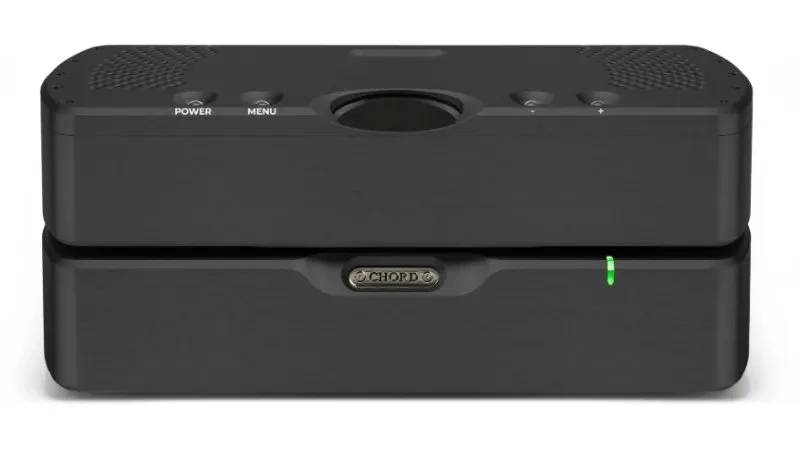
Available in Both Silver and Black
Conclusion
The Quartet reinstates into music all the good stuff like the on-point transients, the subtle timbre of instruments, the microtonality in vocals, the space in music, the leading edge and decay of notes, the subtleties and even the imperfections.
It is something of a hi-fi cliché, but the Quartet really did lift a veil from the music, allowing us to hear much more of what was there in the original analogue recording. It made for a compelling listen.
Obviously, there is a huge amount of electronic processing going on to allow the Quartet to do what it does so well. But its presentation never sounded like artifice or electronic jiggery-pokery. The music sounded natural and honest and, dare we say it, very analogue.
One of the benefits of working in hi-fi retail is that we often get to listen to some superb bits of kit. The downside of listening to loads of fantastic hi-fi components, if there is one, is that it can take a lot to genuinely wow us.
But the Chord Electronics Quartet did just that, and pretty much from the second it was turned on. Hugely impressive.
OK, at £25,000, the Quartet is clearly a costly bit of kit. But it is a cutting-edge upscaler representing a step change in tap rate and processing power. And it also comes with the Pulse Array ADC for analogue upscaling.
However, if you ask us, the Quartet’s real value lies in what it can do for music. The likelihood is that you would have to go a long way and spend an awful lot more than £25,000 to get the same upgrade in sound as that delivered by the Quartet.
If your system justifies a component of this quality, then you are strongly advised to give the Quartet a listen. Consider it especially if you already own Chord Electronics products such as a DAVE DAC.
If you buy one, it will likely transform your already excellent system into something that can deliver an altogether more insightful and absorbing listening experience.
Thanks for reading.
Alan (formerly of Portsmouth’s Audio T branch) - Audio T Southampton
If you have any questions about any of the equipment featured in this article, or any other hi-fi or home cinema enquiries, be sure to Contact Us.
If you’ve enjoyed this, why not go ahead and read some more of our other blogs, and be sure to follow us on our social media channels below…
Chord Electronics can be found at the following Audio T stores