

It’s as Easy as A-T-C: A Closer Look at Britain’s Studio-Bred Loudspeakers
/From compact standmount speakers to imposing floorstanders, ATC’s SCM range promises the same studio-inspired accuracy at very different scales. This month, we’re taking a closer look at three models from this celebrated British manufacturer, a long-standing favourite among music lovers searching for accuracy, transparency and impressive levels of detail.

ATC has spent more than five decades refining its loudspeaker designs, with its products used in professional recording studios as well as home hi-fi systems. With roots in studio monitor design dating back to 1974, the company has adapted that engineering expertise to create loudspeakers designed to deliver accuracy, control and detail in the listening room.
So, is ATC for you? Let’s find out
For this blog, we spent time listening to three models from ATC’s passive SCM range: the compact SCM7 standmounts, the considerably larger SCM19 standmounts, and the highly regarded SCM40 floorstanders.
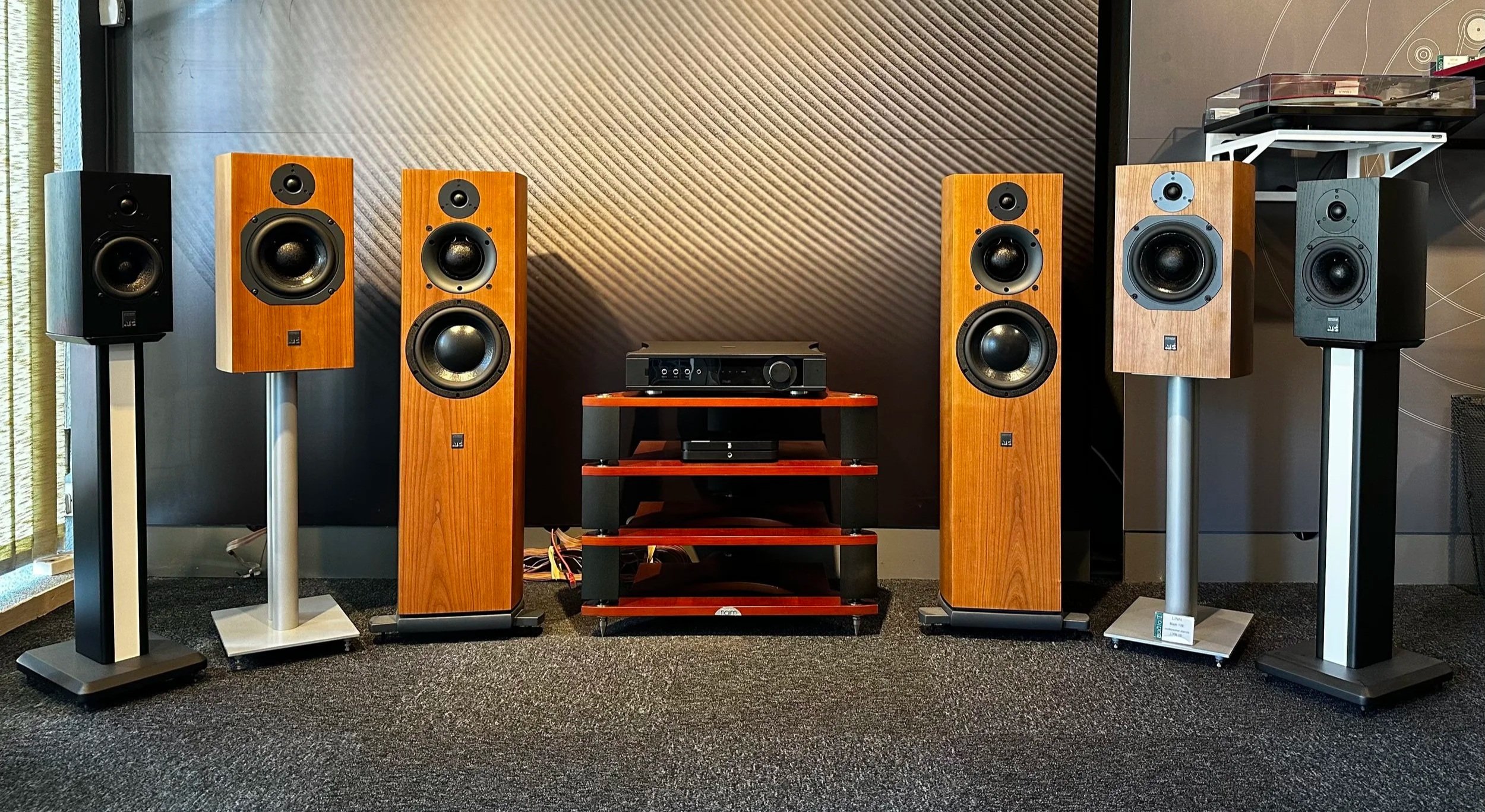
To keep the comparison as consistent as possible, all three speakers were initially partnered with a Rega Aethos integrated amplifier and a Bluesound Node streamer.
The three models share the same underlying ATC design philosophy, but each brings its own character, strengths and requirements.
To provide a broader perspective, I also enlisted two willing volunteers, my good friends Patrick and Jack, who are both relatively new to the hi-fi hobby. A second (or third) pair of ears, without years of preconceived expectations about what a particular brand or speaker should sound like, offered an interesting counterpoint to my own impressions and hopefully helped create a more balanced assessment.
Let’s get into it
For our main comparison track, we chose Born in Winter from Gojira’s album L’Enfant Sauvage.
It was selected for its combination of intricate musicianship and dramatic shifts in intensity. The song moves between relatively sparse passages and moments of dense, high-speed guitar and drum work, making it an excellent test of a loudspeaker’s ability to maintain clarity and instrument separation when things get busy.

Not your average hi-fi demo
Deep vocals are layered alongside emotionally charged screamed passages, challenging the speakers to recreate very different vocal textures without sacrificing detail.
In short, there’s quite a lot going on.
ATC SCM7
The SCM7 represents the starting point of ATC’s passive loudspeaker range.
Rather than simply trying to produce the biggest possible sound from a small enclosure, ATC’s approach with the SCM7 is focused on accuracy and control. Its sealed cabinet and carefully engineered drivers are designed to minimise unwanted colouration and deliver a fast, precise and naturally balanced presentation.
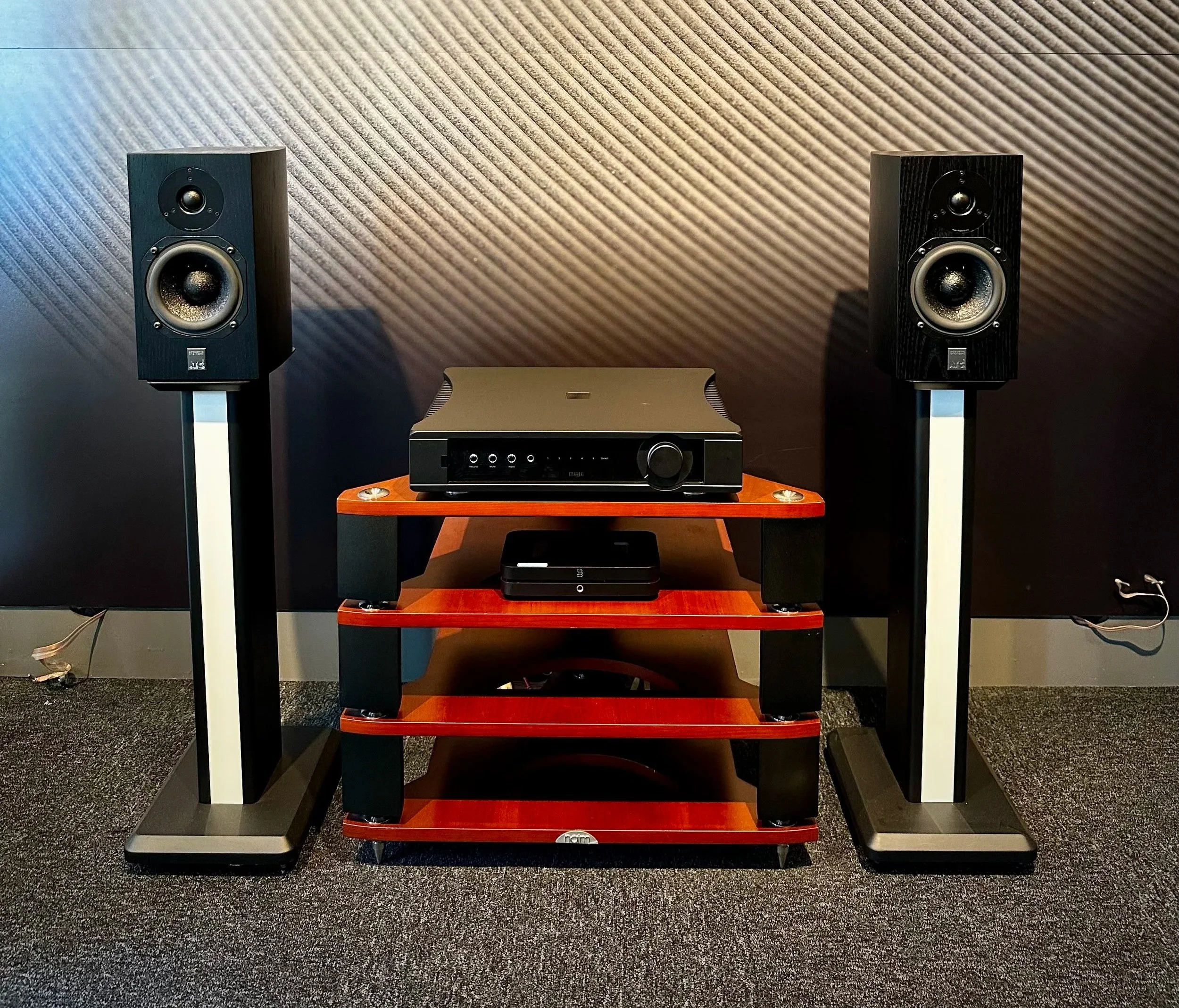
Of course, there are physical limits to what such a compact speaker can do at the bottom end, and that became particularly noticeable with our choice of music.
Small Speaker, Serious Detail
Immediately, two things stood out to me. The drums sounded extremely crisp and clean, but the song as a whole felt slightly hollow.
The reduced bass weight meant there was very little sense of muddiness, with individual instruments remaining impressively clear. The trade-off was that some of the impact and texture lower down the frequency range simply wasn’t there.
What surprised me most was the amount of texture I could hear in the guitar picking. Changes in the force of individual notes became much easier to pick out, including details I hadn’t really noticed before.
Patrick described the SCM7 as:
“Great at differentiating between the different instruments.”
However, he felt the vocals were slightly lacking because the deeper voice didn’t have quite the depth or texture he expected. He also felt some of the weight behind the distorted guitars was missing.
Jack came to a similar conclusion:
“Something’s missing.”
His immediate solution?
Probably a subwoofer.
A Change of Music Changes the Picture

We didn’t want to judge the SCM7 solely on one particularly demanding metal track, so we changed direction and listened to Blacked Out by Alfa Mist and Yussef Dayes.
Interestingly, many of the issues we had noticed with Gojira weren’t nearly as apparent.
The drums remained highly detailed, but the lack of deep bass became much less distracting. Patrick observed that the less dramatic shifts in intensity created an easy-listening sound, while the detailed rim taps of the drums came across as particularly elegant.
It was a useful reminder that a speaker’s suitability can depend heavily on the music you enjoy and what you want from your system.
ATC SCM19
Moving from the SCM7 to the SCM19, the underlying philosophy remains much the same.
The difference is that the larger cabinet and bass driver give the SCM19 considerably greater weight, scale and dynamic impact without abandoning the clarity and control that impressed us with the smaller model.
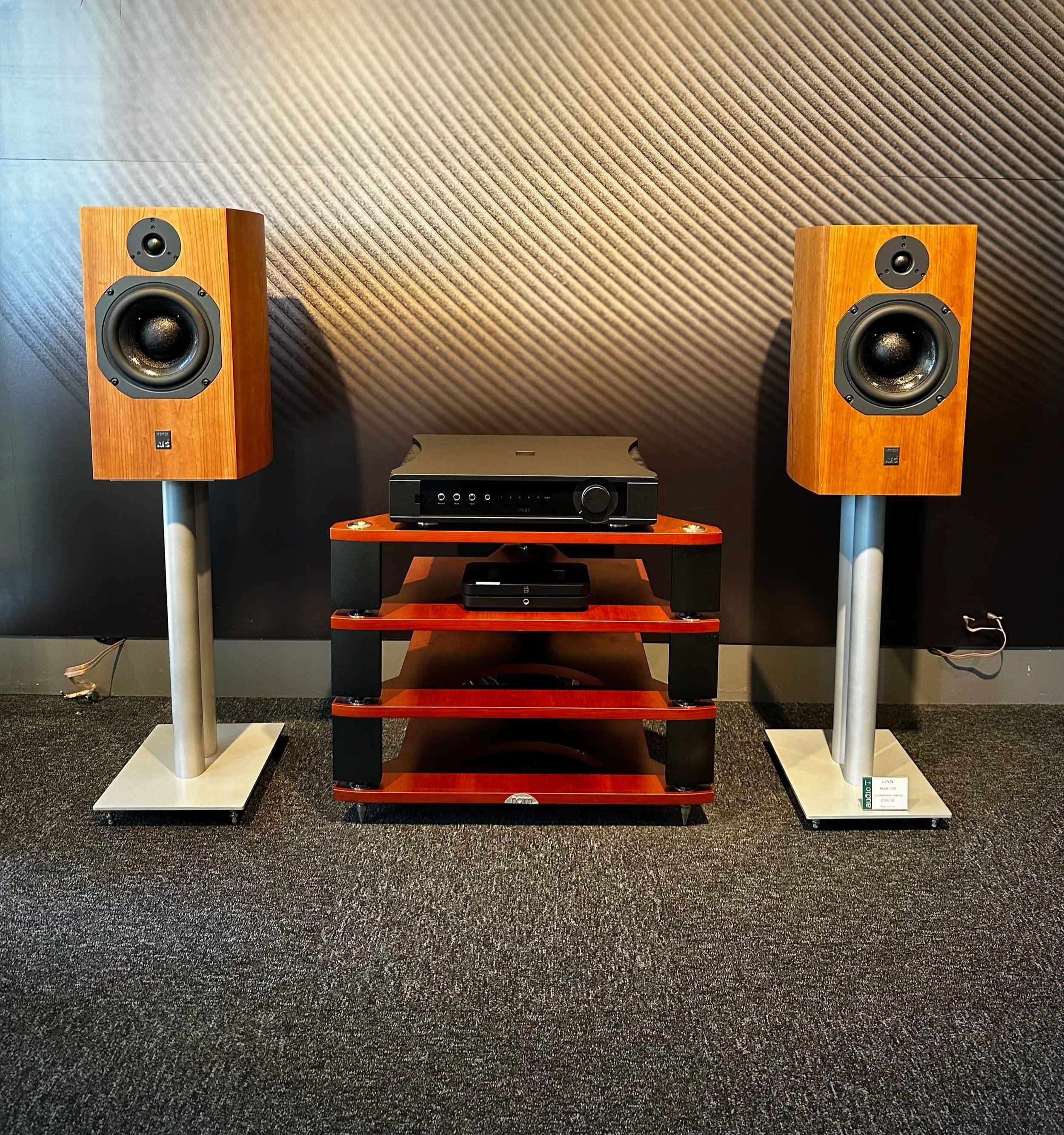
Although still not a low-end-focused speaker, there is enough energy to give clarity and body around the 60hz mark, with additional headroom allowing the speaker to remain composed as volume increases.
The Difference Was Immediate
For me, the jump from SCM7 to the SCM19 was night and day. The music suddenly became much more engaging. The extra body transformed the track, while the overall presentation felt much larger and more convincing.
Unexpectedly, one of the biggest improvements came from the vocals. They sounded more real and raw, with far more of the emotion of the performance coming through.
Lower notes were also much better defined. The kick drum could now thump its way through the chaotic wall of guitars without becoming lost in the mix.
Jack mostly agreed.
He felt that the more prominent bass gave the guitar greater involvement within the song and described the overall presentation as more sophisticated.
As a guitarist himself, he made one particularly interesting observation. Listening through the SCM19s, he became far more aware of the different layers used to create the guitar tone and felt he could almost begin identifying the individual effects involved.
That’s a pretty good demonstration of the extra detail the SCM19 were uncovering.
Jack also felt the instruments were more evenly balanced than with the SCM7, with the vocals becoming part of the performance rather than sounding as though they were sitting on top of it.
Interestingly, Patrick came away with a slightly different opinion.
Although he agreed that the SCM19 handled the distortion of the guitars significantly better, they actually made him appreciate the SCM7 even more, particularly when considering the smaller speaker’s lower price point.
Already, we weren’t all agreeing.
And that’s half the fun.
ATC SCM40
The SCM40 takes ATC’s renowned three-way approach and brings it into a larger floorstanding design.
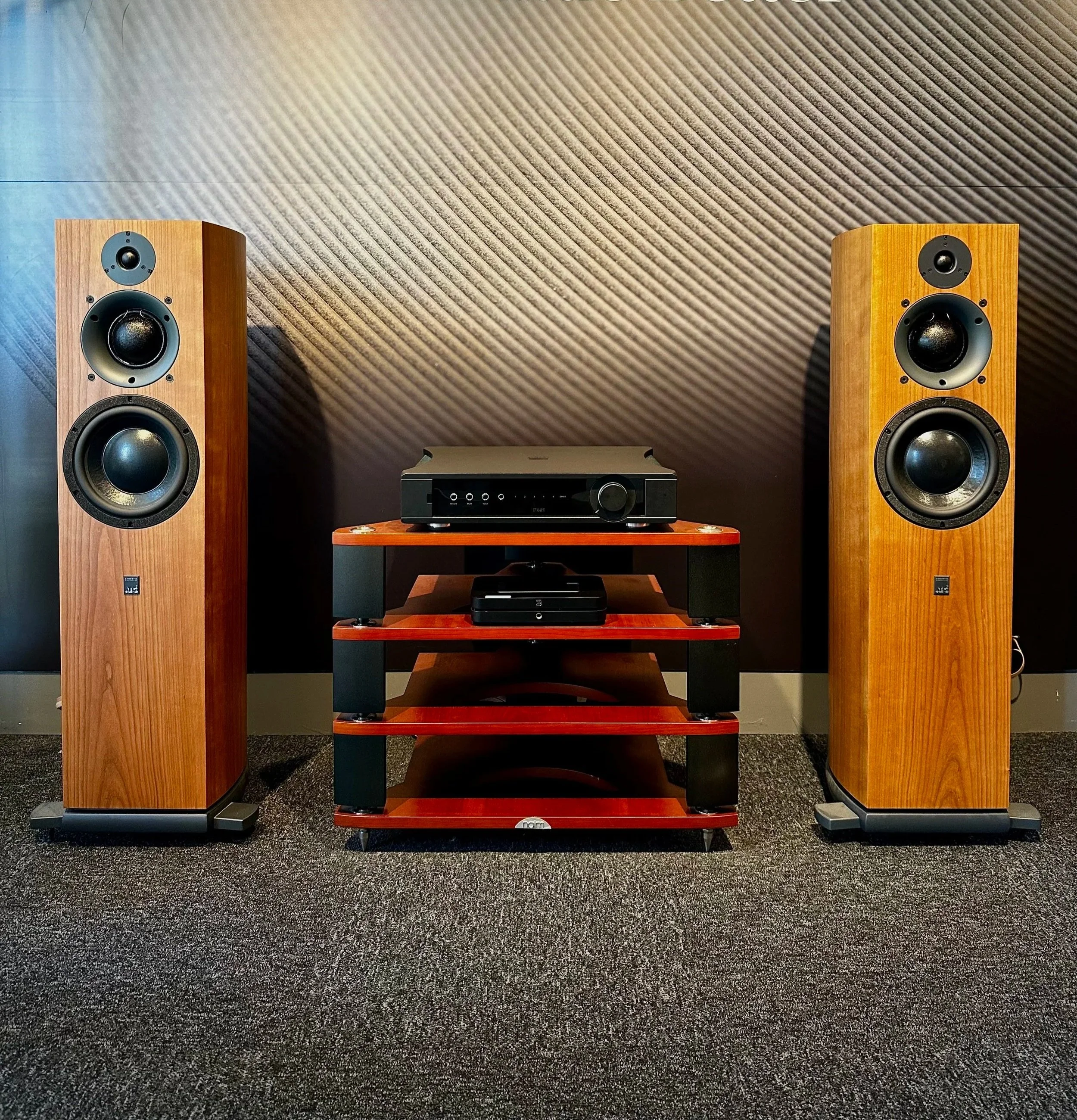
Importantly, it introduces ATC’s famous 75mm soft-dome midrange driver, dedicated to handling the crucial middle frequencies where so much of the character of vocals and instruments lives.
With each driver working across a more specialised part of the frequency range, the SCM40 promises greater scale, bass extension and refinement.
When Bigger Isn’t Automatically Better
This is where things became particularly interesting.
To my surprise, when we first connected the SCM40 to the Aethos, I actually felt we lost some of the clarity that had impressed me with the SCM19, despite the obvious increase in scale and bass presence.
The SCM40 is a more substantial loudspeaker and clearly responds to high-quality partnering amplification. In our room, with our system and at the levels we were listening, I felt the Aethos combination didn’t show the SCM40 at their absolute best.
Rather than simply accepting that as the final verdict, we decided to split this part of the test in two.
First, we would listen with the Rega Aethos for the sake of a consistent comparison.
Then we would move to Rega’s considerably more ambitious Mercury preamplifier and Solis power amplifier to see just how much further the SCM40 could go.
SCM40 with Rega Aethos
Through the Aethos, the presentation felt slightly muddier to me, particularly when trying to follow textures such as individual guitar strings being picked.
There was certainly more scale and bass, but I actually found myself preferring the SCM19 at this stage. The kick drum on the SCM40 almost seemed smaller in relation to the sheer size of everything else happening in the track, making the presentation feel a little less balanced to my ears.
Jack had a different take.
He felt the overall character was similar to the SCM19 but with increased bass undertones. Not necessarily extra punch, but more of the underlying rumble that helped hold the track together. As he put it:
“The bass sounded less like lingering residue and felt more intentional.”
Patrick disagreed with both of us to some extent. For him, the transition from SCM19 to SCM40 represented an even bigger jump:
“More character, more body. The highs of the guitar were very enjoyable compared with the previous speakers.”
Like Jack, he also felt that the track came together more convincingly and that there was much less need to consider adding a subwoofer.
And there you have it.
Three people. Same system. Same track. Different conclusions.
That’s the wonderfully subjective nature of hi-fi.
Giving the SCM40 Room to Breathe
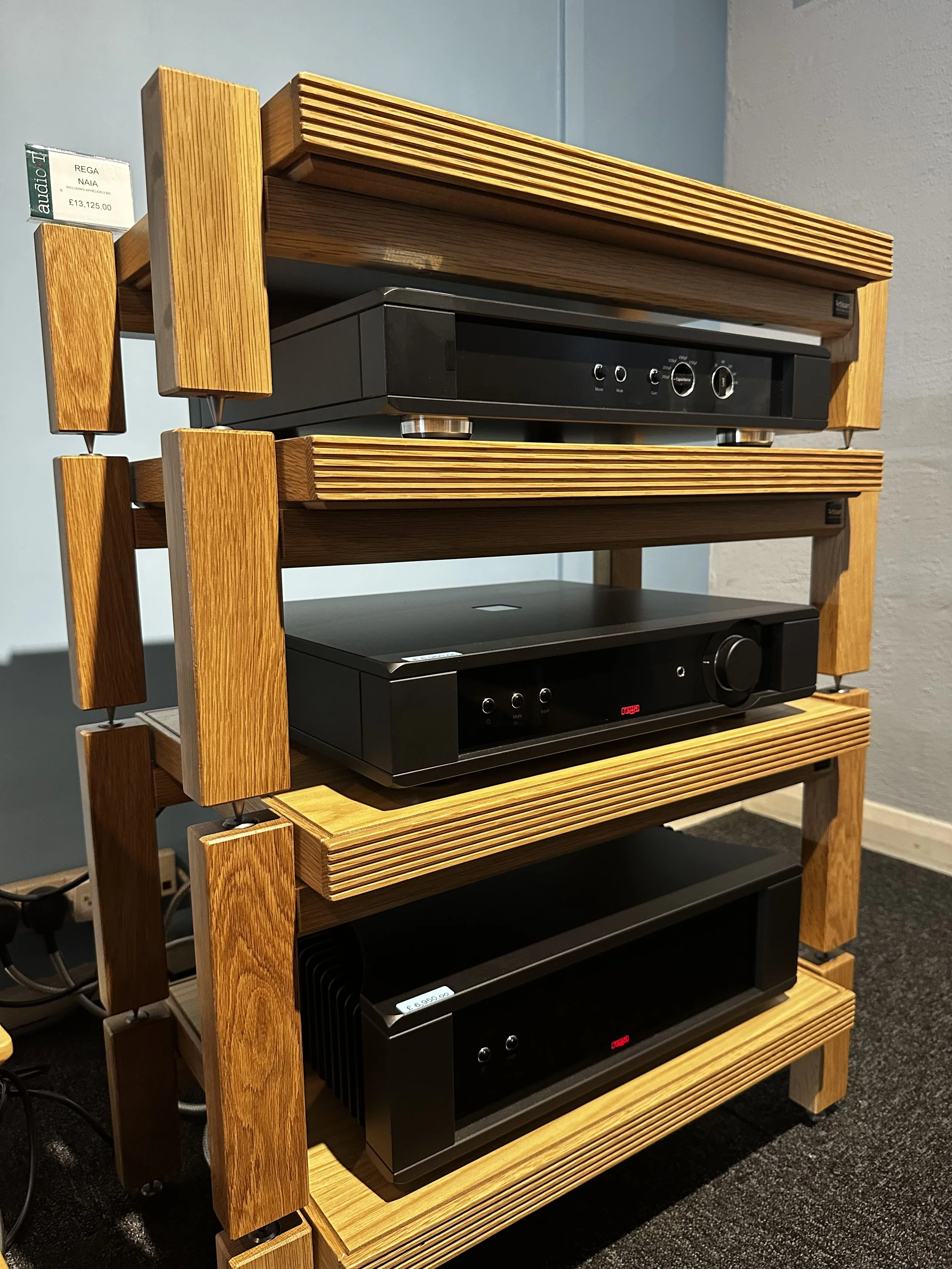
To find out what the SCM40 could really do, we moved over to Rega’s Mercury and Solis pre/power combination.
Rega Aethos vs Rega Mercury and Solis
For me, another major jump in performance was immediately apparent.
The system had considerably more authority and weight, while the treble detail returned cleaner than anything we had heard previously.
The slightly muddier character I had noticed with the Aethos disappeared. The Mercury and Solis combination gave the SCM40s a much greater sense of control, while the whole presentation became cleaner, more confident and more expansive.
Now the SCM40 really had room to breathe.
The soundstage opened up, instruments were easier to follow and the system had the ability to move from quieter passages into the heavier sections of the track with far greater conviction.
Patrick heard:
“More dynamics and power.”
Jack was similarly impressed:
“The drums feel more defined, standing out enough but not overpowering the rest of the track, allowing every instrument to sound good.”
Interestingly, Patrick still preferred the SCM19 overall.
He felt they presented some of the lower-frequency detail in a way he enjoyed more, despite acknowledging that the SCM40 combination was extremely impressive.
Once again, price and size hadn’t automatically determined the favourite.
So, Which ATC Is Right for You?
After spending time with all three models, one thing became very clear: ATC’s design philosophy remains remarkably consistent, but the listening experience changes considerably as you move through the SCM range.
The SCM7 impressed us with its clarity and ability to uncover small details, although its compact dimensions inevitably limit the weight and scale it can bring to particularly demanding music.
The SCM19 added the body, scale and vocal presence that made our Gojira track considerably more engaging. For me, it represented a wonderfully well-rounded balance between detail, scale and practicality.
The SCM40 was perhaps the most interesting of the three.
With the Aethos, its additional scale and bass extension were obvious, but I didn’t immediately feel it offered the same sense of clarity I had enjoyed from the SCM19. Partnered with Rega’s Mercury and Solis pre/power combination, however, the SCM40 really came alive, delivering significantly greater authority, dynamics, space and scale.
Ultimately, there wasn’t a single winner.
The SCM7 remains an incredibly detailed compact speaker. The SCM19 strikes an impressive balance between detail, scale and practicality, while the SCM40 offers another level of performance for those prepared to partner it with amplification capable of showing what it can really do.
And Patrick still preferred the SCM19.
At the end of the day, only your own ears can tell you which one is right for you. But it’s always nice to bring your friends along for the ride.
Thanks for reading.
Louis, Jake and James – Audio T Brighton
If you have any questions about the equipment featured in this article, or any other hi-fi or home cinema enquiries, be sure to contact your local Audio T.
If you enjoyed this article, why not take a look at some of our other Audio T blogs and follow us on our social media channels below…
ATC Loudspeakers can be found at the following Audio T stores