

Lyngdorf RoomPerfect: The Room Correction System That Doesn’t Try to Change Your Speakers
/For many years, we’ve been fans of Lyngdorf’s RoomPerfect technology, not because it produces the most dramatic transformation, but often because it doesn’t.
One of the most common comments we hear after demonstrating a Lyngdorf system is how natural and unobtrusive the correction sounds. Unlike some room correction systems that can leave the impression that the sound has been heavily processed or reshaped, RoomPerfect tends to feel remarkably gentle. The tonal character of the loudspeaker remains intact, the musicality remains intact, and yet the system often sounds cleaner, more balanced and more coherent within the room.
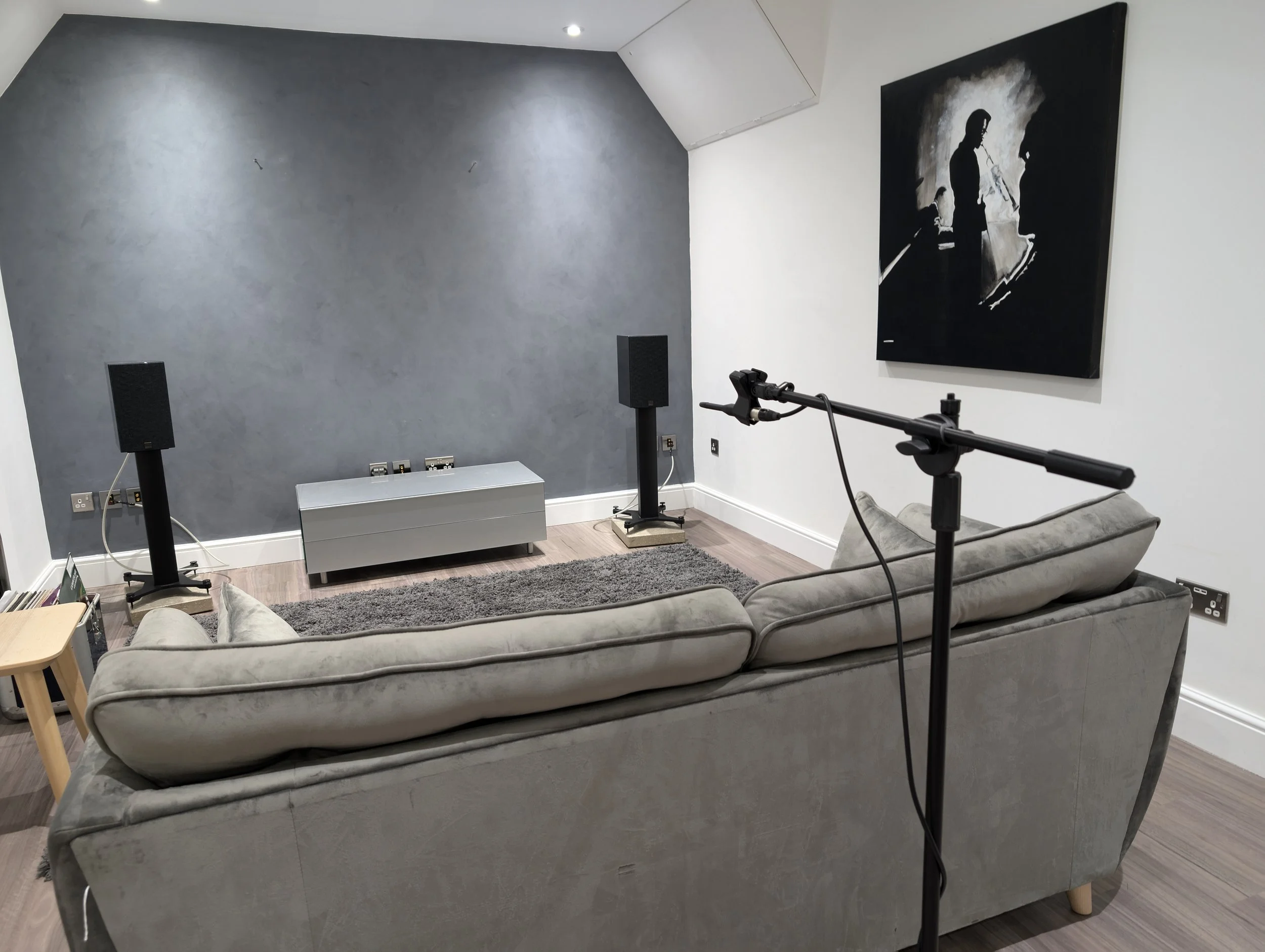
Measuring the Focus Listening Position
Having recently attended Lyngdorf’s RoomPerfect training, we finally discovered why.
Room correction is often associated with home cinema systems, and for good reason. When you’re trying to integrate multiple speakers positioned around a room, along with one or more subwoofers, accurate timing, level matching and room integration become critical to achieving a convincing surround sound experience. Technologies such as Dirac, Audyssey and RoomPerfect have therefore become increasingly common within AV processors and receivers.
However, the same room-related problems exist in two-channel Hi-Fi systems.
Very few of us enjoy the luxury of a perfectly symmetrical listening room. One speaker may be closer to a side wall than the other. Large windows may sit on one side of the room, while bookshelves, furniture or open spaces occupy the other. Hard floors, plaster walls and room dimensions all influence how sound behaves before it reaches our ears. Even the finest loudspeaker will perform differently depending on the environment it is placed in.
This raises an interesting question: if we’re willing to optimise a home cinema system to overcome the effects of the room, why wouldn’t we apply the same thinking to a high-quality stereo system?
It’s a question that Peter Lyngdorf has been exploring for more than three decades. Today, Lyngdorf offers some of the industry’s most sophisticated AV processors and amplifiers for reference-level home cinema installations, alongside a range of elegantly simple streaming amplifiers for two-channel music systems. At the heart of both sits the same technology: RoomPerfect.
What makes RoomPerfect particularly interesting is that it approaches room correction differently from most alternatives. Rather than attempting to force every loudspeaker towards a predefined target response, its primary goal is to understand the relationship between the loudspeaker and the room, minimise the room’s influence, and allow the speaker to sound more like the designer intended.
To understand why this approach sounds so natural, it’s worth looking at how RoomPerfect came to exist in the first place.
Peter Lyngdorf’s Frustration
The origins of RoomPerfect actually go back much further than Lyngdorf Audio itself.
In the 1990s, Peter Lyngdorf was involved in the development of early room correction systems through TacT Audio. These systems measured the response at the listening position and attempted to create a mathematically flat frequency response by applying the exact inverse of what was measured.
On paper, the results looked excellent. In practice, many listeners reported the same thing:
The sound became flatter, less engaging and less natural. While measurements improved, musical enjoyment often didn’t.
Peter Lyngdorf found himself asking a simple question:
“Why do loudspeakers sound so different in different rooms, and why does fixing the graph not necessarily fix the listening experience?”
That question ultimately led to the development of RoomPerfect.
Understanding the Difference
Traditional room correction systems typically focus on what happens at the listening position. RoomPerfect measures both the main listening position and multiple locations throughout the room.
By collecting information from many different positions, it develops a much broader understanding of the room’s behaviour, the loudspeaker’s behaviour and how the two interact.
This is important because sound is not static. Music fills a room in three dimensions. Energy builds over time, reflections arrive at different moments and bass behaves very differently from treble.
Rather than relying solely on a quick frequency sweep, RoomPerfect takes a much longer reading and analyses the overall power response of the loudspeaker within the room. This allows the algorithm to better distinguish between the characteristics of the loudspeaker itself and the problems introduced by the room. The result is correction that is more selective and less intrusive.
Why It Sounds More Natural
One of the most common comments from listeners experiencing RoomPerfect for the first time is that it doesn’t sound like traditional room correction.
This is because RoomPerfect is not trying to flatten everything by forcing every speaker towards a predefined target curve.
Instead, it seeks to reduce the room’s influence while retaining the qualities that made you choose that loudspeaker in the first place.
The sound character remains similar, but the benefits we often find are tighter, more controlled bass, improved integration between speakers and room, better imaging and focus, as well as greater consistency across the listening area.
But crucially, the system still sounds like your system.
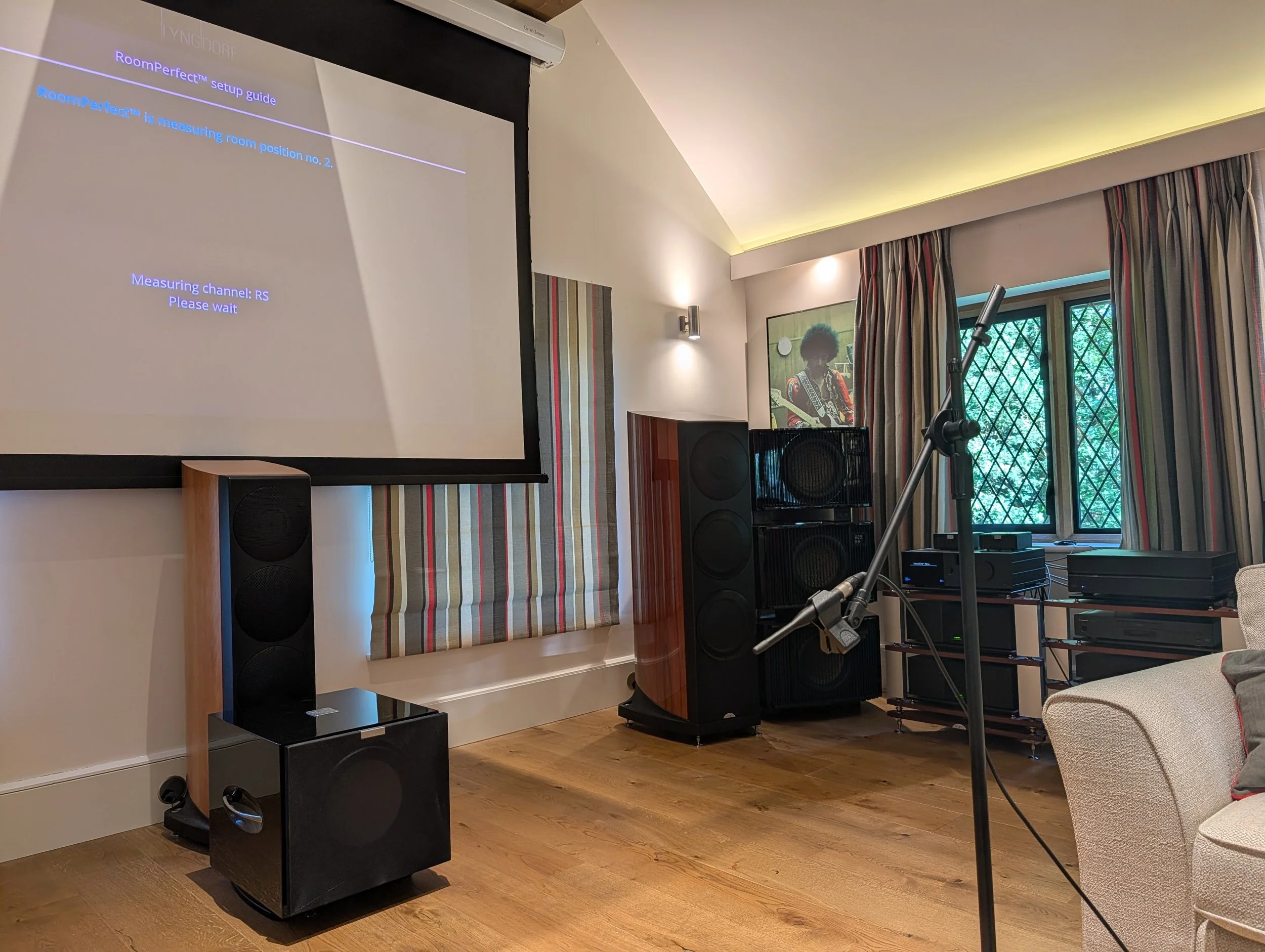
Measuring an acoustically complex space
Why Speaker Placement Still Matters
RoomPerfect is a powerful tool, but it isn’t magic.
Good speaker placement and sensible room setup remain important. Moving speakers away from severe boundary interactions and avoiding obvious room issues will always help. Likewise, well-designed acoustic treatment still provides significant benefits, and getting those two things right first will always give RoomPerfect a better foundation to work from.
RoomPerfect should be viewed as the final stage of optimisation rather than a substitute for good setup.
The Clever Bit
A very nice aspect of RoomPerfect is that it doesn’t require the user to understand room acoustics. You don’t need to calculate room modes, and you don’t need to identify SBIR (Speaker Boundary Interference Response) issues.
The system gathers information from multiple locations around the room and builds its understanding automatically. Behind the scenes, RoomPerfect is doing a remarkable amount of work. The user experience, however, remains refreshingly simple. The Lyngdorf app handles everything, and you can control it all from there, from speaker voicings to custom EQs for movie watching.
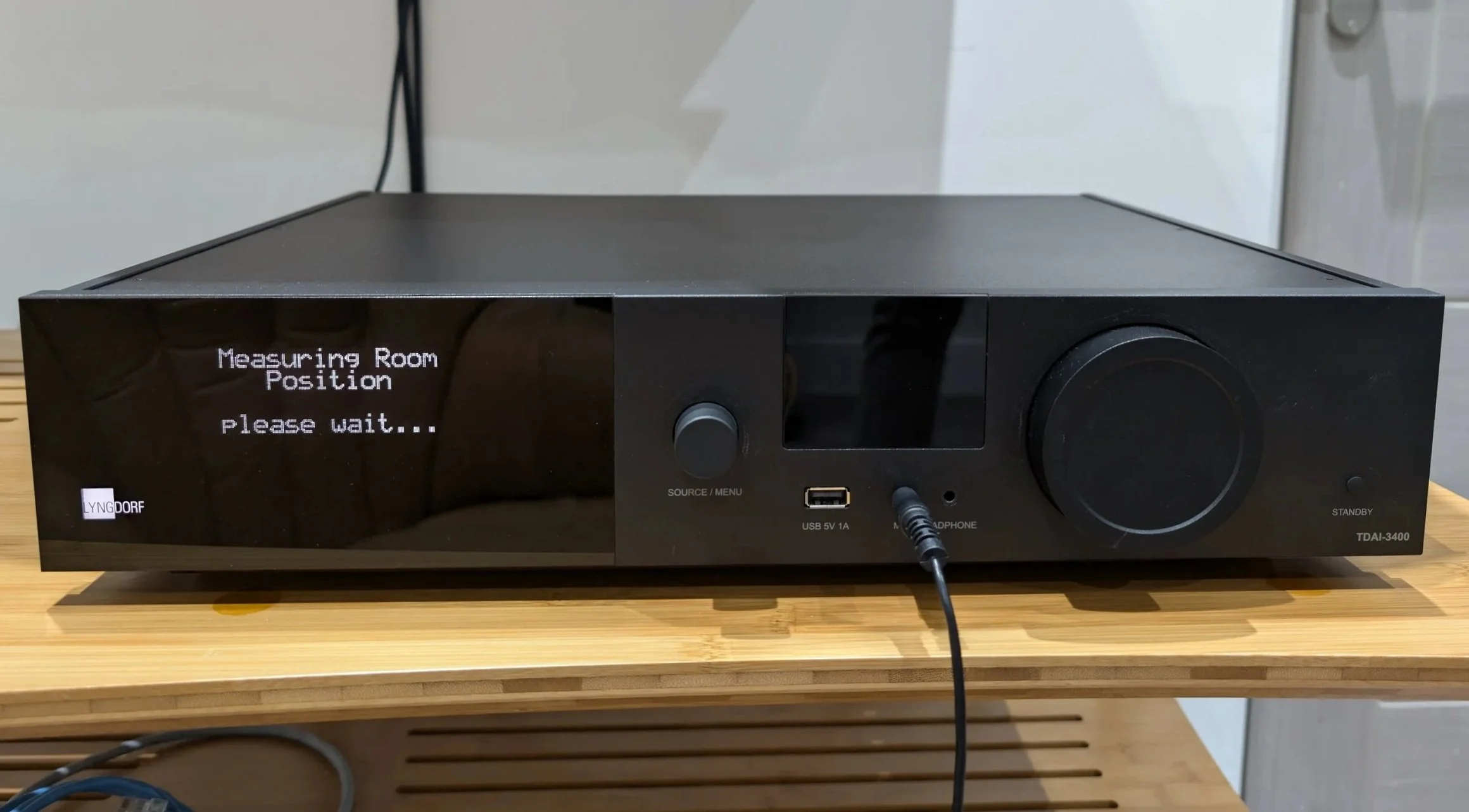
Why We Keep Coming Back to RoomPerfect
After attending Lyngdorf’s RoomPerfect training, the most striking takeaway wasn’t the technology itself; it was the philosophy behind it. Many room correction systems begin with the assumption that the loudspeaker is wrong and must be corrected.
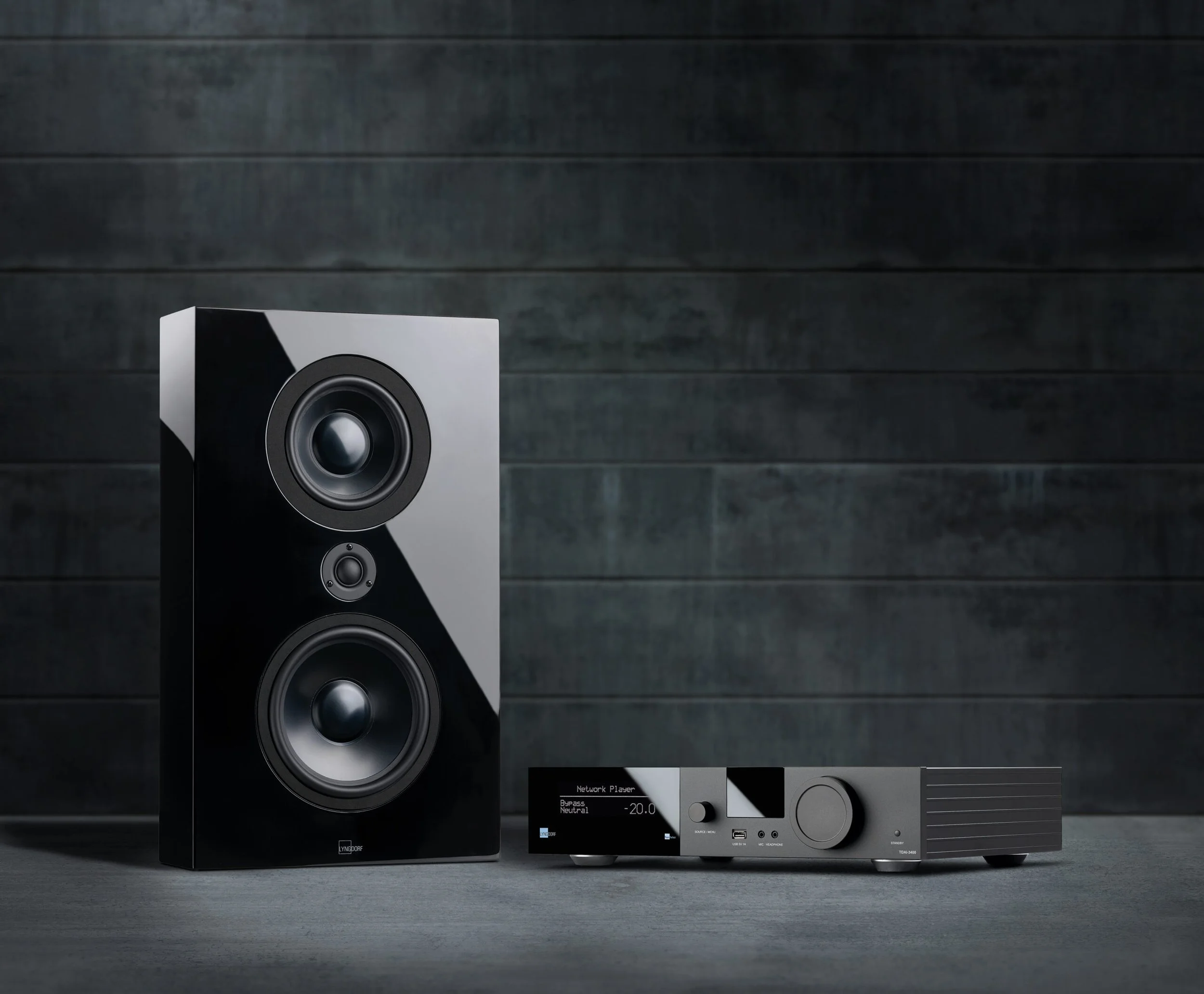
TDAI 3400 + Lyngdorf FR-1 Speakers
RoomPerfect starts from the opposite position. The loudspeaker has already been carefully designed and voiced by its manufacturer. The challenge is not to fundamentally change that character, but to reduce the influence of the room that is preventing you from hearing the loudspeaker at its best.
In a world increasingly obsessed with perfect graphs and ruler-flat measurements, RoomPerfect’s goal is surprisingly human: to make music and movies sound more natural, more believable and ultimately more enjoyable.
Today, RoomPerfect remains a proprietary technology exclusive to Lyngdorf and Steinway Lyngdorf products and can be found throughout the company’s range.
For two-channel systems, this includes the TDAI streaming amplifiers, comprising the TDAI-1120, TDAI-2210 and flagship TDAI-3400.
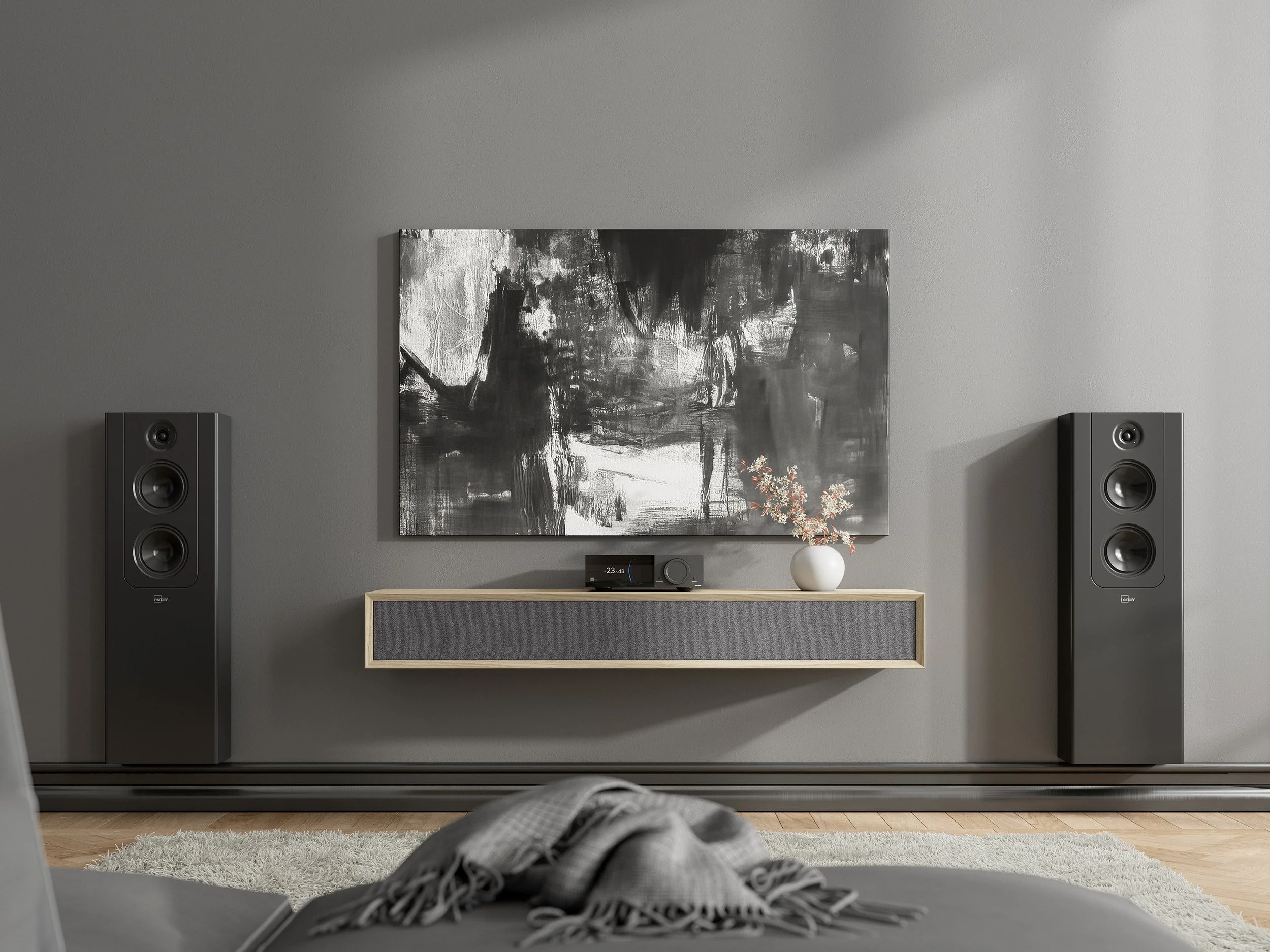
TDAI 2210 + Lyngdorf FR-2 Speakers
For home cinema enthusiasts, RoomPerfect is integrated into Lyngdorf’s highly regarded MP-40 and MP-60 surround processors, which are often found at the heart of some of the world’s most ambitious home theatre installations. These can be partnered with Lyngdorf’s exceptionally clean and powerful multi-channel and stereo power amplifiers to create systems capable of driving virtually any loudspeaker with ease. The standout products for us are the TDAI-2210 for two-channel systems, as well as the powerful MP-40 AV processor.
Beyond the room correction itself, Lyngdorf offers an impressive degree of flexibility. Users can create dedicated Focus positions for a primary listening seat, utilise Global mode to optimise performance across an entire room, save multiple listening profiles and tailor system voicings to suit different content. Whether you’re listening to music, watching a film, enjoying a live concert recording or simply filling a room with background music, the system can be adapted to your preferences, or left alone to quietly do its job in the background.
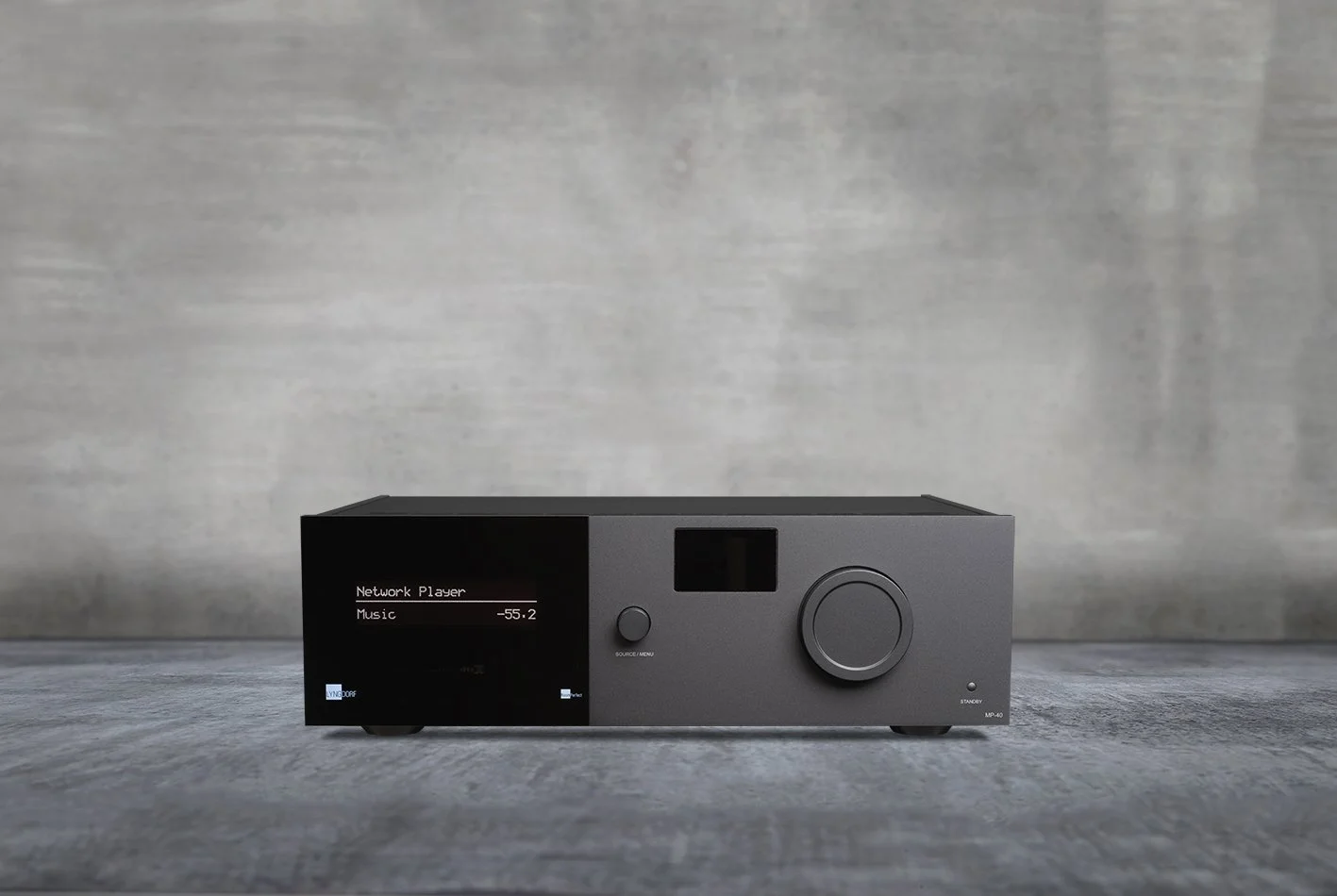
Lyngdorf MP-40 2.1 AV Processor
Lyngdorf also manufactures some great on-wall speakers, which work really nicely alongside the clever DSP that their electronics provide. So, for a discreet or small-footprint installation without compromising the sound, these options are really worth looking into.
Ultimately, that’s perhaps RoomPerfect’s greatest achievement. It doesn’t draw attention to itself. Instead, it allows the loudspeakers, the recording and the performance to take centre stage, while subtly reducing the room’s influence on what you hear.
Thank you for reading.
Dan, Gareth & Rishi – Audio T Reading
If you have any questions about any of the equipment featured in this article, or any other hi-fi or home cinema enquiries, be sure to Contact Us.
If you’ve enjoyed this, why not go ahead and read some more of our other blogs, and be sure to follow us on our social media channels below…
To hear the Room Perfect in action, Lyngdorf can be found at the following stores: