
EQ or Not to EQ? That is the Question. Getting the Best from the WiiM Ultra
/Getting the best from a hi-fi system means paying attention to the room as well as the equipment. In this blog, Paul from Audio T Bristol explores speaker placement, room acoustics and the WiiM Ultra’s RoomFit and parametric EQ features using his own home system. Drawing on his background in film and TV audio post-production, he shares how a few careful adjustments helped him achieve cleaner bass and more natural vocals, with some favourite test tracks along the way…

Right on EQ
When I first started getting into hi-fi, a lot of decent mid-budget amps didn't have tone controls. It was expected that the manufacturers had done all the work possible to get the best sound from an amplifier without any tonal adjustment from the owner.
My Cyrus One had volume and input, nothing else. My Audiolab 8000S likewise. Position your speakers in the optimum place in the room, switch on, and that was your set-up ready to go.
These days, devices such as the WiiM Ultra give us a few more tools to work with.
Speaker Location, Location, Location
My current home set-up consists of:
WiiM Ultra – Streamer/Preamplifier
Chord Company ClearwayX ARAY Analogue 2RCA to 2RCA – Interconnect
Advance Paris X-A160 – Power Amplifier
Chord Company ClearwayX 4m Ohmic Terminated – Speaker Cable Pair
Acoustic Energy AE300² – Standmount Speakers
One of the first questions we ask a customer who's interested in a new system is what size and shape the room is, and where they would like to place the speakers. These two factors have an enormous impact on what equipment you should be auditioning to get the best sound possible.
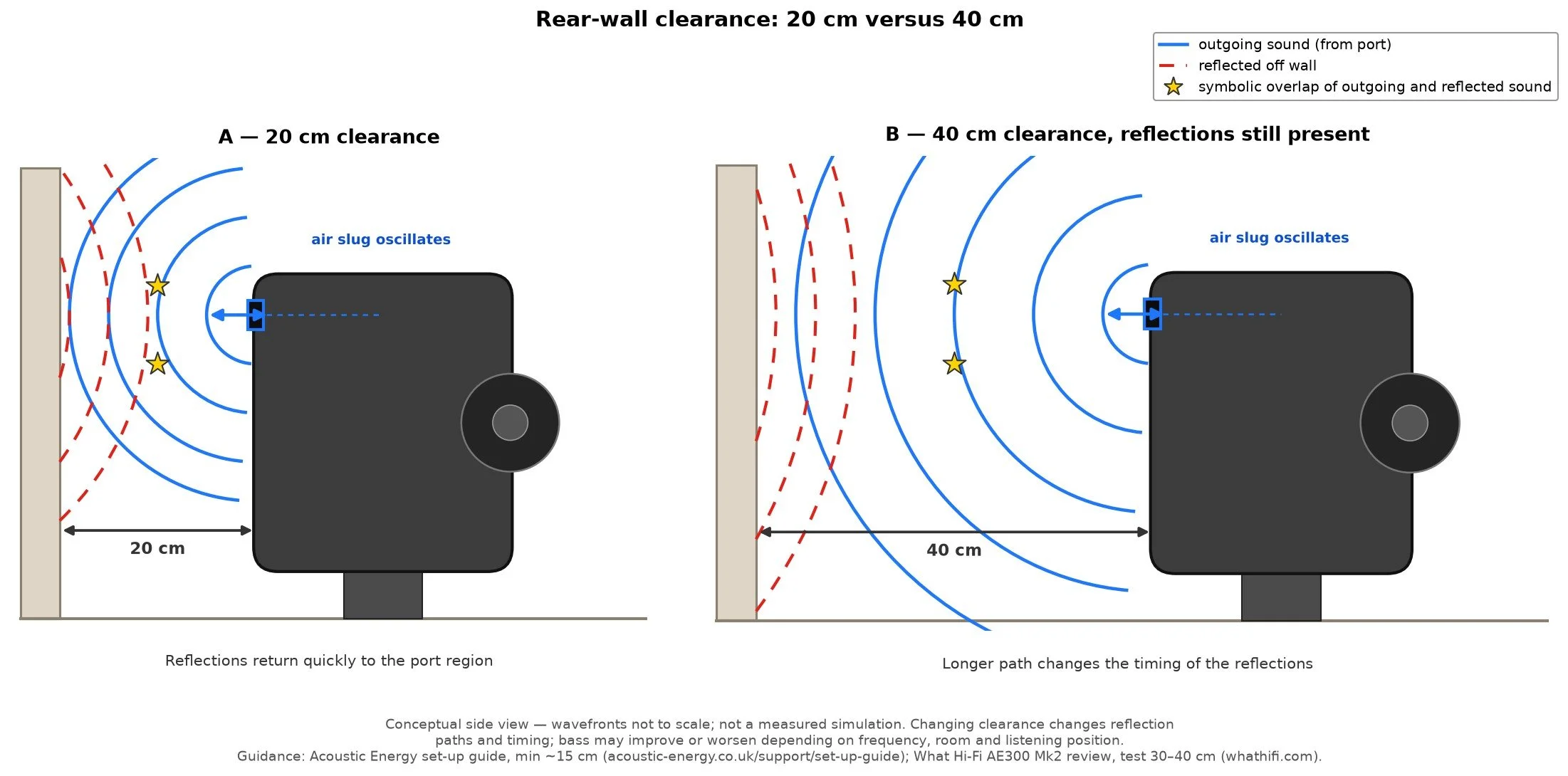
My listening room is a medium-sized rectangular room. But I have an opening to a kitchen on the left-hand rear wall, which has a big impact on the room acoustics. My speakers are placed 43cm from the rear wall, toed in slightly towards my main listening position.
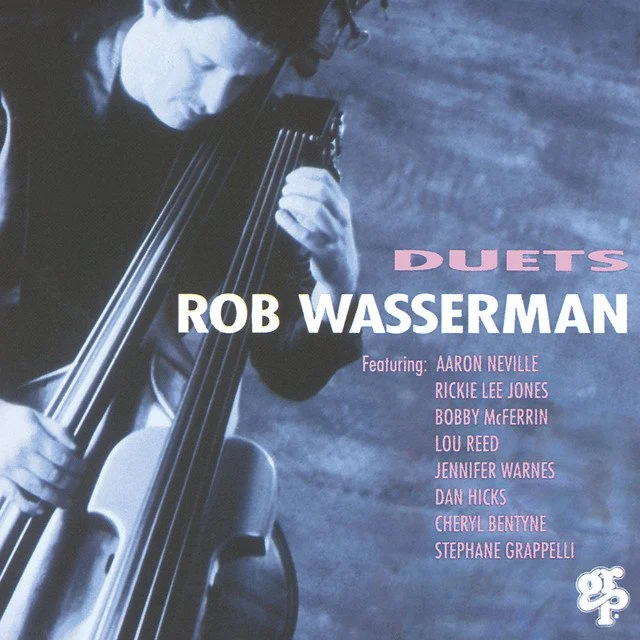
audio t, stereo imaging staple - Album - Duets, by rob wasserman, Track, Ballad of the runaway horse with jennifer warnes
Our go-to track to check the speakers are positioned correctly is Ballad of the Runaway Horse on Rob Wasserman's Duets album. Any Audio T staff member will tell you this is the musical equivalent of one of your five-a-day veggies. With a slight bit of tweaking of the speaker placement, this was sounding as it should, with Jennifer Warnes' vocals dead centre of the stereo stage.
RoomFit for Improvement
As my listening room isn't symmetrical, I decided to use the WiiM RoomFit™ feature.
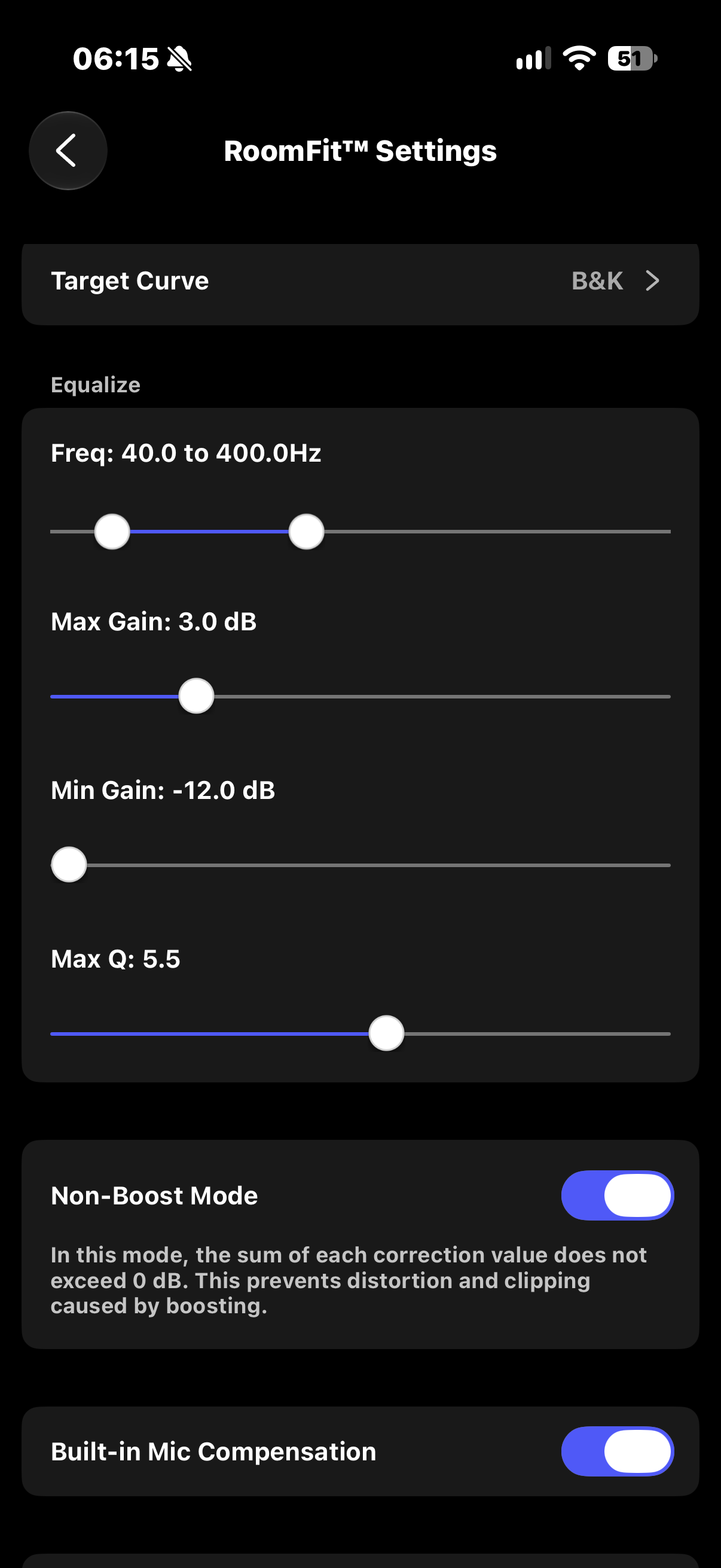
WiiM RoomFit™ setup system settings
The default settings on RoomFit™ can be tweaked to suit an individual system before running it. Trawling through various hi-fi forums, and with a bit of help from AI, these are the settings that I found gave the best results for my set-up. They're a starting point for my room, rather than a recipe for every system.
WiiM RoomFit™ definitely ironed out some of the acoustic issues with the room. The vocals on Ballad sounded much more focused and natural; positioning and projection were both noticeably improved.
However, there were still some major issues. High-frequency sibilance on vocals was much more prominent on the right-hand side. But the major issue was bass “chuffing” on the very low bass notes.
Chuffing is the sound of turbulent airflow through a speaker's bass port, particularly when it is working hard on low bass notes. Nearby walls can also reinforce bass and affect its balance, but that is a separate issue from port noise. As I didn't want my speakers in the middle of the room, it was time to... bring in the paramedics.
Bring in the Parametrics
As I've spent most of my career before Audio T working in audio post-production on films and TV, I have a lot of experience with EQ.
Too much traffic noise behind that voice? Let's lose some of the lower frequencies to minimise it.
Want that dinosaur footstep to sound bigger? Take a recording of an explosion and EQ it to fit the impact.
Underwater sequence? No problem, take that recording of a river, slow it down and remove all the high frequencies.
The WiiM EQ function has a variety of presets (acoustic, classical, rock, etc.), which can suit different listening preferences. They are much more sophisticated than the over-the-top novelty features found on some 80s hi-fi.
The really interesting feature, familiar from the pro world, is the parametric EQ, so you can create a bespoke EQ suited to your individual system and room.
As a starting point, forums and AI can suggest things to try. Then tweak to your own requirements.
My first issue was the chuffing. By reducing the offending frequencies and then adding a little more bass at frequencies that didn't cause chuffing, I ended up with a very satisfying lower end which sounded full and warm with no issues.
A slight dip around the frequencies that emphasised the sibilance reduced this and produced a much more natural vocal. This is a trick I've used on films before to add warmth to an actor's voice that had been recorded in a room with bad acoustics.
(Sound)track Listing
As Audio T has systems that range across the price spectrum, I could listen to tracks on my home set-up and then listen again on a much higher-end set-up to use as a reference. A mid-budget system may not reach the giddy heights of a high-end one, but at least it gives your ears something to aspire to.
As I tend to listen to a lot of film soundtracks, there is an emphasis on that genre in this short list, but these are some of my go-to tracks to audition a system.
Always You by Depeche Mode, from Memento Mori
This is a great track to check the tightness and punch of the bass. Even at low volumes, this now sounded great, with the bass hitting right where it should with no artefacts.
Now You Don't by Brian Tyler, from the soundtrack to Now You See Me, Now You Don't
The hi-hat and cymbals that open the track are clear and detailed with no irritating harshness. The strings sound natural, wide and open, and when the drum kit kicks in, it really does, with great projection in front of the orchestra.
Lonely City by Bill Callahan, from My Days of 58
Callahan's vocals sound warm, rich and natural. The bass drum that kicks in around the 1 minute 30 mark has real impact with no bass distortion.
The Anaconda Adventure by David Fleming, from the soundtrack to Anaconda
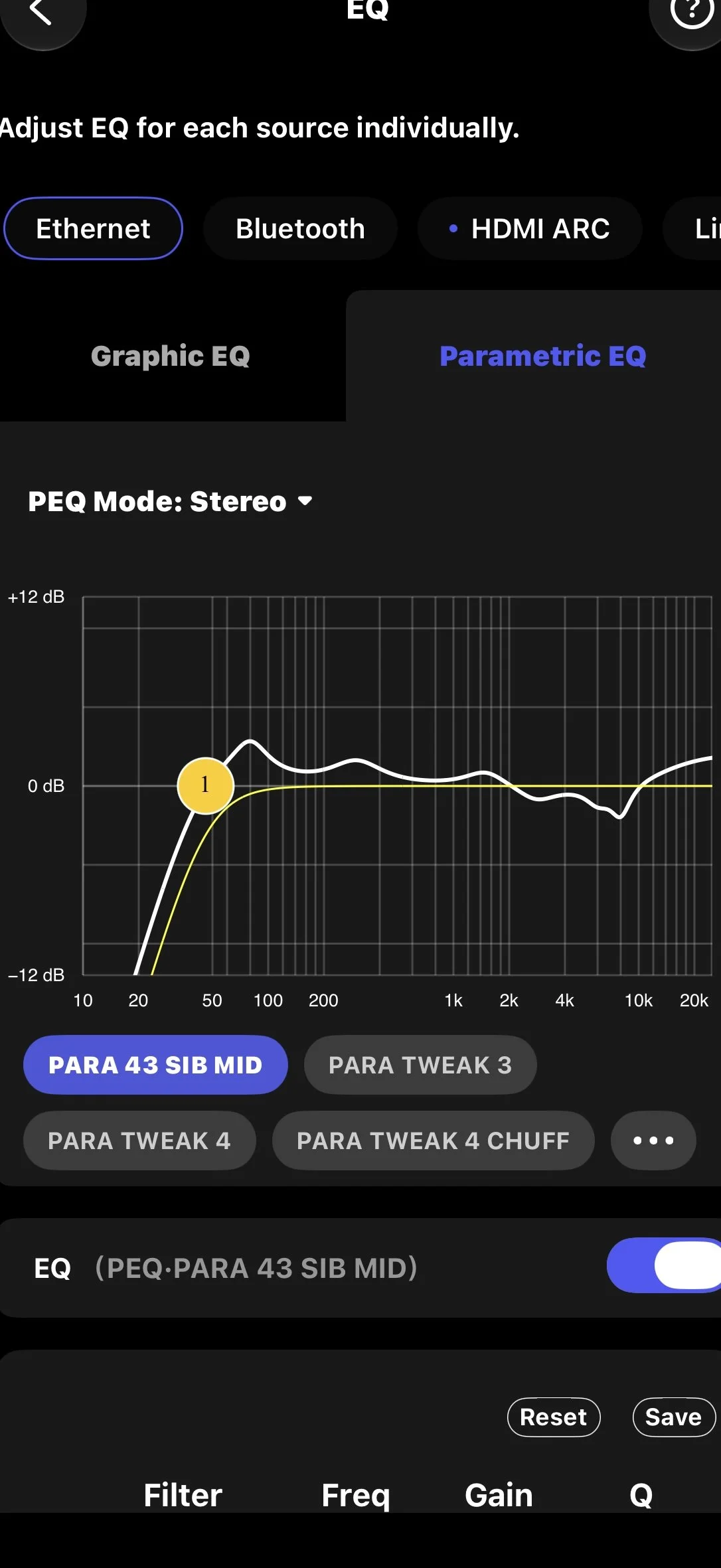
WiiM RoomFit™ Final EQ adjustments (in white) original flat tone curve ( in yellow)
This is a great all-rounder. The various ethnic percussion instruments and acoustic guitar are clear and detailed. When the full orchestra enters, it has real impact, with the lower frequencies sounding punchy and engaging.
Reinventing the Wheel?
I think my system now is sounding as good as it can, given the room limitations.
But look at this (right):
Here's the end result of the parametric EQ process. Apart from reducing the low frequencies to tame the chuffing, adding a slight boost to the bass above those frequencies, and a slight dip around the sibilance frequencies, I haven't actually moved very far away from the sound I enjoyed from the system in the first place.
The key thing is to try and bring out the best of your system, without losing the character you enjoy. Which, after all, is why you chose it in the first place.
Thanks for reading
Paul - Audio T Bristol
If you have any questions about the equipment featured here, or any other hi-fi or home cinema enquiries, please get in touch.
If you have enjoyed this article, take a look at our other blogs and follow us on our social media channels below…
Streaming is Believing at Audio T Bristol
We have our Streaming is Believing event coming up on Saturday 17th October. Every music format has its own strengths and appeal. Our aim is to provide a friendly, informative environment where you can experience modern streaming for yourself and learn more about the options available.
Whether you're taking your first steps into streaming, looking to upgrade an existing player, or simply enjoy spending an afternoon listening to great music with like-minded people, we'd love to see you there.
After all, when it comes to streaming, sometimes hearing really is believing.