

A Tale of Four Streamers: From Budget to Serious Hi-Fi
/
Music streamers have become increasingly popular over the last few years, and it is easy to see why. Access to a vast choice of artists and recordings, thousands of internet radio stations and a seemingly endless supply of podcasts is a rather beguiling proposition. Whether you are revisiting old favourites or discovering something completely new, there is an enormous amount of music at your fingertips.
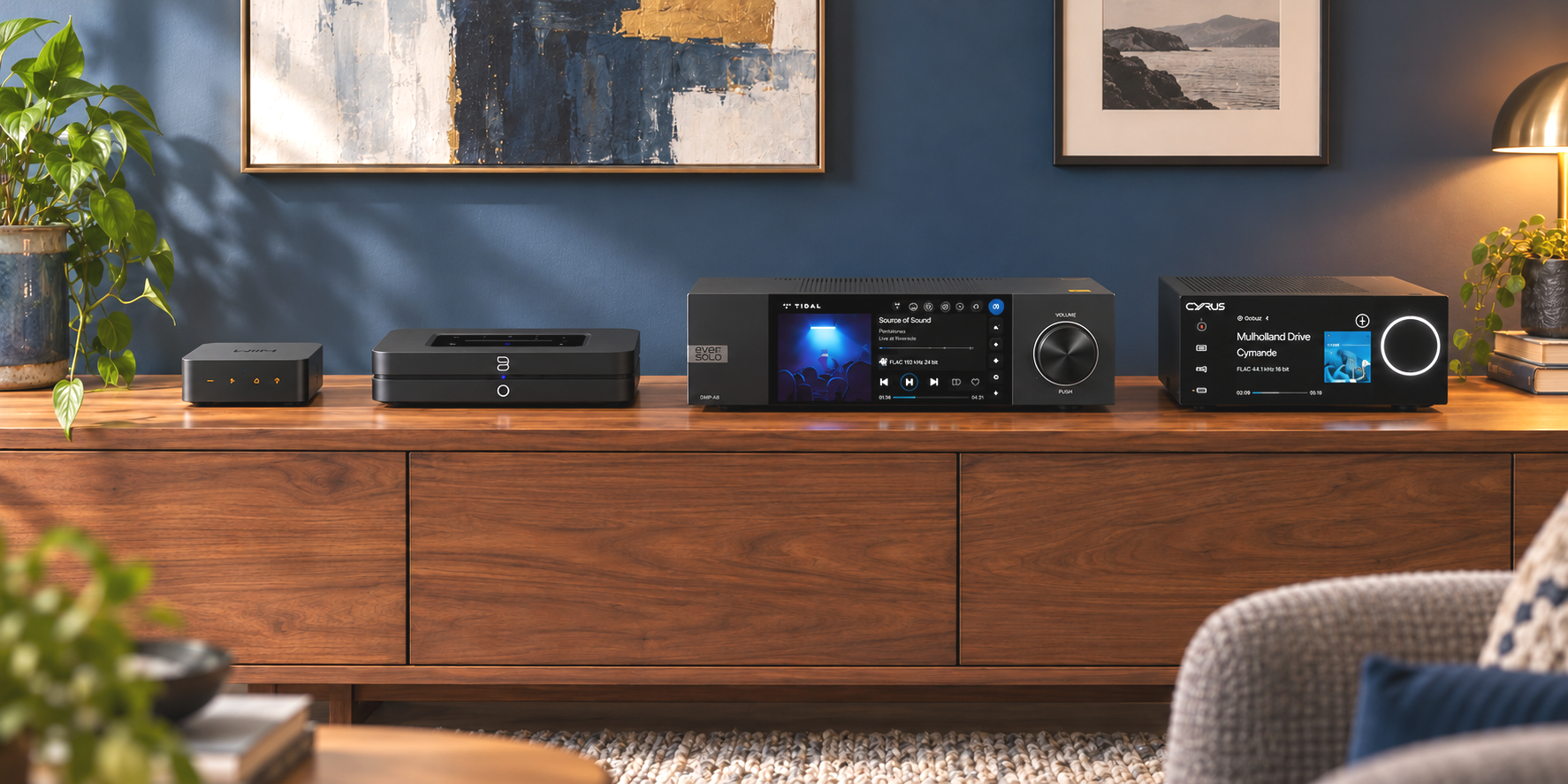
Off the back of our popular Streaming is Believing events across all Audio T stores, we thought we’d take a closer look at four music streamers here at Audio T Swindon. With models from WiiM, Bluesound, Eversolo and Cyrus, we’re moving from an affordable introduction to streaming through to more ambitious hi-fi territory. What do you get as you move up the range, and where might it make sense to spend a little more?
Do music streamers really sound different?
We often get asked, “Do they sound different? Surely it is all just ones and zeros?” It is a conversation that takes me back to the early days of CD. The digital recording is only part of the story: when you use a streamer's analogue outputs, its digital-to-analogue converter, or DAC, and the surrounding circuitry also play a part in what reaches your amplifier.
Firstly, there is clocking. Jitter describes tiny variations in the timing of the digital audio clock, which can introduce distortion during conversion if they are not adequately controlled. Well-designed DACs can suppress jitter, so its effect depends on the implementation. It is not an automatic explanation for every difference we hear.
Secondly, there is electrical noise, including radio-frequency interference. If this is not sufficiently controlled, it can affect sensitive analogue circuitry. Power supply design, circuit layout, shielding and grounding all have a role to play.
Lastly, there is the DAC and its analogue output stage. The DAC converts digital audio into the analogue signal your amplifier can use. The conversion chip matters, but so do the power supplies, filtering and circuitry around it. A chip's specification alone does not tell you everything about the finished product.
How you connect the streamer matters, too. Using its analogue outputs includes its built-in DAC and output stage in the signal path. Connecting it digitally to a separate DAC changes which components are doing that work, so you should not assume the same listening comparisons will apply in both situations.
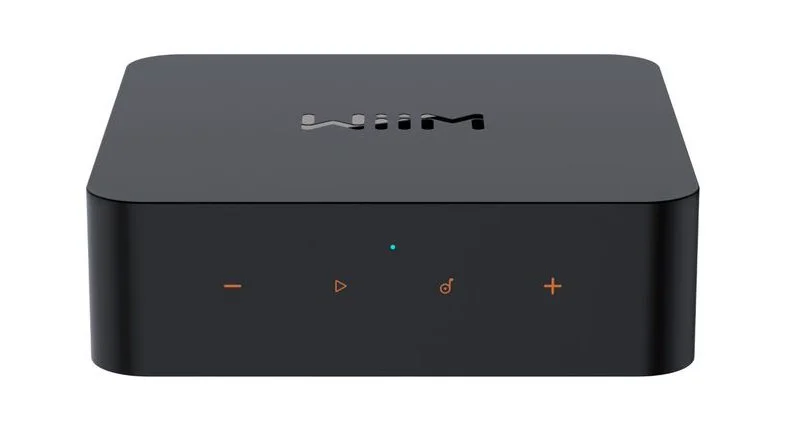
WiiM Pro Plus
WiiM has made quite an impact at the affordable end of the streaming market. There is plenty of choice within its range, but the Pro Plus and its bigger brother, the WiiM Ultra, represent particularly appealing options among its standalone streamers.
Why should I buy it?
The Pro Plus is an excellent starting point if you want to dip your toes into streaming without blowing the budget. It is also a sensible partner for a modestly priced hi-fi system, bringing a wide choice of music and useful features to an amplifier and speakers you already enjoy.
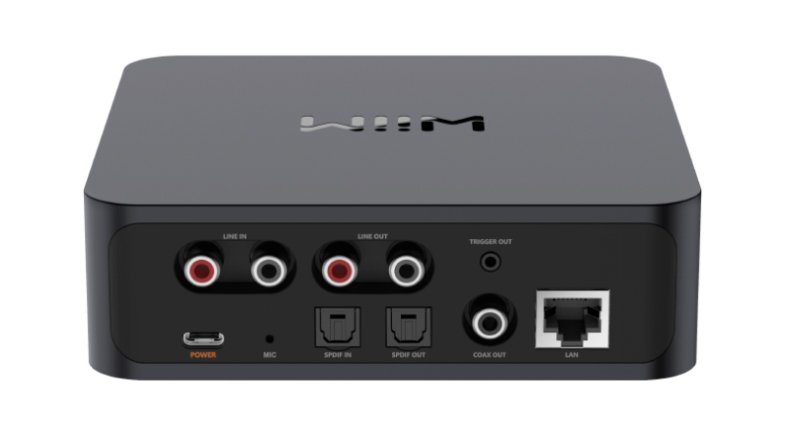
WiiM Pro Plus (rear view)
Is it any good?
In a word, yes. The WiiM Home app is good, which matters more than you might initially think. If an app is clunky or unresponsive frustration soon follows, however capable the hardware might be.
The Pro Plus is compact and supports services including Spotify, TIDAL, Amazon Music, Qobuz and Presto Music. AirPlay 2, Google Cast and multi-room playback add to its flexibility. For someone taking their first steps into streaming there is a great deal to like.
Bluesound have been around for many years and during that time have built up an enviable reputation for high quality but still affordable streaming solutions.
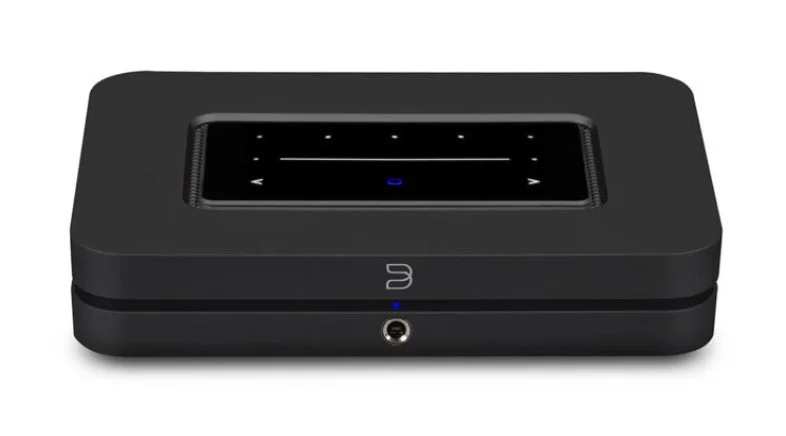
Bluesound NODE
Bluesound has built an enviable reputation for high-quality streaming products that remain within reach of a wide range of listeners. The NODE is a familiar name for good reason, combining a well-established streaming platform with plenty of practical connectivity.
Why should I buy it? Is it a step up from the WiiM?
To our ears, yes. A little larger than the WiiM, the NODE feels more substantial and offers a similarly broad choice of streaming services. Its connections include HDMI eARC for a compatible television, alongside two-way Bluetooth for receiving audio or transmitting it to compatible headphones or speakers. This makes it a useful hub for music and TV sound.
The BluOS app and wider BluOS system are particular strengths. It is one of our favourite streaming platforms, especially if you want to use compatible products in several rooms.
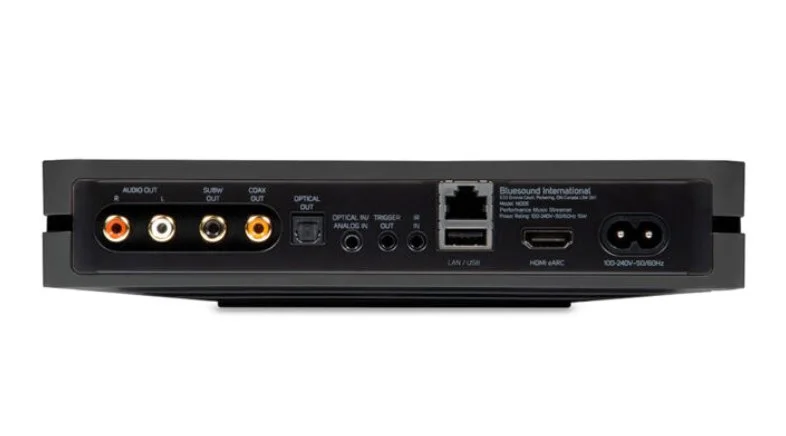
Bluesound NODE (Rear View)
Compared with the WiiM, we find the NODE's presentation more refined. Bass sounds fuller and carries more heft, while the soundstage feels more spacious and layered. Its overall character is smooth and easy-going. Both the NODE and its bigger brother, the NODE ICON, would make worthwhile additions to many existing hi-fi systems
Eversolo DMP-A8 Gen 2
Like WiiM, Eversolo has made a big impression in a relatively short space of time. The DMP-A8 Gen 2 takes us further into premium territory, with a more substantial build, a large touchscreen and features that allow it to play a wider role in a hi-fi system.
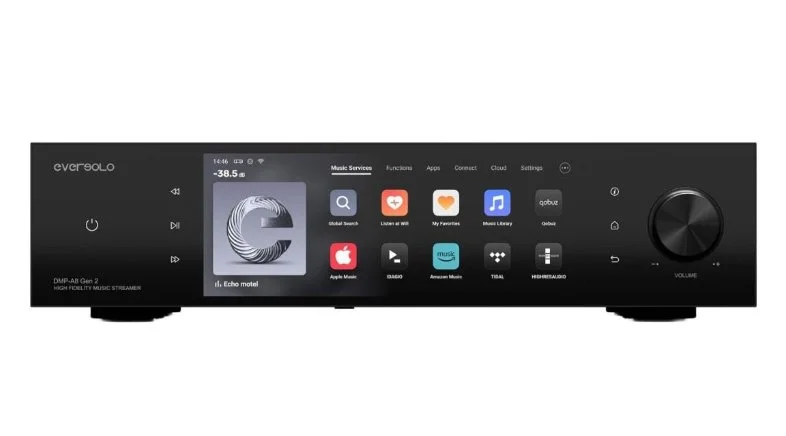
Why should I buy it? Is it a step up from the NODE?
For us, yes, and I sense a theme developing here. The all-metal construction and large display give the Eversolo a reassuring sense of quality. The app is very good, although a little busy at times, and support for Apple Music is a useful attraction alongside its other streaming options.
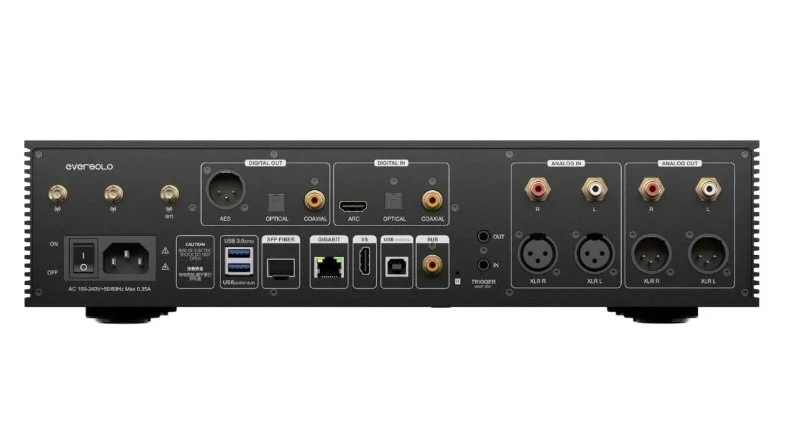
Eversolo DMP-A8 Gen 2 (Rear View)
The DMP-A8 Gen 2 also includes an analogue preamplifier section with analogue volume control. This allows it to partner directly with a suitable power amplifier or active speakers, controlling the listening level without relying solely on digital volume adjustment. It is a useful option if you want your streamer to become the control centre of your system.
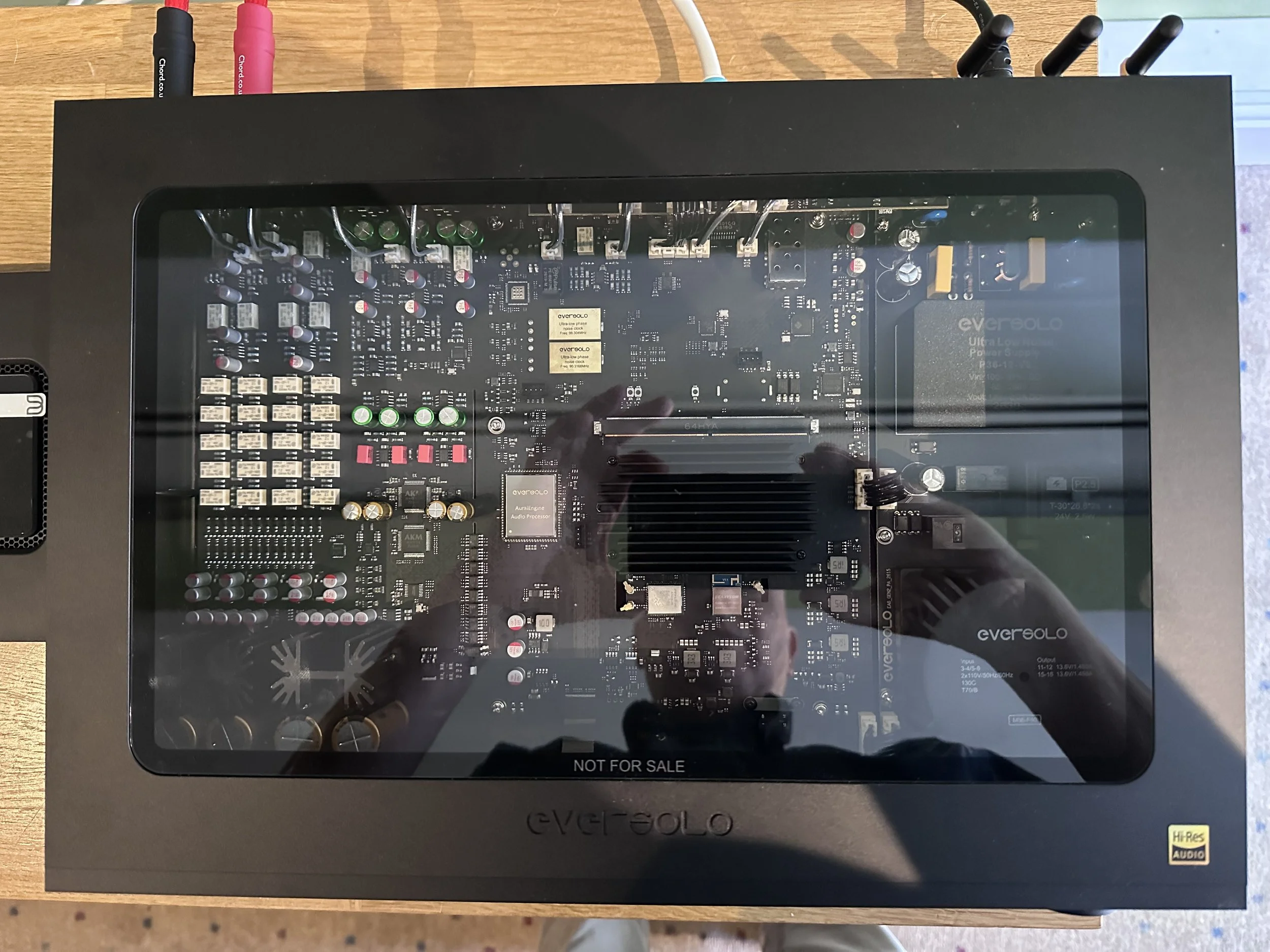
Topology: Special demonstration units of the Eversolo DMP-A8 Gen 2 can be found in our stores with display windows to see the components inside
Compared with the NODE, we hear greater resolution, clearer separation and a more dynamic presentation, with improved depth and focus to the soundstage. These are our listening impressions of the complete product, rather than a judgement based solely on its DAC chip. This is a serious bit of kit, and if streaming is an important part of your listening, it is well worth considering.
Cyrus 40 ST and Cyrus 40 PSU
Cyrus has a long and successful history in hi-fi, and the 40 Series continues that story with a distinctive design and an emphasis on performance. The 40 ST can be bought on its own, with the option to add the 40 PSU external power supply either at the outset or further down the line.
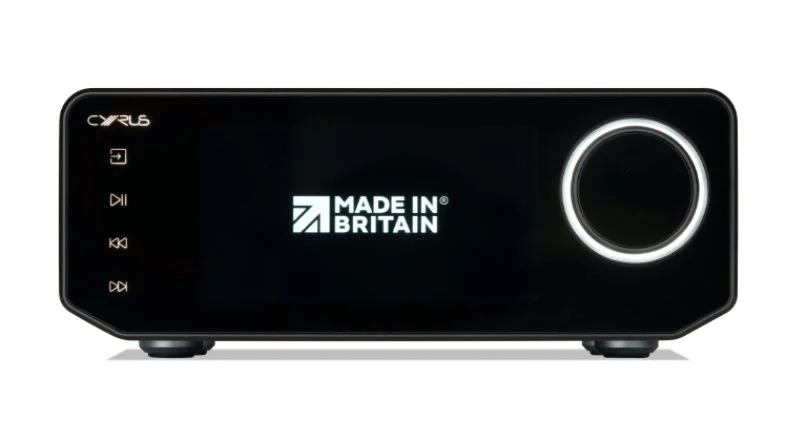
Why should I buy it? How does it compare with the Eversolo?
Build quality is superb, and the controls are well thought out. The 40 ST uses BluOS, the same streaming platform found in the Bluesound NODE, giving you access to the familiar app and its core selection of integrated music services. As mentioned earlier, this is one of our favourite platforms for everyday use.
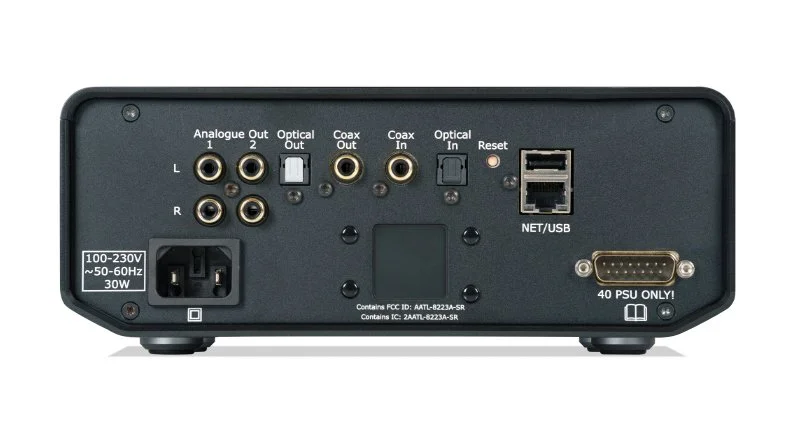
Cyrus 40 ST (REAR VIEW)
The comparison with the Eversolo is rather more about personal preference. The Eversolo is very good indeed, but to our ears the Cyrus has the edge in rhythmic drive and musical flow. The Eversolo, meanwhile, arguably has the advantage in fine detail and ultimate resolution. Both have their attractions, which makes a direct listen particularly worthwhile.
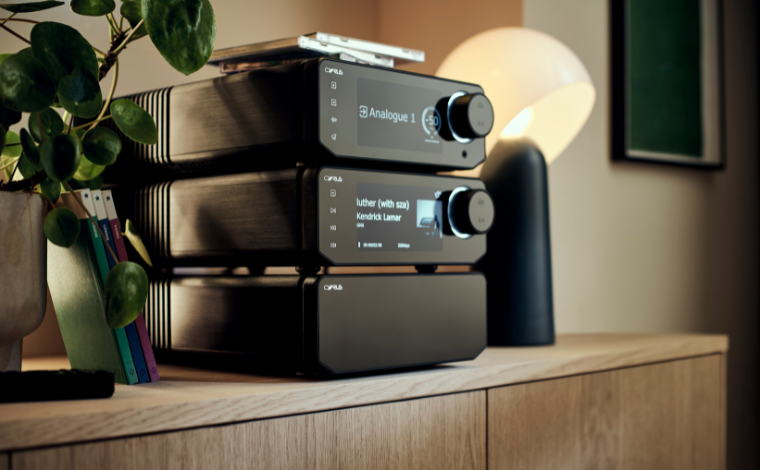
The Cyrus 40 Amp, 40 ST and optional 40 PSU
One of the Cyrus's attractions is its upgrade path. The optional 40 PSU provides a separate, regulated power supply to key sections of the 40 ST, including the analogue side of its DAC and the BluOS network module.
With the 40 PSU connected, we find that fine musical details become easier to follow. Vocals and instruments are more clearly separated, with more space around them, while the bass sounds better controlled and the overall presentation cleaner. For someone who enjoys the 40 ST's character, it is an upgrade well worth hearing before deciding whether the additional investment makes sense.
Which music streamer is right for you?
These four streamers share a common purpose, but they offer different combinations of features, sound and flexibility. The WiiM Pro Plus is a very appealing way to bring streaming to an existing system without a large outlay. The Bluesound NODE adds the strengths of BluOS and useful TV connectivity, alongside a presentation we find more refined. The Eversolo DMP-A8 Gen 2 combines an informative display and preamplifier facilities with an impressively detailed sound, while the Cyrus 40 ST offers an engaging musical presentation and the option of a later power supply upgrade.
The right choice depends on how you listen and what you already own. Think about your preferred streaming service, how comfortable you find the app, which connections you need and whether you will use the built-in DAC. If you already have a separate DAC you enjoy, that changes the comparison. Equally, an analogue preamplifier or HDMI eARC connection may be particularly useful in one system and barely relevant in another.

Visit us at Audio T Swindon
There is also the question of balance. A more expensive streamer may have plenty to offer, but the worthwhile upgrade is the one that makes sense with your amplifier, speakers and budget. Familiar music is useful here: listen to how easily you can follow a vocal, pick out instruments or enjoy the rhythm of a track. Comparing at closely matched listening levels helps you make a fairer judgement, too.
If you are choosing your first streamer or wondering what an upgrade might bring, get in touch with Audio T Swindon to arrange a demonstration. Tell us about your current system and bring along a few favourite tracks. We will be happy to talk through the options and help you choose something you will enjoy using as much as listening to.
Thanks for reading. We look forward to welcoming you in-store soon.
Jon and Andy - Audio T Swindon
If you have any questions about any of the equipment featured in this article, or any other Hi-Fi or home cinema enquiries, be sure to contact us.
If you’ve enjoyed this, why not go ahead and read some more of our other blogs, and be sure to follow us on our social media channels below…