
Cyrus Audio 80 Amp: Serious Power and One-Box Convenience
/The 80 Amp is much more than Cyrus’s first full-width product - it may well be the company’s most important product in years.
Alan at Audio T Southampton has been listening to the Cyrus 80 Amp in store and at home. Here, he shares his thoughts on its sound, streaming features and what Cyrus’s move to full-width casework means for this all-in-one amplifier.
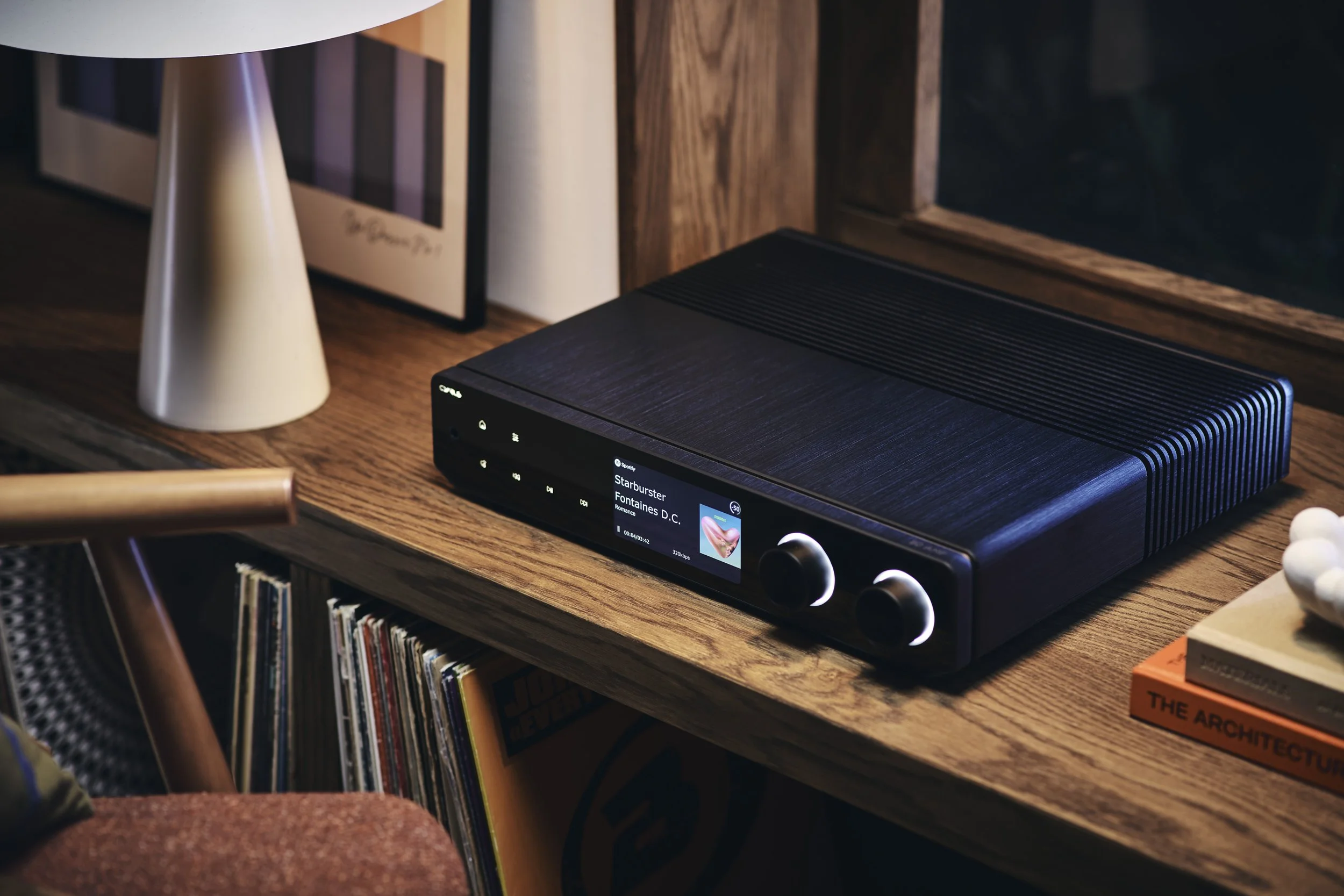
The cyrus 80 Amp opens a new chapter in the company’s story
There is a long history of hi-fi brands sticking to their guns when it comes to the engineering and design principles baked into their products.
In large part, this is a function of the fact that so many renowned hi-fi brands were founded by enthusiasts who were chasing the best sound, as they saw it, rather than solely the bottom line on a balance sheet.
Being driven by passion as much as profit meant that the founding philosophies continued to guide product development for decades. You only have to think of the enduring design principles behind classic products like the Linn LP12 and Rega Planar turntables.
Cyrus Audio is another great example of this approach. Beginning life as a spin-off from Mission Electronics, it launched the Cyrus One integrated amplifier in 1984 in what was to become iconic half-width casework.
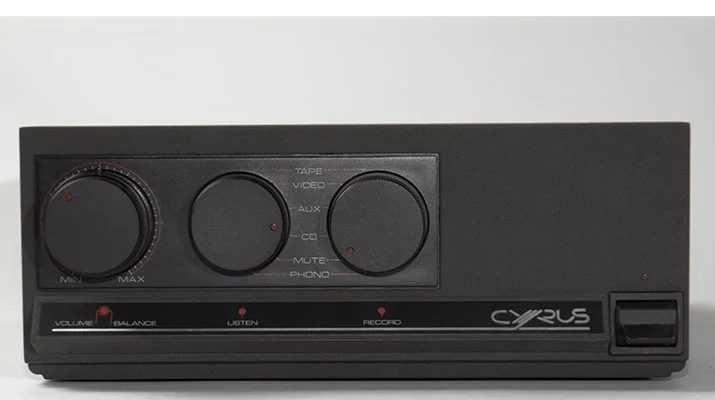
The groundbreaking Cyrus One amplifier
Despite being a keenly priced amp, it used high-quality components and short signal paths to show what a pocket-friendly hi-fi product could achieve in terms of sound quality.
Later iterations retained the half-width cases but introduced further changes, including aluminium alloys to reduce electromagnetic interference, mounting the transformers to the top inside of the cases, off-board power supplies and countless other improvements over the years.
From the early days, the Cyrus sound has majored on detail, agility and timing. At their best, Cyrus products could make competitors sound heavy-footed.
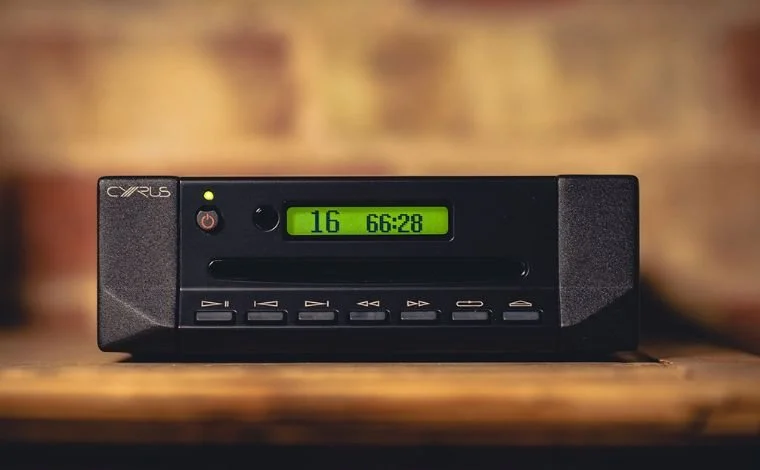
fast, agile and detailed - the cyrus CDi
But it was also true to say that Cyrus owners, and I was one for many years, sometimes craved a little more weight and fullness in what was, by design, a lean sound. And, if we weren’t careful when it came to system matching, that wonderfully agile and transparent sound could edge towards brightness.
With the launch of the 40 series two years ago and now the 80 series, Cyrus have opened a new chapter in their history.
The 40 series – comprising amp, streamer, CD player and power supply – moved away from the company’s familiar half-sized, die-cast cases with slightly chunkier (albeit nowhere near full-width) aluminium boxes.
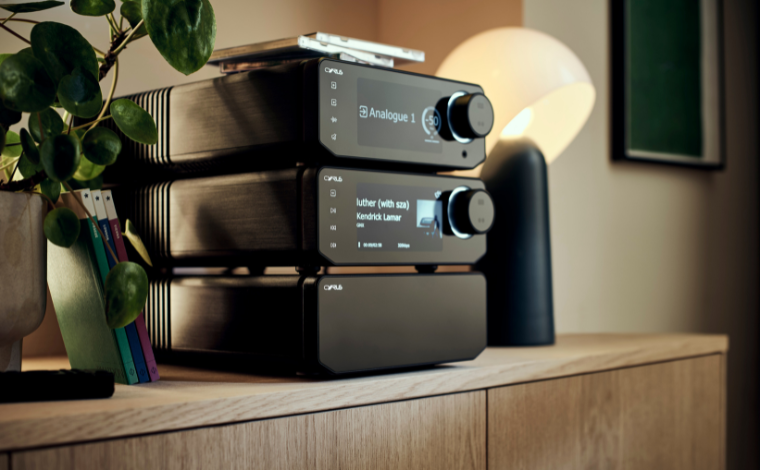
The 80 amp is building on the success of the current cyrus 40 series
They retain that wonderfully agile Cyrus house sound but add a little more warmth into the mix to produce what is, for want of a better word, a lusher overall presentation.
The 80 series – 80 Amp, 80 Pre, 80 Power – takes this evolution a step further with full-width aluminium casework, ending four decades of familiar, compact Cyrus design. The good news is that all that extra space means there’s room for more amplification and a whole lot else besides.
In fact, the Cyrus 80 Amp is the most powerful integrated amplifier ever sold by Cyrus, outputting 150 watts into 8 ohms. Only the Mono X200 and X300 power amps produced by Cyrus exceeded this.
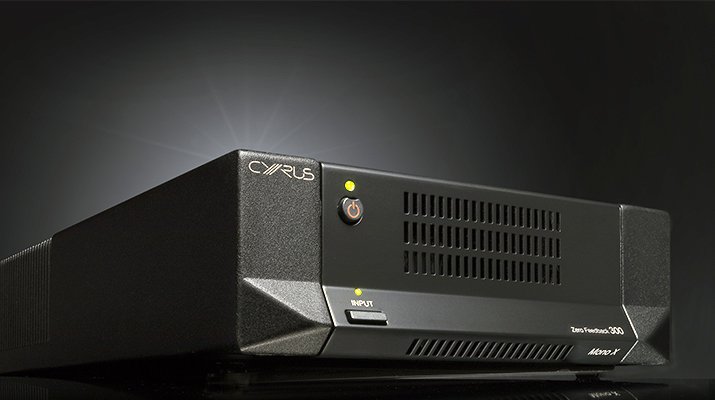
A Cyrus Mono x300 brought new levels of power to the brand
We have had a Cyrus 80 Amp in the Southampton shop for a few weeks now and have been hugely impressed with this new unit, which combines streaming, amplification and pre-amp connectivity.
The 80 Amp sits among what some might term hi-fi ‘lifestyle’ products, that is, attractive one-box audio solutions. Lifestyle is not a particularly good term because it could be taken to imply a slight lack of ‘proper’ hi-fi credibility or even a whiff of style-over-substance.
The 80 Amp is very much in the same category as the Naim Uniti Nova, Hegel H400 or the Arcam Radia SA45. And anyone dismissing such products as somehow not proper hi-fi would be sorely mistaken.
OK, they are single-box solutions and, as we know, by separating hi-fi functions into separate boxes, we reduce the risk of electromagnetic interference and increase the space available for optimising components and layout.
So comparably priced separates may well deliver more detail, a lower noise floor and a wider and deeper soundstage and so on – albeit likely at a greater cost given you would need to buy more than one box plus the necessary interconnect cables.
But for those looking for a quality hi-fi system without the need for multiple boxes, with all their interconnects and power cables, products like Cyrus 80 Amp offer a slice of genuine mid-to-high-end sound in a beautifully functional package.
What’s in the box
All that extra room in the casework means that the 80 can offer a gutsy 150 watts per channel of class A/B amplification, giving it the sort of power and headroom expected from a serious standalone integrated or power amplifier.
The 80 also has a sophisticated digital-to-analogue section, analogue connectivity, a built-in MM/MC phono stage, headphone amplification and integrated network streaming.
It uses the well-established and slick BluOS operating system for streaming, which means it offers user-friendly access to all the main streaming services, including Qobuz and Tidal, with support up to 24-bit/192kHz. It supports Apple AirPlay 2 and is certified Roon Ready.
In terms of connectivity, the 80 Amp is well-furnished, offering four RCA analogue line inputs, balanced XLR analogue inputs, two optical inputs, two coaxial inputs, an asynchronous USB-B input, an HDMI eARC input, an RCA pre-amplifier output and a balanced XLR pre-amplifier output.
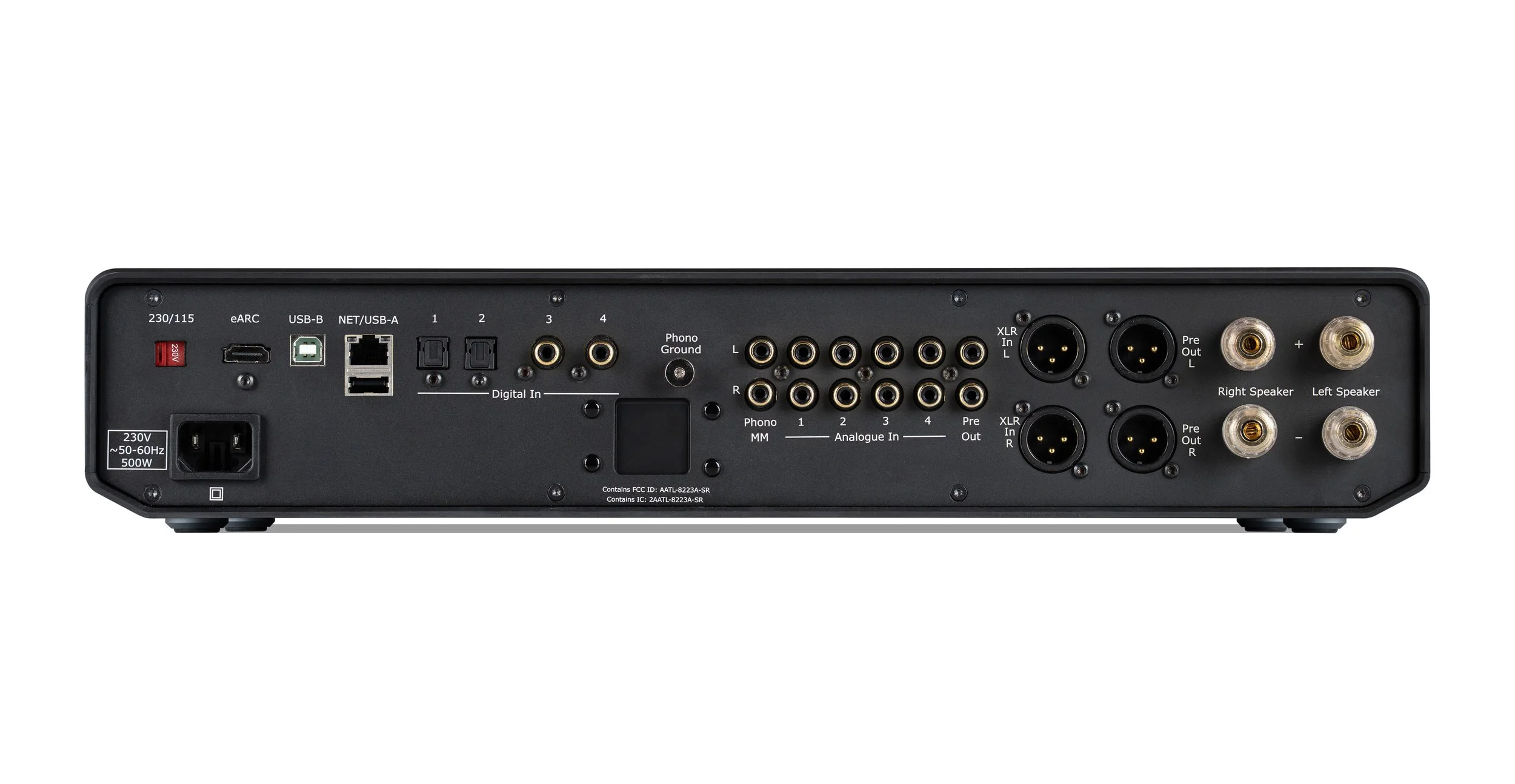
The 80 amp is well-furnished with inputs and outputs
Cyrus has paid particular attention to the digital circuitry. The 80 Amp uses the audiophile ESS Sabre ES9039Q2M 32-bit DAC chip, with Cyrus pointing out that its implementation has been extensively optimised at both component and circuit-board level. It supports PCM up to 24-bit/192kHz and DSD256.
The chip is only part of the story. Power supply design, analogue output circuitry, clocking and board layout all influence the final result. And Cyrus has paid attention to all of these in the digital section to optimise sound.
The sound
The worst thing the Cyrus engineers could have done with the 80 series was to drastically alter the Cyrus sound along with the looks. Cyrus kit is famed for its agile, open, fast sound and you tamper with that ‘house sound’ at your peril.
Happily, the engineers have not only retained the characteristic transparency, speed and timing but they have augmented it considerably thanks, in considerable part, to the additional clean power available.
There is an authority and effortlessness to the 80’s presentation that no legacy Cyrus amplifier, barring perhaps the previously mentioned Cyrus Mono X200 or Mono X300s, could hope to match.
Yet that weight and power are deployed deftly. There is excellent control over the low frequencies which have heft but produce basslines which are tight and musical.
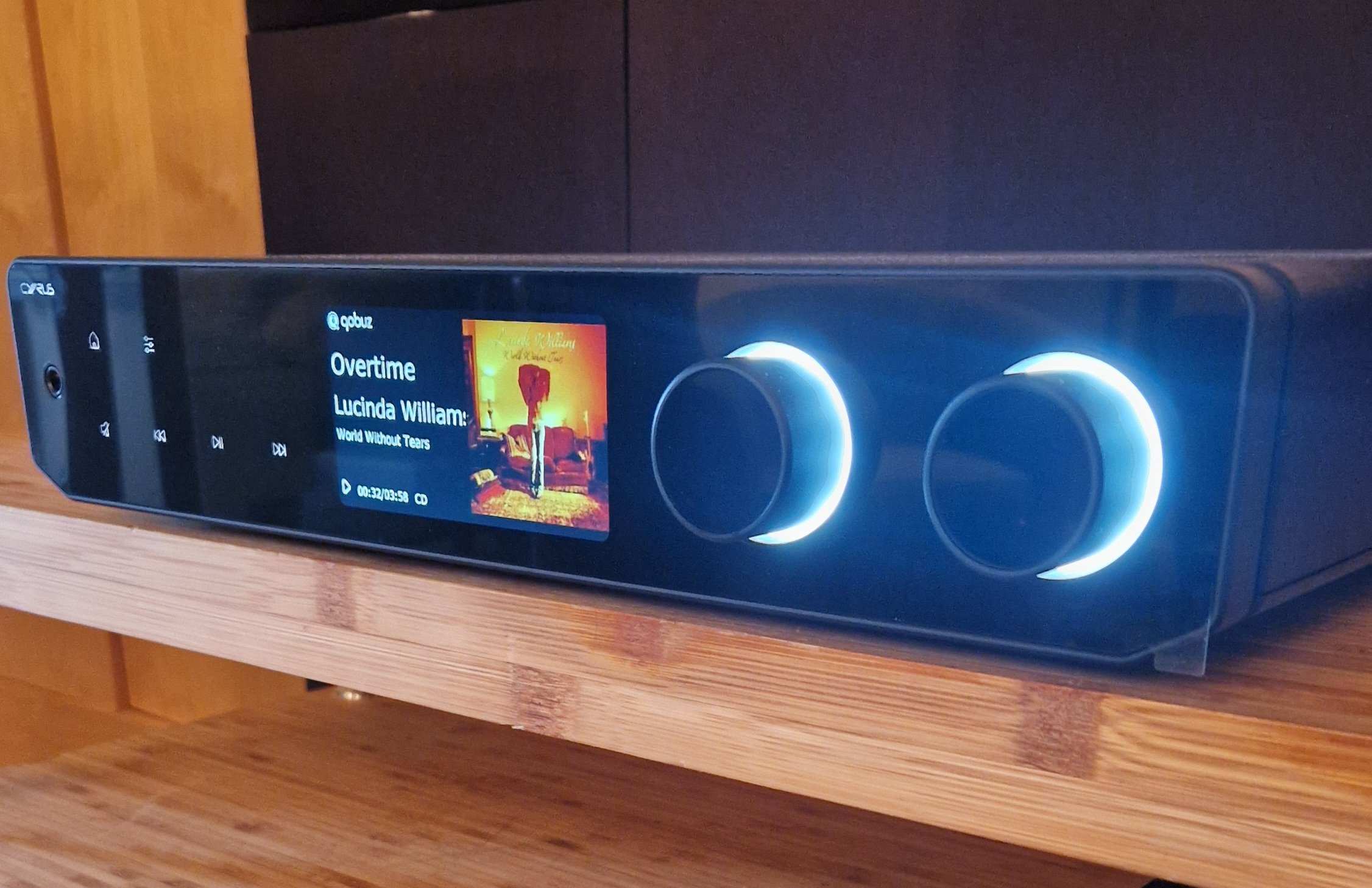
With great power comes responsibility and the Cyrus 80 deploys its muscle deftly
That extra grunt helps the Cyrus 80 Amp maintain a spacious and open soundstage within which voices and instruments have room to shine.
Give the 80 Amp a well-recorded orchestral piece, live recording or densely produced rock track and its power reserves become increasingly apparent.
The presentation has scale, with instruments occupying their own space rather than crashing together when the arrangement becomes busy. Dynamic contrasts also have room to breathe. Quiet passages can remain intimate before the amplifier opens up when the recording demands it.
The move to a substantial 150W Class A/B design makes absolute sense by providing additional headroom and contributing to a feeling of effortlessness.
The midrange retains Cyrus’s characteristic openness and transparency. But there is more control, precision and texture in the way voices are projected. With the right recording and speakers, the 80’s midrange presentation is hugely engaging.
Move into the treble and the same philosophy is evident. Detail is readily available, but the 80 is no high-frequency show-off. Treble performance is better integrated into the whole musical presentation than in earlier Cyrus integrated amps, giving the 80 a superb musical coherence and balance.
Overall, the Cyrus 80 Amp is a beautifully poised and polished performer. It is like the 40 series but with extra grunt, giving it a more dynamic, beefier sound. Yet it loses nothing of its smaller stablemate’s detail and transparency, and arguably that extra power affords the 80 a more open and controlled soundstage.
And if the 80 Amp is anything to go by, then the 80 Pre and Power amps, which we are due to get our hands on soon in the Southampton shop, should be a cracking combination. Plus you can upgrade to a pair of 80 Powers and run them in bridged-mono configuration, which promises a further mouth-watering upgrade in performance.
Having listened to the 80 Amp in the shop and at home on a number of occasions, I expect it will prove very easy to live with. Whereas in the past Cyrus owners might have thought it wise to steer clear of speakers and cables with a reputation for brightness, the 80 Amp seems far less fussy about partnering equipment.
Of course, different partnering equipment will change the sound you get from the 80. But it seems to us that you would have to go some to unsettle this impressively composed amplifier.
Conclusion
The 80 Amp's biggest achievement may ultimately be how much functionality it manages to combine without losing sight of its primary purpose, which is to deliver a genuinely hi-fi musical performance.
You get BluOS, Roon Ready functionality, AirPlay 2, a high-resolution DAC, MM/MC phono, HDMI eARC, USB, optical and coaxial digital inputs, balanced connectivity, a headphone amplifier and 150W-per-channel Class A/B amplification. There is a full-colour 5-inch TFT display on the front panel.
That makes the 80 Amp considerably more than a traditional integrated amplifier. It is effectively a complete digital and analogue music hub.
Its strongest selling point isn't any one specification. It's the combination: serious Class A/B power, high-resolution digital processing, BluOS streaming, vinyl support, TV connectivity and balanced analogue connections in one box.
Sonically, the emphasis is on control, clarity, detail and dynamic confidence rather than gimmicky hi-fi fireworks. Pair it with a capable set of loudspeakers and the 80 Amp easily has what it takes to become the centrepiece of a genuinely high-performing hi-fi system.
I’ll stick my neck out here and say that, based on what I’ve seen and heard over the past few weeks, the 80 Amp is shaping up to be one of the most significant and best Cyrus products in a long time.
Thanks for reading.
Alan - Audio T Southampton
If you have any questions about anything covered in this article, or any other hi-fi or home cinema enquiries, be sure to contact us.
If you’ve enjoyed this, why not go ahead and read some more of our other blogs, and be sure to follow us on our social media channels below…
Cyrus can be found at the following Audio T stores