

What should I Naim this? Inside the Naim Factory: From New Classic to Statement
/Louis and Martin from Audio T Brighton recently visited the Naim factory to see how its products are made and hear the range in action. From the engineering behind Statement to a listening session through the New Classic range, Louis shares what they discovered along the way.
The Naim factory tour was quite the experience, that's for sure. Although the traditional lab coats were gone, Naim's energetic and welcoming atmosphere was still as strong as ever. This time the focus of the visit was for Martin and me to get some first-hand listening experience with the full Naim Classic range, while also learning more about the thinking, engineering and processes behind some of the company's most iconic products. The ultimate aim was to explore what separates each step along the journey from the Naim 200 Series all the way to the legendary Naim Statement, an incredible opportunity on many levels.
My first look at Naim Statement
Our visit began with a brief look around the demonstration room, where we were given our first glimpse of the impressive-looking Naim Statement (pre and power).
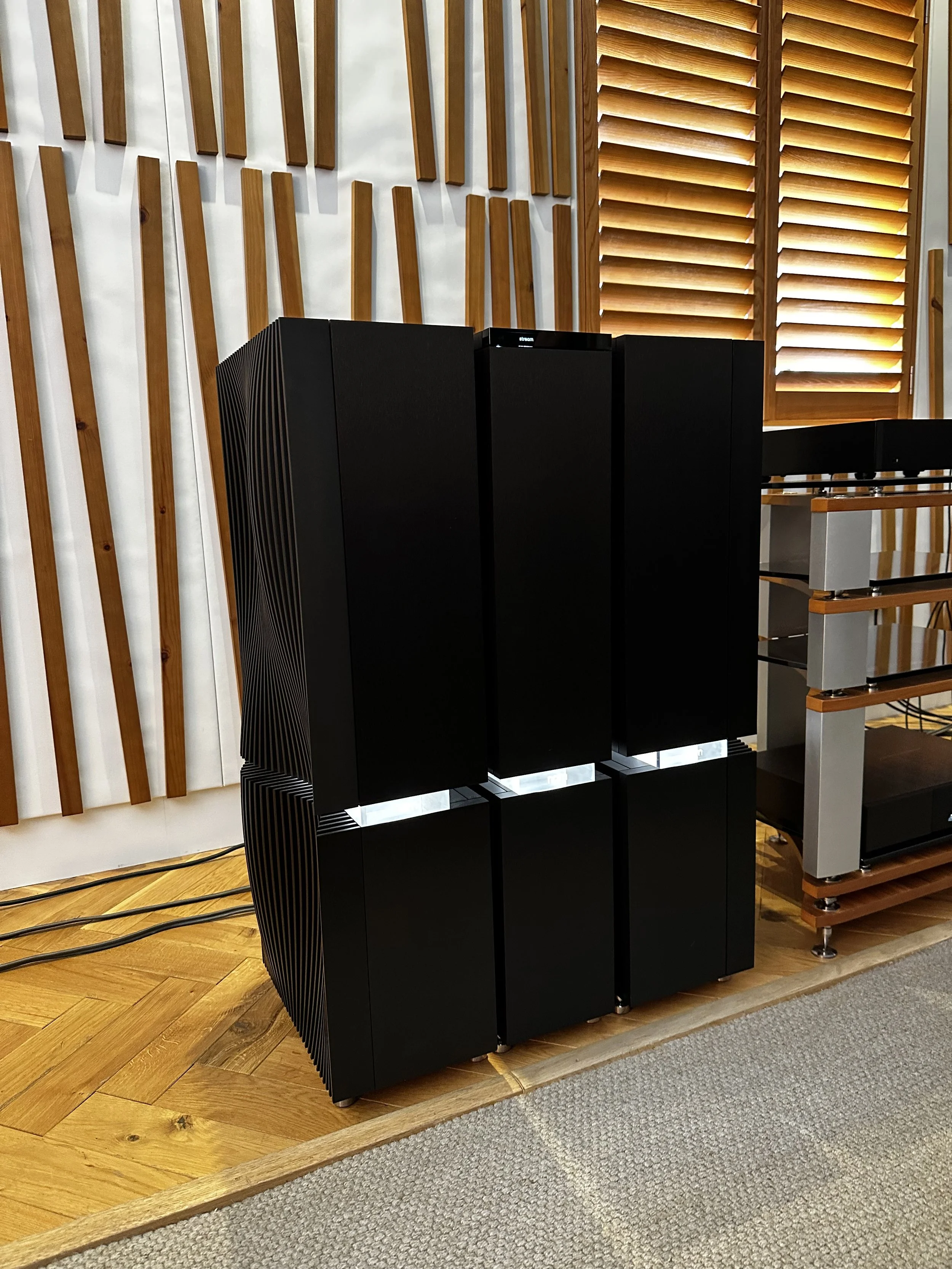
Naim statement pre and duel power
We also had the chance to see some of Naim's earlier equipment, including specially made, distinctive acrylic-topped units which were particularly cool to see in person, offering a glimpse into the company's design history and the evolution of the familiar Naim aesthetic.
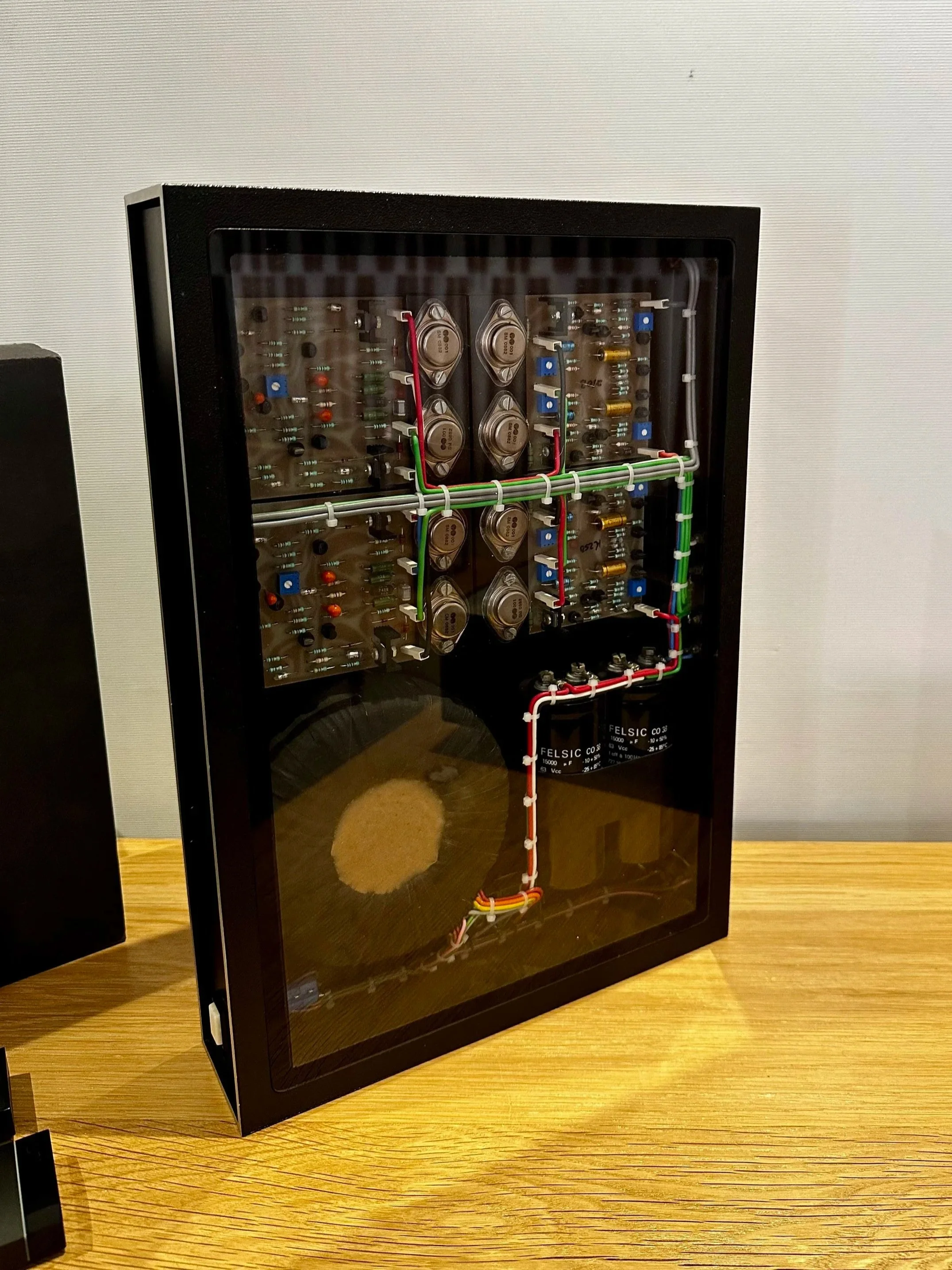
An old nap 250 classicS acrylic demo edition.
From there, we headed onto the factory floor to see some of the manufacturing processes first-hand, including the assembly of the Naim Statement. This was where things started to get particularly interesting. Rather than simply seeing the finished products, we were able to get hands-on experience following parts of the manufacturing processes and a closer look at the components and engineering that go into building them.
Transformers at the heart of the sound
Our first stop was the transformers – the heart of Naim's amplification designs, and certainly not components to be messed with. The sheer size of the coils was striking. Throughout the tour, we were given the opportunity to handle various components, but I don't think a single one of us managed to pick up the Statement's transformer, and no one seemed particularly keen to risk putting their back out trying!
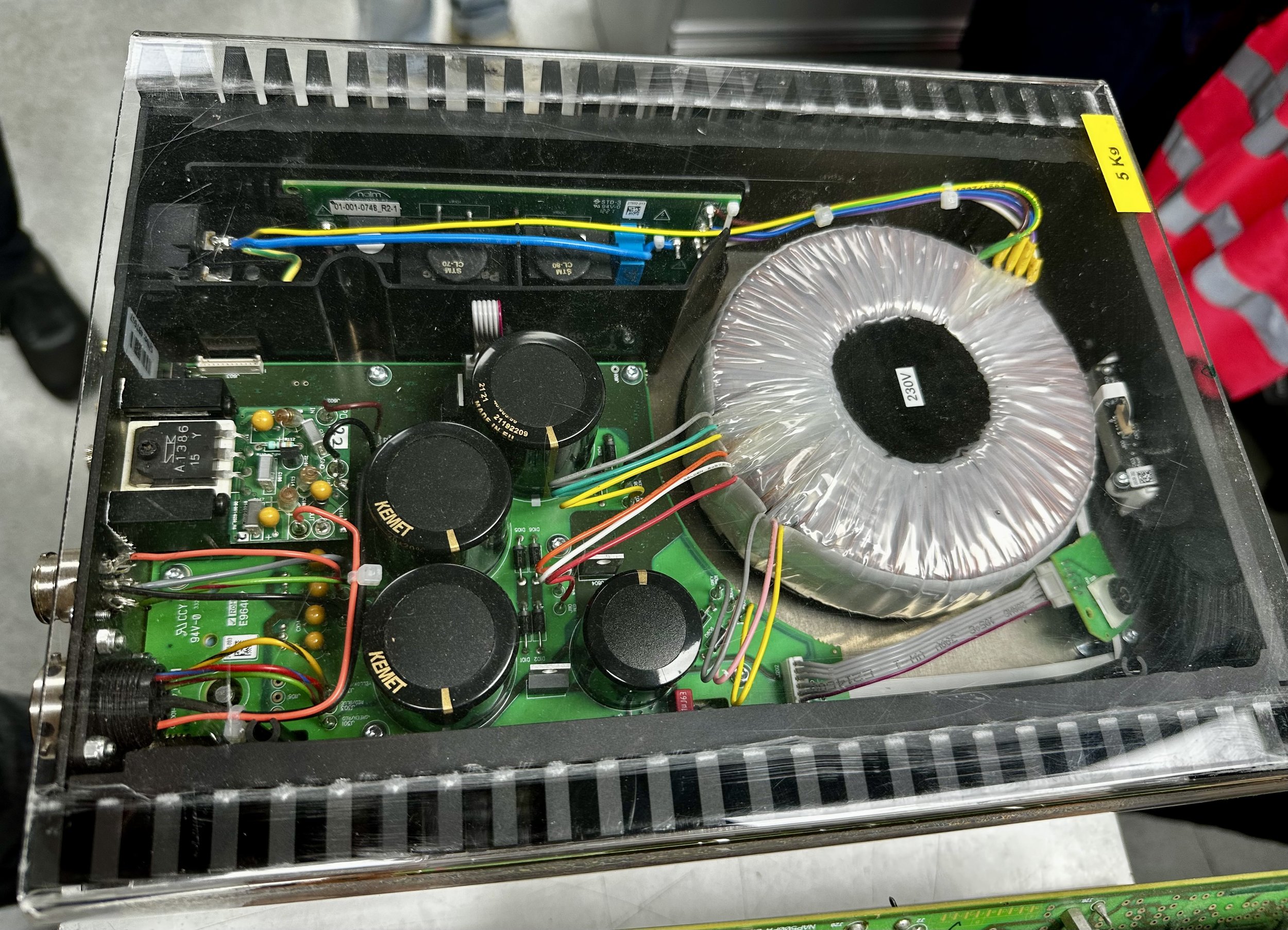
Can you guess what this one is?
The scale of the transformers used in products such as the NAP 250 was especially surprising to me: about half the internal volume of these devices was taken up by the coils – which just shows that their surprisingly meagre power ratings say very little about the quality and scale of sound they produce. We would get a particularly impressive demonstration of this later, when the NAP 250 was given the job of driving a pair of enormous Focal loudspeakers in the demonstration room.
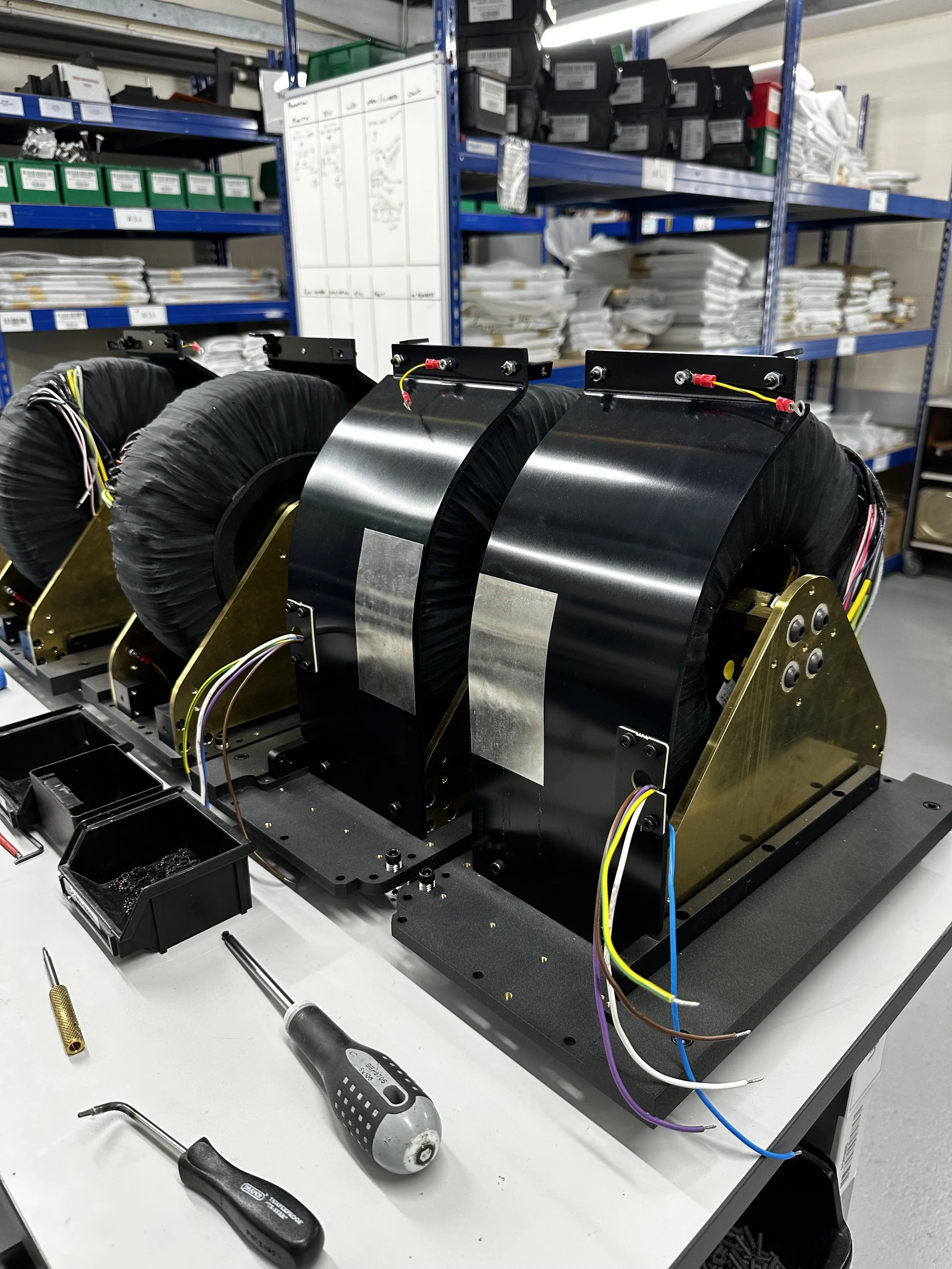
naim statement transformers
Moving on from the transformers, we got a closer look at various other stages of the Statement assembly. While the impressively large capacitors were certainly a sight to behold, I was particularly interested in the chassis construction of each stage. As shown in the picture, the milled metal construction is hefty. The sheer thermal mass capacity of the design is impressive, with the symmetrical dual internal heatsink fins helping to dissipate the stored thermal energy from the amplifier's output stages efficiently. But obviously, more importantly, it looks wicked cool.
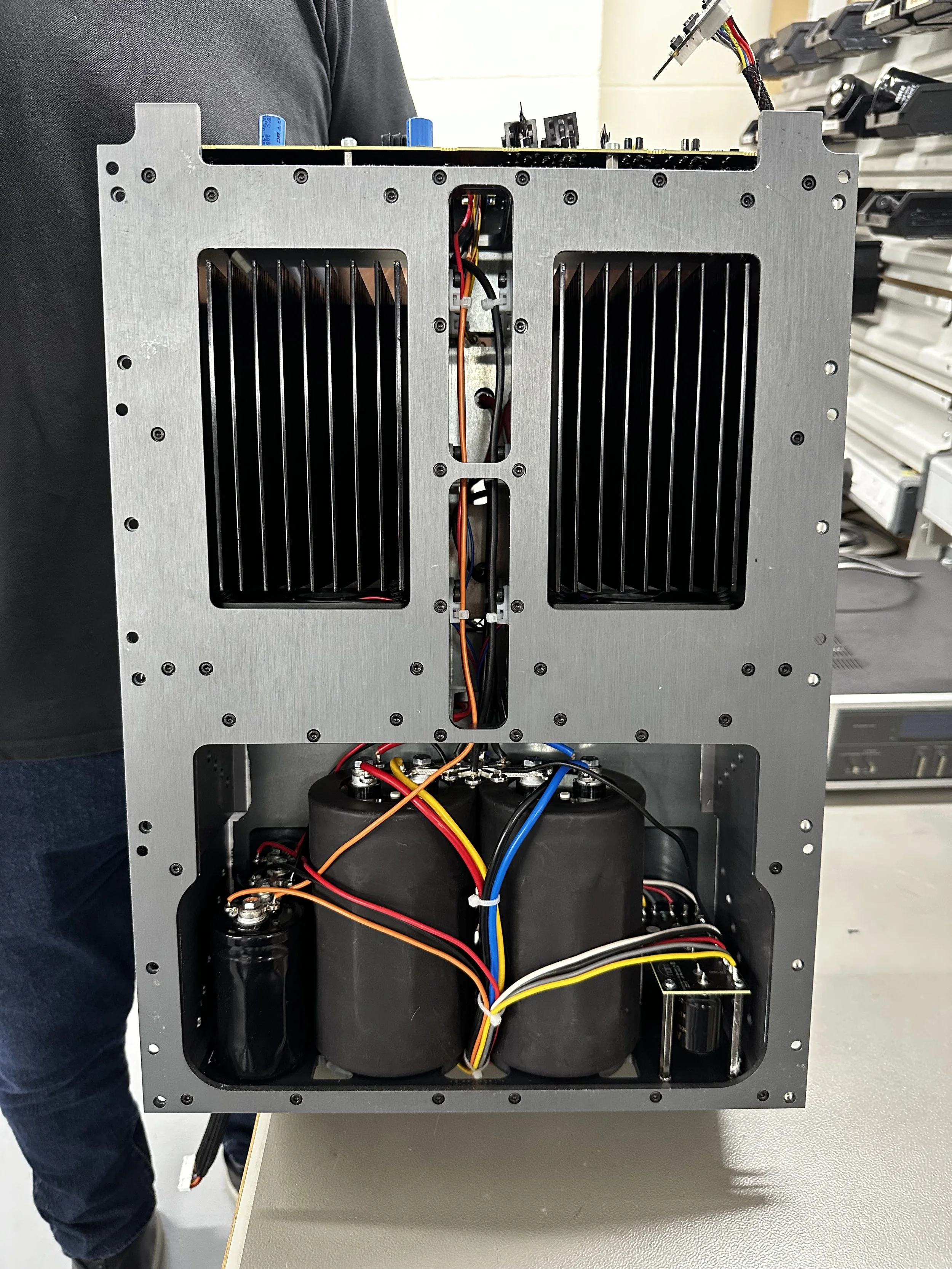
Naim statement chassis assembly
Super Lumina: the details behind the cables
The next focus point, unsurprisingly, was cables. Naim likes their cables – a lot, and it has some pretty good reasons why. During the tour, I was lucky enough to watch one of the technicians assemble some of Naim's famous Super Lumina cable, which was certainly quite interesting but also raised some questions. Firstly, in each Super Lumina cable, a small incision is cut into the cable housing, and a resistor is soldered between the L- and R-channel metal shielding. This resistor is certainly not there just for looks, especially since it is covered up underneath the housing that controls the cable split at the speaker end. It was explained to me that this resistor differs depending on the length of the cable (3m, 5m, 7m, and so forth) and is one of the reasons behind these preset length options. From what I gathered, the resistor's job is to help regulate the resistance differences between the different lengths of shielding, helping to manage RF interference as the cable length changes. As I understood it, there was additional discussion on how this resistor would also help standardise the change in total cable resistance between cable lengths – ideally so that the amp always sees the same value regardless of length.
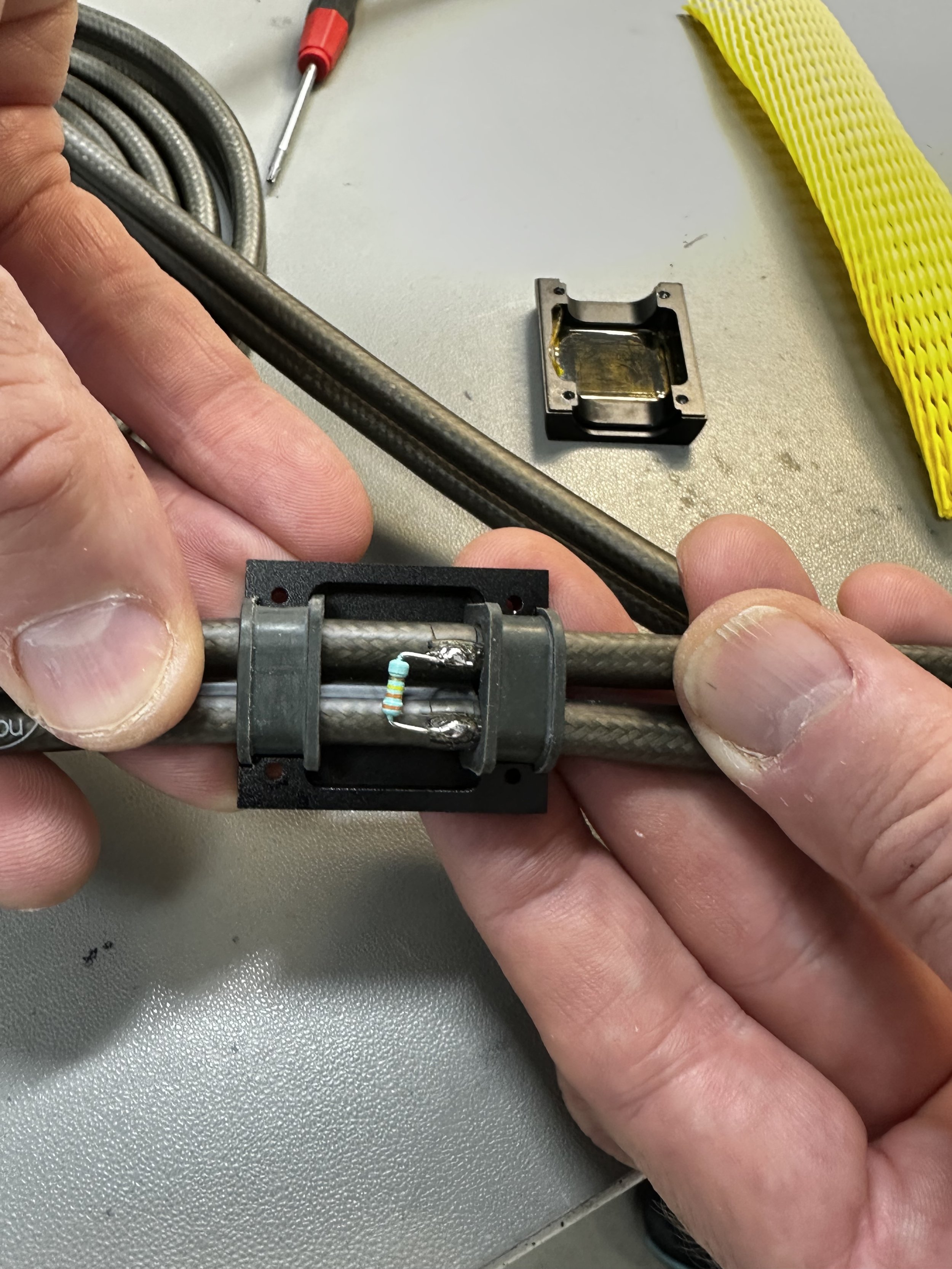
SUPER LUMINA INTEGRATED RESISTOR
Another curious technique I was surprised to learn about within Super Lumina was its multi-layered conductor design. The basic layout of each polarity wire consists of a central copper conductor surrounded by a shielding layer, which is then surrounded by another copper conductive layer, connected to the first at both ends of the cable. This is then covered by an additional shielding layer. Although, once again, I may have misunderstood some of the finer details, our discussions centred around the idea that, as audio travels down a wire, its frequencies partially separate, with the higher frequencies moving towards the outer edges of the cable and the lower frequencies moving more towards the centre. This is part of the reasoning behind the two-layered conductive design of Super Lumina, which aims to take advantage of this natural separation to create better isolation and separation for ultimate clarity.
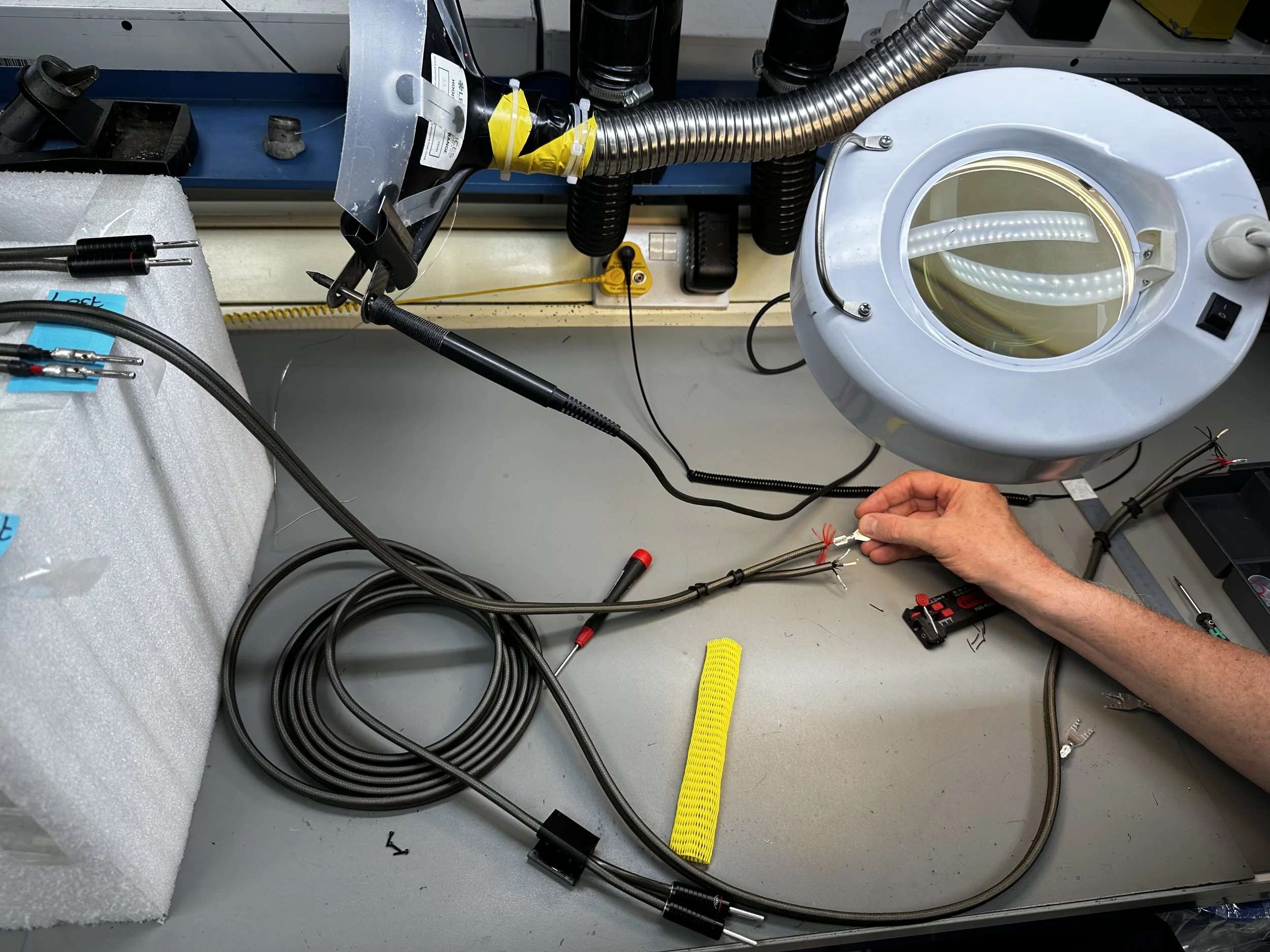
Cable manufacturing
The famous Naim cable shaker
Continuing with the cable discussion, the famous Naim “cable shaker” (or “wiggle machine” according to my partner) was next on the itinerary. Although rather comical, it serves a genuine purpose. Naim claims it makes a significant difference to the sound of its interconnects, to the extent that it takes the time to run each cable through it twice! The shaker links back to a core principle behind every aspect of Naim's design: decoupling! Naim recommends that all cables are left hanging loose and without tension, avoiding twists or kinks that put strain on the wire or terminals. By allowing the cable to hang freely, the “loose” cable terminals can remain as such, reducing the amount of mechanical vibration transferred between the loudspeaker and the amp or preamp. Speakers have large mechanical forces at work, so preventing those vibrations from reaching the amplification equipment is something Naim has identified as highly beneficial to the sound. So, how does the cable shaker relate to this? Well, it's simple! It shakes them loose! Giving the cables a good shake helps the fresh rubber loosen up and gain elasticity, while also helping the copper settle internally. This reduces overall rigidity and stiffness, allowing the cables to hang more naturally.
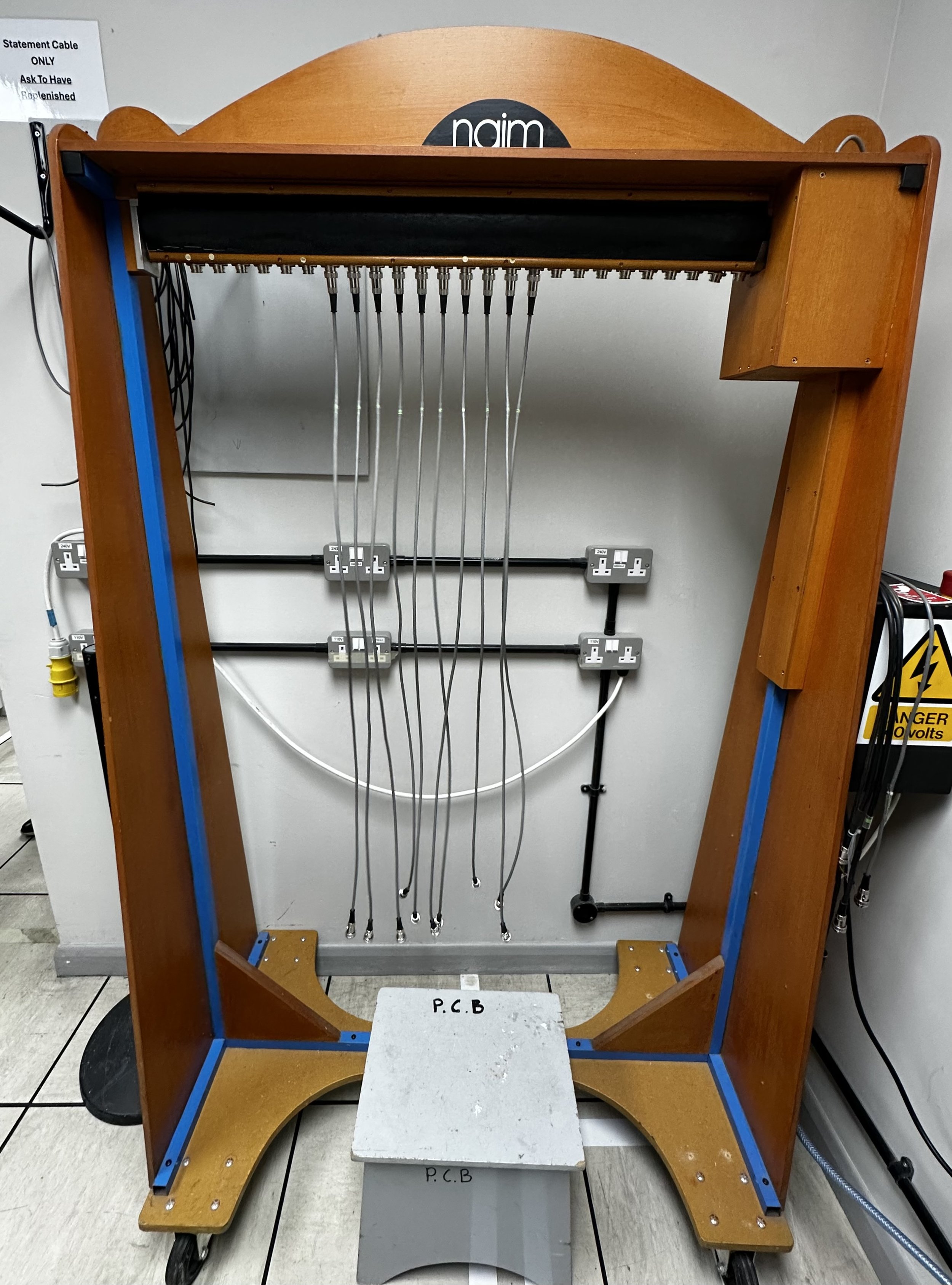
The famous Naim cable shaker
Demo time (aka the fun bit)
After some very welcome lunch in the Naim canteen, we settled down in the demo room for a run-through the current Naim separates range. We took up our listening positions in front of a pair of ‘just run-in’ Focal Utopia III Evo floorstanders. Jason and Tom from Naim assured us that the speakers, priced at around £35k, would allow us to hear the benefits of any system upgrades made.
We began the listening session with the entry-level NSC 222 streamer/pre-amp and NAP 250 power amp. Our initial assumption was that the entry-level combo might struggle with the Focals. We were, however, surprised by how good they sounded, with plenty of resolution and dynamics available.
We continued to progress through the range, with the NSS 333 streamer/NAC 332 pre-amp and NAP 350 monoblocks up next, and again the extra dynamic headroom and increased clarity levels were readily apparent.
What a power supply upgrade can do
Jason then introduced an NPX 300 power supply to each component, from the NSC 222 to the NSS 333 streamer and NAC 332 pre-amp, and the sequence was repeated. The sound became smoother and more resolving, whilst losing none of its dynamics. Jason explained Naim’s ethos of customers being able to upgrade the performance of their existing components that they know and enjoy, just by adding a separate power supply. By removing the interference caused by having a power supply active in the same chassis as sensitive audio electronics, audible improvements to the sound quality were made. We had listened to a track, ‘One of a Kind’ by Tia Gordon, which demonstrated the differences well.
Making a Statement
Finally, we were treated to the ND 555 streamer and Naim Statement. With over 700 watts of power on tap, we held on to our seats! Jason played ‘Stimela (The Coal Train)’, a live recording by South African jazz artist Hugh Masekela. The track builds from a syncopated bass drum and cowbell riff that makes you smirk with the sheer power and dynamics present. We also listened to Michael Jackson’s ‘Beat It’. I’ve heard this track many times before, but was amazed by the ability of the Statement to pull out details and vocal inflections I’d never heard before.
Similarly, Buddy Holly’s ‘True Love Ways’, recorded in the 1950s, sounded fantastic over the Statement, with a real sense of being in the studio with the musicians if you closed your eyes when listening.
From the sheer scale of the Statement’s transformers to the tiny details in a Super Lumina cable, the visit gave Martin and me a greater appreciation of the work behind Naim’s products. Hearing the systems afterwards brought it all together, showing how those engineering decisions translate into the listening experience. Seeing the care taken to keep older equipment playing was another real highlight.
A big thank you to Jason and Tom for a very entertaining and informative day, and for taking the time to share their knowledge and answer our questions. We came away with plenty to think about and a few tracks to revisit back in Brighton. There’s certainly a lot going on behind those familiar Naim boxes!
Thanks for reading.
Louis - Audio T Brighton
If you have any questions about anything covered in this article, or any other hi-fi or home cinema enquiries, be sure to contact us.
If you’ve enjoyed this, why not go ahead and read some more of our other blogs, and be sure to follow us on our social media channels below…
Naim can be found at the following Audio T stores