
AC/DC – How current can affect the sound quality of your Hi-Fi
/Direct Current (DC) contamination of our AC electrical supply is growing, and that’s bad news for hi-fi fans. This blog explores the rise in DC and what can be done to minimise its impact on our listening enjoyment.
We’ve spoken before about noise floor and its impact on the sound quality of your hi-fi.
In short, it’s the base-level noise that’s present in your system the moment you turn it on without playing any music. The higher the noise floor, the less you hear of your music.
It comes from the electrical and mechanical noise (see our July blog for more on mechanical noise) that is generated by our systems themselves, and that which leaks in from the world outside.
And in recent years, there has been a significant rise in one particular noisy culprit – direct current (DC).
As most know, our electricity supply is alternating current (AC). AC can be noisy, and hi-fi manufacturers have spent lots of time and money trying to minimise this noise both within components and by developing equipment like mains conditioners for the home audio market.

A diagram of the difference between AC and DC in the electricity grid. Source: PEguru
But while all the attention has been on AC, DC has quietly encroached into our electrical supply in recent years, causing additional issues. And it’s not just in our homes, but throughout the electricity grid.
Growing problem
Unfortunately, our modern gadgetry is largely to blame for introducing more DC into our homes and our hi-fi.
Common culprits include:
Switch-mode power supplies (SMPS) – what used to be called “wall warts” (plug-in chargers) found on laptops, chargers, TVs, LED lights and smart devices. They convert AC to low-voltage DC.
Energy-efficient appliances – fridges, washing machines, and HVAC systems often include motor controllers that can introduce DC.
Electric vehicle chargers and solar inverters – EV chargers convert AC to DC, while solar inverters convert the DC from solar panels into AC—both of which introduce noise.
Dimmers and LED drivers – modern lighting solutions can distort the AC waveform and leave residual DC and high-frequency noise.
Green energy sources – while these are good for the planet and the UK’s energy security, decentralised generation sources like wind and solar mean the grid needs clever electronics to balance demand and supply which, you guessed it, introduces more DC noise into the system.
The problem is that AC is supposed to be a clean waveform. Okay, it never truly is—but DC imbalances AC’s switching between positive and zero volts by introducing a small but steady voltage that shouldn’t be there.
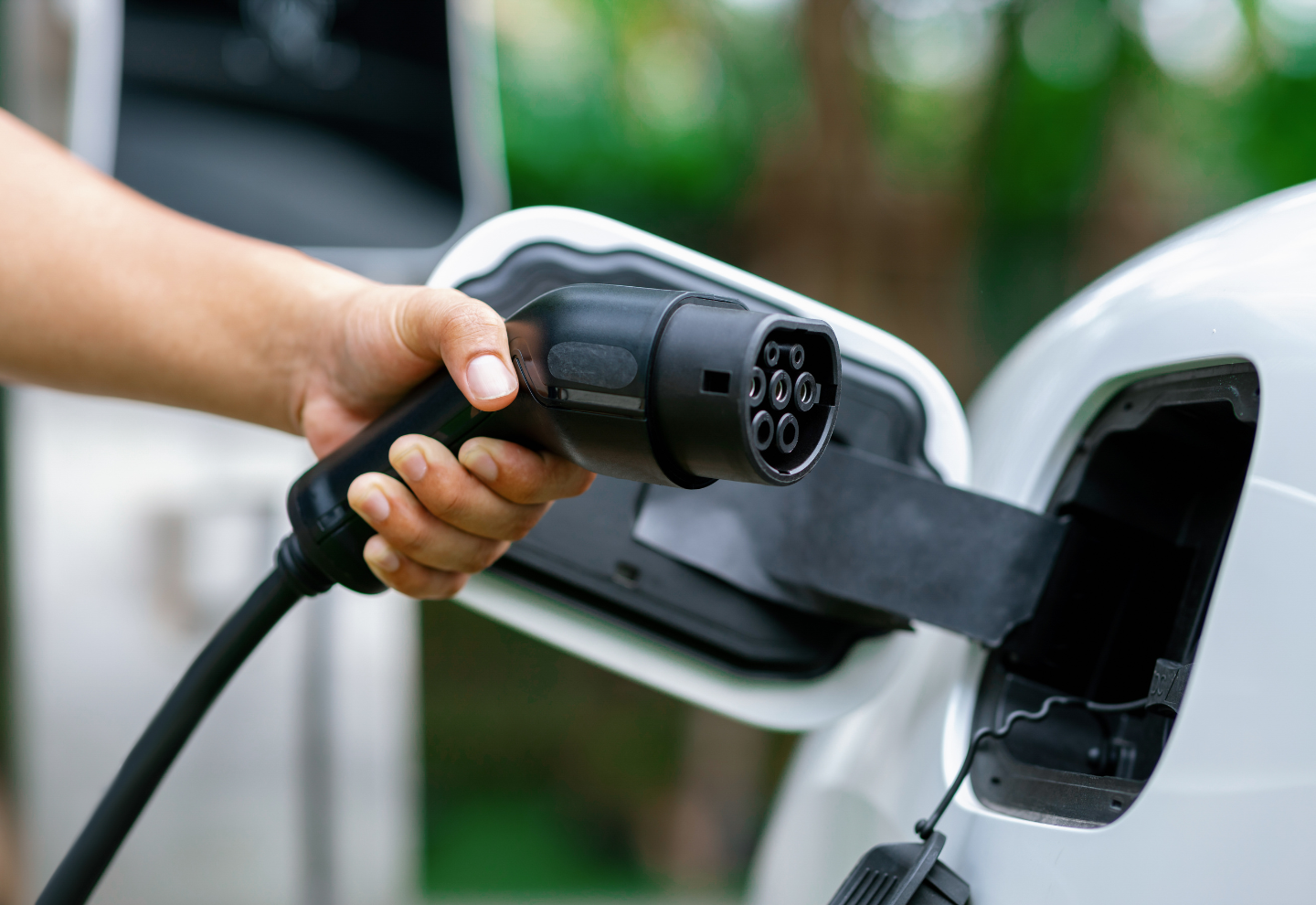
The rise of evs is increasing dc in the ac system
The result? Noise.
How does DC affect our hi-fi?
Well, as mentioned, it increases the noise floor in our systems.
Imagine putting a record, CD, or streamed track on your system, sitting down and waiting for the sound to wash over you in glorious stereo.
And then a neighbour starts up their lawnmower.
The lawnmower may not be particularly loud indoors, but the quiet, persistent background noise takes the edge off your listening pleasure. It may mean you can no longer hear subtle musical details as clearly.
So the lawnmower has raised the ambient noise floor, with much the same impact as DC raising the electrical noise floor in your system. Okay, electrical noise rarely creates a lawnmower-like buzzing from your speakers (if it does, you have a serious noise floor problem!), but the noise is there and it does affect the sound.
Most high-end audio components use linear power supplies. These use a transformer to step down AC to DC to provide a smooth power supply for your equipment.
If DC is present in the AC line, it can cause an asymmetrical signal in a component’s power transformer. This reduces efficiency, generates more heat, and introduces more distortion.
And then there are ground loop issues. Every hi-fi enthusiast has a healthy respect for ground loop issues. These are the hums and/or buzzes that appear because different devices around your home earth in different ways, which can cause voltage imbalances and current flows.
Unfortunately, DC imbalance in an AC line can exacerbate ground loop issues, giving you more hums, buzzing, and even mini pops.
In worst-case scenarios, DC voltage on audio signal lines—such as pre-amp outs or headphone jacks—can damage equipment over time by causing heating in speaker drivers and voice coils.
How to protect your system from DC
There are a number of ways to mitigate the effects of DC distortion:
Use a DC Blocker - DC blockers (or DC offset eliminators) are devices that filter out DC from the incoming AC line, for example the Isotek V5 Syncro Uni 10 DC Blocker. Some high-end power conditioners have this feature built in.
Power Conditioners and Isolation Transformers - quality power conditioners can filter out both DC and high-frequency noise. Isolation transformers go further, creating a “clean” local AC supply.
Dedicated Audio Spur - install a separate electrical circuit for your audio system, ideally with its own breaker. Use high-quality cabling and avoid sharing this line with noisy appliances.
Measure and Monitor – a power quality meter can tell you how clean or dirty your electrical supply is. Even a standard multimeter can tell you if you have too much voltage emanating from the speaker terminals on your amp (plenty of info online on how to do this safely). Or ask an electrician to help you out.
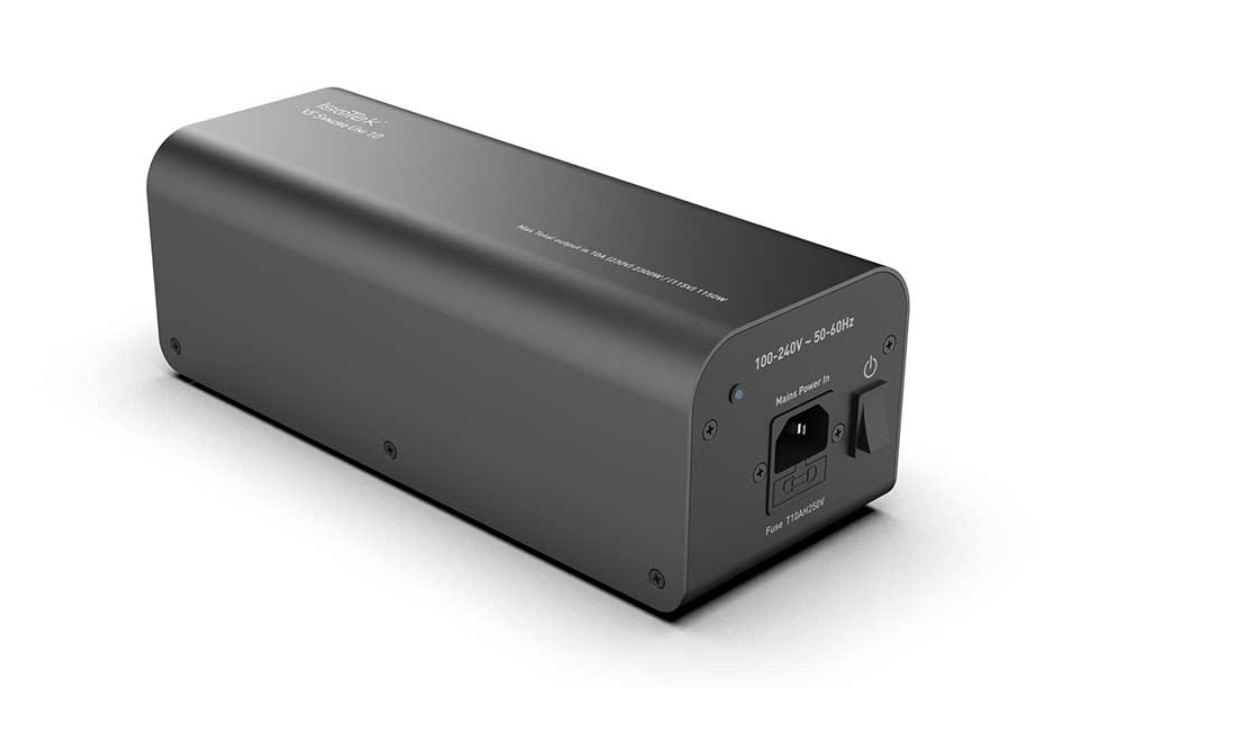
Isotek v5 synchro uni 10 dc blocker
DC on the AC line may not sound like a big deal—and most of us live with it.
But feeding our hi-fi dirty electricity is a bit like putting a sportsman or woman on a fast food diet and expecting them to perform at their very best.
So, in our quest to get the best sound out of our hi-fi systems, let’s not forget our noisy electrical supplies, especially the growing problem of DC.
You can explore a range of mains and signal conditioners here. You may be surprised at how much better your system performs with cleaner power.
If you want to find out more about mains conditioners, or you’ve got a noise problem you just can’t get to the bottom of, you can contact us at portsmouth@audio-t.co.uk or on 0239 266 3604.
Not local to Portsmouth? You can find your nearest Audio T store here.
If you’ve enjoyed this, why not go ahead and read some more of our other blogs, and be sure to follow us on our social media channels below…