
Splendid isolation – ways to control the ever-present audio gremlin of mechanical interference
/Interference and, for the purposes of this blog we are focusing on mechanical interference rather than electromagnetic, increases background noise levels meaning you hear less of your music. So what is it and what can be done about it?
Hi-fi manufacturers spend huge amounts of time and money developing ways to reduce signal interference.
Shielding on cables, circuitry design in components, separation of signal paths from power supplies, power conditioners and, indeed, the whole concept of hi-fi separates are all ways to reduce electromagnetic interference.
The aim is to reduce the noise floor in your system, which is to say minimise the noise that is present in your system the moment you turn it on. Because these hums, hisses and other sonic interference are often inaudible, you may not even realise you have noise floor issues!
Whilst much of the wizardry to control electromagnetic interference is designed into good quality hi-fi products, much of the task of reducing mechanical interference is left to us.
The good news is that there are plenty of solutions on the market, including equipment racks, isolation products and room treatment, all of which can help us tame mechanical interference in our systems and listening rooms.
Additionally, there are a few simple things we can do ourselves to make sure our systems sound as good as possible.
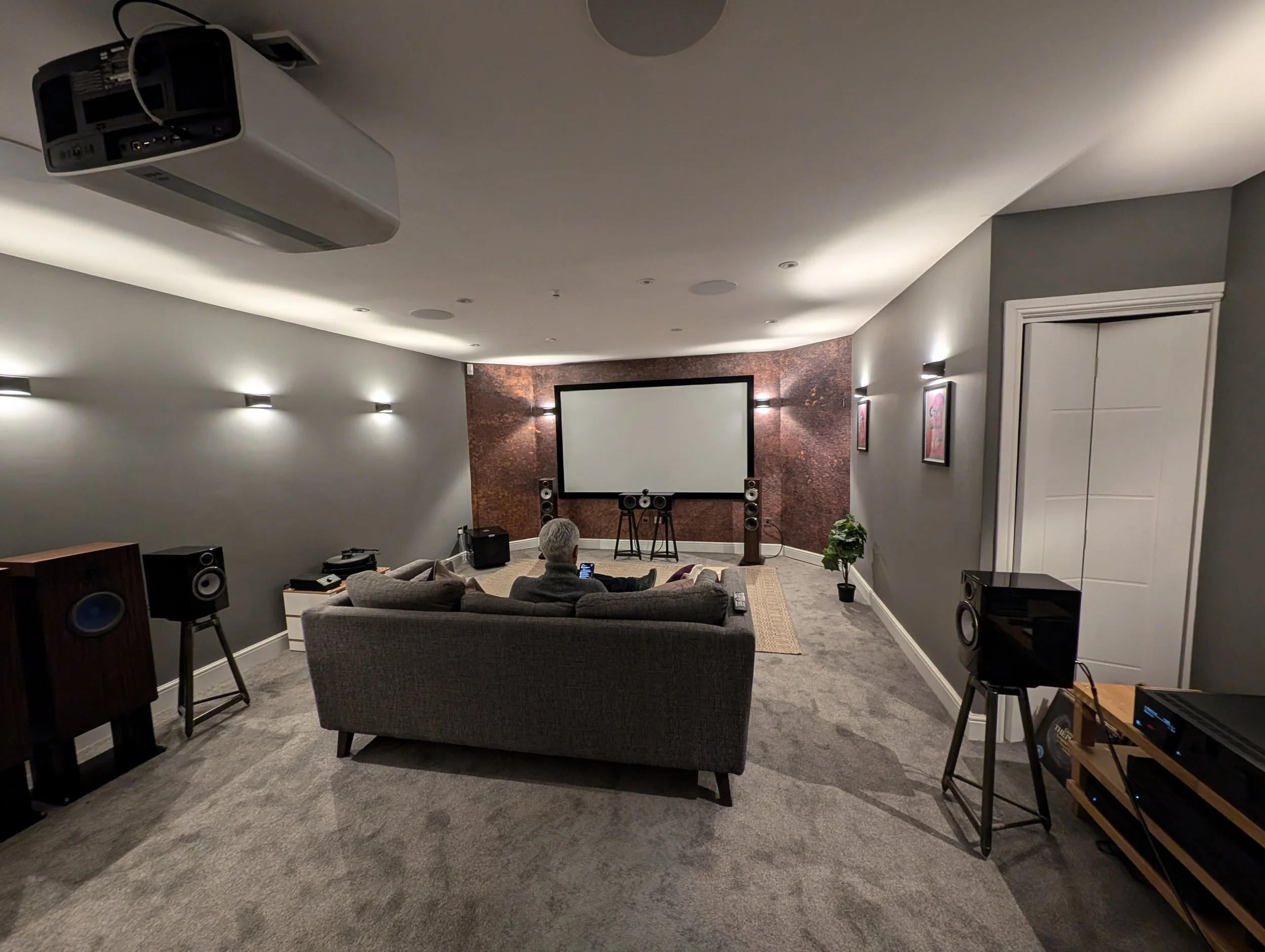
Audio nirvana - minimising mechanical interference pays sonic dividends
Not so good vibrations
Basically, mechanical interference is vibration. This is to a large extent caused by the sound, whether direct or reflected, coming from our own hi-fi speakers which energises the room and everything in it, including all our hi-fi equipment and cables.
If care is not taken then we can end up with our listening rooms ‘humming along’ to our music. And, if mechanical interference isn’t bad enough, the vibrations can leach back into the electronics in our system and become electromagnetic interference too!
Many of us will remember from school physics that just about everything has a resonant frequency. This is the frequency - determined largely by the composition and construction of different materials and objects - at which something will vibrate with maximum amplitude when in contact with an energy source which, in this case, is mainly (but not exclusively) the music coming from our loudspeakers.
Given that there are so many different frequencies in a piece of music, it is a safe bet that almost everything in our rooms will have its resonant frequency activated at some point or other while listening to music. The louder the music, the more energy is transferred to our rooms and their contents.
Things don’t only vibrate at their resonant frequency, it’s just that this is when the vibration, or energy transfer, will be greatest.
What’s more, it’s not just energy from the sound waves produced by our speakers. Vibrations emanate from other sources such as household appliances, someone walking about in the house or from the traffic outside. Even our turntables and CD players introduce an element of mechanical noise into our systems.
The result is an unwanted chorus of extraneous buzzing, thrumming and booming going on alongside our music. As mentioned, not all of this noise will be audible to the human ear but, whether audible or not, it does interfere with the sound of our hi-fi.
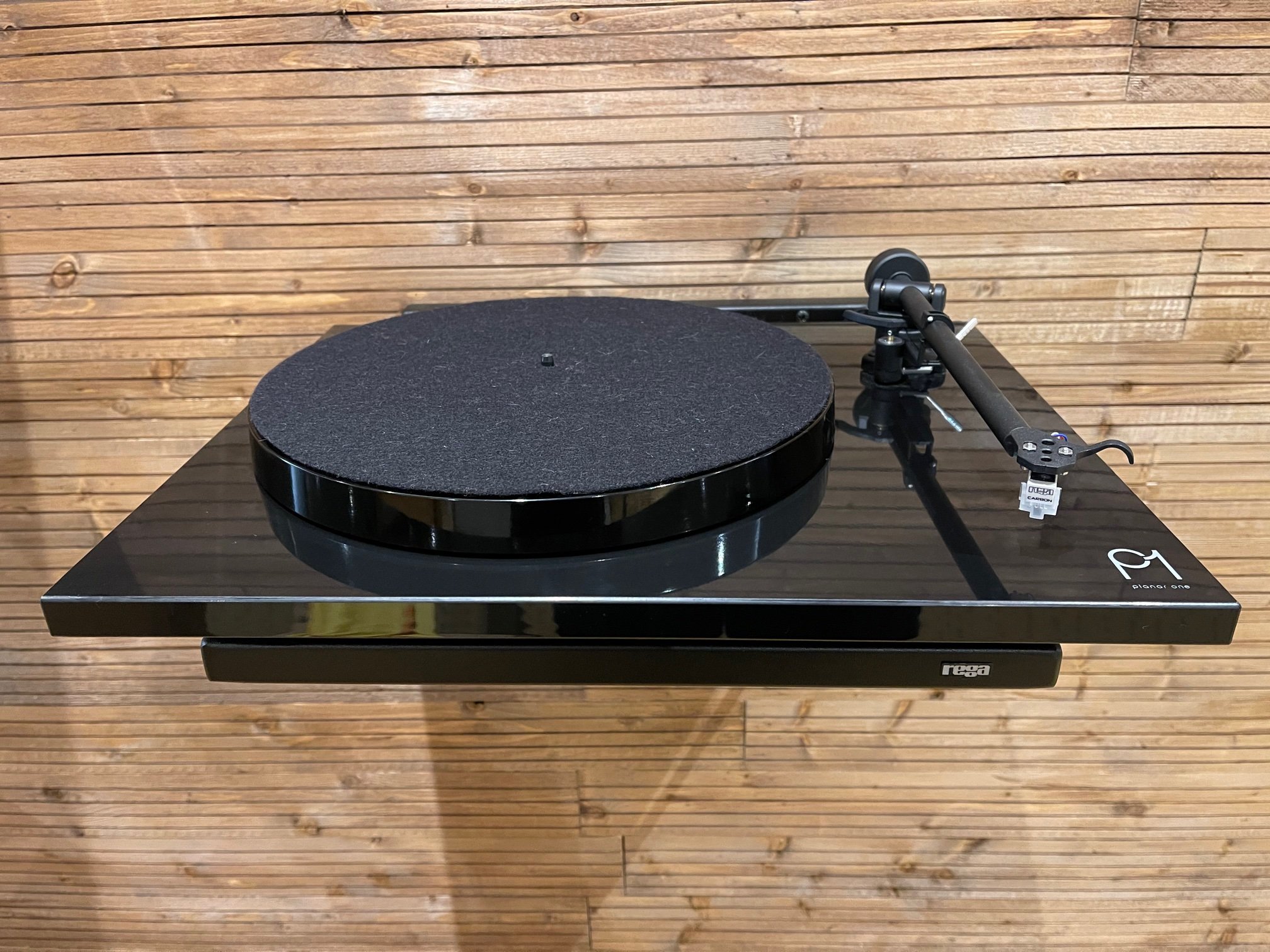
wall brackets can reduce vibrations affecting turntables
Here’s how mechanical noise can affect audio:
Microphonic Effects: Sensitive electronic components, such as capacitors and valves, can act like microphones - picking up physical vibrations and converting them into unwanted electrical noise.
Timing Smear: Vibrations can subtly alter the timing of digital circuits, potentially leading to jitter or loss of low-level detail.
Distortion in Analogue Playback: Turntables are especially vulnerable and any vibration that reaches the stylus can be interpreted as part of the signal.
Resonant Coupling: When components share vibrations through a shelf, stand or rack, they can resonate with each other, introducing tonal colouration or masking fine detail.
Putting a dampener on things
There are a number of ways to combat vibration, most of which revolve around some kind of isolation system and/or a deadening medium.
Isolation products - ranging from equipment feet and platforms to racks and cones - are designed to reduce and, ideally, eliminate the impact of unwanted vibrations.
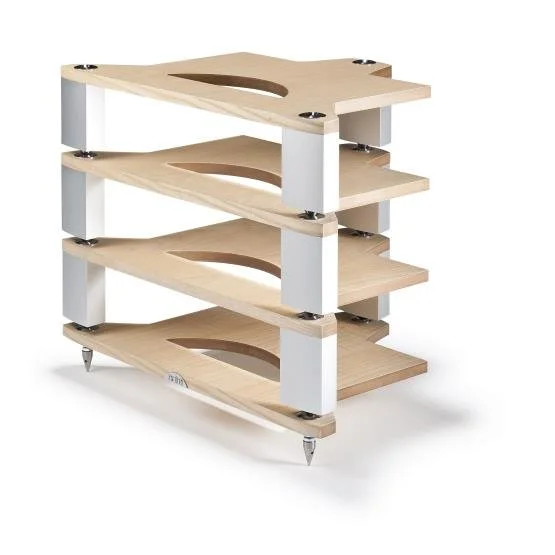
quality racks like the Naim FrameLite provide a stable and acoustically isolated platform
The goal of isolation is twofold: preventing external vibrations from reaching your components and preventing internally generated vibrations from coupling into the support structure which would include your rack, speaker cabinets and floor.
Isolation products typically work through one or more of the following mechanisms:
Damping - some materials convert vibrational energy into heat. Sorbothane, viscoelastic polymers, and certain foams are commonly used in feet and pads. These materials are tuned to absorb vibrations within specific frequency ranges, reducing resonance.
Decoupling - by creating a mechanical barrier between a component and its environment, you can decouple it from structural vibrations. This can be achieved through soft suspension (springs, air bladders) or opposing hard interfaces, for example ceramic balls on steel cups.
Mass loading - heavy platforms made of dense materials (like granite or constrained-layer composites) absorb energy and prevent components from “shaking themselves.” A good example is filling metal speaker stands with a dense filler to stop then ‘ringing’.
Mechanical grounding - some isolation systems aim to drain vibrations away from a component by providing a low-resistance mechanical path, often using rigid cones or spikes into heavy bases.
The key is to match the isolation approach to the component and environment. What works for a turntable might not be ideal for a DAC or preamp.
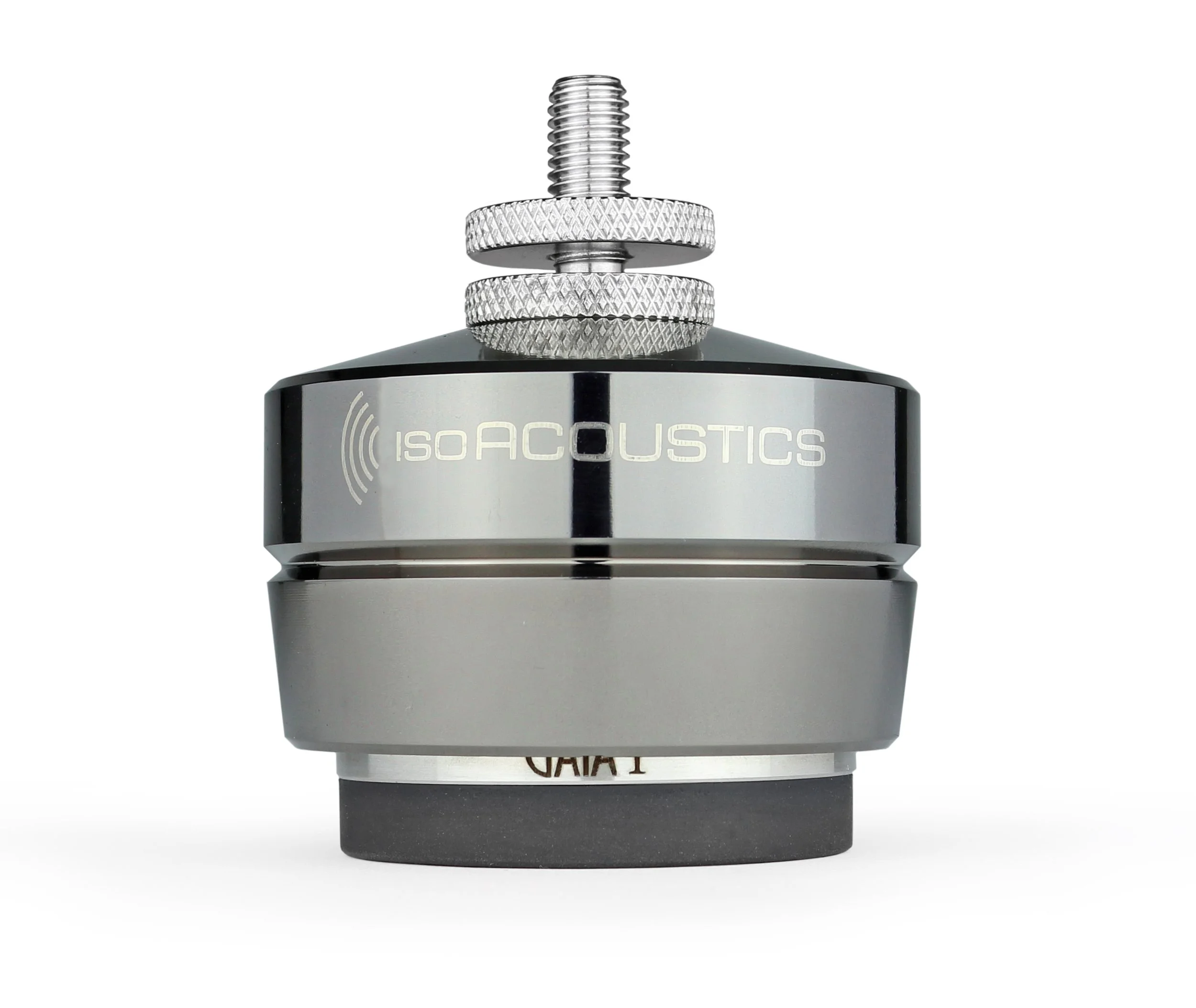
Isoacoustics gaia feet provide isolation for speakers and speaker stands
The sound of silence
Isolation products can benefit your system in many ways by reducing the noise floor. This means a quieter background allowing you to hear more of your music. The result is improved clarity and detail, better instrument separation and enhanced spatial imaging.
You may also experience a tighter and more tuneful bass response. Unruly bass is one of the biggest offenders when it comes to mechanical interference thanks to the amount of energy in bass notes and the fact that many things in our homes have resonant frequencies at the lower end of the audio spectrum.
Isolation should also give you greater dynamic range, so that quiet passages are properly quiet and when the music really kicks in the difference between quiet and loud is vivid and real.
You may also notice that, with good isolation, longer listening sessions become less fatiguing on your ears. This is because unwanted resonances can introduce a harshness or glare in a system and this can be wearing on the ears.
Here are a few ideas for isolation products for different components:
Speakers: spikes are a minimum form of isolation, reducing the energy transferring from the speakers to the floor and vice versa. For stand mount speakers always try to use good pair of speaker stands and consider filling the uprights on suitable stands with some sort of deadening material, such as Custom Design inert Filler or Atacama Atabites. For floor standers consider IsoAcoustic Isolation Feet or the Chord Silent Mount SM7 Isolation Feet.
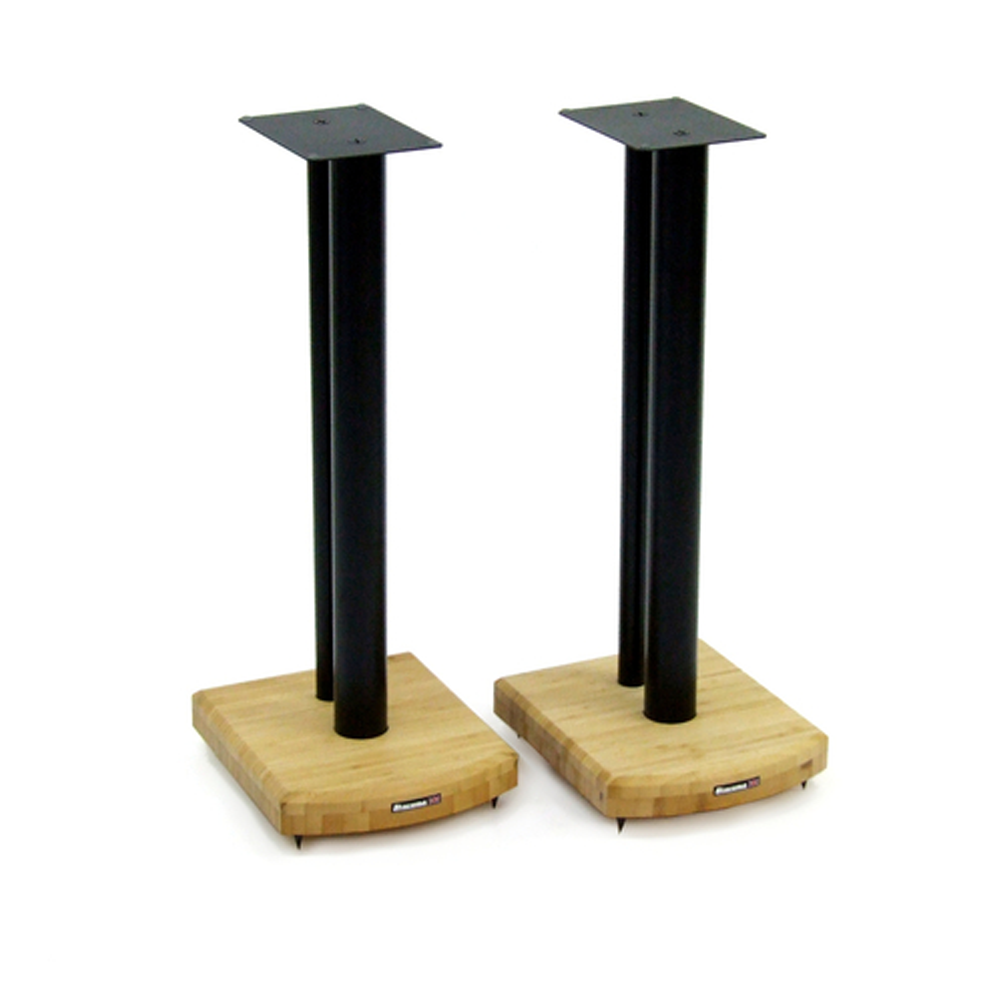
invest in a good pair of speaker stands
Amplifiers and CD players: Isolate using a good quality rack such as those from SolidSteel or Quadraspire or Blok or Naim.
Streamers & DACs: Isolate using a good quality rack. Even consider additional isolation feet such as Quadraspire Qplus Supports or the Bassocontinuo Ultra Feet Enhanced Isolation System
Speakers: spikes are a minimum form of isolation, reducing the energy transferring from the speakers to the floor and vice versa. For stand mount speakers always try to use good pair of speaker stands and consider filling the uprights on suitable stands with some sort of deadening material, such as Custom Design inert Filler or Atacama Atabites. For floor standers consider IsoAcoustic Isolation Feet or the Chord Silent Mount SM7 Isolation Feet.
Other things to consider
While all the products above will improve sound quality there are, in addition, other things we can do to treat our listening rooms – the aim being to control vibration and, just as importantly, sonic reflections.
Most listening spaces will be reasonably well-furnished with sound absorbent materials, for example sofas, carpets and curtains. But if your listening area is on the minimalist side and you’re not a fan of rugs and soft furnishings then consider acoustic treatment panels and bass traps. You can get some pretty trendy designs these days.
The other thing to consider is speaker placement. By moving a speaker away from rear and side walls you can reduce the sound reinforcement you get from boundary walls and thereby help to reduce issues with boomy bass.
Likewise toeing your speakers inwards, towards your listening position, can help to focus your music and can help control reflections, leading to a clearer sound.
Reaping the rewards
Isolation and other measures to control mechanical interference are grounded in sound engineering principles.
That said, the effectiveness of any isolation or damping products can vary depending on the quality of those products, your hi-fi equipment, you room and your expectations because, let’s face it, no real-world room is going to be acoustically perfect.
If you own a medium to high-end system then you really owe it to that system to introduce some measures to control mechanical interference – a decent rack, speakers stands and some thought about the acoustics in your listening room at the very least. But even more modest systems benefit from the addition of a few choice isolation solutions.
Let’s put it this way, it’s a shame to spend all that money on a good hi-fi system only to have your room humming along with every song.
If you’d like to discuss isolation solutions and products then simply pop into the shop or call on 0239 266 3604 or email portsmouth@audio-t.co.uk.
Alan, Luke and Steve - Audio T Portsmouth
If you have any questions about any of the equipment featured in this article, or any other hi-fi or home cinema enquiries, be sure to Contact Us
If you’ve enjoyed this, why not go ahead and read some more of our other blogs, and be sure to follow us on our social media channels below…