
REL Classic 98 vs REL T/9x: Two Very Different Subwoofer Alternatives
/At Audio T Swindon, we’ve been fortunate to experience two of REL’s most talked-about subwoofers side by side — the Classic 98 and the T/9x. On paper they may seem similar, but in reality, they represent two very different approaches to bass reproduction. One looks back to REL’s heritage, inspired by the legendary Strata III of the late 1990s, while the other showcases everything the brand has learned since. In this comparison, we explore how these two models differ in design, technology, and sound — and which one might be the best fit for your system.
REL: A Legacy of Innovation
From its inception, REL Acoustics has been driven by a singular purpose: to deliver uncompromised audio excellence. Founded by Richard Edmund Lord (the "R-E-L" of REL), the company’s journey began with dissatisfaction. Richard, a huge fan of classical organ music, found that no loudspeaker available could reach low enough to reproduce the deepest organ pipes. Frustrated by the subwoofer offerings of the day, he decided to build his own. What began as a custom-built design integrated into a bay window in his home quickly became a phenomenon.
Richard’s first groundbreaking contribution — the High-Level Input — revolutionised the industry. Unlike conventional subwoofers that rely on preamp signals, REL’s High-Level Input connects directly to the main amplifier’s speaker outputs. This ensures that REL subwoofers blend seamlessly with loudspeakers, delivering a sound as cohesive and natural as the original recording. This innovation became the cornerstone of REL’s legacy and remains a defining feature today.
Another major breakthrough followed soon after: the addition of a dedicated .1/LFE input with its own gain control. This allowed a single subwoofer to handle both music and home cinema without manual adjustments — an elegant, forward-thinking solution that perfectly embodied REL’s engineering ethos.
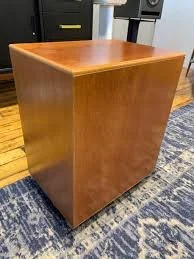
REL Strata 3
REL has always focused on how an entire system integrates, not just the bass. Early models such as the Strata 3 and Stadium set the stage for REL’s reputation, offering solutions that were both musical and technically innovative.
The R-Series, introduced in 2005, embraced modern Class D amplification. Compact yet powerful, these designs paired beautifully with piano black lacquer finishes, showcasing REL’s ability to combine performance with style. This range laid the groundwork for today’s Serie S.
In the early 2000s, the Britannia Series introduced forward-firing designs, while the T-Series (launched in 2007) brought in a cube-style cabinet, simplified crossovers, and refined aesthetics — the blueprint for the current Serie T/x.
Between 2015 and 2020, innovations such as PerfectFilter™ and LimitLess™ limiters gave REL unprecedented control and precision, allowing their subwoofers to deliver powerful, deep bass without losing speed or definition. REL’s ongoing refinements — including reducing driver moving mass by 20% — have resulted in even faster and more dynamic performance, ensuring every nuance of music or film is faithfully reproduced.
The REL Classic 98
The early REL models — Strata, Stadium, and Stentor — introduced the brand to the world, but the Strata III (1998) was the product that truly put REL on the map. The latest Classic No. 98 is an homage to that legendary design, updated for today’s systems.
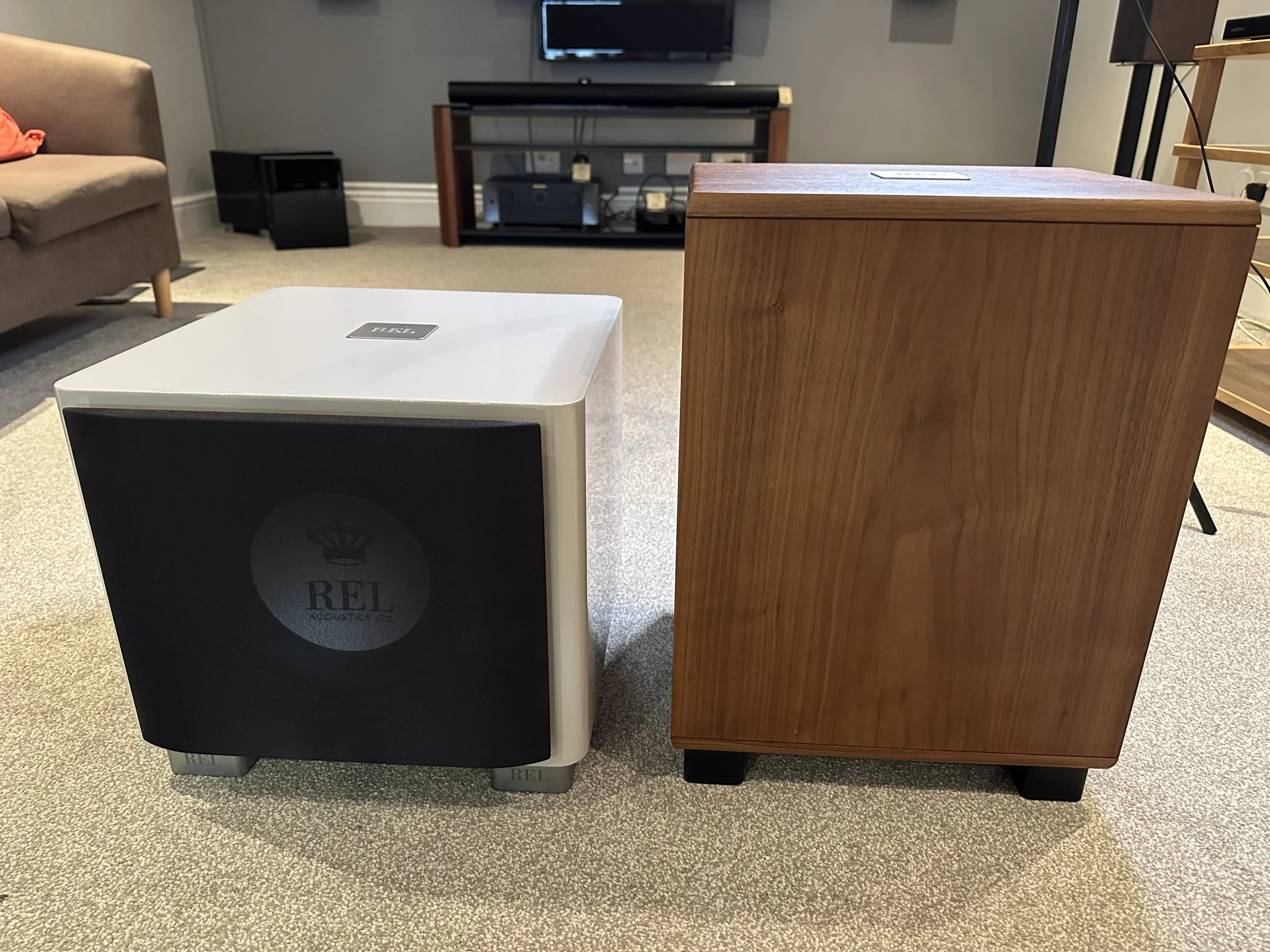
Rel T9X and Classic 98
The original REL concept was a sealed enclosure with a low-power Class A/B amplifier driving a long-throw bass driver. Where many subwoofers use ports to extend low frequencies, Richard’s idea was to use a large, sealed cabinet for cleaner, more controlled bass. Both the Strata III and Classic 98 use a 250mm driver. Back in 1998, that was a VIFA unit. REL could have repurposed the driver from its T/9x, but instead designed and built a bespoke paper driver specifically for the Classic 98.

top views
In the late 20th century, using a low-power Class A/B design was more of a necessity than a choice — powerful Class D amps weren’t yet viable. Building several hundred watts of Class A/B power into a Strata III would have been extremely heavy, expensive, and hot-running. However, by 2023, REL had perfected its Class D technology and equipped the Classic 98 with a new 300W amplifier, providing ample power without the need for external heat sinks that would spoil its retro design.
Aesthetically, REL returned to its roots. After years of black and white finishes, the Classic 98 revives the deep matte walnut veneer and rounded edges that defined its heritage. The polished REL badge on the top plate and square feet subtly distinguish it from the original, while the rear panel remains faithful in spirit. It’s a superb fusion of past and present — modern engineering wrapped in timeless style.
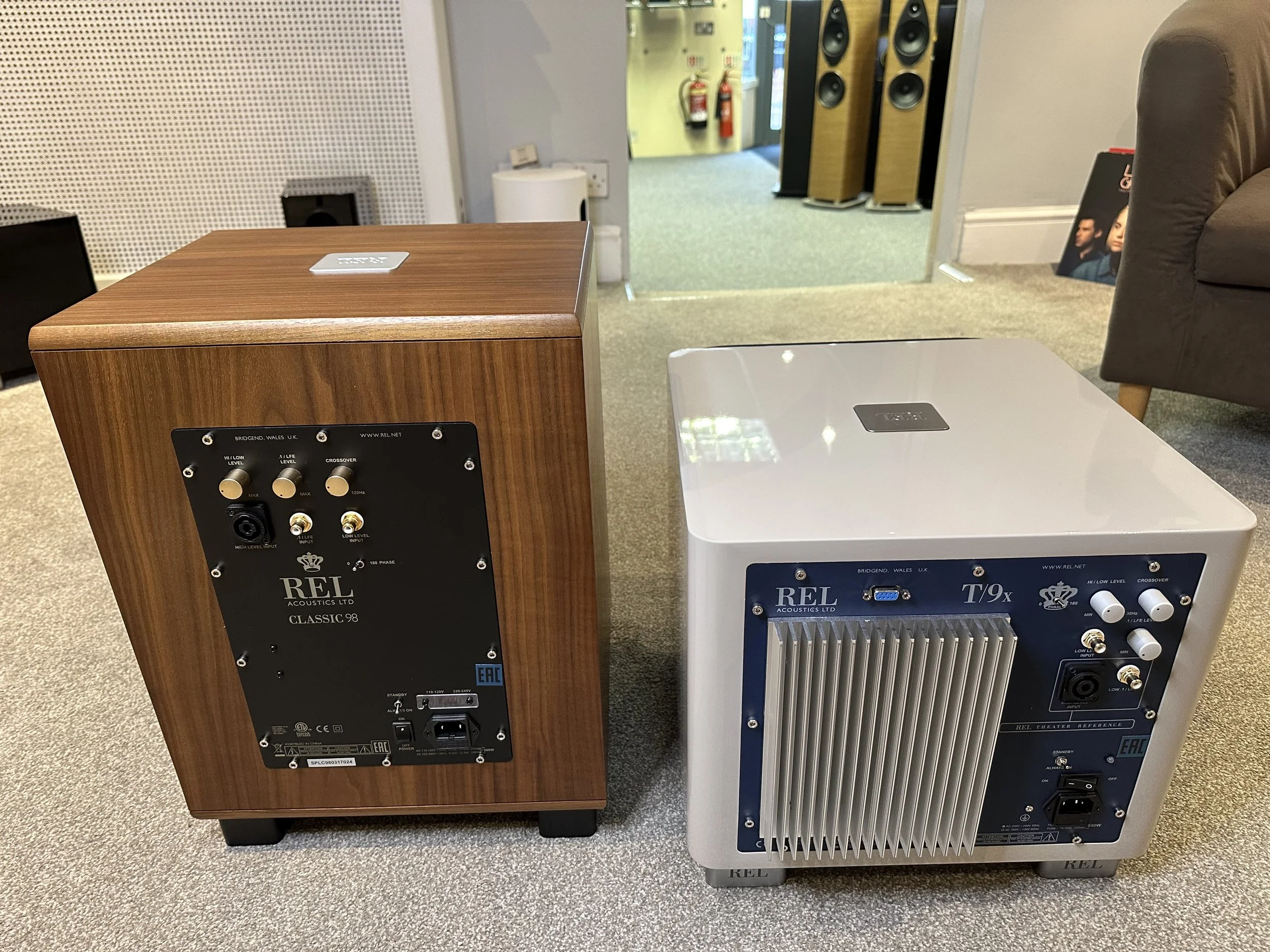
rear views
Early REL subs were a revelation for music lovers wanting to add depth and warmth to their systems, though by modern standards they weren’t the deepest or most neutral. The Classic 98 successfully bridges that gap — retaining some of the original warmth, but with the speed and precision of modern designs.
There’s still a hint of that classic REL warmth: a touch of richness that gives the midrange more presence. However, the Classic 98 sounds more direct and extended than its 1990s ancestor.
More speed!
The Classic 98 delivers the speed expected from modern REL subwoofers. Its paper cone driver moves air quickly and cleanly — far faster than its predecessors. It’s less warm than the originals but still fuller and more characterful than the T/x range.
The warmth of older REL designs often came from limited cabinet control. The Strata III used an unbraced enclosure with light wadding and as much grip on the driver as the amplifier could muster. The Classic 98 retains an unbraced cabinet but adds thicker wadding, a more dynamic driver, and far more power, resulting in a tighter, deeper, and faster sound — with just a trace of that vintage smoothness.
Bass reinforcement follows REL’s long-standing principle: underpinning the entire system rather than overwhelming it. This allows the midrange and treble of the main loudspeakers to shine through naturally.
While the Classic 98 can certainly deliver bass impact, that’s not its primary goal. Like the Strata III, it’s about musical integration and natural reinforcement — and that’s what makes it such a joy to listen to.
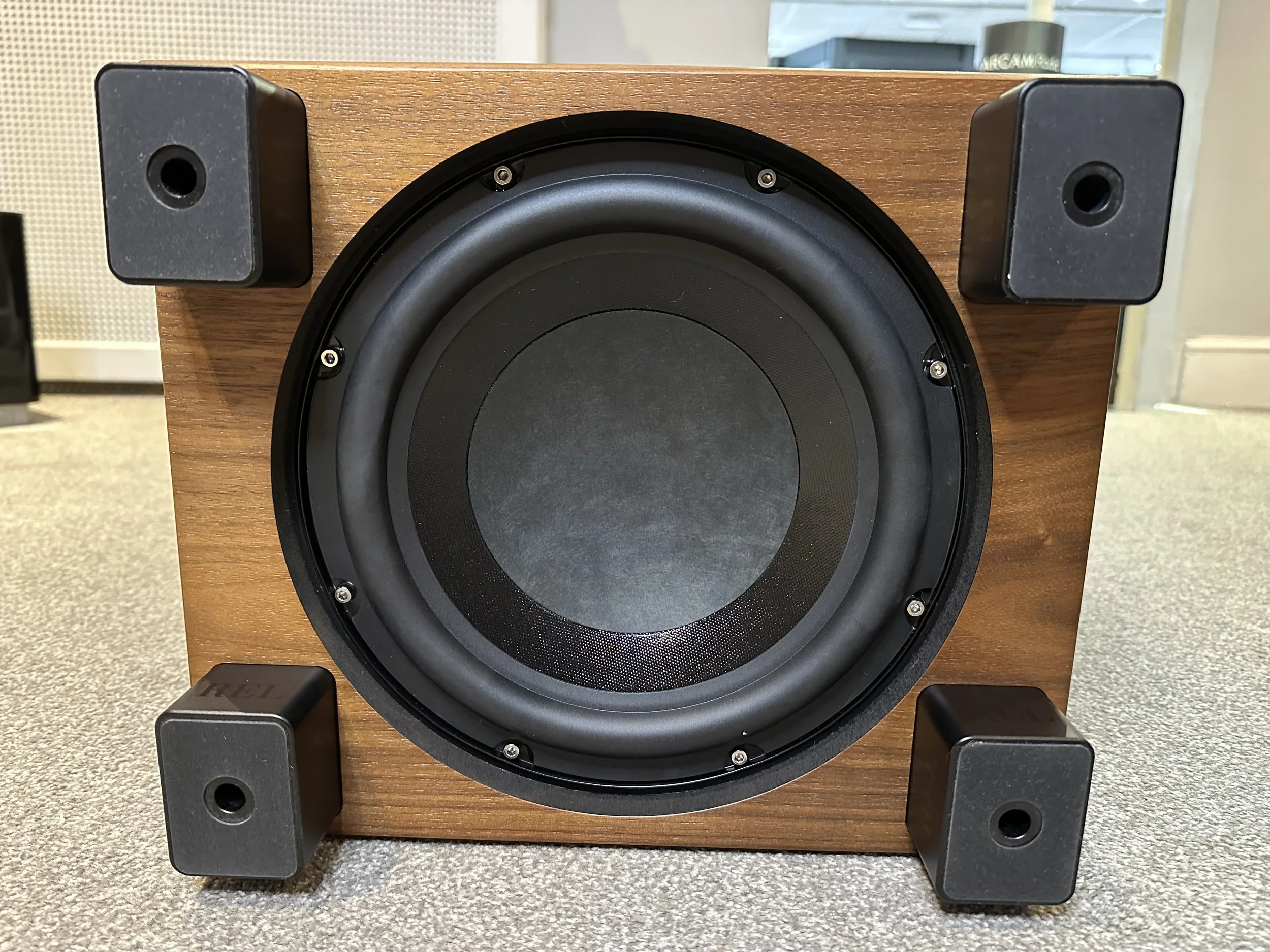
Classic 98 driver
REL T/9x: Modern Power and Precision
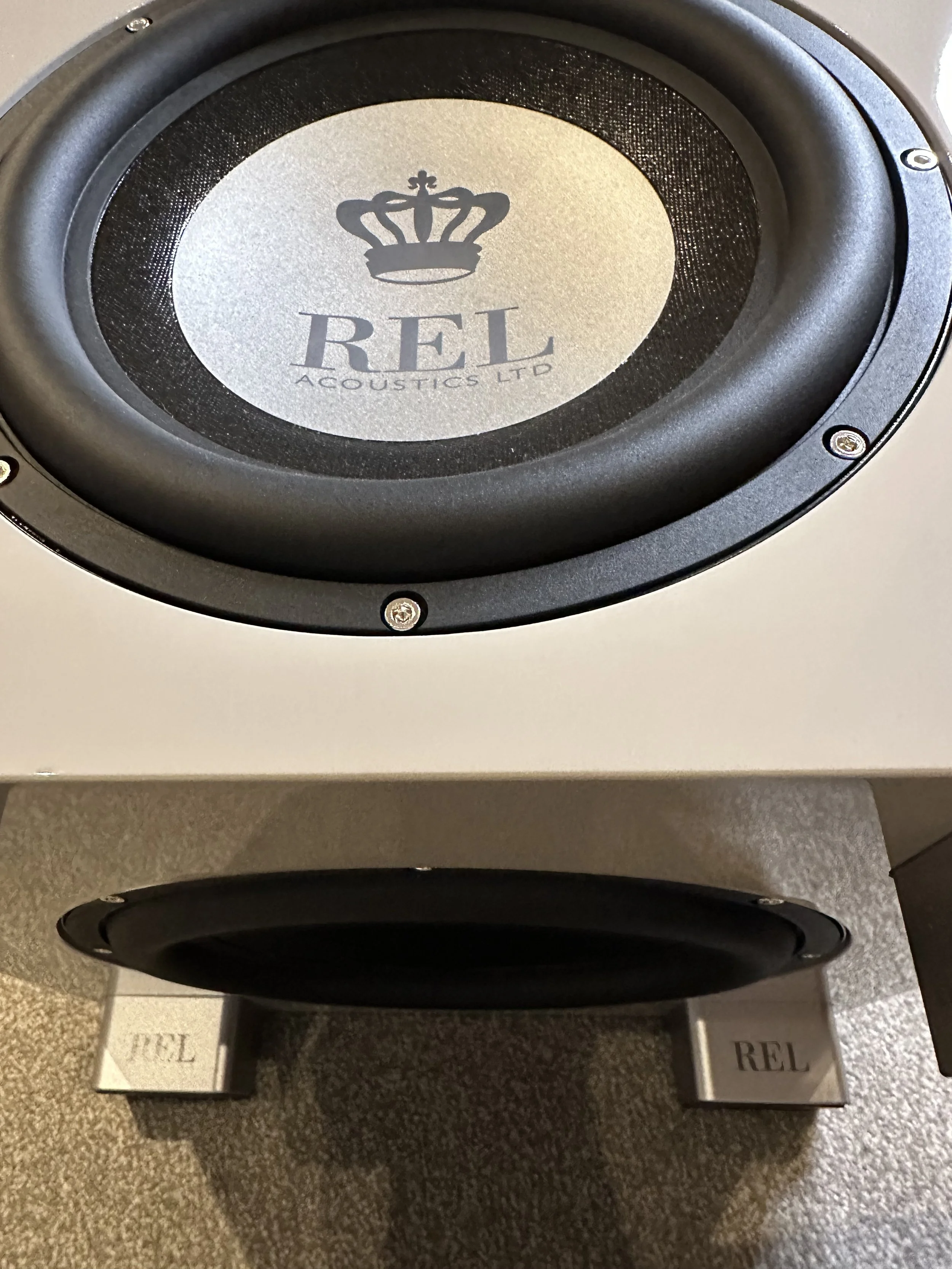
T9x showing active and passive drivers
The T/9x sits at the top of REL’s T-Series and could be considered the company’s best-value all-rounder. It’s capable of filling larger rooms and delivers deep, fast, and agile bass.
While the Classic 98 exudes vintage charm, the T/9x represents REL’s modern engineering at its finest. Available in black, white, and grey (with optional bright colours in the T/9x SE for an additional £150*), it’s as stylish as it is capable.
Despite a similar price to the Classic 98, the T/9x is a very different beast. Its 300W amplifier is a Class A/B design, not Class D. The Classic 98 uses a single 10-inch down-firing paper cone, while the T/9x features a pair of 10-inch drivers — a forward-firing fibre alloy driver and a downward-firing passive radiator. Both models have similar overall cabinet volume.
The Classic 98 offers softer, warmer bass; the T/9x excels in speed, clarity, and soundstaging. Both are rated down to 27Hz, but in real-world performance, the T/9x likely digs a little deeper.
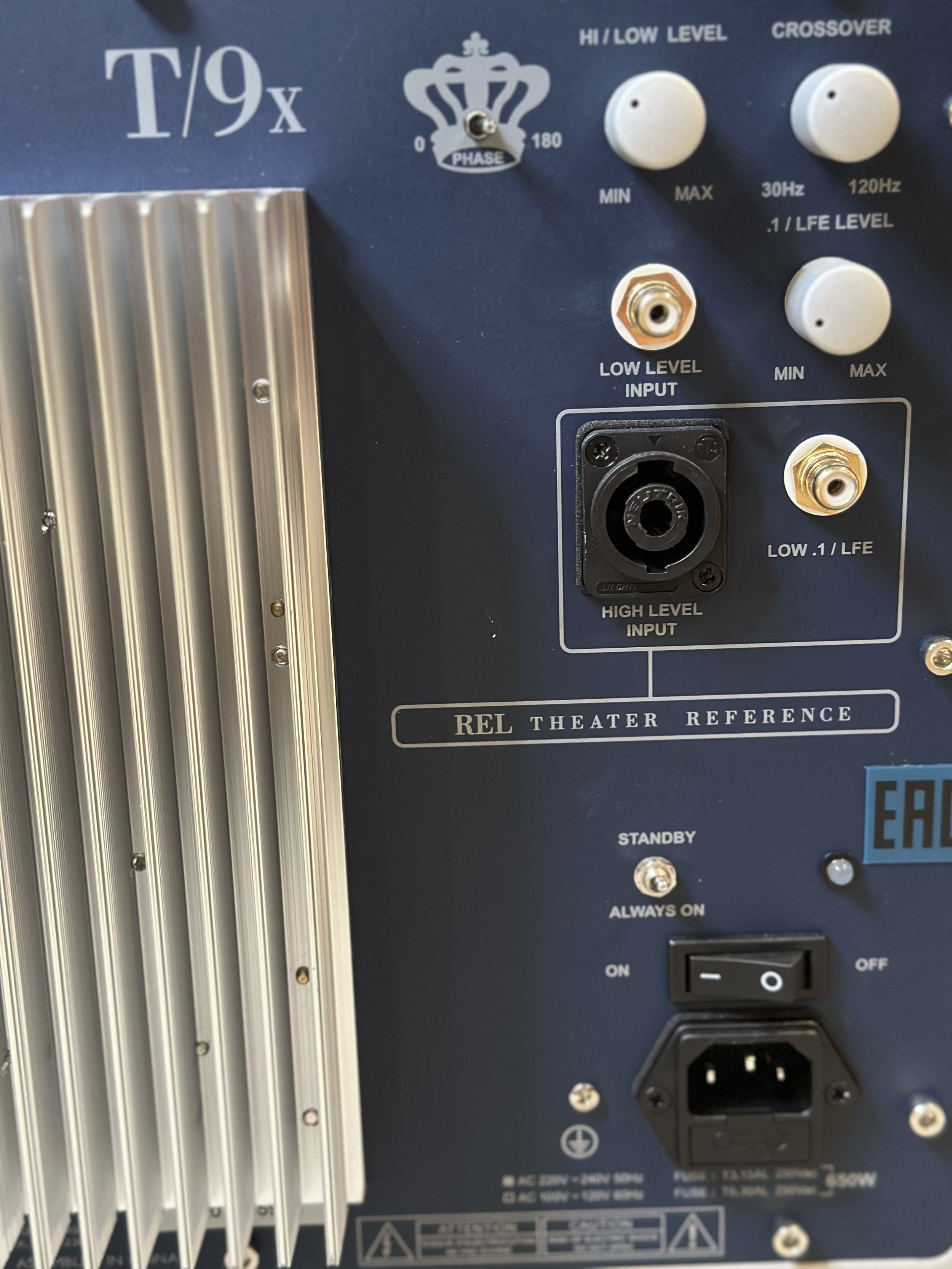
T9x back panel
Conclusion: Which REL is Right for You?
The Classic 98 is ideal where space or style is a consideration — its smaller footprint and walnut finish make it perfect for vintage systems or retro-inspired rooms. Its smoother, warmer presentation suits music lovers seeking natural integration rather than sheer impact.
The T/9x, on the other hand, offers greater speed, precision, and scale. If you prefer a more modern look and your room allows for it, the T/9x is the one to go for.
Thanks for reading, and we look forward to welcoming you soon.
Jon and Andy - Audio T Swindon
If you have any questions about any of the equipment featured in this article, or any other Hi-Fi or home cinema enquiries, be sure to contact us.
If you’ve enjoyed this, why not go ahead and read some more of our other blogs, and be sure to follow us on our social media channels below…
REL can be found at the following Audio T stores