
Stylus Switch-Ups – Rishi at Audio T Reading Experiments with Interchangeable Styli
/If, like us at Audio T, you are deep into all things music and hi-fi and have an incessant urge to connect to your tunes just that little bit more, there’s a good chance that the upgrade bug has bitten you a number of times. If you’re also into spinning vinyl, maybe you’ve looked at making improvements to your turntable setup – perhaps a cable upgrade, or say exchanging your felt mat for a cork one, or maybe you’ve even thought about jacking your whole turntable up onto an isolation plinth? But what if you currently own a moving magnet (MM) cartridge with an interchangeable stylus? Have you ever wondered if there is scope to wring out some extra performance there?

Amongst those who may not have explored or tried to swap out their stylus, there might be some scepticism as to how much difference this change can make. It would be a perfectly reasonable reservation – I mean, after all, look at the size of the actual needle. With my glasses off, I’m not always able to see the stylus. But then again, I might struggle to see the whole turntable with my dodgy eyes! Self-mocking aside, changing out something so minuscule surely cannot amount to a difference of any meaningful note? I’m typically up for a challenge though, and recently I’ve been experimenting with exchanging styli on a couple of different cartridges to see if there is any mileage in it. One of these styli is a new entry to the charts, so if (like me) you’re a ‘diamond’ geezer (someone who likes record player needles) please do keep reading…
REGA RELOAD – CARBON STYLUS VS NEW CARBON PRO
Ah, the humble Rega Carbon – this cartridge and stylus combo has been around for over a decade, and it’s considered by Rega as not only of the required spec to mount to their entry-level Rega Planar 1 turntable, but also good enough to proudly perform on their next-model-up Planar 2. Is the Carbon among the best tracking styli available? Well, courtesy of its modest conical stylus profile, not really. Perhaps the Carbon is up there when it comes to retrieving oodles of detail from the grooves of your records? Erm, not so much either. What the Carbon is good at, though, is being impressively balanced throughout its frequency range, as well as sounding tonally very believable for a budget needle.

However, new on the scene as of now (autumn 2025) is Rega’s Carbon Pro Stylus – the very first Rega upgrade pathway for owners of the standard Carbon cartridge. But is swapping over to this Carbon Pro worth it at the current price of £35*? From my initial tests, yes, I think it is. Whether you’re a Carbon cartridge owner courtesy of a Planar 1, a Planar 2, or perhaps rocking a Carbon on a similarly appointed deck, the Carbon Pro stylus sounds comfortably more dynamic, airier, and that bit clearer when compared to the stock Carbon.
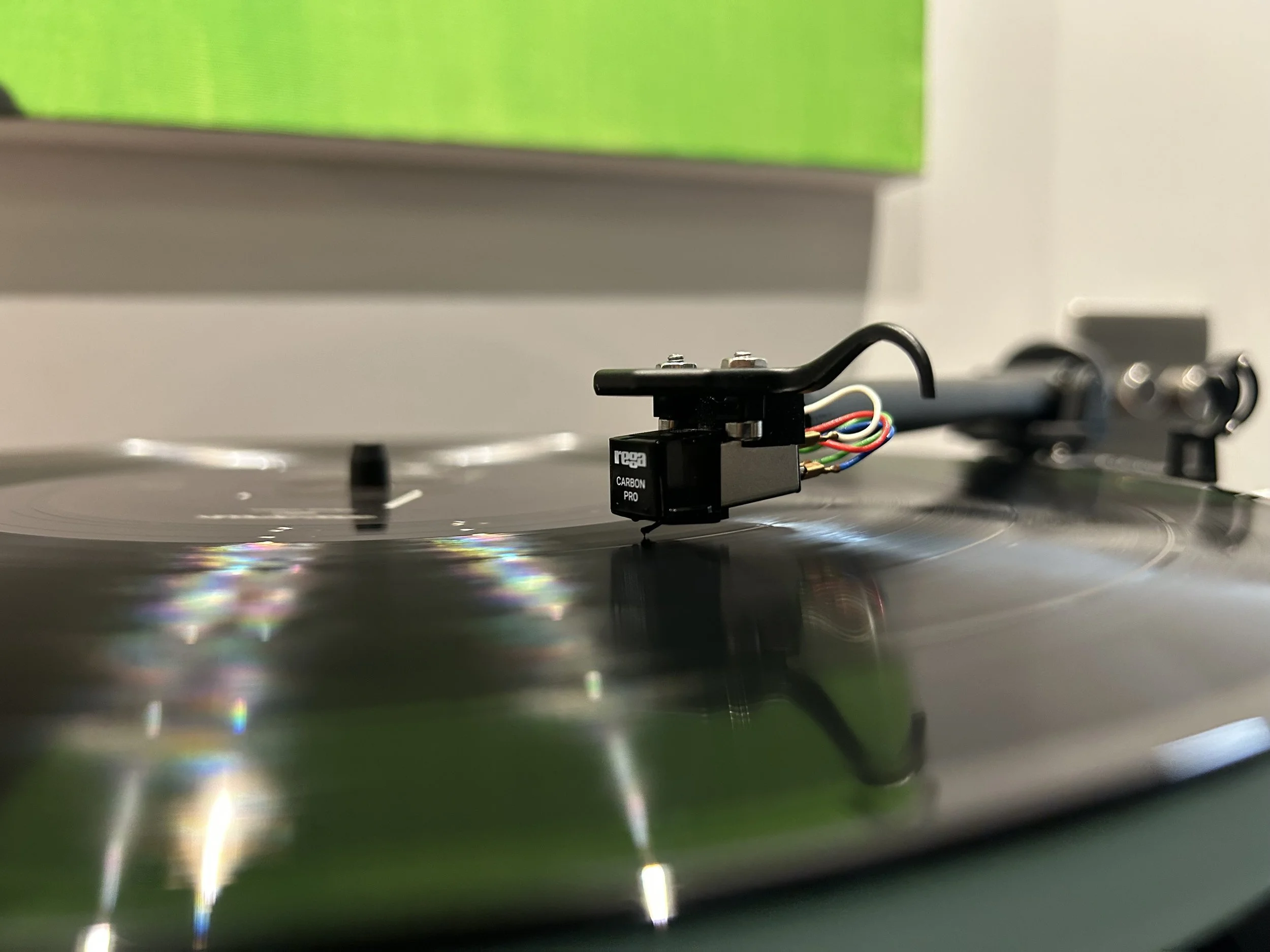
How is this so? It’s just a teensy needle change, right? Well, it’s almost entirely because the elliptical shape of the Carbon Pro’s needle is contacting more of the record groove than the Carbon’s rounded stylus is capable of. Not even Superman with a vitamin A jab would be able to see just how tiny that extra contact is. But it’s worth mentioning that the musical signal formed by that needle contact as it makes its way through the record groove, is being amplified by at least a thousand times before it reaches the speakers. That tiny delta of contact matters – it’s one of those rare occasions when doing very little amounts to a lot!
ORTOFON OVERHAUL – 2M BRONZE STYLUS VS 2M BLACK
An Ortofon 2M stylus-based comparison is one of those that feels like it’s been done more than any other in the hi-fi universe – the 2M Red vs the 2M Blue… the 2M Bronze vs the 2M Black – but it could well be because the experiment is so much fun. Here, I went with the Bronze vs the Black. I’ve owned a 2M Bronze cartridge and stylus for many years, so have gotten very accustomed to its sonic presentation. Changing it out not only gave me a chance to enjoy and learn about the virtues of the 2M Black, but it also helped me to understand my own 2M Bronze that little bit more.
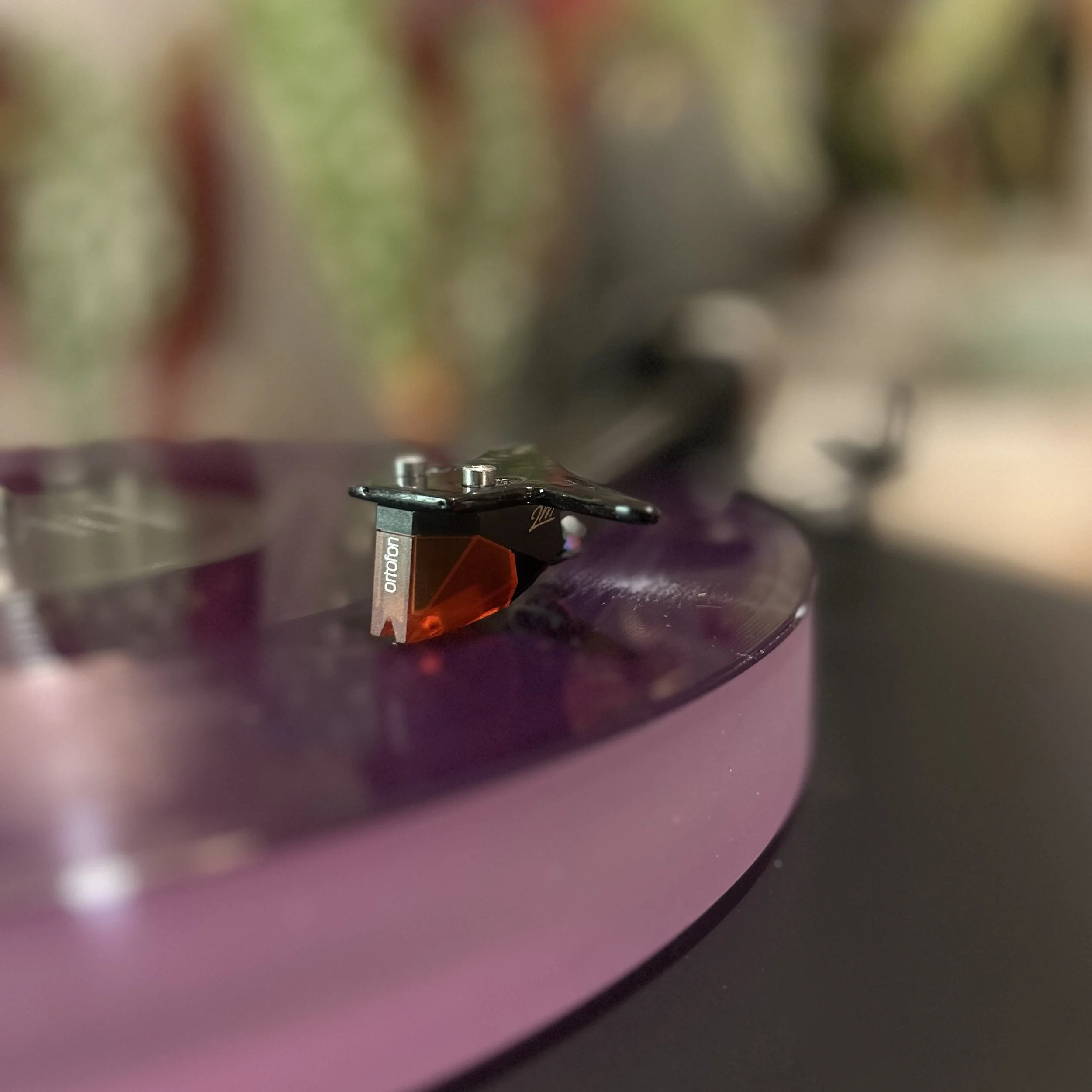
To my ears, there was certainly a higher level of detail retrieval on offer from the 2M Black, but it didn’t come across in a forensic way. If anything, the 2M Bronze sounded just that bit more analytical by comparison, although I’m very keen to point out that I wouldn’t label the 2M Bronze as analytical when listening to it in isolation. I thought the 2M Black made my music sound bolder, more dramatic and atmospheric, and perhaps not quite as lit up in the upper frequencies as the 2M Bronze. For me, the 2M Black has some character and colour, with basslines coming across with more mass and authority. In contrast, the bass from the 2M Bronze presented with more tautness and definition. If anything, I could associate the 2M Bronze with a more ‘reference’ type of sound, despite the 2M Black being the one that is marketed as such... how interesting.
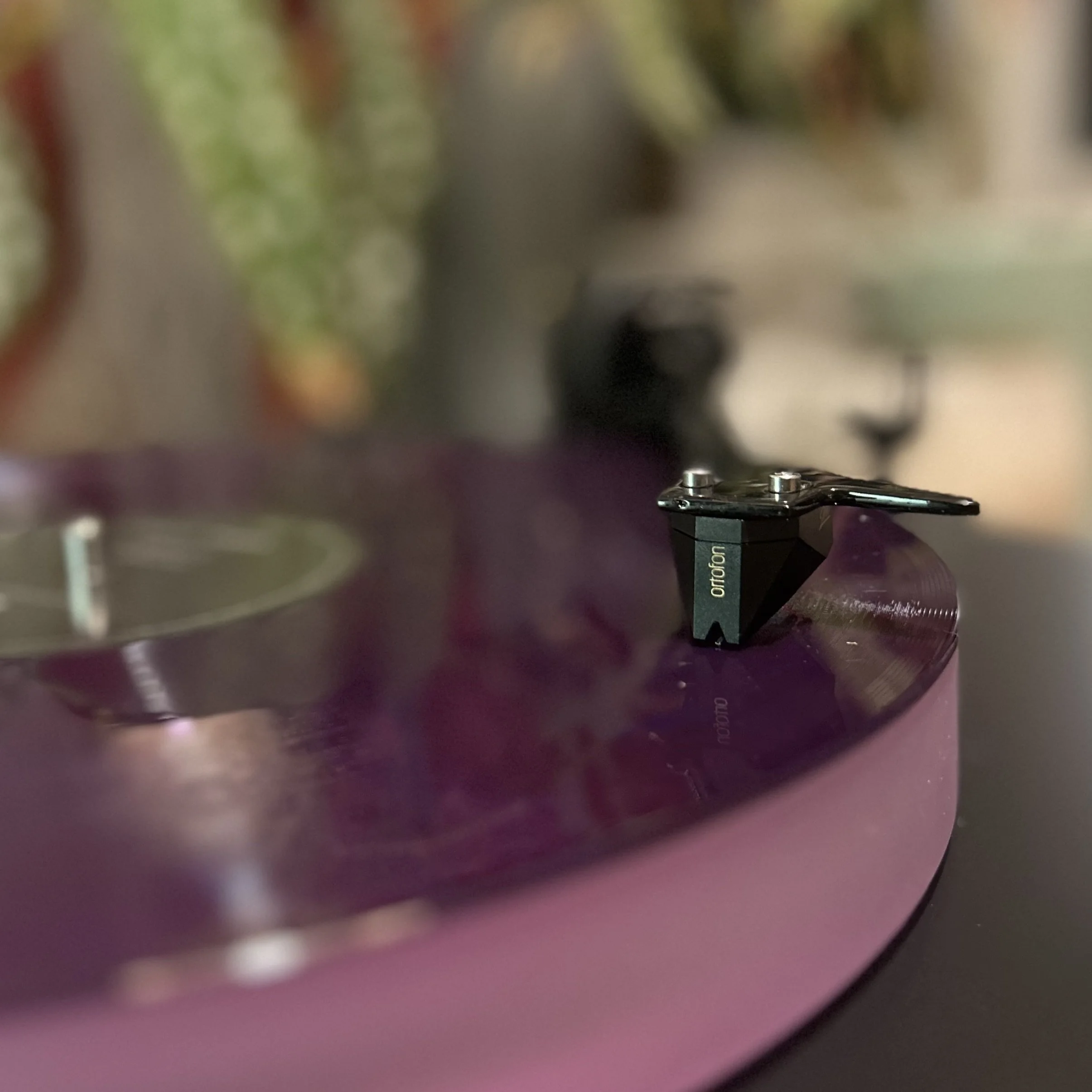
If you’ve already got a 2M Bronze (or even 2MR Bronze) cartridge, is it worth switching out the 2M Bronze stylus for a 2M Black one? Well, the decision will likely hinge on how you like your music presented to you, and it may depend on what turntable you have and how it inherently offers up its own sonic signature. To my mind, rather than the 2M Black being outright better than the 2M Bronze, both styli imbue the music with a different flavour, with each having its own merits. It’s worth knowing that both the 2M Bronze and 2M Black have high-performance stylus profiles, Nude Fine Line and Nude Shibata respectively. Both will make excellent contact with your vinyl, and both will track the tighter inner grooves of your records without contributing much in the way of distortion. Both styli will also track deeper in the record, therefore bypassing most of the surface noise if any is present.
OUTRO – STICK OR SWAP
These stylus ‘swapsies’ are something that I’ve experimented with before on other cartridges, for example with the VM95 range from Audio Technica, and to quite astonishing effect when moving from an Audio Note IQ1 stylus to the sensational IQ3. This one really has to be heard…

To offer some concluding thoughts, a big takeaway here is that changing out something as negligible as a stylus on a cartridge can make a remarkable difference to the sonic output of your turntable, which consequently can have a positive impact on your musical enjoyment. While going for a cheaper replacement stylus (those typically found with a conical or elliptical profile) can save money in the short term, it may be worth considering a ‘line-contact’ (i.e. microlinear, microline, Shibata, etc.) type of replacement stylus – these particular styli have the ability to track the record much better, while having a longer expected lifespan than conical or elliptical types.
In addition, line-contact styli tend to distribute pressure more evenly on your vinyl, leading to reduced record wear. If you would like to know more about changing out your stylus, or if you would like to hear the difference it can make, please do get in touch with us. We’d be happy to help, needle-less to say.
Thank you for reading
Rishi - Audio T Reading
If you have any questions about any of the equipment featured in this article, or any other Hi-Fi or home cinema enquiries, be sure to Contact Us.
If you’ve enjoyed this, why not go ahead and read more of our other blogs, and be sure to follow us on our social media channels below…
Rega can be found at the following Audio T stores
Ortofon can be found at the following Audio T stores
Audio Technica can be found at the following Audio T stores
Audio Note can be found at the following Audio T stores
*All prices, credit terms and interest rates quoted are correct at the time of going to press but may be subject to change. E&OE