

New Toy Day! Putting the Eversolo DMP-A8 Gen 2 Through Its Paces
/We always enjoy new toy day here in Audio T Swansea, and we’ve been looking forward to this particular one for a wee while. With AURALiC no longer in the picture, we’ve been on the lookout for a music streamer higher up in the canopy than our favourite Bluesound NODE ICON, but a little more attainable in price than the offerings from the otherwise excellent Innuos Audio.
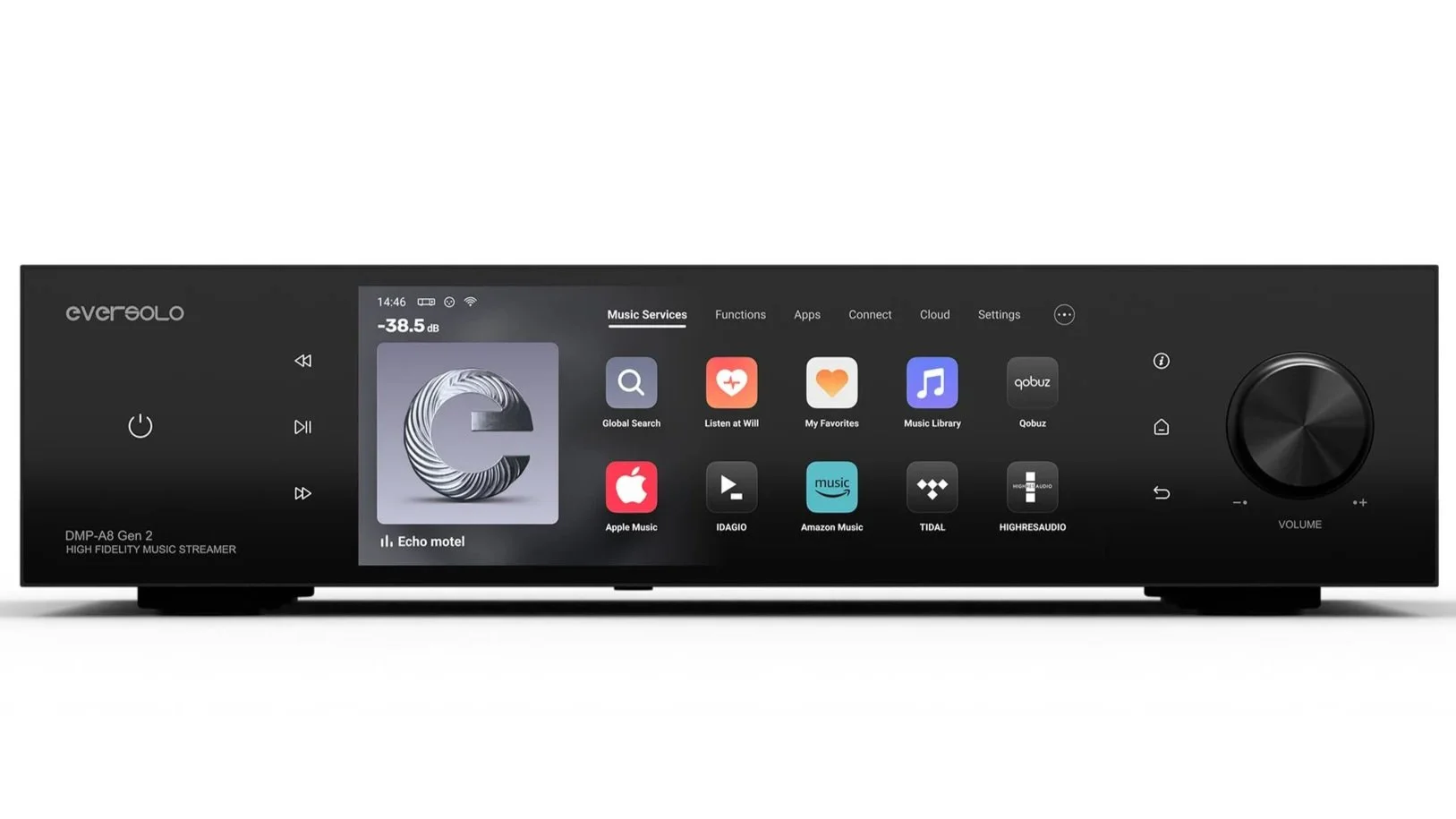
the eversolo a8 gen2 streamer/dac/pre
Eversolo, under the aegis of parent company Zidoo, has distinguished itself recently by offering products with a very attractive price-to-performance ratio. The Eversolo DMP-A8 Gen 2 sits towards the upper end of this line-up, representing more than an incremental update to the previous streamer/DAC. Our demo unit is a little more special than a standard unit in that it has a glass top panel, so we can admire all the deliciousness contained therein. Nice!
The front panel is almost entirely taken up by a TFT touchscreen. Full control of the unit is possible from here, as well as through the app for tablets and smartphones.
Under the Hood
The A8 combines four distinct functions within a single aerospace-grade aluminium chassis: a network streamer capable of bit-perfect playback, a flagship Japanese DAC, a fully balanced analogue preamplifier featuring an R2R resistor-ladder volume-control network, and digital signal processing, including room acoustic correction. Gosh. Eversolo’s approach places considerable emphasis on keeping noise and interference away from the sensitive analogue circuitry. The design separates digital processing from analogue conversion, with each stage assigned its own job rather than asking a single chip to do everything.
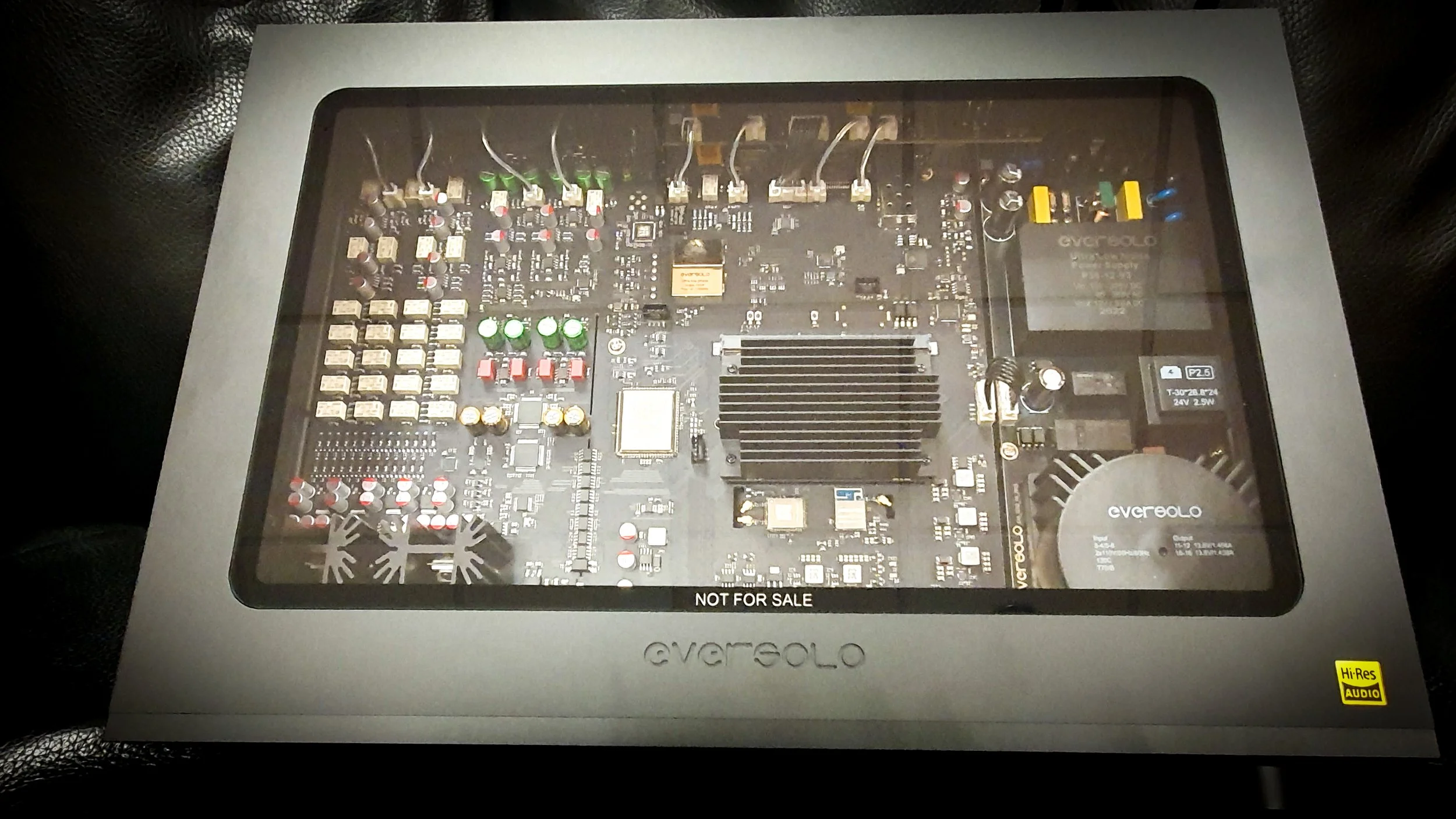
“the trouble with glass ade, is that it will reflect light when you try to photograph it” - nic
The core of the conversion system moves away from the ESS Sabre chips used in the entry-level series, opting instead for an Asahi Kasei Microdevices (AKM) dual-chip architecture featuring Velvet Sound Verita technology.
Which all sounds lovely.
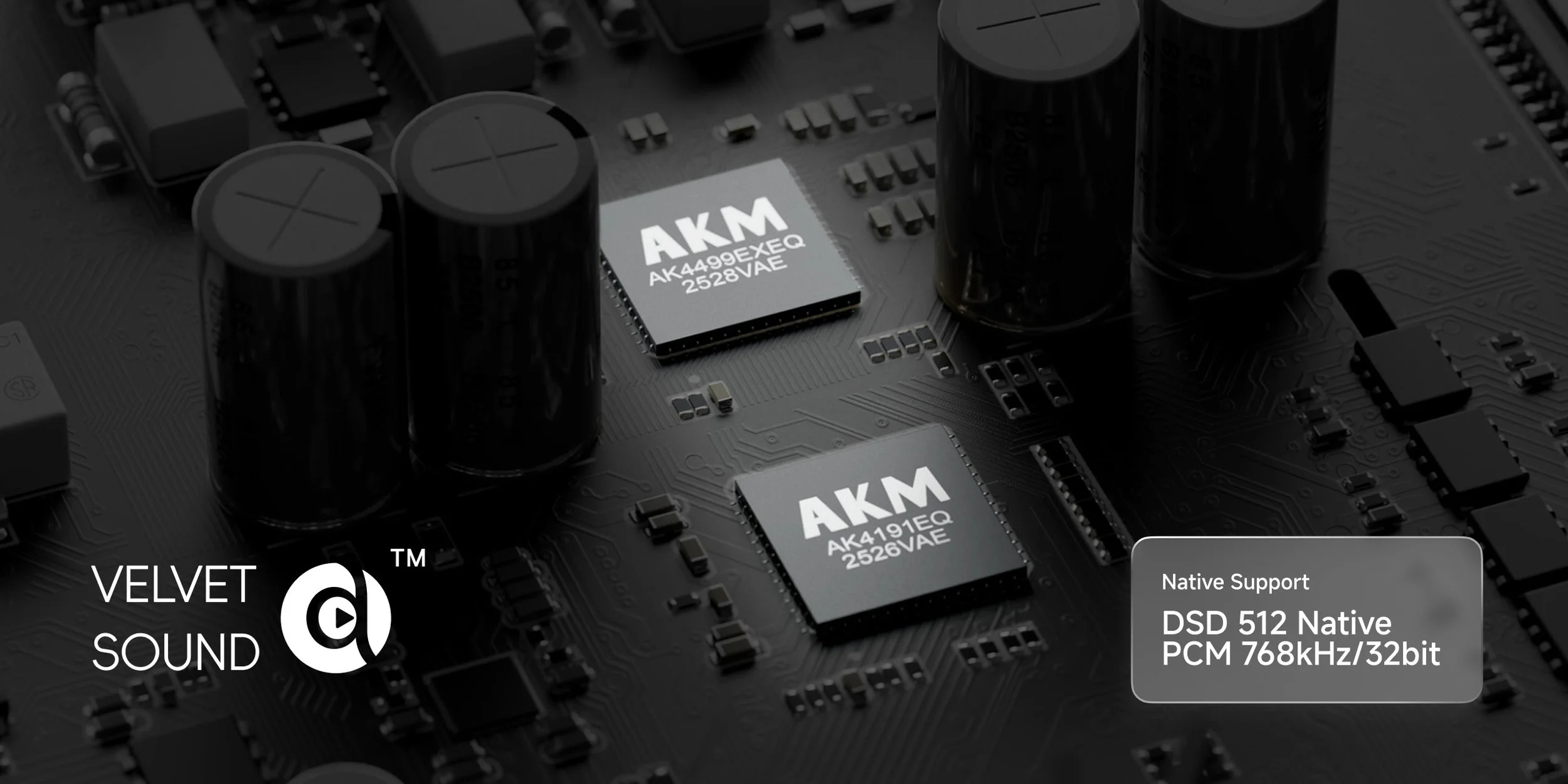
one of the clever bits (no pun intended)
The AK4191EQ digital delta-sigma modulator handles the complex computational tasks associated with digital filtering, noise shaping and signal modulation. Keeping this processing separate from the chip that generates the analogue waveform is intended to reduce interference between the digital and analogue stages. Each component can concentrate on its particular part of the conversion process. Very sensible, if you ask me.
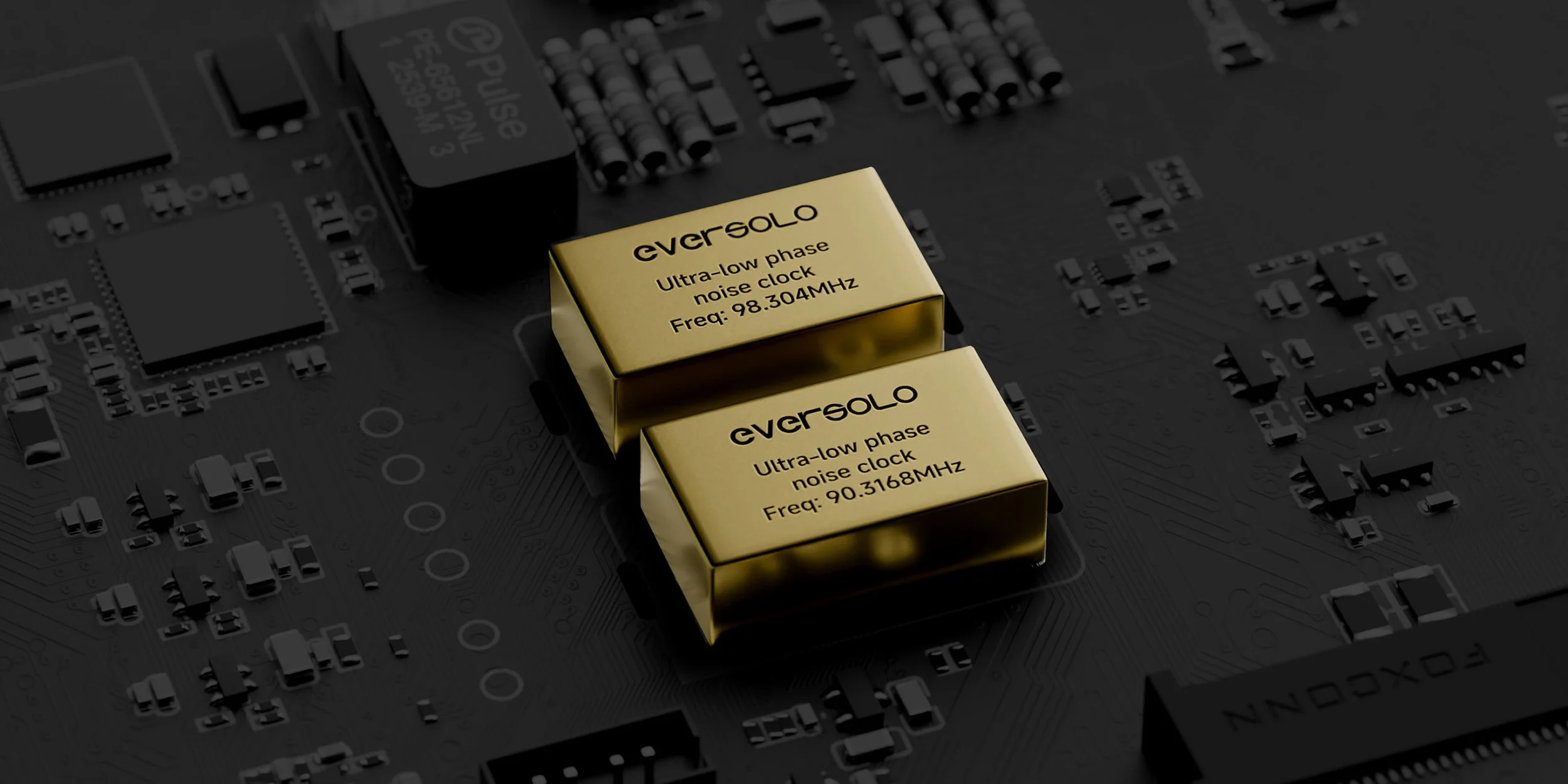
two of the other very clever bits. this time: clocks! (that one was deliberate)
The AK4499EXEQ stereo DAC receives the upstream modulated signal and translates it into an analogue waveform. This separation is designed to deliver low-noise, low-jitter conversion and preserve the fine detail in the recording. We shall see! The system supports PCM up to 768kHz/32-bit and native DSD512 files, including through the USB-B input. Maximum playback resolution depends on the connection and settings, but there should be enough here to keep the geekiest geek very happy.
Analogue Preamplifier and R2R Volume Control
Many competing streamers adjust volume in the digital domain. The Eversolo DMP-A8 Gen 2 instead incorporates an analogue line preamplifier that is fully balanced from input to output, with volume adjustment taking place after digital-to-analogue conversion. This avoids relying on digital attenuation to set the level of its analogue outputs.
Volume adjustment is handled by an R2R resistor-ladder network, with precision resistors switched via miniature mechanical relays. The intention is to provide accurate level control while preserving dynamics and detail across the listening range. Useful when listening at very low volumes late at night. The analogue circuit also provides up to +10dB of gain, giving the Eversolo greater flexibility when matching it to power amplifiers or active speakers. Another plus.
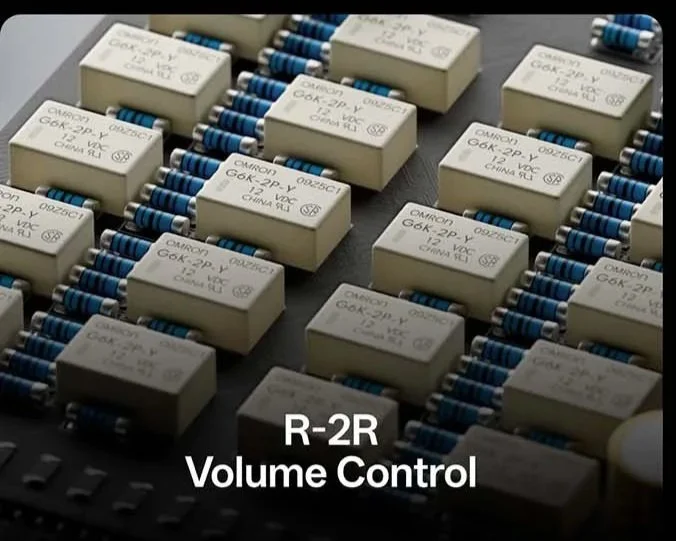
that trick volume control ladder
Equipment Connectivity
A near-full suite of digital and analogue sockets graces the rear panel. Optical, coaxial, HDMI ARC/eARC and USB-B digital inputs are present, plus analogue RCA and XLR inputs should you wish to utilise the A8 as a preamplifier.
RCA and XLR analogue outputs cater for those of us with existing preamplifiers and integrated amplifiers, as well as the clearly intended power-amplifier and active-speaker applications. A submenu allows you to toggle between fixed and variable output. The default is variable, for obvious reasons! No headphone socket is provided, however. An enormous amount of effort has been spent on keeping noise to a minimum, after all!
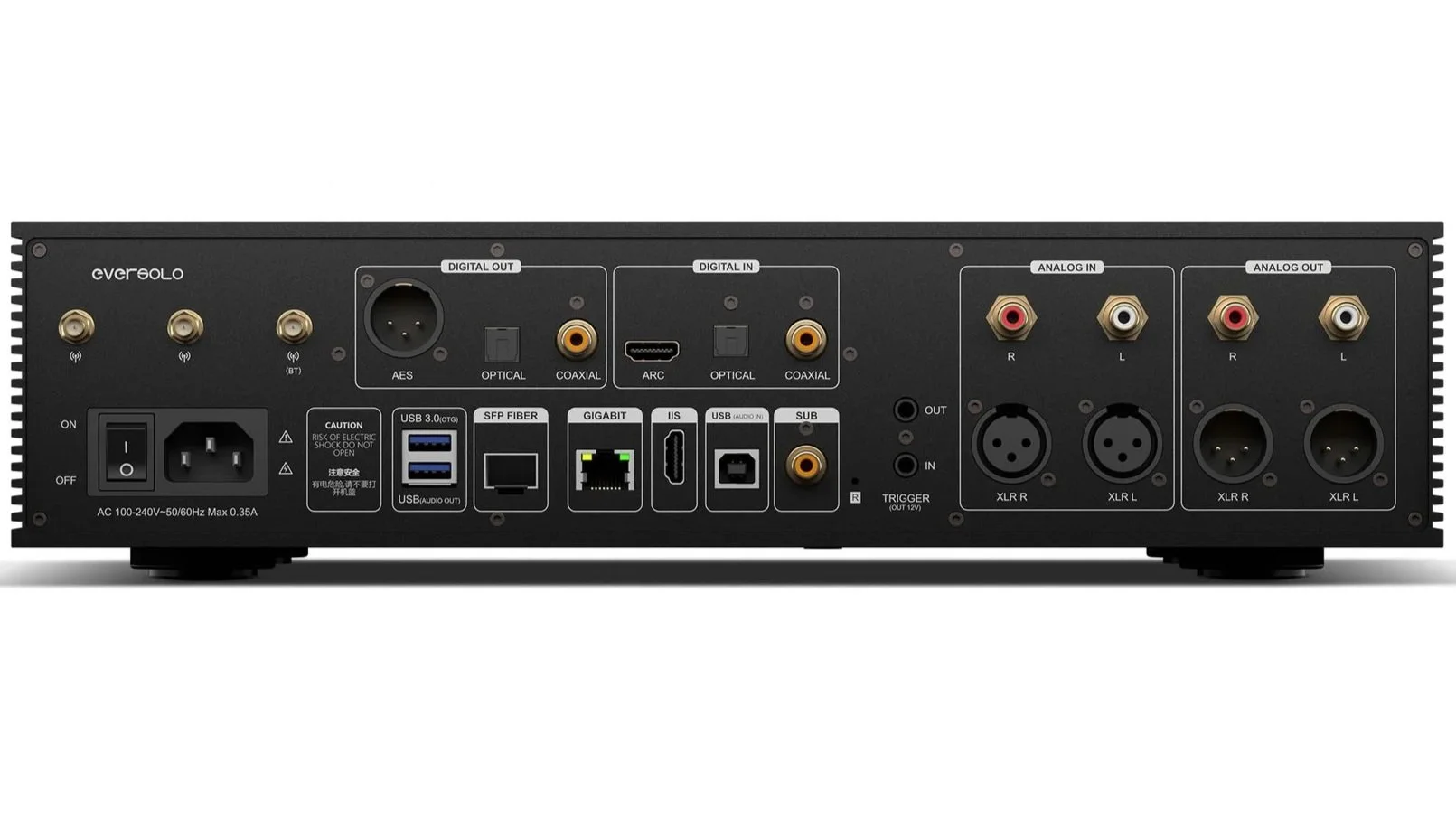
the socketry is high quality and very solid indeed. note the triggers should one own an eversolo power amplifier
Network Connectivity
Alongside those audio inputs, the rear panel offers digital outputs, including AES/EBU for connection to a compatible external DAC. HDMI ARC/eARC takes care of stereo PCM audio from a compatible television. Network connectivity brings something rather more unusual: the Gen 2 introduces an SFP (Small Form-factor Pluggable) network port for fibre optics, allowing an alternative to the traditional copper-based RJ45 Ethernet connection.
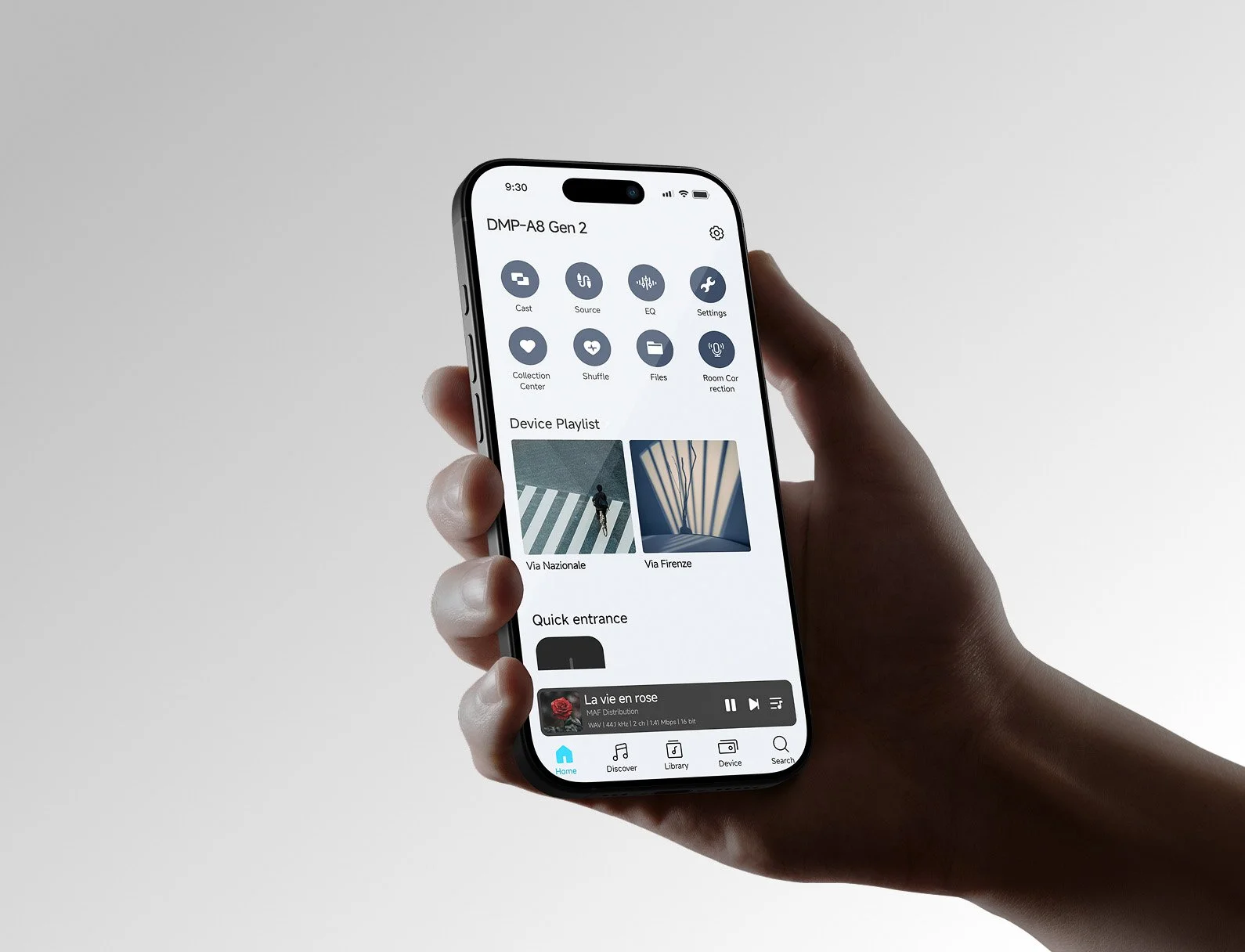
the app works well, even if it did cause my bluesound-centric colleagues a moment of pause
By using a compatible optical SFP transceiver and a fibre-optic cable, the electrical connection between the home network and the streamer is broken at that link. Routers, NAS drives and PCs can all introduce electrical noise, particularly through their switching power supplies. An optical network connection provides galvanic isolation at this point, helping to prevent conducted interference from travelling along the network cable into the streamer. The aim is to keep that interference away from the sensitive audio electronics.
(Never let a software engineer tell you digital hardware is unimportant: “…because it’s data, Ade, it’s just zeroes and ones!”)
Eversolo has produced and supports its own app, which has hitherto proven stable and easy to navigate. Pleasingly, when you select a track, album or playlist, the app displays a cheerful “Success!” icon. It’s reassuring to know I’m good at something.
Eversolo EOS
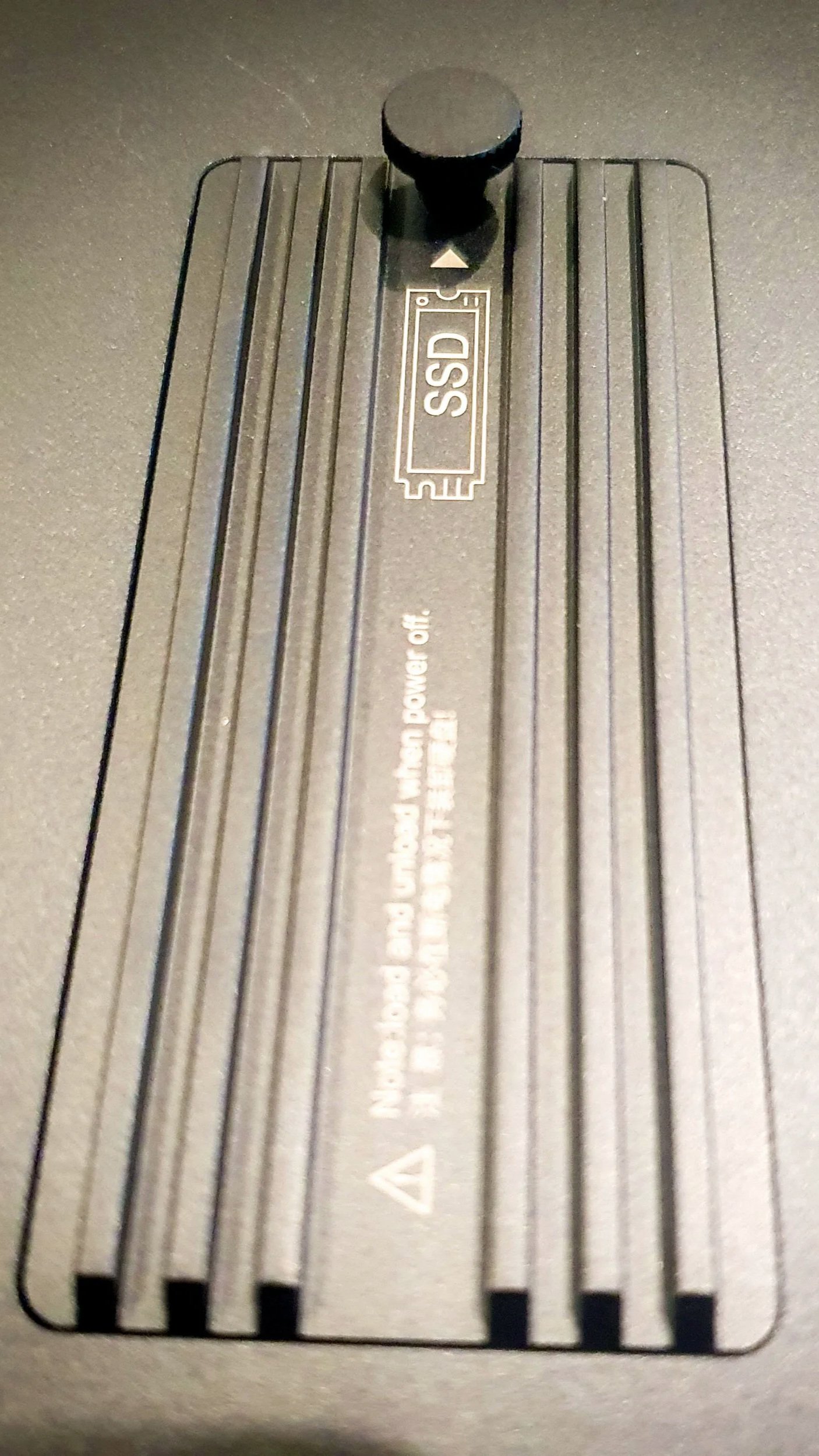
that wee hatch with artistic bokeh in the foreground. cough.
This innovation is the Eversolo Original Sampling-rate Audio Engine, a technology developed to bypass the sample-rate conversion associated with the standard Android audio path. Android playback can otherwise be resampled by the system mixer rather than retaining the recording’s original sample rate. EOS is designed to allow compatible third-party applications, such as Apple Music, TIDAL and our favourite, Qobuz, to deliver audio at its native sample rate, whether that is 44.1kHz, 192kHz or another supported rate. Compatibility depends on the application and playback settings, and bit-perfect playback requires signal-altering processing, such as EQ and room correction, to be disabled.
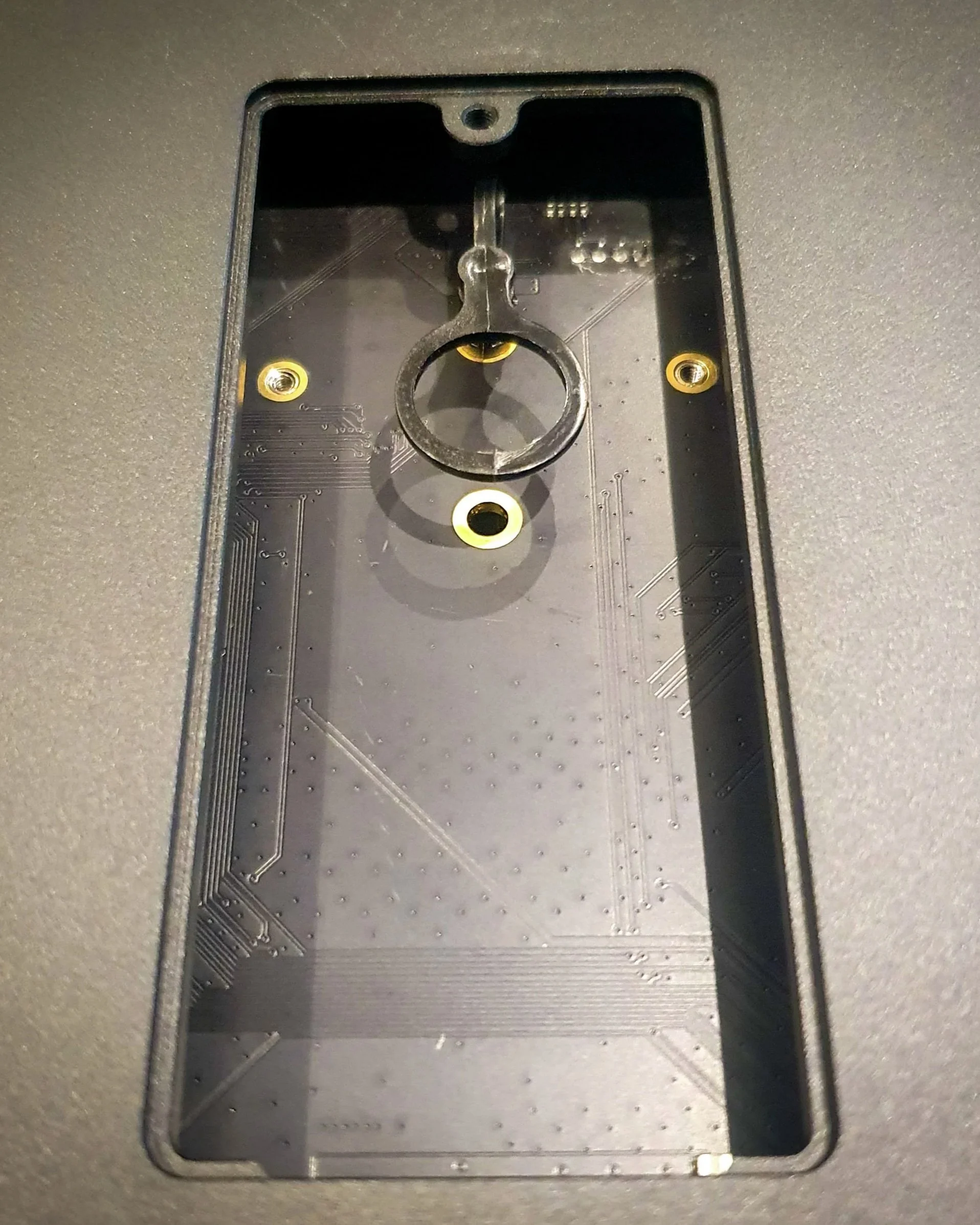
under the aluminium hatch is the loading bay for your ssd. neat as a wee pin.
Expandable Storage
A removable panel on the underside of the unit gives access to an M.2 NVMe PCIe 3.0 SSD slot. This Gen 2 model supports compatible solid-state drives with capacities of up to 8TB. Fit a drive and the A8 Gen 2 can act as a high-speed local music server, eliminating the need to keep a computer or NAS running constantly to play your stored music. It also takes network file transfers out of the equation when listening to tracks held on the internal drive.
Whilst we’re here, and apropos of nothing at all, I shall mention that the front panel can be configured to display VU meters, or a spectrum analyser, à la the 1970s and ’80s. Such fun!
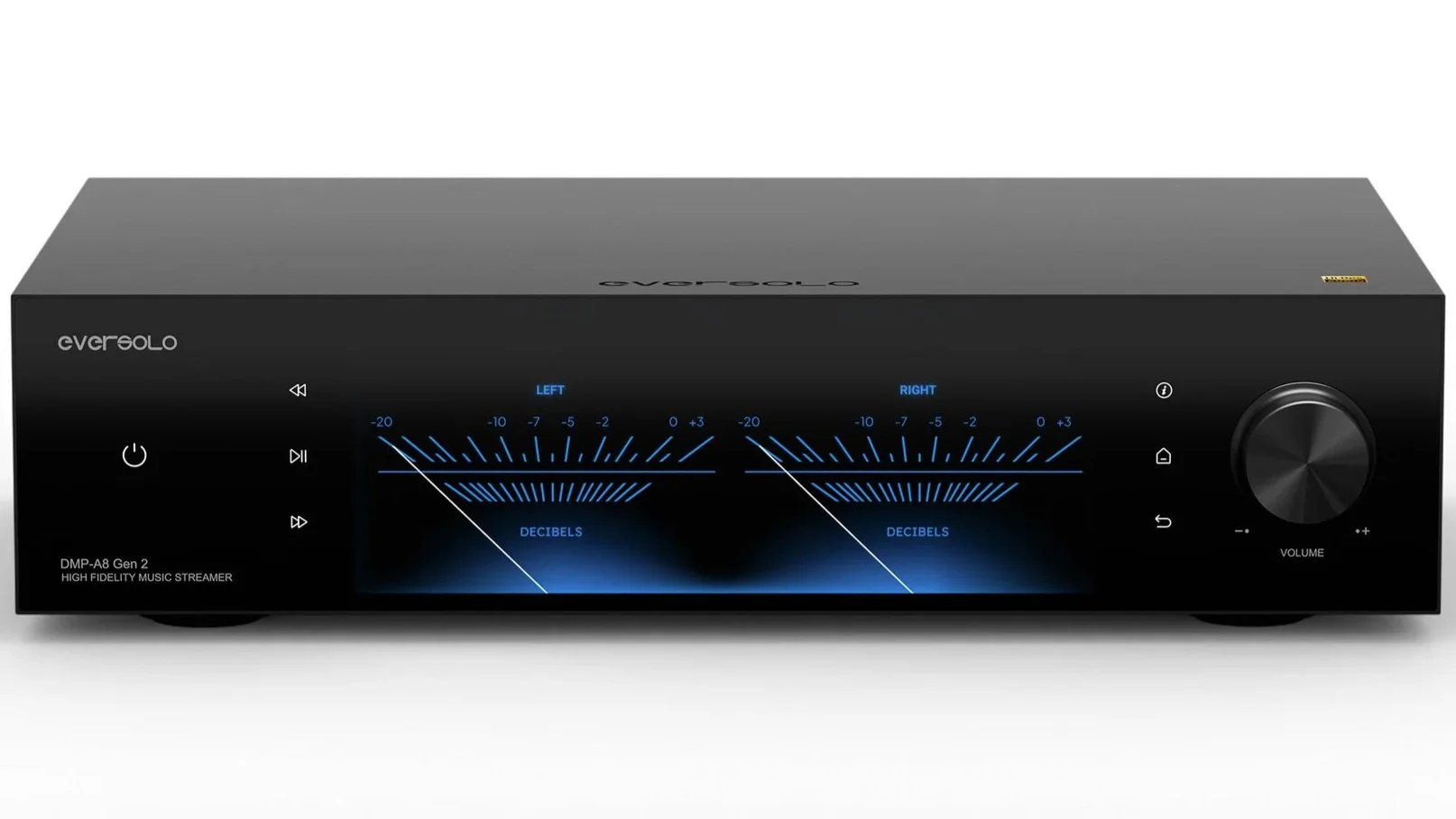
did i mention the vu meters? it’s got vu meters!
Usage Modes
The operational flexibility of the Eversolo DMP-A8 Gen 2 allows it to serve three main roles within an audio system, depending on the output and settings selected. Source and Preamplifier Mode offers the most integrated approach. The Eversolo connects directly to a power amplifier or a pair of active speakers using, for example, balanced XLR cables. In this scenario, the unit fully utilises its analogue preamplifier section. You control the system’s master volume directly from the Eversolo interface, or via the smartphone app, minimising the number of interconnect cables and chassis components in the living room. Useful if you have limited space available.
Fixed Line Out Mode is probably the configuration most likely to be utilised by traditional Hi-Fi enthusiasts. The A8 Gen 2 can be set to a fixed analogue output level, leaving volume adjustment to your existing preamplifier or integrated amplifier. The device then functions as a streamer and DAC, delivering a nominal signal of 2.1Vrms via RCA or 4.2Vrms via XLR to the connected amplifier. In our case, we used Black Rhodium Operetta XLRs to a Hegel H400 amplifier, Black Rhodium Calypso speaker cables and ATC SCM11 loudspeakers on Solidsteel SS-6B stands, another favourite at Chez Swansea.
Streaming Transport Mode may appeal if you own, or intend to acquire, a high-end DAC in the future. If this scenario is at all on the cards, I would heartily recommend the Eversolo T8 or T10 streaming transports instead of this unit. As it stands, the DAC in here is excellent and will make your other digital sources sing. Speaking of which…
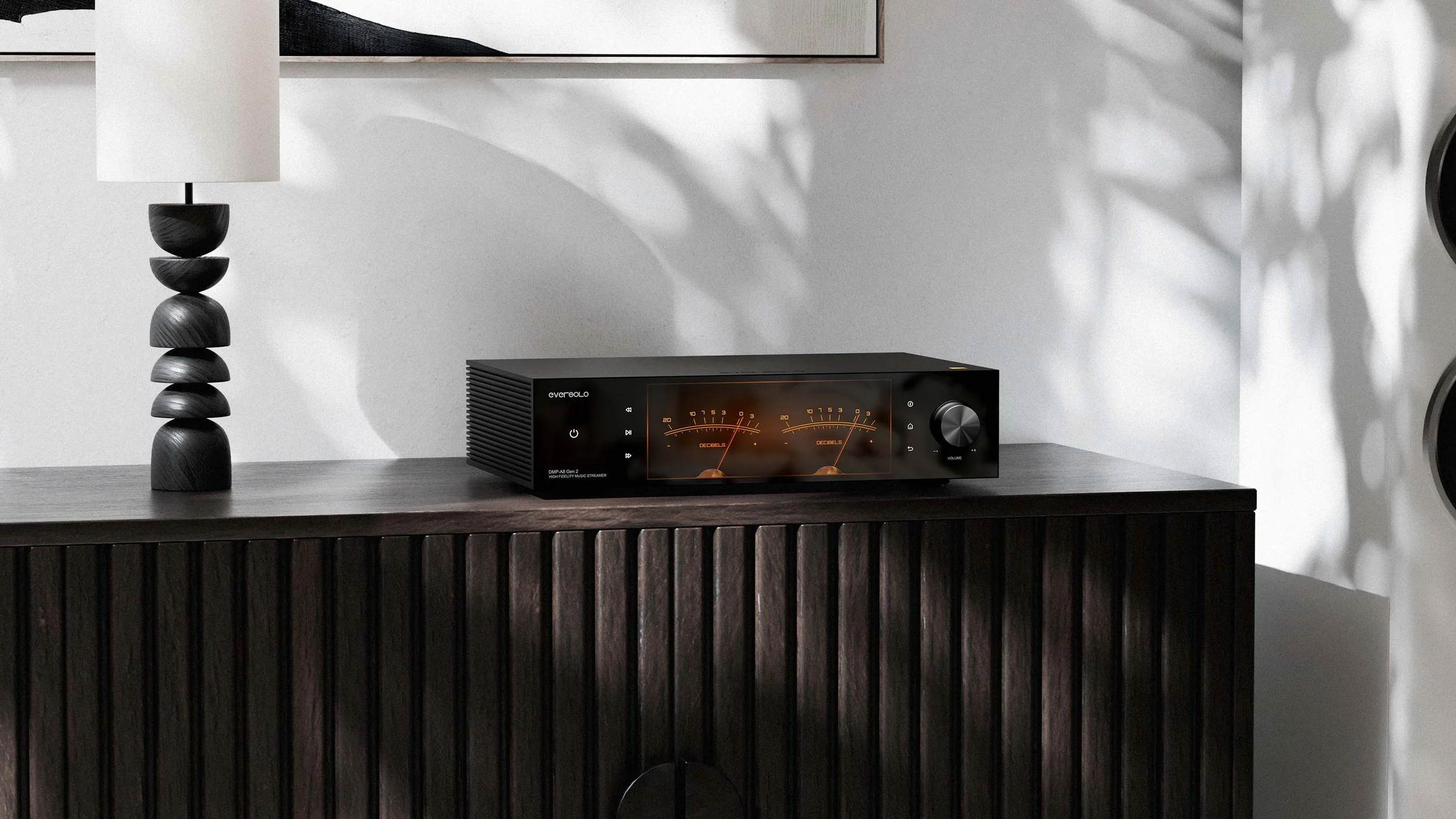
appropriately for the 1970s, the eversolo’s VU meter colour palette includes tobacco brown.
What Does It Sound Like?
Massive Attack – “Teardrop” (from Mezzanine, 16-bit/44.1kHz FLAC)
This familiar track puts the handling of low frequencies and rhythmic stability to the test. The synth bassline, pulsing constantly in the background, feels appropriately earth-shaking. The bass is visceral, remarkably tight and articulate. At the same time, the metallic, percussive ticking that marks the tempo remains crystal clear, floating in the soundstage without being even slightly masked by the energy unleashed by the lower frequencies. Elizabeth Fraser’s voice emerges at the centre of the soundstage with disarming transparency, focused and free of artificial sibilance. Lovely stuff.
Gustav Mahler – Symphony No. 2, “Resurrection” (Boston Symphony Orchestra, Seiji Ozawa, 24-bit/192kHz via Qobuz, with EOS bit-perfect playback)
The complexity of a monumental symphony orchestra combined with a full-scale polyphonic choir is a tough test. The A8 Gen 2 handles Mahler’s score with ease and authority. The virtual soundstage is reconstructed with great precision: the violins are positioned on the left, the cellos in the centre and the double basses set back on the right, while the woodwinds and brass occupy the rear rows, creating layers of sound that are deep and easily discernible to the listener. Impressive.
In fortissimo orchestral passages, where the entire ensemble and the timpani strike in unison, the Eversolo shows no sign of dynamic compression or sonic muddiness. The sound remains clear, airy and transparent. The brass instruments retain their metallic brilliance without ever veering into harshness or shrillness; the choir emerges from behind the orchestra with distinct separation between the individual vocal sections, ensuring an intelligibility of the sung text that is moving in its realism.
Miles Davis – “So What” (from Kind of Blue, Legacy Edition, 24-bit/192kHz FLAC)
To evaluate the reproduction of acoustic wind instruments and the sense of rhythm, we selected this masterpiece. Miles Davis’s trumpet is rendered with extraordinary brilliance and sonic penetration, yet the high-frequency sharp edges that can sometimes make this recording fatiguing on analytical digital sources are skilfully smoothed out. Julian “Cannonball” Adderley’s alto saxophone possesses abundant warmth and physical presence, rich in the detail that allows you to hear the mechanical clicking of the keys. The track’s timing is impeccable: the ride cymbal in Jimmy Cobb’s drumming features a silky, shimmering and incredibly extended metallic decay that floats in the air, defining the rhythm with precision and engaging energy. Just wonderful.
Verdict
Anyone seeking a competent streamer/DAC capable of serving as the heart of a Hi-Fi system, handling both cloud streaming and local libraries, delivering excellent sound quality and offering features such as DSP and room correction will find the Eversolo DMP-A8 Gen 2 to be a fine solution. With CD-quality files, it sounds excellent, and some of the higher-resolution recordings I tried sounded better still. I found myself seeking out higher and higher resolutions to try.
An album I found, Nearness by Lizz Wright, was available on Qobuz as a 24-bit/96kHz FLAC stream. The display showed around 2.65Mb/s, and it sounded incredible. For context, uncompressed CD audio runs at 1.411Mb/s; Higher bit rates alone don’t guarantee better sound, of course, but this particular recording was a treat. Oh, and I haven’t mentioned the evotune room correction or the DSP-based 20-band EQ system, mostly because I haven’t played with them yet. So much to discover.
The DMP-A8 Gen 2 comes highly recommended to any and every music enthusiast. Playing in Demo Suite One all this week, and likely the next…
Thank you for taking the time to read my scribblings. I hope you enjoyed them.
Ade - Audio T Swansea
If you have any questions about any of the equipment featured in this article, or any other Hi-Fi or home cinema enquiries, be sure to contact us.
If you’ve enjoyed this, why not go ahead and read some more of our other blogs, and be sure to follow us on our social media channels below…
Eversolo can be found at the following Audio T stores