
Audio T: Born in 1966. Still Obsessed with Sound.
/Audio T is celebrating its 60th anniversary this year. Brad Tyler looks back at six decades of change, the people who kept the company going and an industry that has been written off more times than anyone can remember.
Sixty years is a difficult length of time to properly get your head around. In 1966, The Beatles released Revolver, The Beach Boys gave us Pet Sounds, Bob Dylan unveiled Blonde on Blonde and England won the World Cup. Rather more importantly, at least for the purposes of this article, John Bartlett started a small Hi-Fi business from his home.
I cannot claim any first-hand knowledge of those early days. I was still two decades away from making an appearance and only joined Audio T in 2019. However, one of the things I have always loved about the company is that its history has a personality. This is not the story of a carefully planned retail empire created in a boardroom. It is far stranger, more rebellious and considerably more entertaining than that.
So, Where Did Audio T Come From?
John originally called the business Audio Technica, before discovering that a Japanese company had already beaten him to the name. “Technica” was swiftly dropped and Audio T was born.
The business was initially run part-time from John’s home, with equipment advertised in The Gramophone as “ex-demonstration” or “display” stock. In reality, much of it was brand new. At the time, retailers were not permitted to discount new equipment, so this was Audio T’s slightly creative way around the rules. That probably tells you quite a lot about John from the outset.
Audio T’s First Real Store
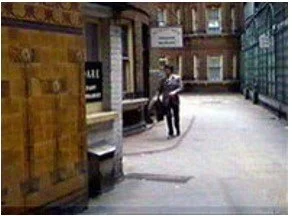
By 1968, Audio T had grown enough to move into its first proper premises at Dryden Chambers, just behind Oxford Street in London. The building had previously been a Victorian brothel and later appeared in Alfred Hitchcock’s Frenzy. Not many retailers can boast that particular combination on their company CV.
However, there was more to Audio T than unusual premises and a casual disregard for retail conventions. John was determined to find the best and most reliable equipment, often from small manufacturers that were largely unknown at the time. If a product was not good enough, Audio T would say so, regardless of how large or influential the manufacturer might be.
Equipment was independently tested and the results were published. This occasionally caused a few disagreements along the way, including one particularly public falling out, but customers appreciated the honesty.
In 1972, Audio T moved to West Hampstead and became the first British retailer to offer direct-cut vinyl, five-year warranty options and full amplifier test reports. There were also midnight sales and a policy of closing on Mondays, another tradition that has stubbornly survived in our stores to this day. Audio T broke the rules, and people rather liked it.
A Few Familiar Faces
Audio T’s independent, straight-talking approach attracted quite a following over the years, including more than a few familiar faces. Our stores have welcomed everyone from conductor Leopold Stokowski, Elton John, Keith Moon and John McVie of Fleetwood Mac to Johnny Rotten, Noel Gallagher, Bernard Sumner of New Order, Mani of The Stone Roses, Jay Kay of Jamiroquai and Emma Watson.
That would make for a fairly unlikely queue outside a demonstration room.
The full roll call is considerably longer and covers musicians, actors, composers, conductors, sportspeople and television personalities from several generations. Other notable customers have included Andrew Lloyd Webber, Justin Hawkins of The Darkness, Bonnie Tyler, Karl Hyde and Rick Smith of Underworld, Dr Karl Jenkins, Will Young, Russell Watson, Joe Jackson, Kevin Rowland, Colin Blunstone of The Zombies and Mark Potter of Elbow.
They came to Audio T for much the same reason as everyone else: knowledgeable advice, carefully chosen equipment and a shared enthusiasm for great sound. Celebrity or otherwise, the approach was exactly the same. Listen first, offer an honest opinion and find the system that best suits the person sitting in front of you.
Everything Changes. Then Comes Back Again.
The world of Hi-Fi has changed almost beyond recognition since 1966. Audio T has seen vinyl supposedly replaced by cassette, cassette replaced by CD, CD replaced by downloads and downloads challenged by streaming. We have watched home cinema arrive, televisions become enormous, headphones become wireless and whole music collections shrink into something that can be carried around in a pocket.
Curiously, many of the things pronounced dead have refused to stay dead. Vinyl has returned in a way few people would have predicted 20 years ago. Turntables are introducing a new generation to physical music, while plenty of existing listeners are rediscovering collections that had been gathering dust. Even the CD, after years of being told its services were no longer required, is showing signs of renewed interest.
Every few years, someone announces that Hi-Fi itself is finished. People have phones, smart speakers and endless access to music, so why would anyone need a proper system? The answer is quite simple: having access to music and really listening to it are not the same thing.
Streaming has not killed Hi-Fi. If anything, it has made more music available to more people than at any other point in history. The challenge for our industry is showing those people what can happen when that music is played through something better.
Once someone hears a familiar recording properly reproduced, the conversation changes. They notice an instrument, a harmony or a tiny detail they had never heard before. The music feels bigger, more involving and more human. That moment is why this industry keeps going.
Surviving Isn’t the Same as Standing Still

Reaching 60 does not mean Audio T has simply carried on doing exactly the same thing while the world changed around it. The company has expanded, contracted, merged with other respected retailers and adapted to some extremely difficult trading conditions.

In 1990, Audio T joined forces with Oxford retailer Absolute Sound and Video. The three Jeffries Hi-Fi stores followed in 2002, before Audio Excellence and Practical Hi-Fi became part of the business in 2008.
There have been recessions, changing shopping habits, the rise of internet retail and the small matter of a global pandemic. Stores have opened, moved and closed, and many familiar names from the wider Hi-Fi industry have sadly disappeared altogether. Specialist retail is not easy, and it probably never has been.
What has allowed Audio T to persevere is the recognition that our role is about more than putting products into boxes and taking payment. You can find specifications, prices and opinions online within seconds. What the internet cannot easily tell you is how two products will behave together, whether a pair of loudspeakers will suit your room or if spending more money will genuinely give you something worthwhile.
Sometimes the best advice is that you do not need to spend more at all. That is not always the most effective sales technique, but it is a good way to build a relationship that lasts longer than a single purchase.
Sixty Years of Knowledge
No celebration of Audio T would be complete without recognising the people who have worked here over the years. Our staff have built up an extraordinary amount of knowledge, and it has not come from simply memorising specifications.
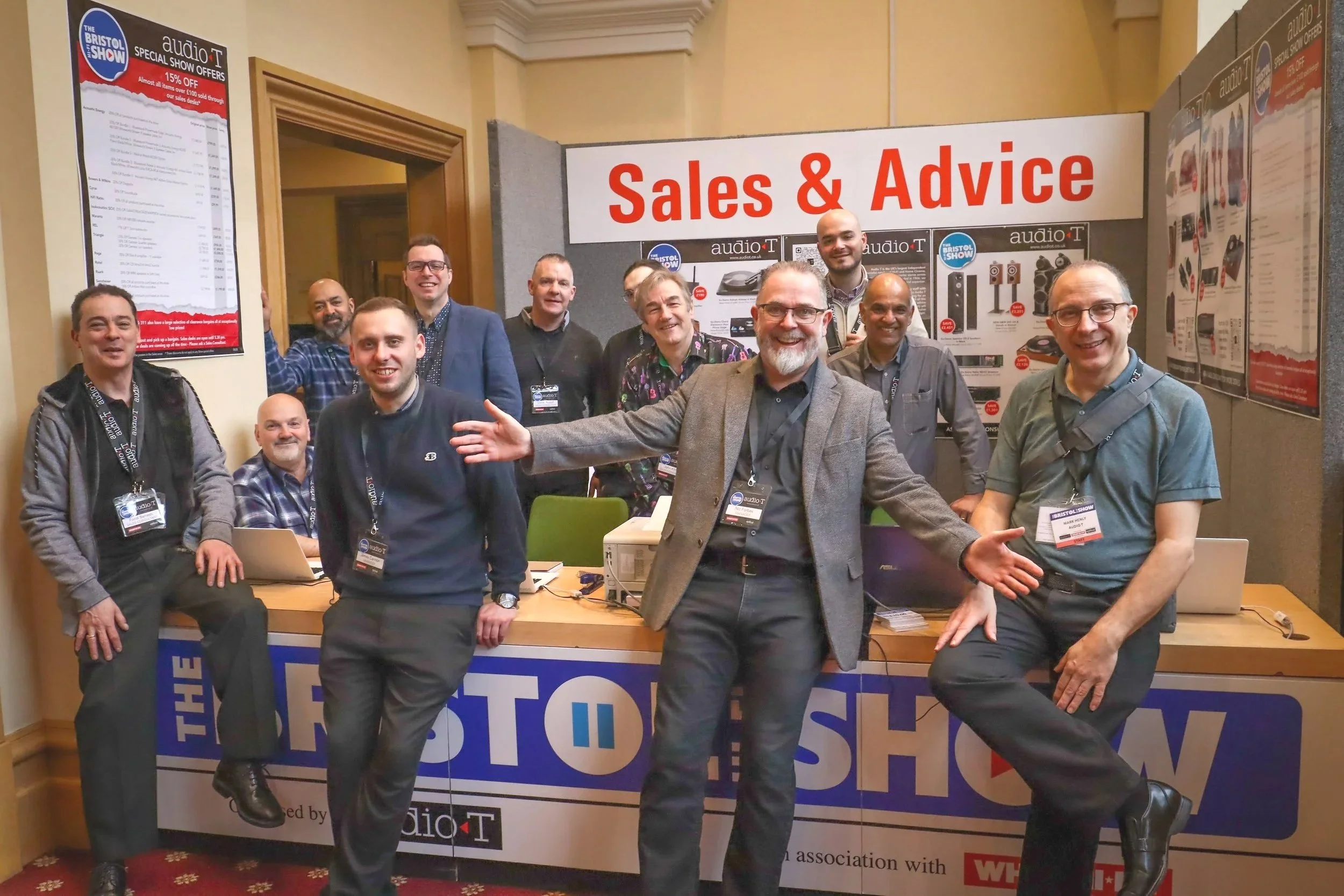
Some of our staff, past and present, at the bristol hi-fi show
It has been gained through thousands of demonstrations, installations, home visits and conversations. It comes from matching countless combinations of amplifiers, loudspeakers, turntables and source equipment. Occasionally, it comes from making mistakes so that you do not have to.
Many members of the team have spent a substantial part of their working lives with Audio T. They know which products complement one another, which combinations are best avoided and how apparently small changes can completely alter the balance of a system.
More importantly, they understand that there is no single “correct” system for everyone. We all listen differently, live in different homes, enjoy different music and have different priorities. Good advice begins with listening to the customer. The equipment comes afterwards.
Of course, conversations in our stores have a tendency to wander away from the equipment and into discussions about albums, concerts and which version of a recording sounds best. That is not an unfortunate distraction from the job. It is a large part of the reason most of us got into it.
Thank You for Keeping Us Here
The truth is that no independent business reaches its 60th anniversary without loyal customers. Some of you have been visiting Audio T for decades, gradually building and changing your systems as your circumstances, homes and music collections have evolved. Some have introduced children, friends and other family members to us. Others may have discovered Audio T only recently while searching for a first turntable, a better pair of headphones or a way to get music out of a phone and into the room.
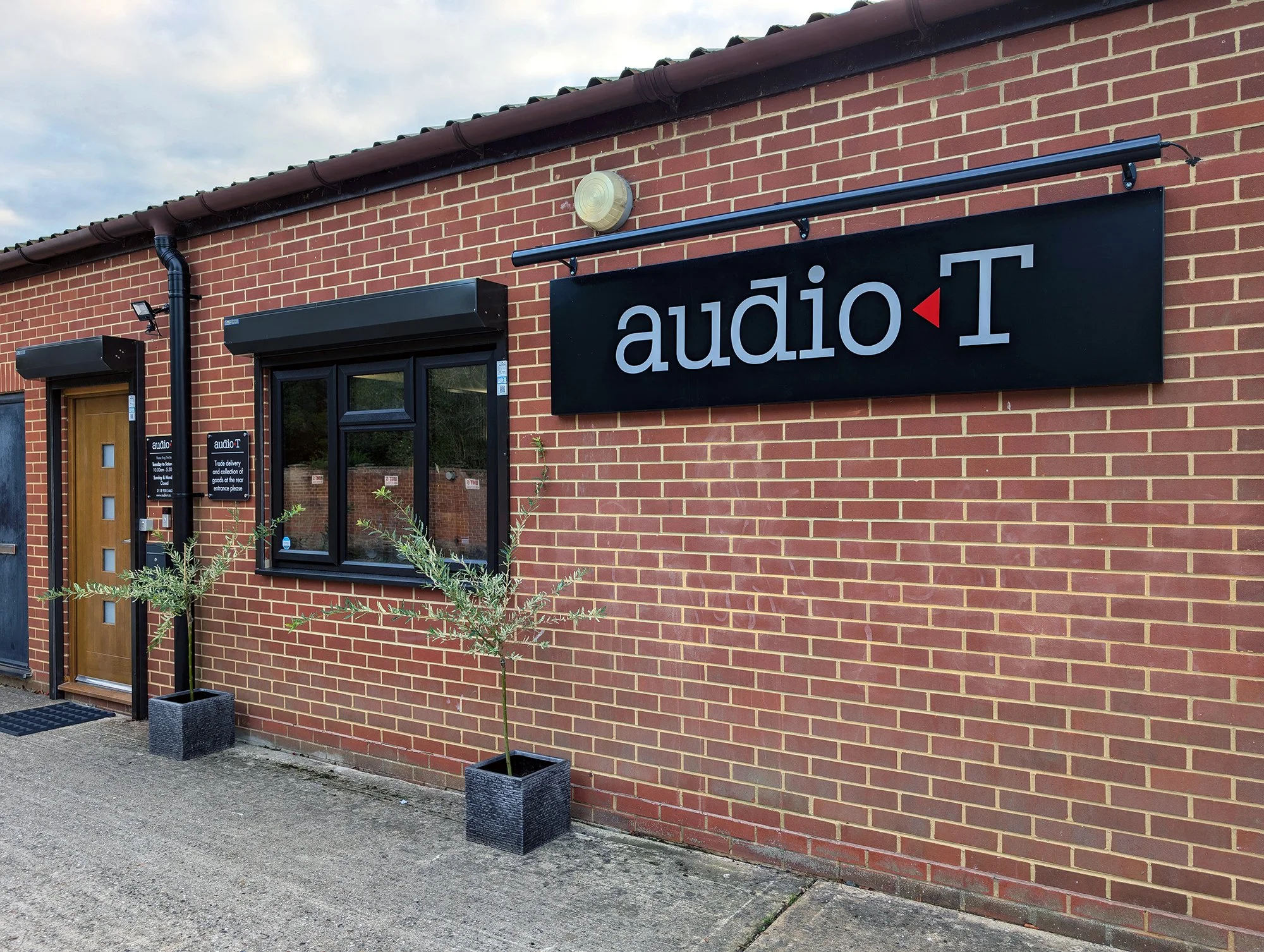
Our destination store, just outside of reading, in swallowfield
Every one of those customers is part of this story. Your purchases have obviously kept the business going, but so have your recommendations, reviews, event visits and conversations. Every time someone tells a friend about a good experience in one of our stores, it helps an independent retailer continue doing what it does.
That support is something we should never take for granted. To everyone who has trusted Audio T over the years, thank you. Whether you have bought several generations of equipment from us or have only just walked through the door for the first time, you are always welcome.
Another Anniversary Is Coming
The celebrations do not end with Audio T’s 60th. In 2027, it will be 40 years since the first Bristol Hi-Fi Show took place in 1987. The next event will be the 38th Show and takes place from Friday 26th to Sunday 28th February at the Delta Hotels by Marriott Bristol City Centre.
The Show has changed over the years, just as the industry has, but its purpose remains remarkably similar. It brings manufacturers, retailers, music lovers and curious newcomers together in one building and gives people the opportunity to experience an enormous range of equipment for themselves.
It is also fairly compelling evidence that the Hi-Fi industry still has plenty of life left in it. We will be celebrating those 40 years properly in Bristol next February, and we hope many of you will be there to join us.
What About the Next 60 Years?
I would be lying if I said I knew what Hi-Fi would look like in another 60 years. By then, we may be controlling our systems with our thoughts, listening through invisible loudspeakers or having heated arguments about whether music sounded better before it was beamed directly into our brains.
Whatever happens, I suspect people will still care about music. They will still want to feel something when they listen, and they will still be curious about whether their favourite recordings could sound better.
That is why Audio T is still here. The technology has changed, the formats have come and gone (and come back again) and the company itself has changed, but the reason behind it all has remained remarkably consistent.
Born in 1966. Still obsessed with sound.
Here’s to whatever comes next.
Thanks for reading.
Brad Tyler – Head of Marketing at Audio T
If you have any questions about Hi-Fi or Home Cinema, be sure to contact your local Audio T.
If you’ve enjoyed this, why not go ahead and read some more of our other blogs, and be sure to follow us on our social media channels below…