

When Good Hi-Fi Goes Bad: Why Does My System Sound Harsh, Boomy, Thin or Dull?
/You’ve carefully chosen your system, lovingly connected everything together and selected one of your favourite albums. The lights are dimmed. The drink of choice is poured. You settle into your chair, press play and prepare to be transported into musical nirvana… Only something isn’t quite right...

The cymbals sound like someone attacking a baking tray with a set of car keys. The bass has all the subtlety of a washing machine falling down a flight of stairs. The vocals have retreated behind the speakers, while the entire performance somehow manages to sound both tiring and thoroughly unexciting.
Your beloved Hi-Fi system is sounding harsh, boomy, thin, dull or perhaps an unwelcome combination of all four.
So, what has gone wrong?
The answer may be the equipment, but before you start replacing boxes, buying new cables or blaming the recording engineer, there are several things worth checking. In many cases, a disappointing system can be dramatically improved through careful positioning, better setup and a little patience.
Who Am I to Tell You Any of This?

Before we go any further, I should probably introduce myself.
I’m Brad Tyler, Head of Marketing here at Audio T, although my relationship with Hi-Fi goes considerably further than writing newsletters, administering our website and working on promotions.
I’ve collected vinyl for most of my life, played in bands throughout my teens and twenties, and have a degree in studio recording and live sound. I originally joined Audio T as a Sales Consultant in our Portsmouth store before eventually moving into marketing.
You may also have seen me presenting some of our YouTube coverage from the Bristol Hi-Fi Show.
In other words, I may now spend much of my working life sitting behind a computer, but I’m still an enthusiastic music listener who has spent far too many hours moving speakers backwards and forwards while wondering why the bass sounded better yesterday.
Before You Start Replacing Everything…
When a system doesn’t sound right, it is easy to assume that something needs upgrading. Perhaps the amplifier lacks power, the speakers are not good enough, or you need a better streamer, cartridge or some enormously expensive cable woven from the hair of a mythical Scandinavian goat.
Possibly.
However, even excellent equipment can sound disappointing when it is poorly positioned, badly matched or placed in an unsuitable room. The system, the room and your listening position all work together.
The good news is that some of the biggest improvements cost nothing. The bad news is that you may have to move some furniture.
Why Does My Hi-Fi Sound Harsh or Too Bright?
A harsh system can be incredibly tiring or fatiguing to listen to.
Vocals may become aggressive, cymbals can sound splashy and distorted, and electric guitars might have an unpleasant edge that makes you instinctively reach for the volume control.
Before long, you may find yourself avoiding certain albums altogether.
Take a Look Around the Room
Hard surfaces such as wooden floors, large windows, glass furniture and bare walls reflect sound. Too many reflections can make a system sound brighter, less focused and more aggressive.
You don’t need to turn your living room into a recording studio. Start with simple changes: add a rug, close the curtains, or use bookshelves, pictures and furniture to help break up reflected sound.
In short, the room should look like somebody lives there, rather than an empty Scandinavian furniture showroom.
Check the Speaker Angle
The angle of your speakers can make a significant difference to the amount of high-frequency energy reaching your ears.
Pointing the speakers towards your listening position is known as toe-in. It can improve focus and stereo imaging, but too much toe-in may also increase the prominence of the treble.
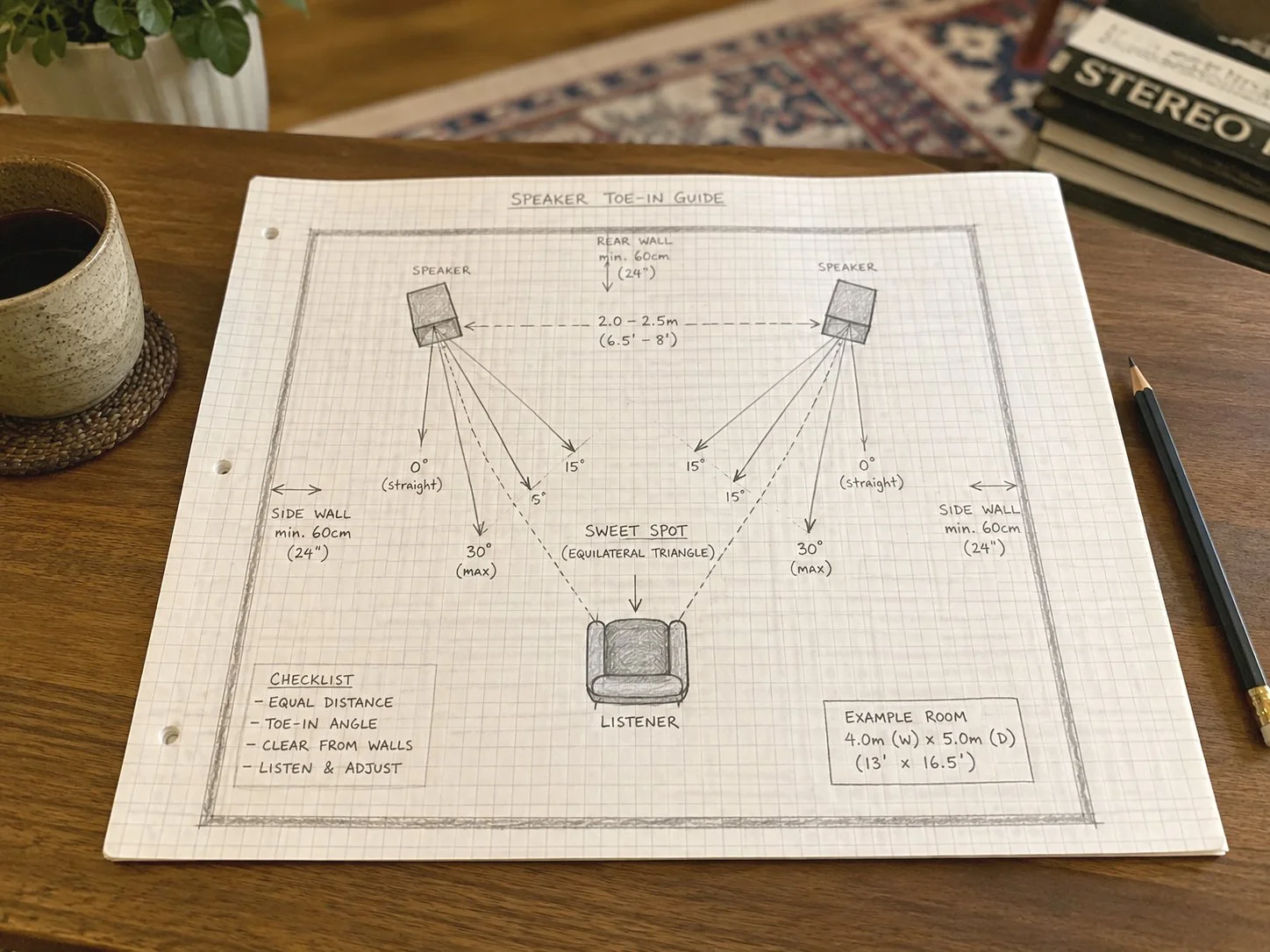
Try turning the speakers slightly outwards so that they point just past your shoulders rather than directly at your head.
Make small, equal adjustments to both speakers and listen again.
Changing the angle by only a few degrees can make the difference between a clear, detailed presentation and the musical equivalent of being shouted at by a cutlery drawer.
Are You Sitting Too Close?
Sitting very close to a large pair of speakers can make it harder for the output from the different drive units to combine properly before reaching your ears.
You may hear the tweeter, midrange and bass driver as separate sources rather than one cohesive loudspeaker.
Try moving your listening position slightly further back, where possible. Alternatively, moving the speakers a little closer together may help them integrate more effectively at a shorter listening distance.
Turn It Down… Just a Little
Playing music loud is great, but if the amplifier or speakers are being pushed too hard, the sound can become strained, compressed and harsh.
Try lowering the volume. If the unpleasant edge disappears, the system may be running out of comfortable headroom for the room and listening level.
That doesn’t necessarily mean you need more power, but it does suggest the amplifier, speakers and room may not be ideally matched.
Why Does My Hi-Fi Sound Boomy?
Boomy bass is one of the most common Hi-Fi complaints.
Instead of distinct notes, you hear a thick, swollen rumble. Bass guitars become difficult to follow, kick drums lose their impact and every recording appears to contain the same long, droning note.
A generous amount of bass can initially sound impressive. However, after several songs it becomes clear that you are not hearing more musical information - You are hearing the room joining in.
And unlike the musicians, the room has not rehearsed.
Move the Speakers Away From the Wall
Placing speakers close to a wall or corner will usually increase the bass, sometimes making it sound slow or boomy. Pulling them too far into the room, however, can leave the system sounding thin.
Move both speakers forwards or backwards a few centimetres at a time, keeping them symmetrical where possible. Use a track with a clear bass line, such as “The Guns of Brixton” by The Clash or Billie Eilish’s “Bad Guy”, and listen after each adjustment.
You are looking for bass that sounds full but controlled, with clear definition between notes.
Once you find the best position, measure it and write it down. Otherwise, the next time somebody moves a speaker while vacuuming, you may spend three weeks trying to rediscover the magic centimetre.
Your Chair Could Be the Problem
The listening position matters just as much as the speakers. Bass varies throughout a room, so sitting directly against the rear wall can make it sound overpowering or uneven.
Try moving your chair forward slightly. You can also play a bass-heavy track and walk around the room to hear how dramatically the low frequencies change from one position to another.
Why Does My Hi-Fi Sound Thin or Lacking in Bass?
A thin system can sound clean and detailed, but it lacks body, warmth and weight.
Vocals appear unnaturally small, drums have little impact and instruments lack the physical presence that helps make recorded music believable.
Before buying larger speakers or an enormous subwoofer capable of rearranging your internal organs, there are several things to check.
Check Your Speaker Connections
One of the first things to investigate is whether the speakers have been connected in phase - The positive amplifier terminal should connect to the positive terminal on the speaker, while the negative terminal should connect to the negative.

Be sure to switch everything off before checking the connections.
If one speaker is connected correctly and the other is reversed, the two speakers will move in opposite directions. Certain frequencies, particularly in the bass, can partially cancel one another at the listening position.
The result is often thin bass, a vague central image and a sound that seems strangely detached from the speakers.
Follow each cable carefully from the amplifier to the speaker. Never assume that the markings are correct if the cables have been re-terminated or assembled at home.
It is a simple mistake, and it happens far more often than you might think.
Revisit the Speaker Position
If the speakers have been pulled a long way into the room, try moving them slightly closer to the rear wall. This can restore some bass weight, although moving them too close may make the sound boomy.
Speaker positioning is a balancing act, so make small adjustments and listen after each one.
Are the Speakers Too Small for the Room?
Compact standmount speakers can produce astonishing bass, but there are limits to what a small cabinet and drive unit can achieve.
If you are trying to fill a large, open-plan room at substantial volume, they may struggle to deliver the scale and weight you want. That doesn’t make them bad speakers; they may simply be unsuitable for the room.
Equally, buying the largest floorstanders you can squeeze through the doorway could replace a thin sound with an uncontrollably boomy one.
This is where a proper demonstration, and ideally a home loan, becomes particularly valuable.
Why Does My Hi-Fi Sound Dull or Lifeless?
A dull system may not sound actively unpleasant, but it can make music feel flat, closed-in and uninvolving.
Check the Speaker Angle and Height
Too little toe-in can reduce focus and make the treble sound subdued. Turn both speakers slightly towards your listening position and listen for a clearer central image.
The tweeters should also sit reasonably close to ear level when you are seated. If standmount speakers are placed on low furniture, much of their high-frequency output may be directed towards your chest rather than your ears.
Suitable stands improve their height, stability and positioning. Where stands are impractical, angled isolation supports may help.
Could the Room Be Too Absorbent?
We often worry about rooms being too reflective, but thick carpets, heavy curtains, large fabric sofas and excessive acoustic treatment can remove too much high-frequency energy.
The aim is not to eliminate every reflection. We are trying to control the room, not punish it for existing.
Check the Source
If the dull sound only affects one input, the source may be responsible.
With a turntable, check the stylus and cartridge alignment. A dirty or worn stylus can reduce clarity and may eventually damage your records.
Recordings, masters and streaming versions can also vary considerably. If one album sounds lifeless but several others sound excellent, the recording may simply be the problem.
Your Free Hi-Fi MOT
Before spending any money, work through these basic checks:
Make sure both speakers are connected correctly and in phase.
Check that they are the same distance from your listening position.
Move them slightly towards or away from the rear wall.
Experiment with toe-in.
Move your chair away from the rear wall.
Check that the speakers are stable and the tweeters are close to ear height.
Reduce the volume and listen for signs of strain.
Try several familiar recordings and check each source separately.
Most importantly, change only one thing at a time.

If you reposition the speakers, alter the amplifier settings and change the cables simultaneously, you won’t know which adjustment made the difference.
You could improve the sound and then spend the rest of the weekend methodically undoing it.
What About Tone Controls and Room Correction?
Tone controls are sometimes treated as the forbidden fruit of Hi-Fi, but small adjustments can be useful with a difficult room or troublesome recording. Room-correction systems can also produce excellent results.
However, it is usually best to address speaker positioning, listening position and basic setup first, then use equalisation to deal with what remains.
You wouldn’t fix a wonky picture by rebuilding the wall around it. Straighten the picture first.
When Is It Time to Change the Equipment?
If the system still doesn’t sound right after all the moving, measuring and mild swearing, the equipment may not be ideally matched to the room or to each other.
There could also be a fault, such as a damaged drive unit, worn stylus or loose connection.
This is where experienced advice can prevent unnecessary expense. At Audio T, we can help identify whether the problem is caused by setup, positioning, equipment matching or an individual component. Our demonstration rooms and home-loan options also allow you to compare possible solutions properly.
Final Thoughts
If your Hi-Fi sounds harsh, boomy, thin or dull, there may be a simple reason — but finding it is not always straightforward.
Your local Audio T team can help you work out whether the problem is down to speaker positioning, room acoustics, system matching, setup or a component that is no longer performing as it should.
Bring us the details of your system, your room and what you are hearing, and we will offer honest, practical advice on the best next step. That may be a simple adjustment you can make at home, a demonstration in store or a carefully chosen upgrade that genuinely improves your system.
We can also arrange home loans and demonstrations where available, helping you judge any change in the place that matters most: your own listening room.
Contact your local Audio T store and let us help you get your system sounding as good as it should.
Thanks for reading.
Brad Tyler – Head of Marketing at Audio T
If you’ve enjoyed this article, take a look at more of our blogs and follow Audio T on our social media channels below…