

No need to Krane your Neck, Kromey... The Linn Majik has it all.
/Music Unites Our City
In Manchester, vinyl isn’t just a format. It feels like part of the city’s musical bloodstream. From the crate-digging corners of the Northern Quarter to legendary spots like Piccadilly Records and Vinyl Exchange, records carry the weight of a musical heritage that stretches from Factory Records to today’s indie and underground scenes.
Yes, Mancunians love their vinyl. The figures say it all. Record sales are up 25% year on year, and ‘The Northern Quarter’ is one of the main driving factors.
So, it stands to reason that here at Audio T, we want to shout about this cultural phenomenon too. We sell the very things you need to play your vinyl.
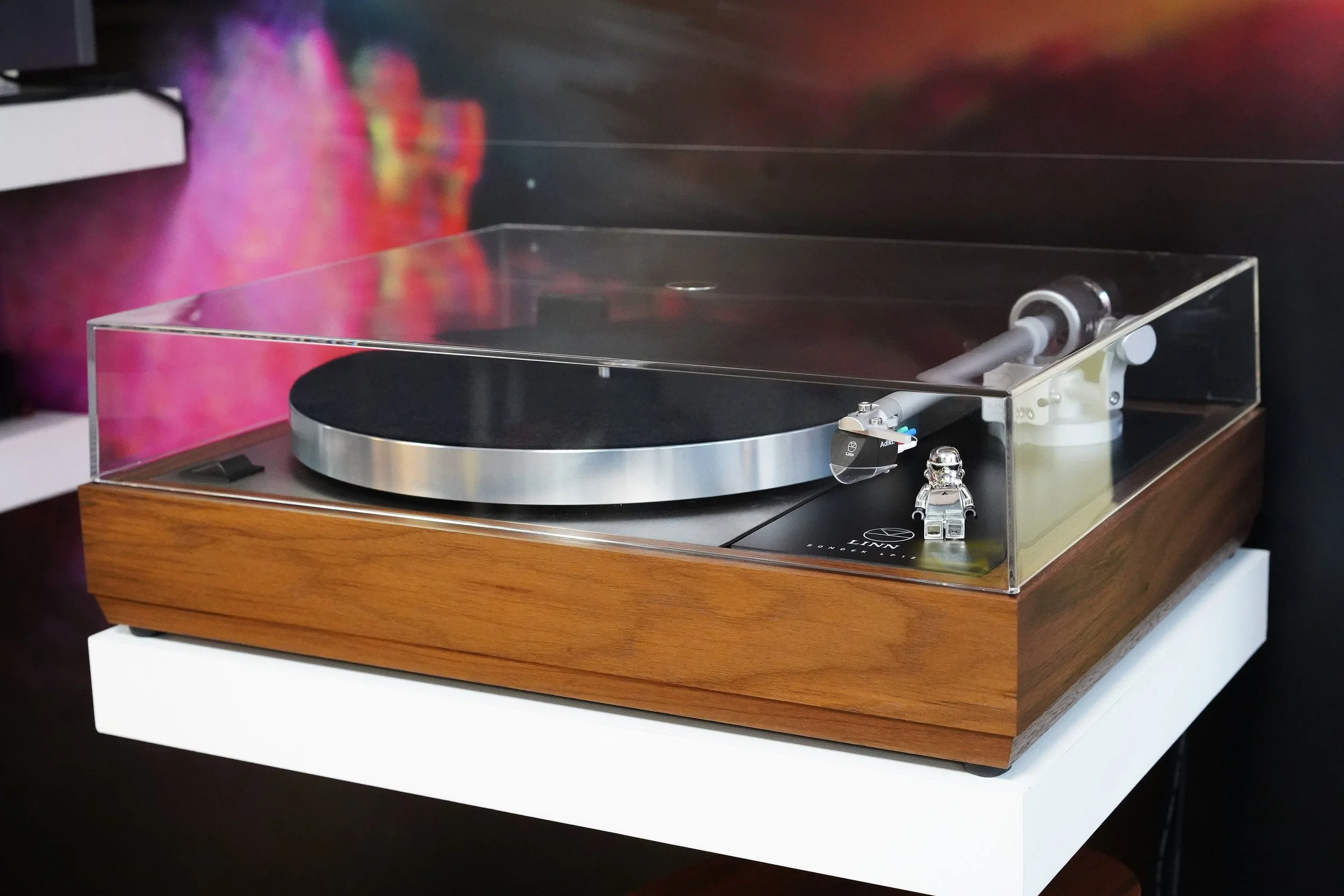
One of those things being the Linn Sondek Majik LP12.
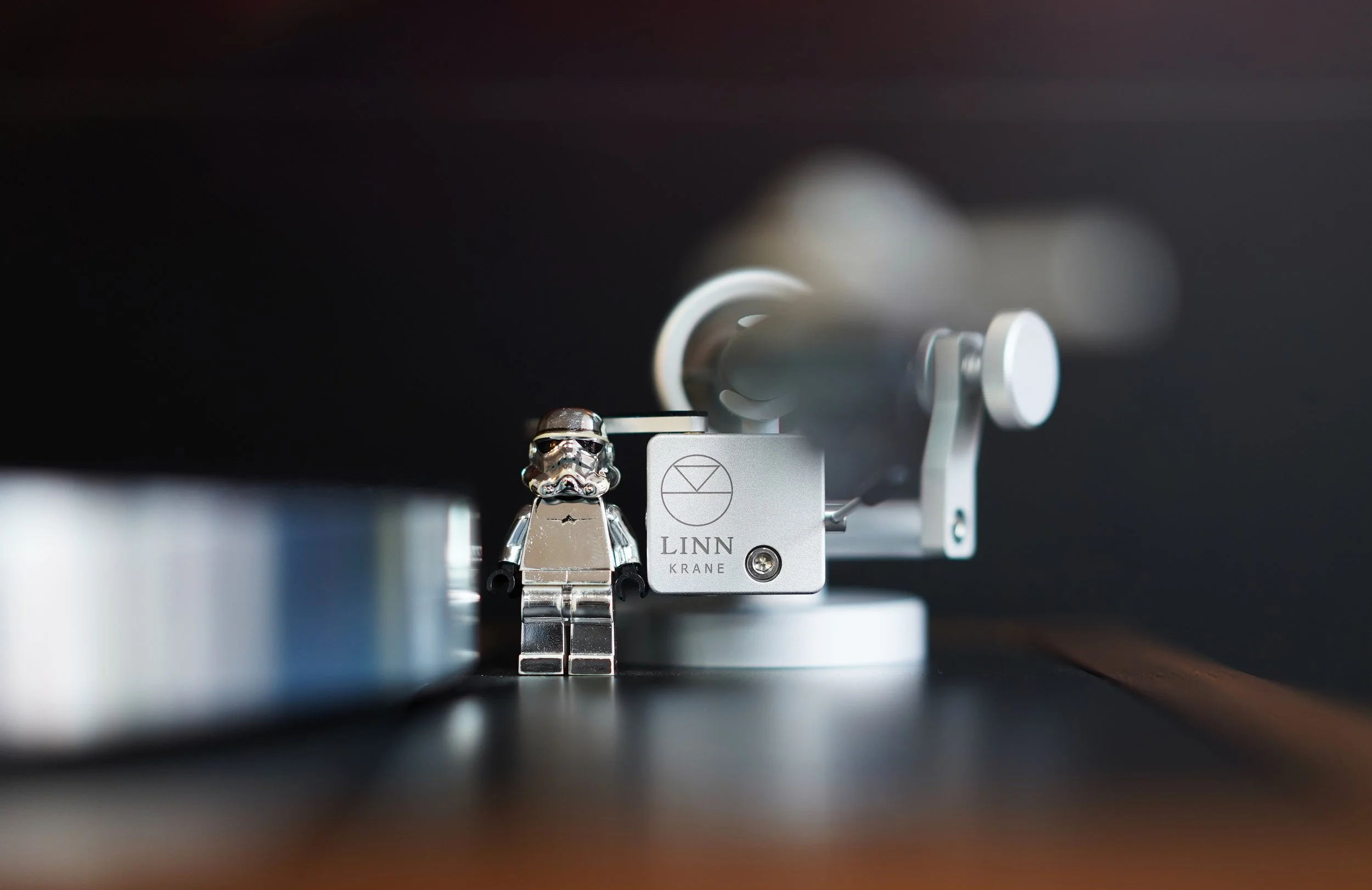
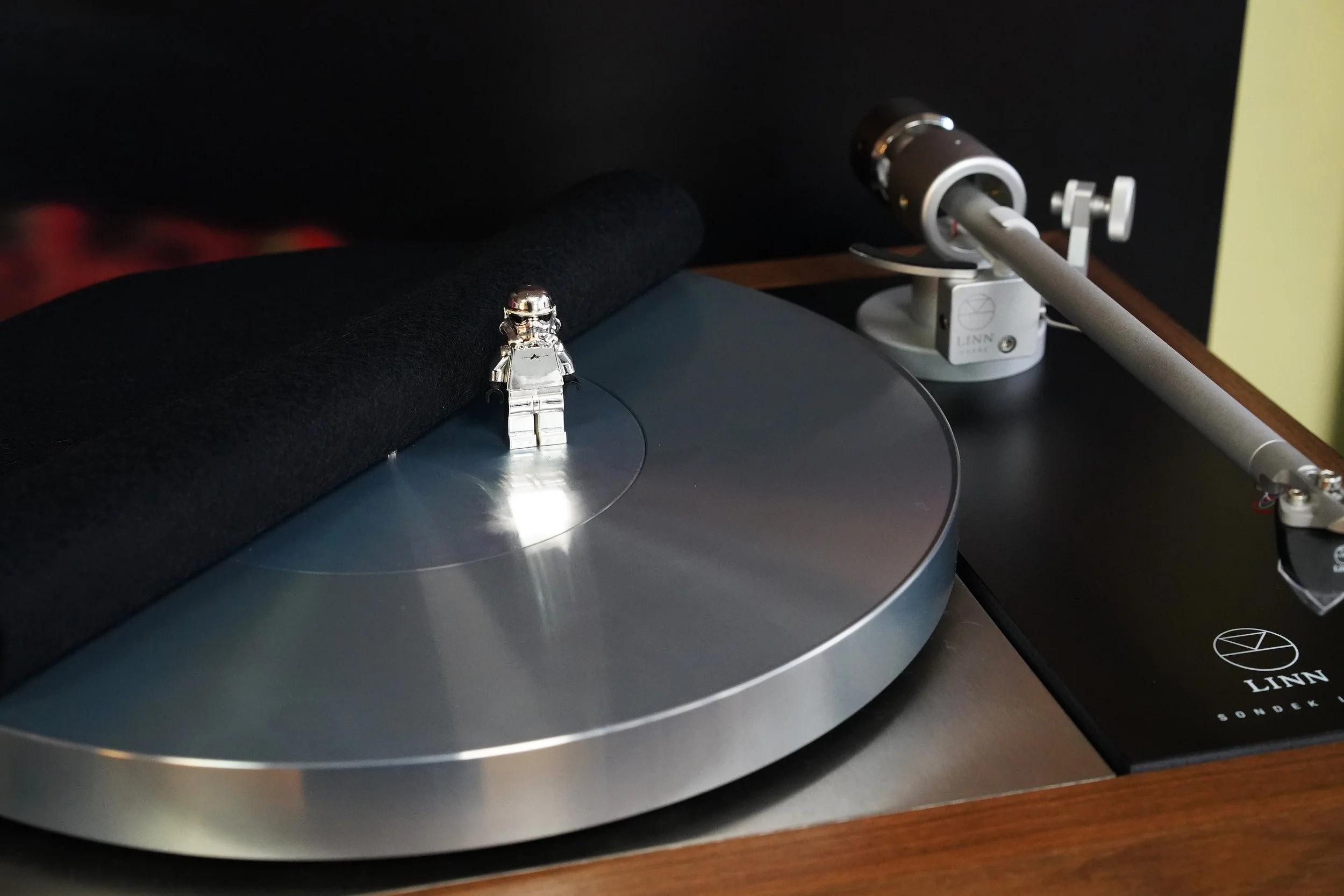
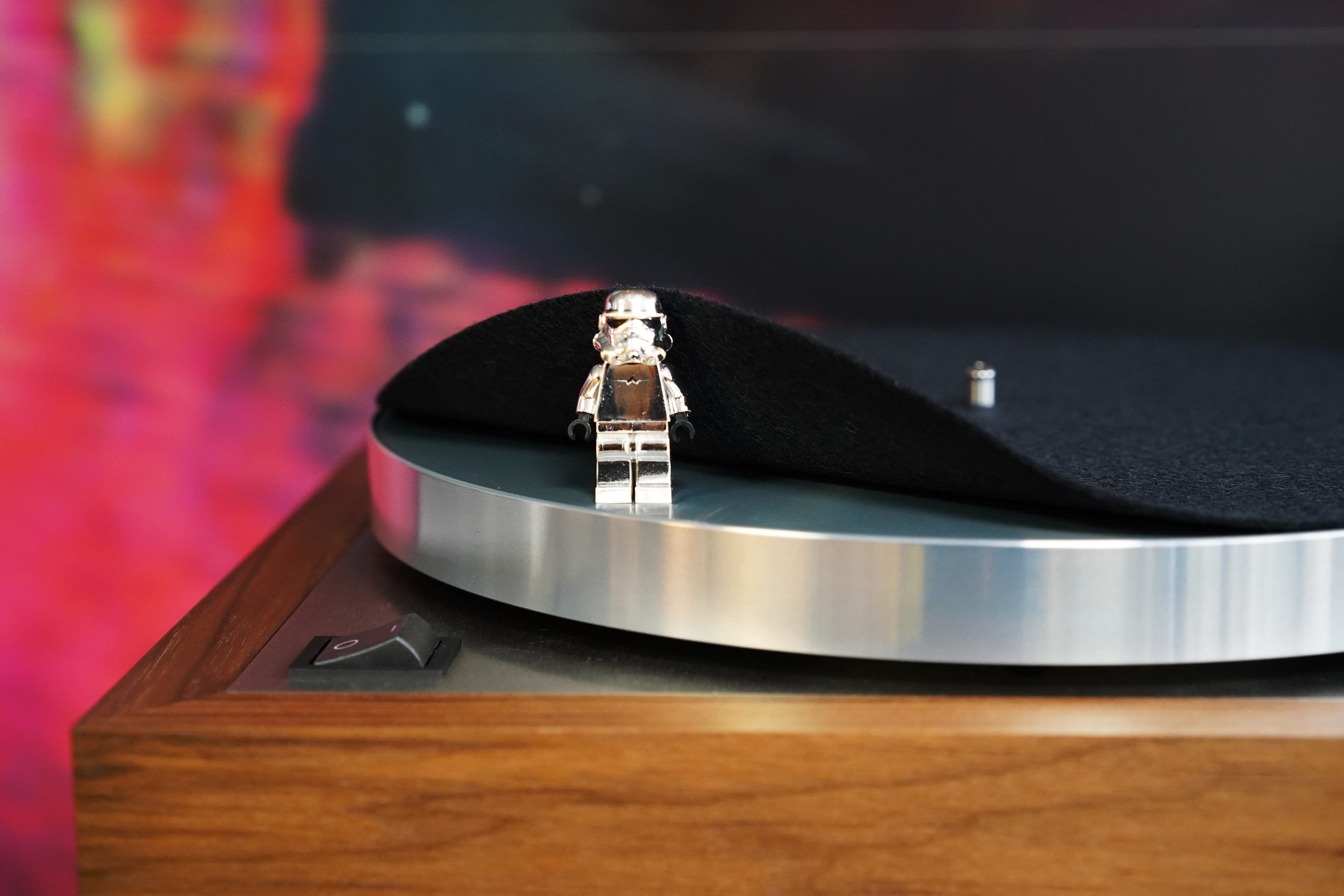
Manchester store mascot, “Chromey” with the Linn Krane tonearm
It’s A Kind Of Majik
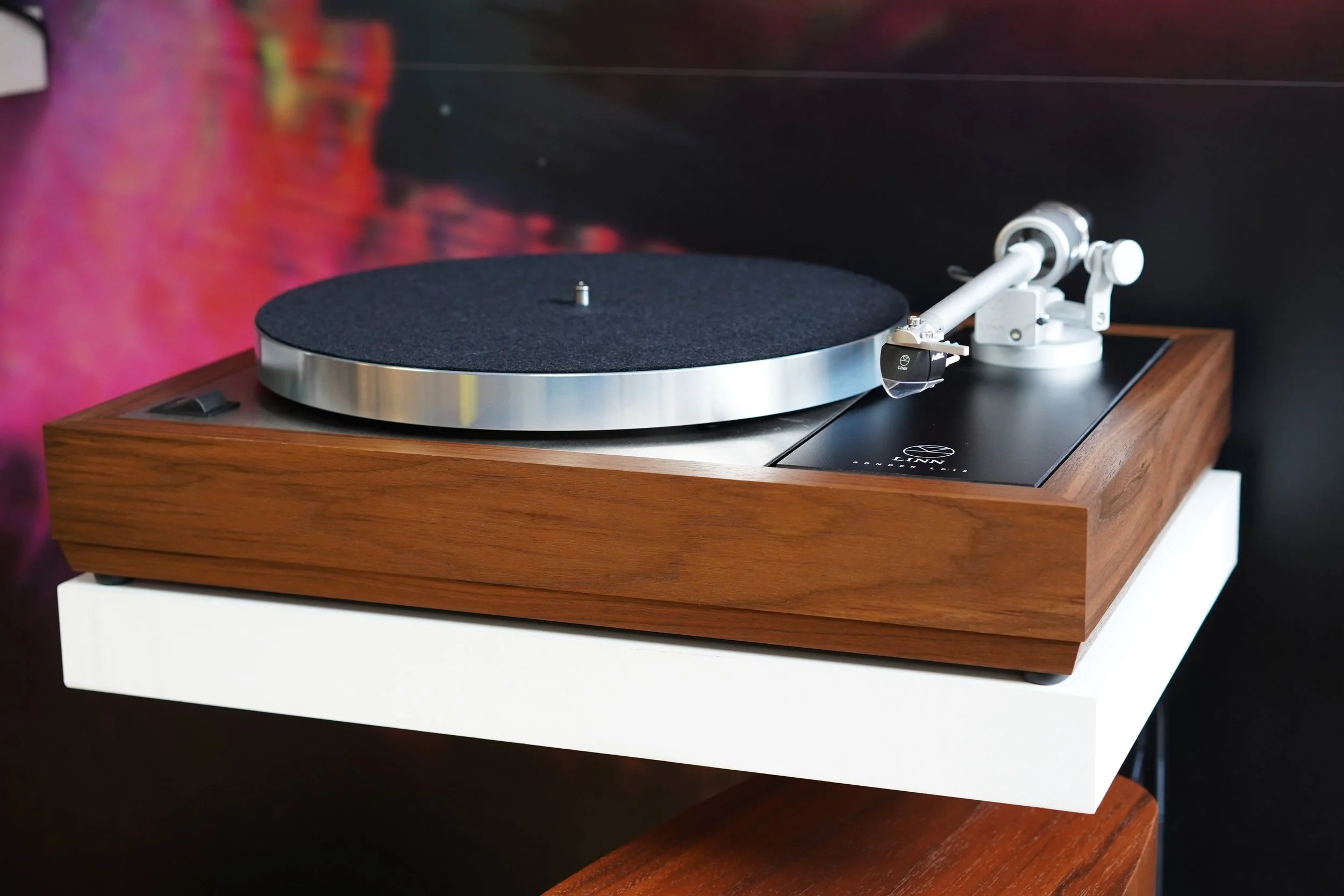
The Linn Majik LP12 is actually one of those rare hi-fi products that sits at the intersection of heritage, engineering philosophy, and musicality. Much like our beloved city of Manchester.
At a glance, the Majik LP12 hasn’t changed much… And that’s entirely the point. Its suspended sub-chassis design and understated wooden plinth still echo decades of heritage. But beneath that familiar exterior lies a significantly modernised deck, anchored by the Karousel bearing, improved power supply, and now… the Krane tonearm.
Some Weight Lifting
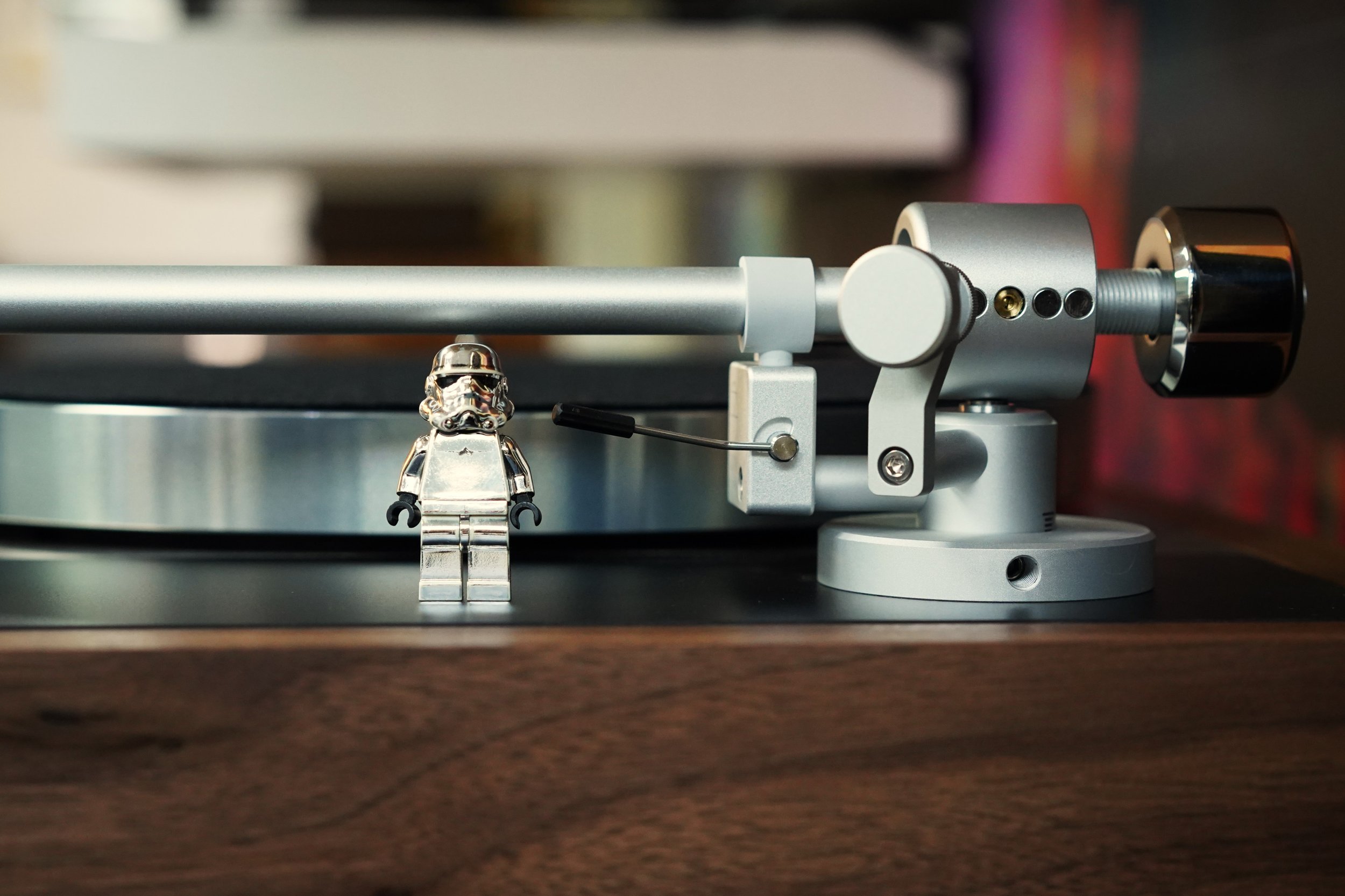
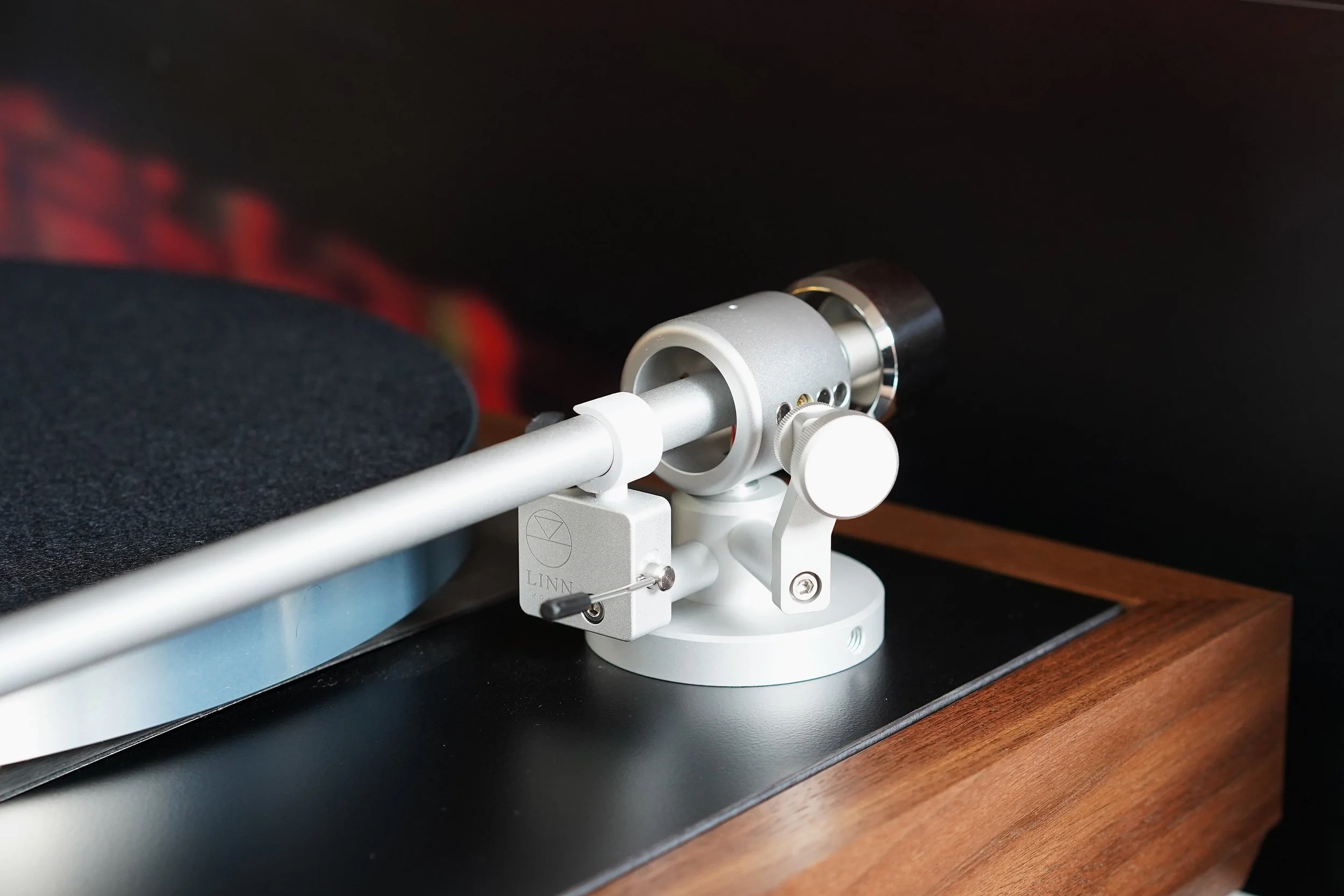
The Linn Krane tonearm is an interesting piece of kit. It sits right in that “serious but not expensive” tier of analogue components, so how you judge it really depends on your expectations.
It’s very good for what it’s meant to be. Think of it as a well-engineered, modern baseline for the LP12. It can hold its own, but not necessarily blow away higher-end arms. This isn’t a cheap bundled arm, but a properly engineered, no-compromise tonearm. The use of aluminium, stainless steel, and sapphire/tungsten bearings gives it good rigidity and low friction, all essential requirements for a well-thought-out tonearm.
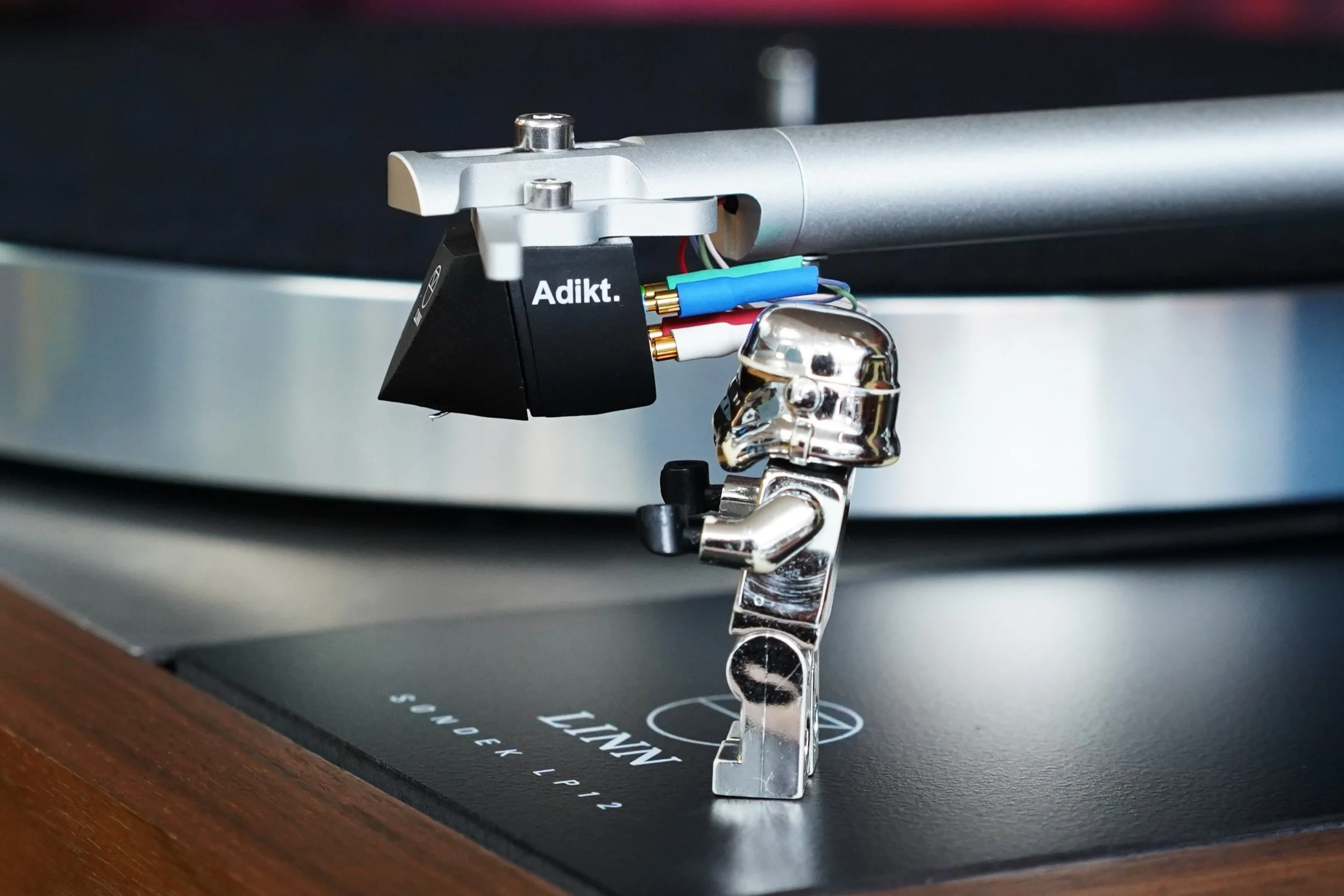
The Linn geometry is baked in. VTA scale, azimuth adjustment, and magnetic anti-skate make it easier to dial it in to your chosen cartridge, if the Adikt isn’t your preferred option. In all honesty, it’s a big step up from the old Majik/Jelco arms; it clearly improves on detail and tracking, and it’s a meaningful upgrade to entry-level LP12 performance. Plus, it looks great too!
Stable Under Foot
The LP12 was introduced in 1972 by Ivor Tiefenbrun, and at the same time, most hi-fi thinking prioritised speakers. Linn argued the opposite: that the source (turntable,) is the most critical component.
That philosophy led to a design where vibration control, mechanical stability, and energy dissipation were treated as core sound-quality factors, not secondary concerns.
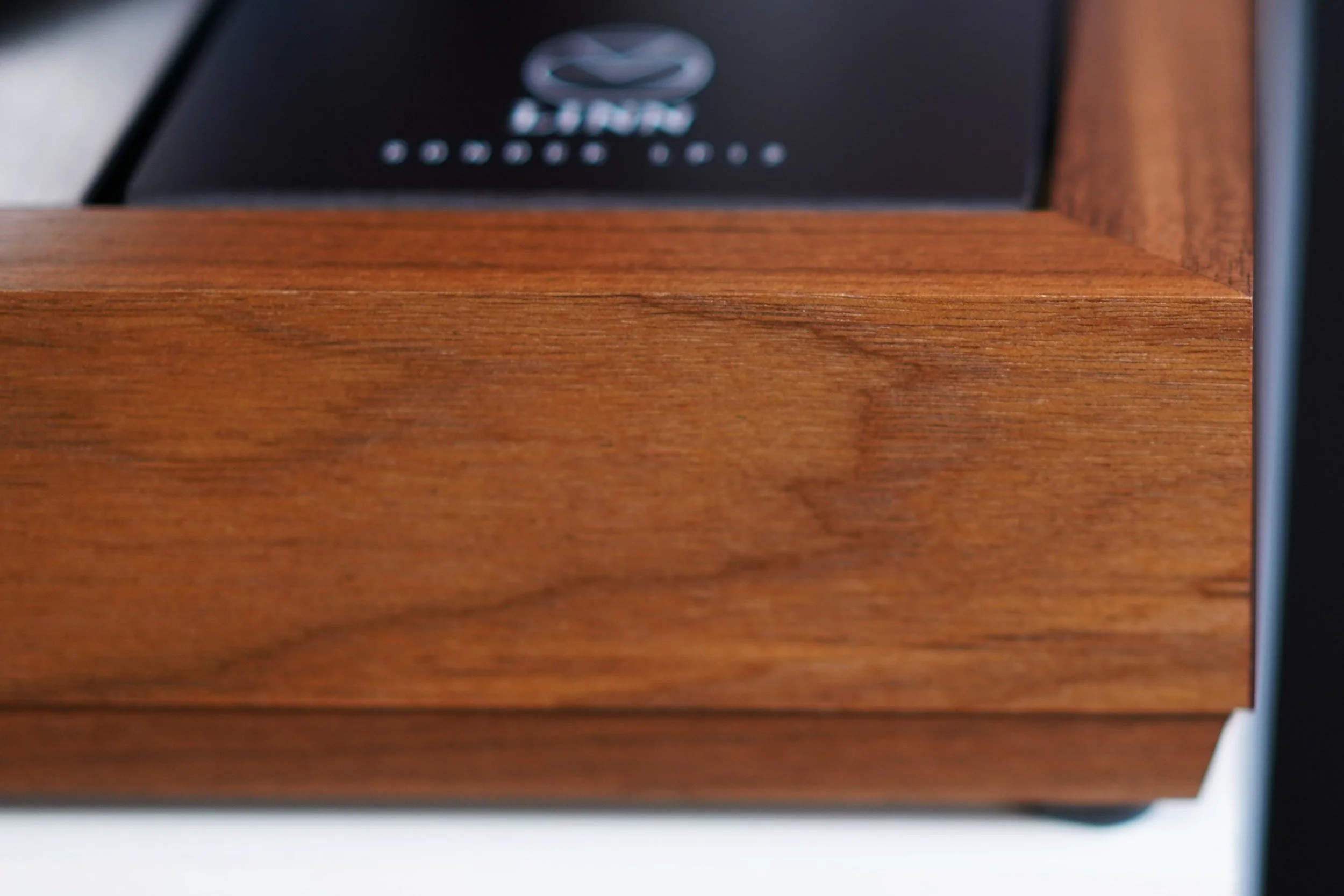
The LP12 uses a suspended sub-chassis design, where the platter and tonearm “float” on springs inside a rigid outer frame. That outer frame is the plinth. This is key, and often misunderstood.
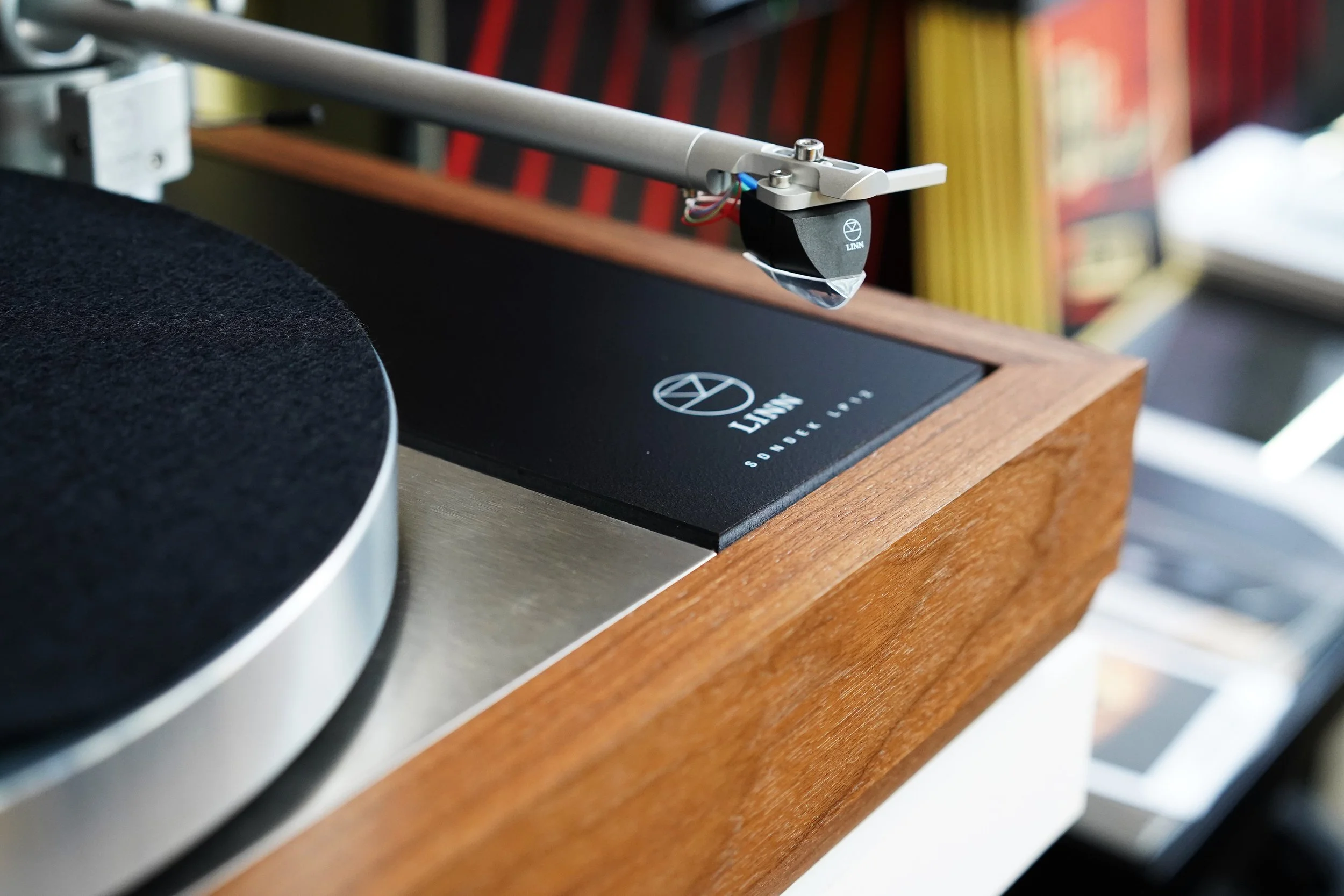
The LP12 isn’t just “isolated”, it’s a tuned mechanical system where the inner suspension handles micro-vibrations and the plinth provides a stable outer boundary. If the plinth is too soft, you get a loss of precision; if it’s too rigid or reflective, the energy bounces back.
Linn carefully balances rigidity vs damping.
So, when the plinth is doing its job well, you typically get tighter bass (less smearing from vibration), better timing and rhythm, improved low-level detail, and a lower noise floor.
These improvements come from mechanical stability, not electronics.
Simple, really.
Take Your Bearings
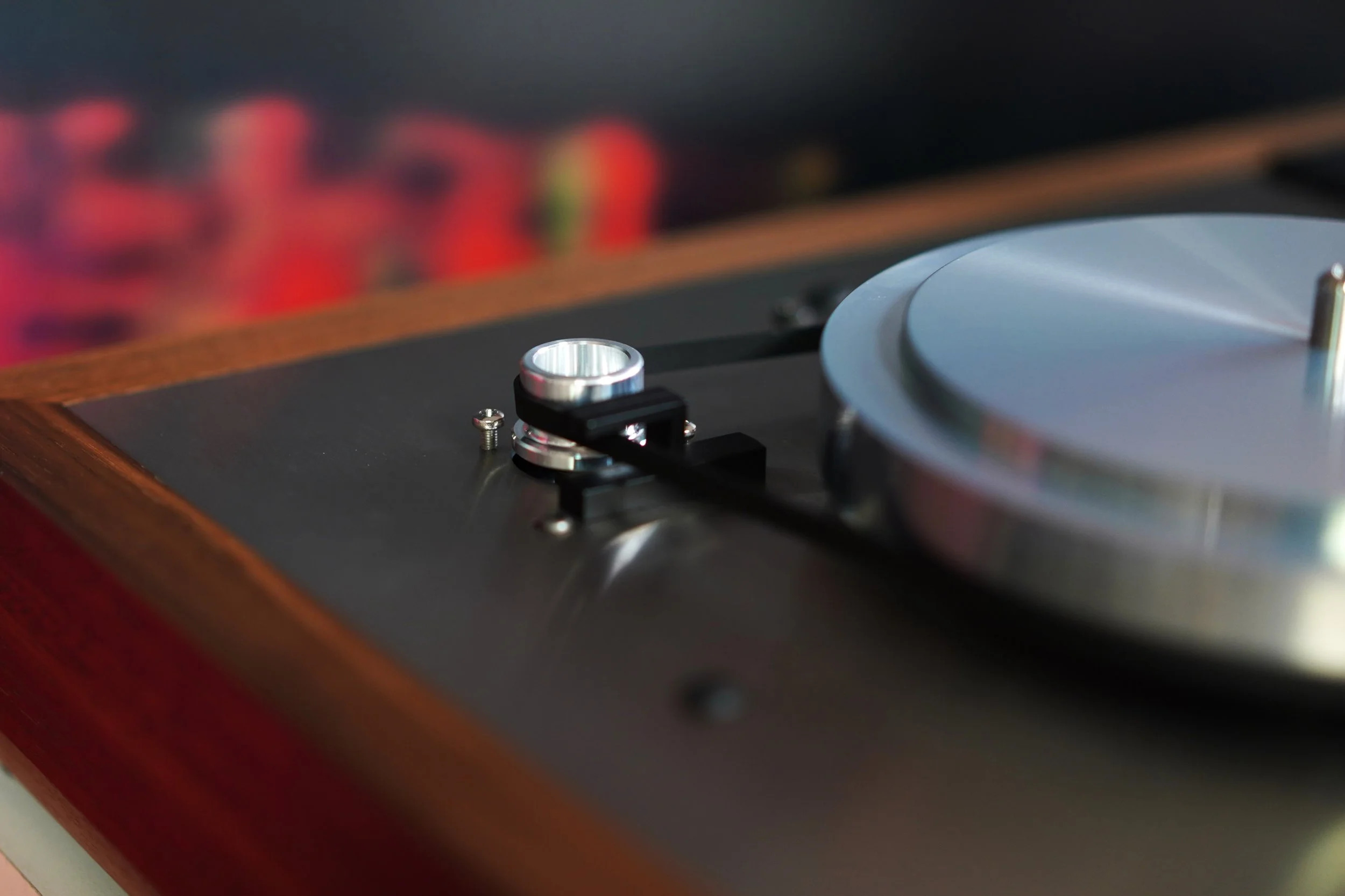
One of the biggest strengths of the LP12 system is how quiet the bearing/platter interface is. The inner hub works in harmony with Linn’s Karousel bearing to minimise rumble, micro-vibrations, and energy feedback into the stylus.
That silence translates directly into better retrieval of low-level detail, and arguably one of the reasons the LP12 sounds so… “Alive” and rhythmically convincing.
The inner and outer platters are heavily machined and stress-relieved zinc alloy, which Linn call Zamak (or Mazak).
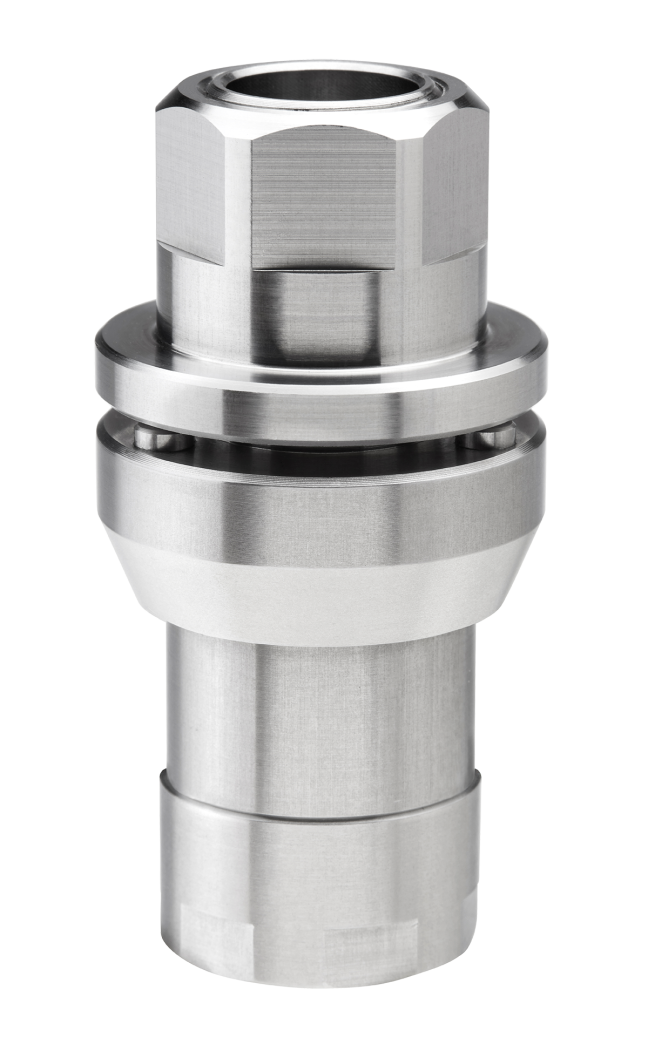
The Karousel bearing is made from stainless steel and is polished to what Linn call a diamond-like carbon for the thrust pad. This reduces friction at the spindle tip; the single point where the platter’s weight is supported. The result is smoother, quieter rotation and lower mechanical noise as well as quieter backgrounds during playback, in other words.


Manchester Majik
The Linn LP12 Majik and Manchester actually make a quietly fitting pair.
What keeps vinyl alive here isn’t nostalgia alone, it’s community: shops that double as venues, listening spaces, and meeting points where strangers bond over sound. In a city built on music, vinyl offers something streaming can’t… a tangible connection to that legacy, a way to discover new artists through human recommendation, and a sense that every record bought is part of a living culture rather than a disposable click.
Manchester’s musical identity, from post-punk grit to club culture, has always been about feel over perfection. Think raw rooms, imperfect acoustics, but emotionally precise output. The Linn Majik sits in a similar space: it’s not about flashy specs or clinical neutrality; it’s about timing, rhythm, and musical cohesion. It pulls you into the groove rather than dissecting it.
In that sense, it echoes the ethos behind places like the ‘The Haçienda’. Not the most polished environment, but culturally seismic because of how it felt. The LP12 Majik does something comparable at a smaller, domestic scale: it prioritises engagement and flow over sterile accuracy, something akin to Northern Soul.
It’s an absolute cracking turntable. Come and have a listen.
Thanks for reading.
Munir, Thomas and Dave - Audio T Manchester
If you have any questions about any of the equipment featured in this article, or any other Hi-Fi or home cinema enquiries, be sure to Contact Us.
If you’ve enjoyed this, why not go ahead and read some more of our other blogs, and be sure to follow us on our social media channels below…
Linn can be found at the following Audio T stores