
When Cables Disappear: An AudioQuest Demonstration at the Bristol Hi-Fi Show 2026
/
the audioquest bristol show 2026 banner
AudioQuest was founded in 1980 by William E. Low and is based in Irvine, California. It has offices in the Netherlands and distributes its products to approximately 65 countries across the planet. The first hi-fi system I bought upon entering the workplace in 1993 had AudioQuest interconnects and loudspeaker cables stringing it together. We’ve had an on-off-and-back-on-again relationship ever since. AudioQuest UK has been a mainstay of the Bristol show for many years now, most recently led by the inimitable Toby Allen, late of our very own Audio T Bristol store. His product demonstrations have always been interesting, informative, and intelligently thought through.
This February’s was no exception. Citing AudioQuest’s enormous catalogue of products, Toby explained that rather than attempting to showcase inventory, he was going to illustrate AudioQuest’s own premise: that cables should have no discernible character of their own, but instead act as a clear glass — if not a wide-open — window onto the music your system is attempting to reproduce.
Referencing the 17th-century medical clinician Thomas Sydenham’s noble aphorism, “Primum, non nocere” — more famously, “First, do no harm” — Toby led us through a concise, amusing, and illuminating demonstration of what cables can do, and more importantly, what they should not do to one’s hi-fi.
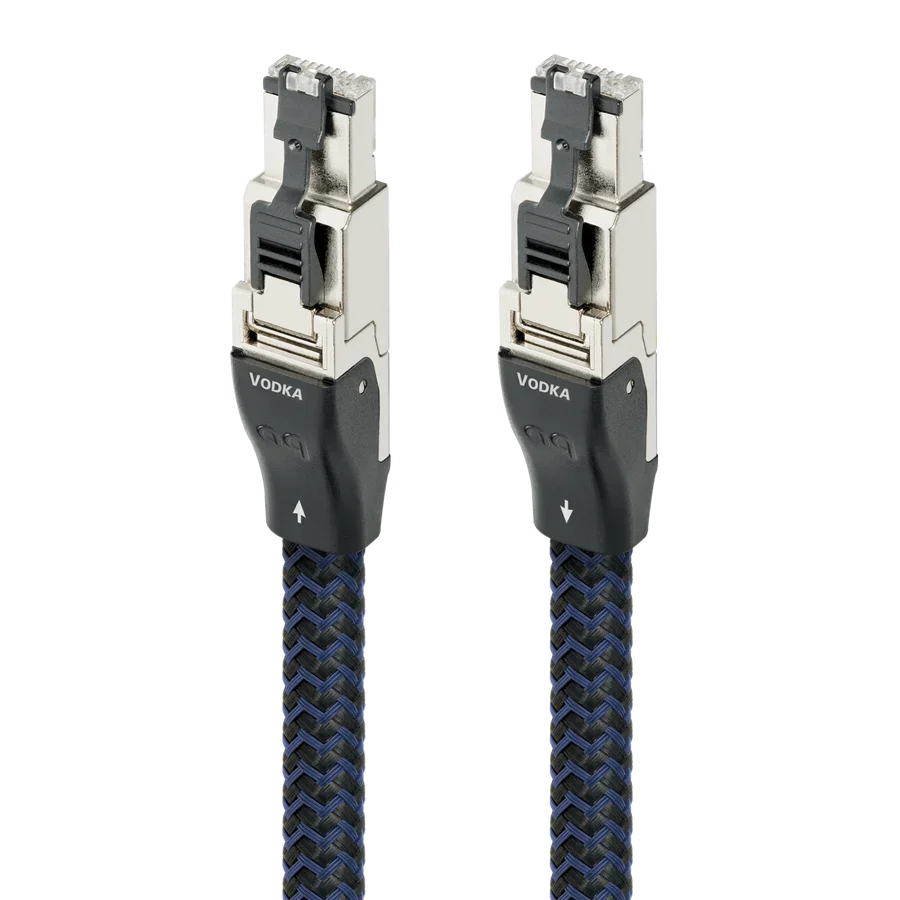
the audioquest vodka ethernet cable. an….idiosyncratic nomenclature that’s for sure.
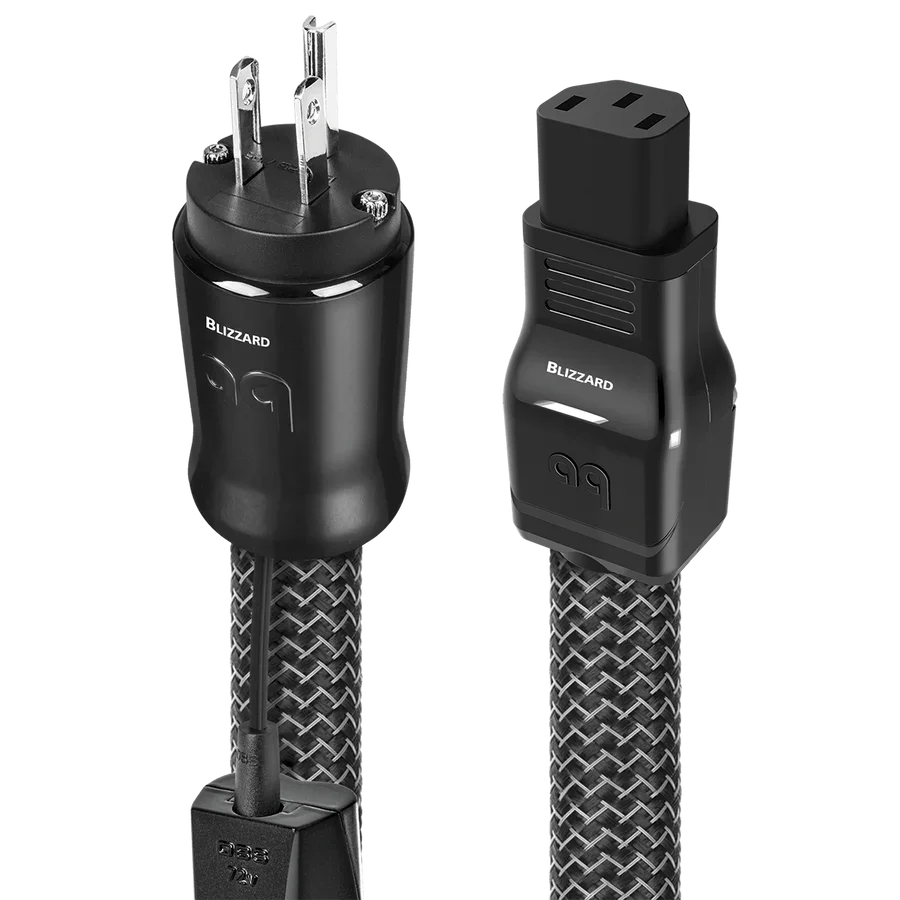
the audioquest blizzard power cable. all the higher-end AQ power leads are named after inclemant weather. i don’t know why, i just work here man.
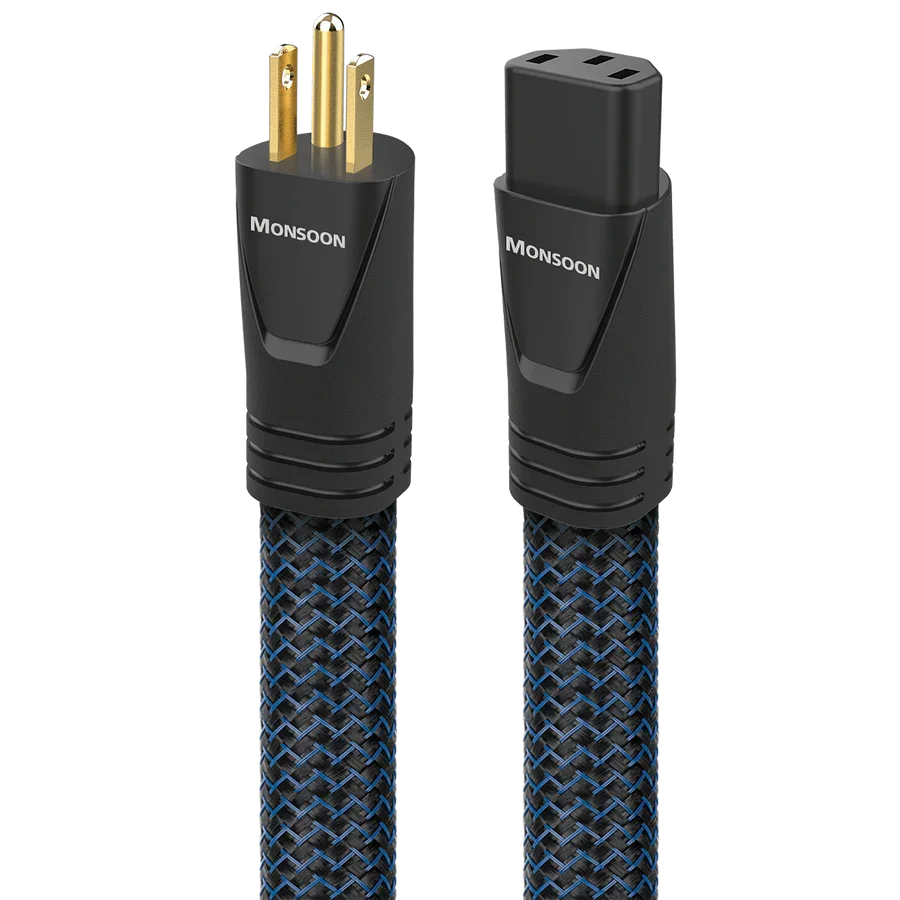
the monsoon power cable ‘brings the rain’, which i understand in american parlance means ‘good times’. how very chic.
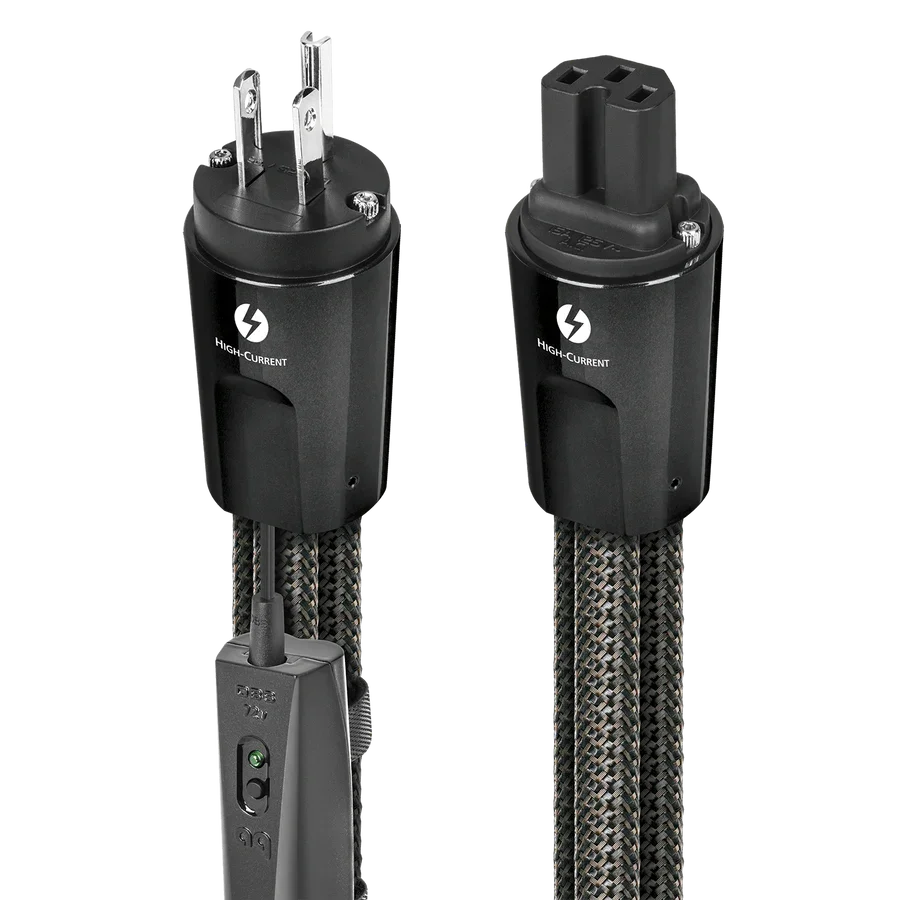
the audioquest thunder power cable - it goes all through the night according to prince, and we’re not about to gainsay him now, are we?
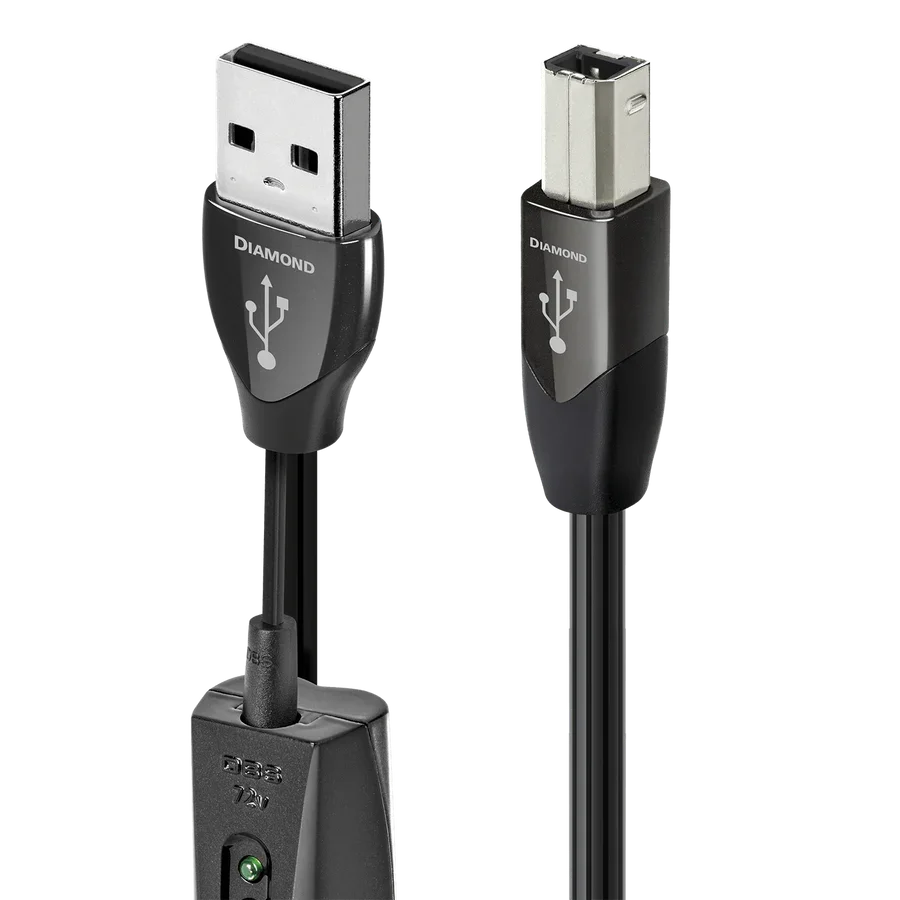
the audioquest diamond usb digital interconnect. probably the most remarkable interconnect i’ve ever heard. digital files are all zeroes and ones so cables shouldn’t make a difference, right? wrong. so very, very wrong.
Keeping the loudspeakers, electronics, power conditioning, and signal cables the same, Toby changed only the speaker cables. The system comprised:
AudioQuest Vodka Ethernet cable
AQ Niagara 3000 power conditioner with AQ Blizzard power cord
AQ Monsoon power cable to an Innuos Stream3 stream/server
AQ Thunder power cable to a Heed Lagrange S digital integrated amplifier
AQ Diamond USB A-B digital signal cable from the Stream3 to the Lagrange S
Variable AQ and generic speaker cables from the amplifier to a pair of:
Acoustic Energy Corinium loudspeakers
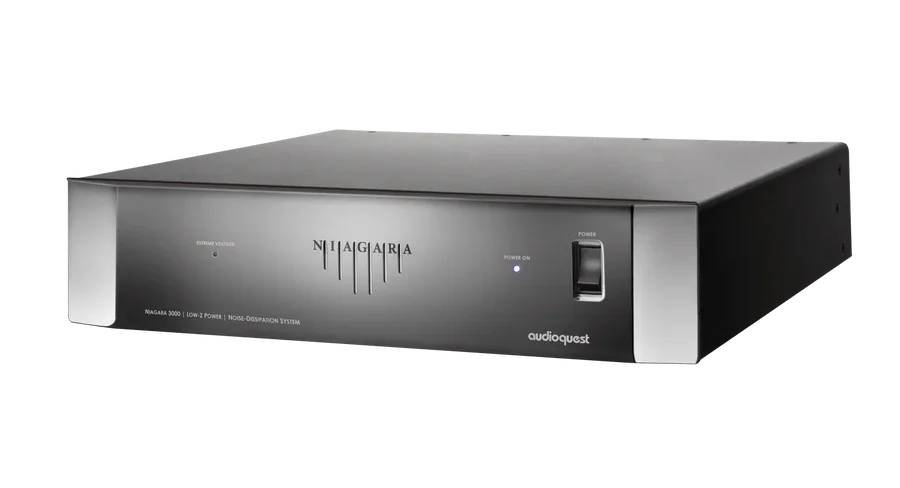
the niagara power conditioner. it’s remarkable the improvement in sound quality it makes. just don’t call it niagra, like the waterfall.
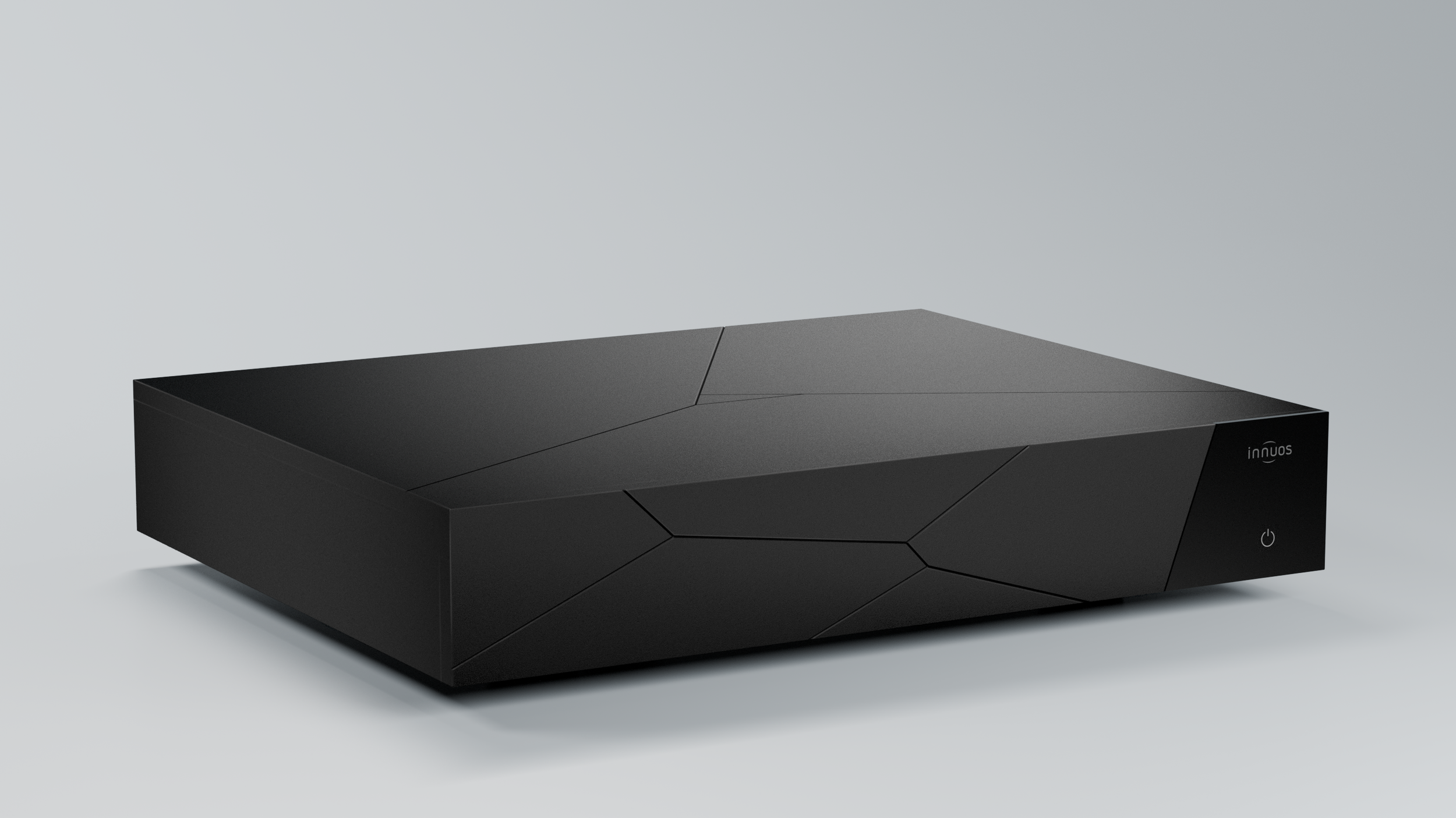
the innuos stream 3 stream/server media player. a remarkably clever and very fine-sounding piece of digital electronics indeed.
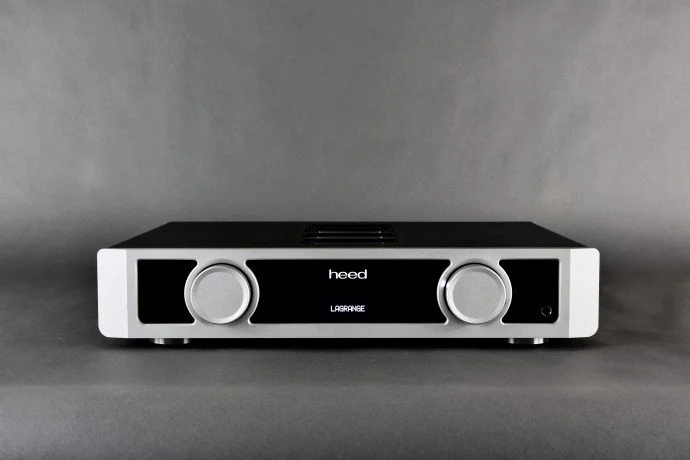
the budapest-based heed lagrange s integrated ampifier with optional dac module - which is the modestly-priced dac toby used in the demo. a wonderfully weighty, meaty yet delightfully sophisticated sound. hitherto i’d heard only their phono stages and headphone amplifiers, which are excellent.

acoustic energy corinium loudspeakers in tectona wood veneer, (which is a new one on me). brilliant speakers, the top of acoustic energy’s range and compared to a great many other speaker marques at the show, rather reasonably priced. superb value for money.
Beginning with a generic £10/m heavy-gauge, twin-axial stranded copper wire, Toby explained that this type of cable was first introduced to a breathless audio world by Monster in 1979. It was designed to improve audio quality over the standard lamp cord that was in common usage at the time. Developed in a San Francisco garage by Noel Lee, it was marketed as offering lower resistance and better conductivity than basic household wiring.
Toby cued up “The Black Messiah (Part 2)” from George Duke’s 2002 live album Face the Music via Qobuz (see last month’s blog).
The track opens with an MC introducing Duke as a Capricorn (!), followed by enthusiastic applause before launching straight into a drum strike and a gloriously meaty bass guitar slap. Brass joins, momentum builds, and we’re swept into an extended intro before Duke enters the fray. It all sounded thoroughly enjoyable. The soundstage was fulsome, high, and wide — more than acceptable given the humble cable in use.
Swapping to AudioQuest’s Slip 16/2 cable (£6/m), we heard an immediate improvement. Everything sounded crisper, with greater dynamics, better depth, and noticeably improved flow. Cheaper and better — always a satisfying outcome.
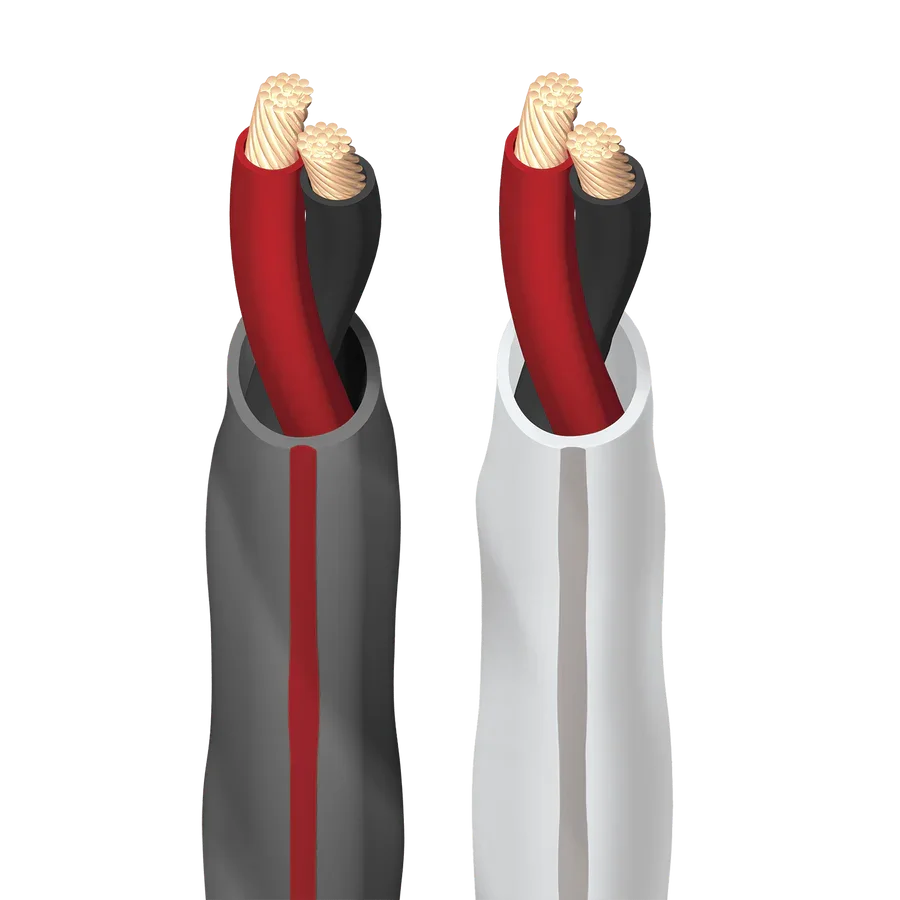
a computer rendering of audioquest’s slip 16/2 speaker cable. for the life of me couldn’t find an actual photo. not that it’s desperately interesting-looking.
Next came a surprise: a £20/m multi-stranded, silver-plated copper cable widely available on the market. Expectations were high. The reaction, however, was not. The presentation became strangely bloated and subdued, as though the music had retreated into the shade. Timing suffered. Energy evaporated.
“You’ve broken it!” one wag was heard to say.
“Don’t worry,” Toby replied with a grin, “I’m about to fix it with this…”
Out came the AudioQuest Rocket 11 speaker cables (£20/m).
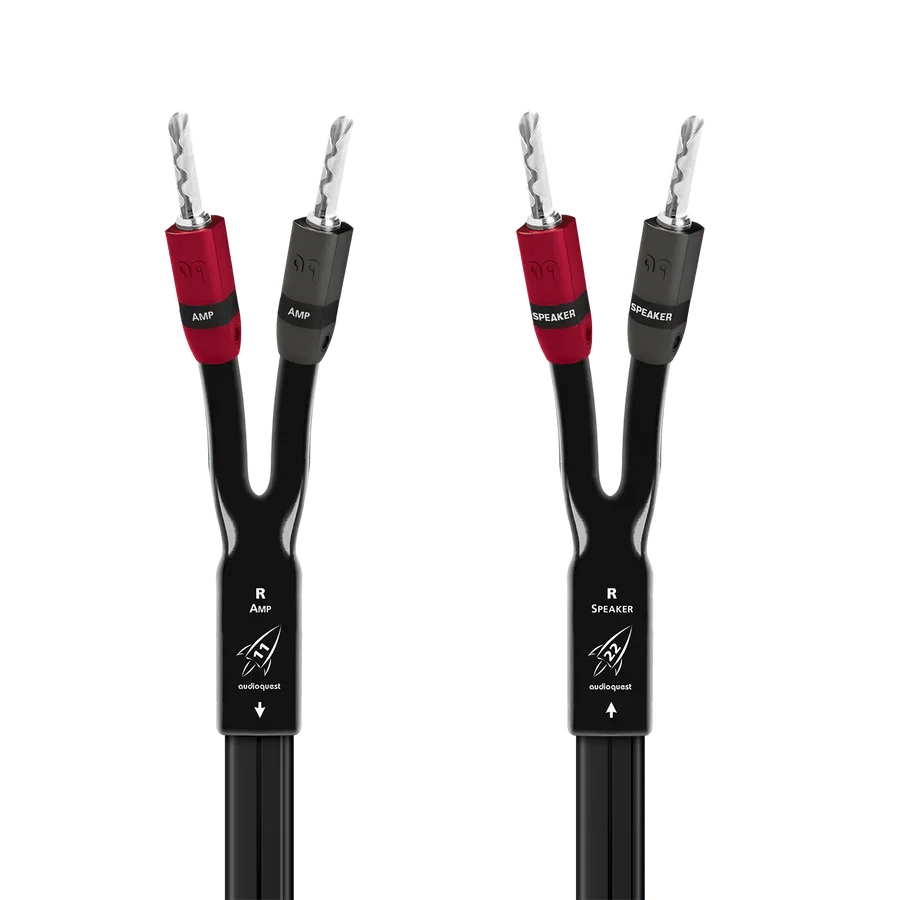
the audioquest rocket loudspeaker cable with cutesey rocket-liveried trousers. Although being from across the pond audioquest pronounce it ‘pants’.
Fix it indeed. The track snapped back into focus — lively, rhythmic, and expansive. The soundstage gained height, width, and depth, while the groove returned with infectious confidence. The bass guitar, in particular, sounded superb: punchy, agile, and propulsive. Smiles spread across the room. Heads nodded. Relief was palpable.
For his pièce de résistance, Toby connected the £4,800 per 3m pair AudioQuest Braveheart cables, simply to demonstrate what the system could achieve with minimal perceived constraint.
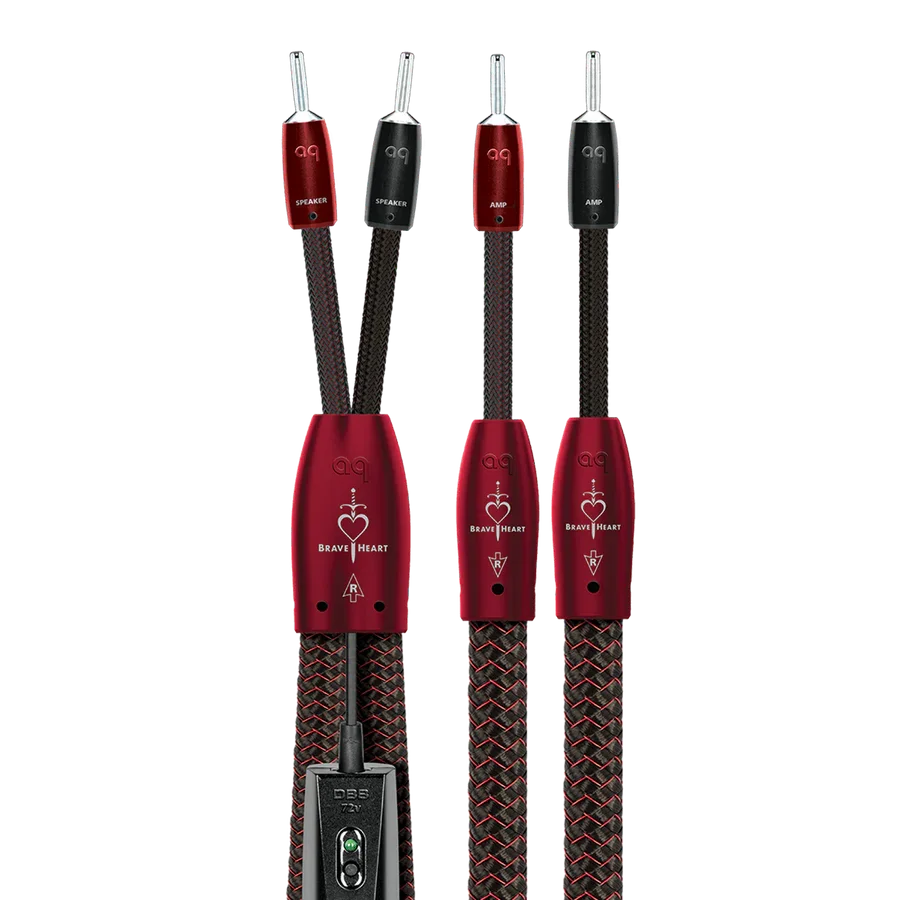
audioquest’s braveheart loudspeaker cable. that open window we’ve been talking about.
Final Thoughts
What struck me most was not the scale of the differences — though some were far from subtle — but the nature of them. When things went wrong, it wasn’t a matter of frequency balance or hi-fi fireworks. It was timing, coherence, and musical intent that suffered. The system still made sound, of course, but the performance felt strangely disjointed, as if the musicians were no longer quite listening to one another.
When things clicked back into place, the effect was instantly recognisable and oddly reassuring. Rhythm locked in, phrasing made sense again, and the illusion of real musicians playing in a shared space returned. No drama, no exaggeration — just music behaving as music should.
Vinyl lovers will recognise this phenomenon immediately. Swap a cartridge, alter a setup parameter, or introduce an ill-suited component and the same thing happens: the tune falters long before the tonal balance does. Pace, flow, and that difficult-to-quantify sense of “rightness” are often the first casualties.
Perhaps Sydenham’s centuries-old medical wisdom is more applicable to hi-fi than it first appears. Before adding character, flavour, or enhancement, the priority is surely to avoid harm. Preserve the signal, respect the performance, and let the recording speak for itself.
Which, in the end, is exactly what the best systems — and the best cables — seem to do.
If you’ve never attended, make a note in your diary now: the next Bristol Hi-Fi Show takes place from Friday 26th to Sunday 28th February 2027.
Thanks for reading.
Adrian – Audio T Swansea
If you have any questions about any of the equipment featured in this article, or any other Hi-Fi or home cinema enquiries, be sure to Contact Us.
If you’ve enjoyed this, why not go ahead and read some more of our other blogs—and be sure to follow us on our social media channels below…
Audioquest can be found at the following Audio T stores