

Sennheiser HDB 630 Review: One Small Dongle, One Giant Leap for My Ears
/The Sennheiser HDB 630 promises audiophile sound without being tethered to a hi-fi system. An experienced Sennheiser user, Audio T’s Brad Tyler gets acquainted with the new Lunar Silver edition and discovers why the smallest accessory in the box deserves some serious attention.
After the battering I gave my ears in my last headphone blog, I thought it was time to treat them to something special. They had been remarkably patient. An apology seemed overdue.
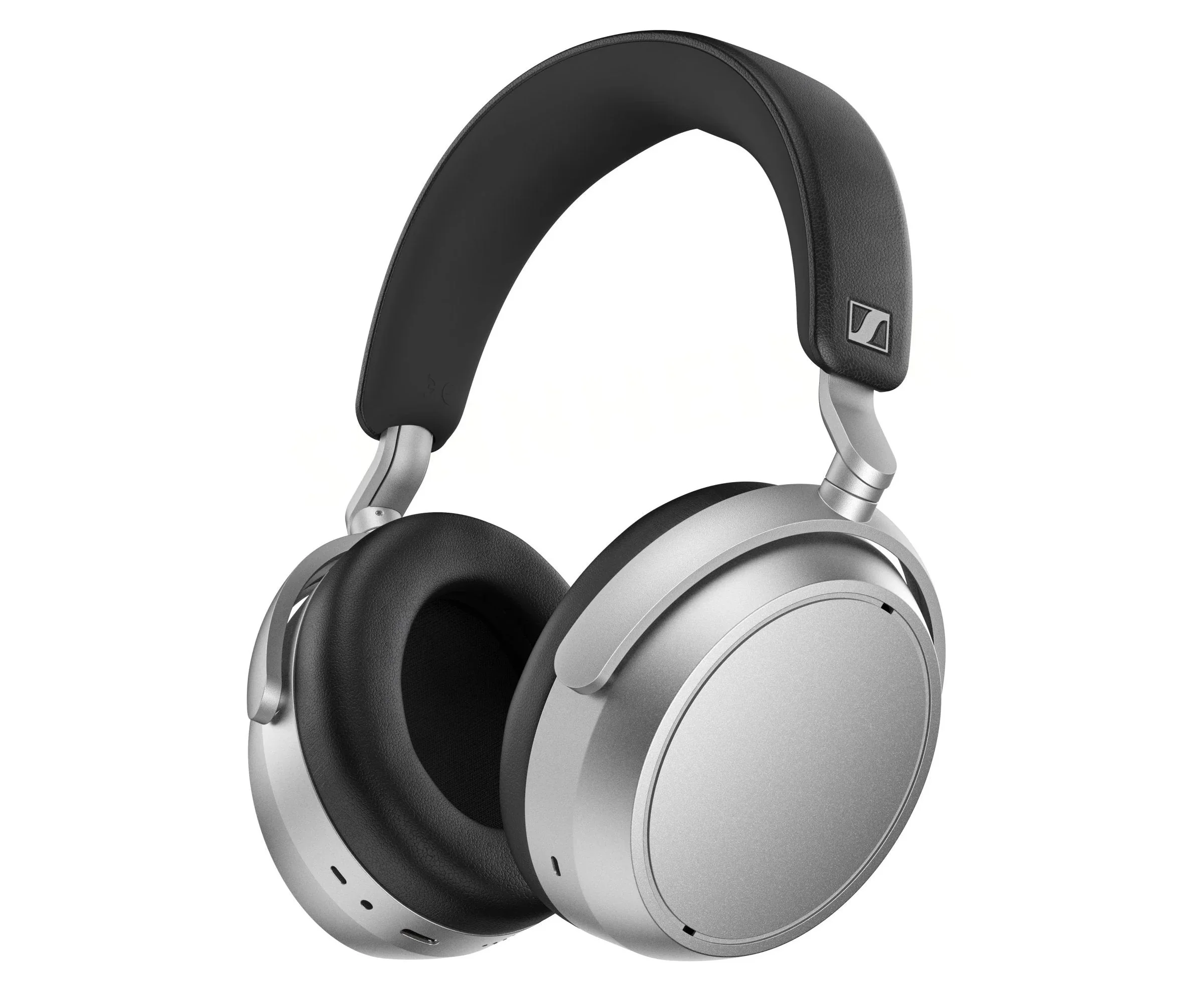
Enter the Sennheiser HDB 630, here in the new Lunar Silver finish: a pair of closed-back wireless headphones with rather more serious intentions than their everyday appearance might suggest. There is adaptive noise cancellation, a comprehensive control app and, tucked into the case, a little USB-C Bluetooth dongle that proved to be a particularly worthwhile inclusion.
I was expecting good things. I wasn’t expecting to find quite so many excuses to keep wearing them…
Sennheiser and I Have History
I’ve used Sennheiser headphones in one form or another for almost 25 years. During my time studying at the Academy of Contemporary Music in Guildford, my trusty HD 600 helped me check countless coursework mixes. They were a familiar reference when an approaching deadline and an increasingly questionable coffee intake had started to cloud my judgement.
Then they mysteriously disappeared after a particularly lively Halloween house party. Somewhere, I like to imagine, somebody is still enjoying excellent sound while feeling just a little bit guilty.

Legendary Founder, Fritz Sennheiser
My familiarity with Sennheiser also came through professional music and recording. The company’s story began in Germany in 1945, when Fritz Sennheiser founded Labor W near Hanover. Microphones became central to the business, and the HD 414 brought open-back headphones to market in 1968. Neumann, another name familiar from recording studios, joined the Sennheiser Group in 1991.
For somebody with a recording or live sound background, those names carry associations with making and recording music as much as listening to it. That creates expectations, although an illustrious history only gets you so far once somebody presses play.
The First Surprise Was the Case
When the HDB 630 arrived, the box caught me slightly off guard. Perhaps I had subconsciously decided that audiophile headphones should arrive in something enormous, with more more elaborate packaging and fanfare, as though the amount of cardboard had any bearing on how they’d sound.
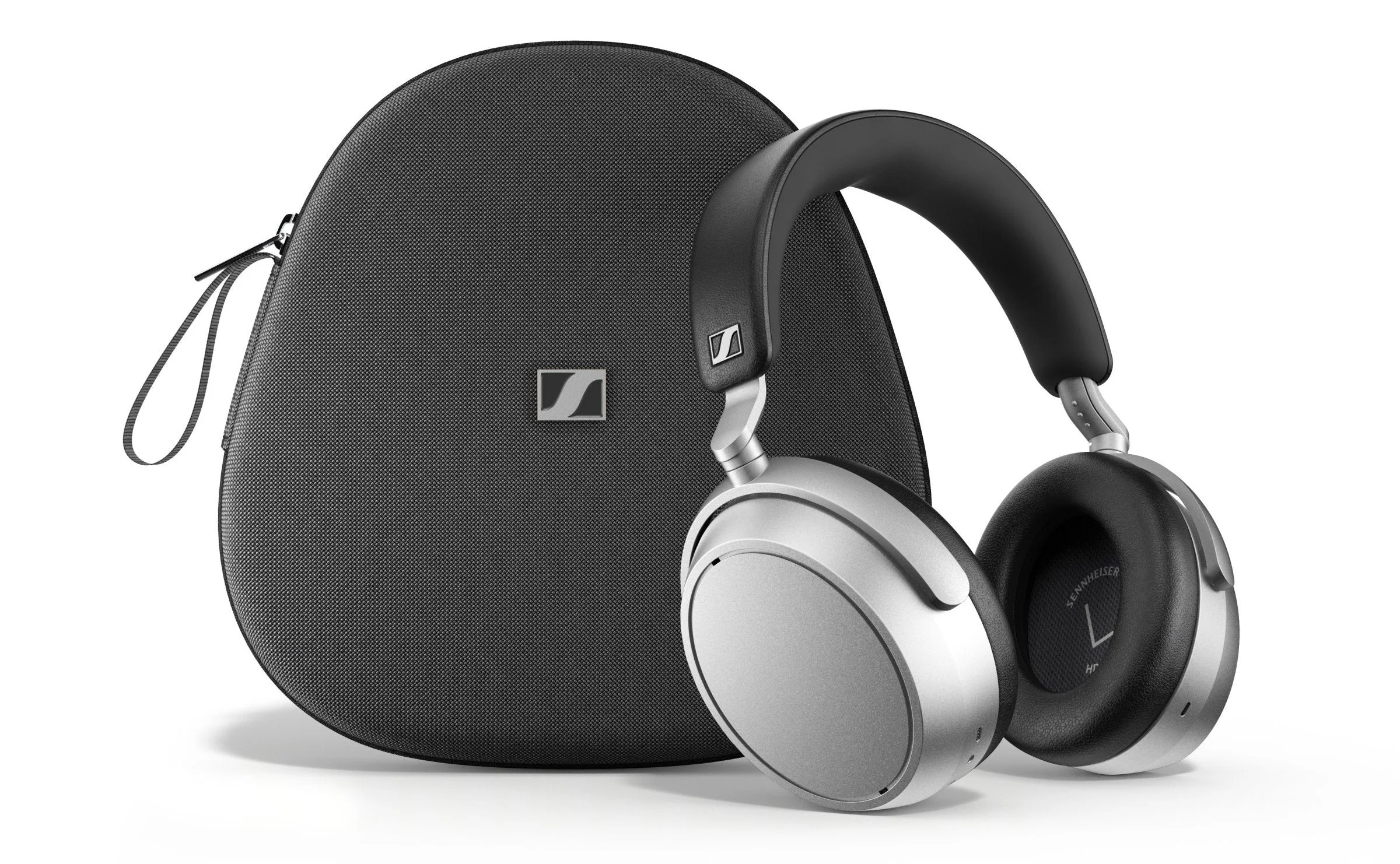
Opening it revealed something considerably more useful: one of the nicest headphone carry cases I’ve encountered in a long time. It feels durable, keeps everything neatly organised and is compact enough that I could readily imagine taking it on a commute or holiday.
Inside were the BTD 700 USB-C Bluetooth dongle, a 1.2-metre USB-C cable for audio and charging, and a similarly lengthy analogue cable with a 3.5mm plug for the source. An in-flight adapter and quick-start guide completed the travelling essentials. There was no immediate need to rummage through the drawer of obsolete cables that every household seems legally obliged to maintain.
Sennheiser’s tagline, “Audiophile sound, cut loose”, began to make sense. The contents suggest headphones intended to accompany you into ordinary life, with several sensible ways of getting music into them.
The Lunar Silver finish suits that approach. It gives the HDB 630 a lighter alternative to the familiar black headphone uniform, while keeping the styling understated. This is a new colour option for the existing model; the acoustic proposition remains the same.
Comfort Beyond the First Album
I have a larger than average head. Buying hats can feel like a negotiation, and some headphones run out of adjustment before I run out of skull. The HDB 630, thankfully, accommodated me comfortably.
My ten-month-old daughter appears to have inherited the family head dimensions. I wish her luck with hats.
There is a reassuring substance to the construction, yet once settled in place they quickly become easy to forget. That matters far more to me than a luxurious first five minutes, headphones need to remain comfortable when one album becomes another album, and then another and so on.
The earcups arrived wearing helpful stickers explaining the controls. These stayed attached for longer than they probably should have. I prefer to call this a thorough familiarisation period and nothing to do with my aging brain.
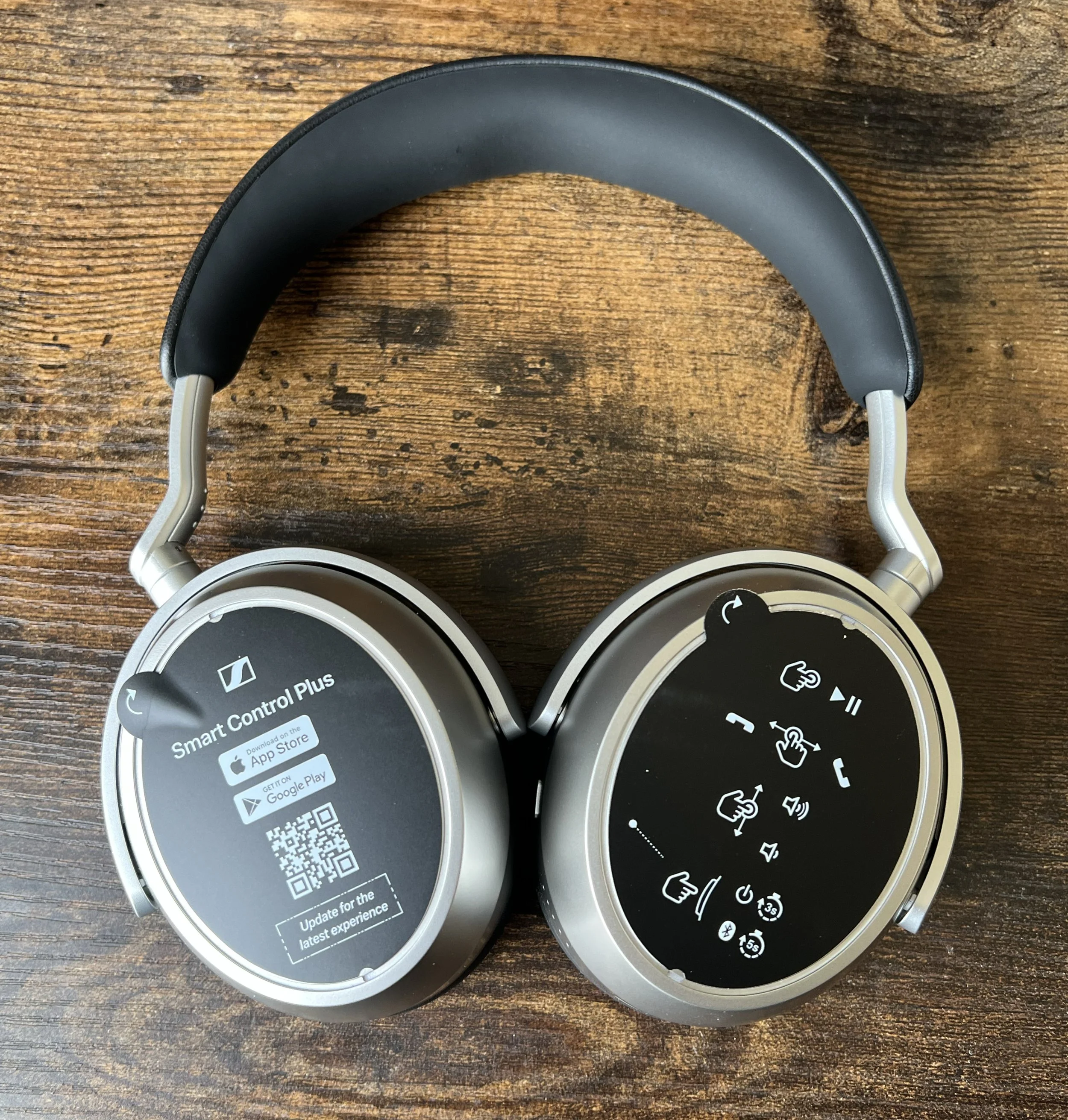
The right earcup’s touch surface handles playback and volume, while the app provides further adjustments. Pairing also brings a surprisingly theatrical sequence of sounds: an ethereal, almost binaural introduction, a celebratory flourish and then an unexpectedly sultry voice announcing, “Connected”.
So there was a fanfare after all. It was simply waiting inside the headphones.
For Those Who Like to Tinker
A QR code on the headphones points you towards Smart Control Plus, Sennheiser’s companion app for compatible iOS and Android devices. I was already familiar with it, and it remains one of the more comprehensive headphone control apps I’ve used.
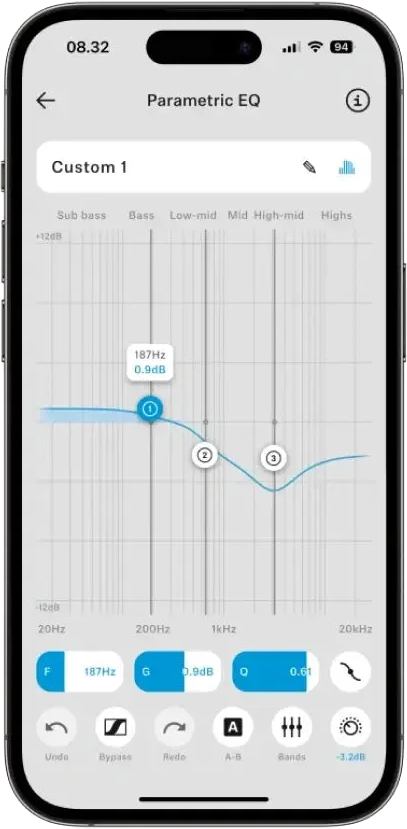
Sennheiser Smart Control App
The HDB 630’s parametric equaliser is particularly interesting. Alongside the amount of boost or cut, it lets you choose the frequency being adjusted and how broad or narrow that adjustment should be. That gives you more precise control than a handful of fixed bass, midrange and treble bands. Anyone who has spent time working on mixes will recognise the appeal.
There is also crossfeed, which blends a little information between the left and right channels to make strongly separated stereo recordings feel more like listening through loudspeakers. Older recordings with an instrument parked firmly at one ear are an obvious use case. It is a listening preference to explore, rather than a compulsory improvement to every recording.
ANC and Transparency settings, firmware updates and the high-resolution audio options are accessible through the app too. The Signal Path display is especially useful for checking the active codec and sampling rate. With wireless audio being able to see what is actually happening is preferable to collecting impressive logos and hoping for the best.
Now We’re Getting Somewhere
My listening began with Qobuz on my MacBook Pro, using the computer’s own Bluetooth connection. Even at this stage, the HDB 630 made a strong impression. Detail was easy to follow, vocals were clear and the presentation felt more accomplished than I had expected from an already familiar brand.
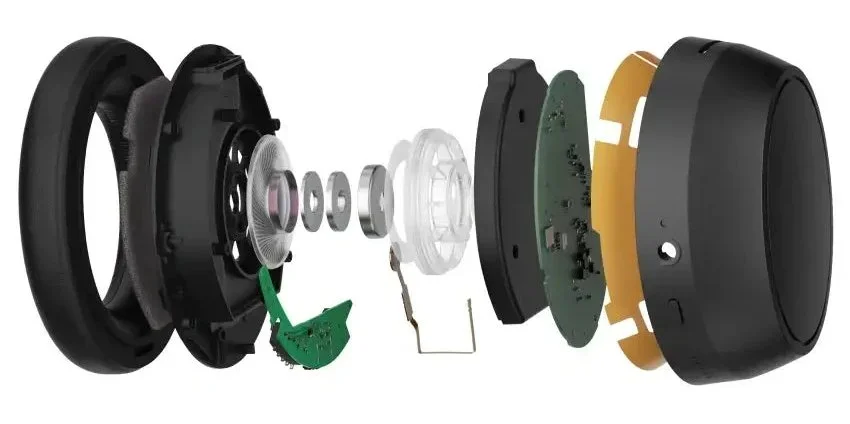
Sennheiser uses an in-house 42mm dynamic driver, with the acoustic design and digital processing aimed at a balanced presentation. In practice, the clarity and refinement were immediately appealing. I could quite happily have continued listening this way.
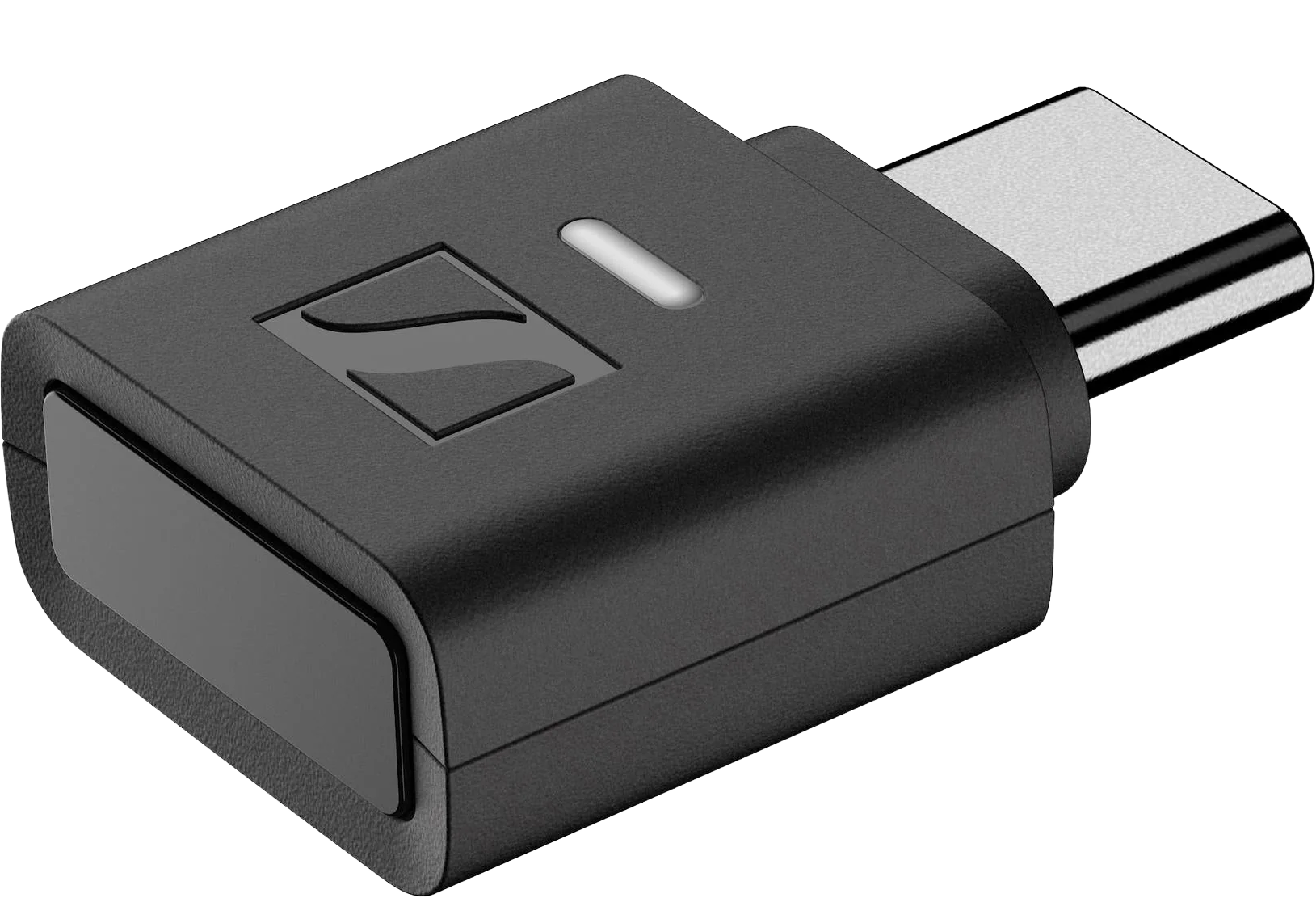
Eventually, curiosity got the better of me and I plugged in the supplied BTD 700 dongle.
For reasons that probably say more about my age than the technology, the little transmitter briefly reminded me of early infrared wireless headphones. Move between the hi-fi and the listener and the sound would disappear. They were excellent if everybody in the room agreed to remain completely still.
The BTD 700 is a very different proposition. It takes audio from a compatible USB-C device and handles the Bluetooth transmission itself, providing an aptX Adaptive connection to the HDB 630 independently of the computer’s built-in Bluetooth capabilities. With the appropriate settings, this combination supports up to 24-bit/96kHz.
I changed the Mac’s audio output from the headphones’ direct Bluetooth connection to the BTD 700 and returned to my music.
The change was striking. The presentation seemed to open out, with a much more generous sense of space and an airiness that reminded me of listening through audiophile wired headphones or even a stereo speaker setup. Instruments had more room around them, and the performance felt less confined to the immediate space around my ears.
With orchestral music, that extra space brought a stronger impression of scale and presence. The nearest analogy I can offer is moving closer to the performers, where individual contributions become easier to distinguish without losing sight of the whole ensemble.
The upper midrange was particularly rewarding. Vocals and strings sounded richer and more refined, with more of the texture that gives a voice or instrument its character. It was easier to hear how those parts occupied the recording, lending the presentation a convincing sense of depth.
That carried across to heavier guitar music. Listening to The Gaslight Anthem, I found myself noticing small physical details within familiar recordings: the scrape of a plectrum against strings, or the faint fret rattle accompanying a bent bass note. Those sounds belong to the performance. Hearing them more clearly brings you closer to the people making it.
There is a useful distinction here between hearing more detail and simply hearing a brighter presentation. What caught my attention was the extra information in the instruments themselves, alongside that greater sense of space. I kept wanting to revisit familiar music to hear what else I might notice.
That sense of a veil lifting describes my listening impression. Technically, the connection is still Bluetooth, using aptX Adaptive. It should not be confused with an aptX Lossless link, and the dongle’s wider feature list does not automatically describe what these particular headphones receive.
The BTD 700 earned its place in the case. If you’re using the HDB 630 with a compatible USB-C phone, tablet or computer, I’d recommend giving the dongle a try to hear what it can bring to your own setup.
A small disagreement with Qobuz
There was one interruption to proceedings. Certain tracks in my trusty Qobuz playlists refused to start, accompanied by a message claiming that the device was being used by another application.
This was slightly irritating when I was quite certain that the application I wanted using it was the one currently refusing to cooperate.
The culprit turned out to be the dongle’s audio settings on the Mac. Correcting those restored playback. The songs hadn’t disappeared from Qobuz; my output configuration needed attention.
It is worth checking this during setup. Mac users can inspect the BTD 700’s output format in Audio MIDI Setup, while the headphones’ hi-res mode is enabled through Smart Control Plus. Sennheiser notes that 96kHz operation may require adjustment at the source. The app’s Signal Path display then helps confirm the connection you have established.
A little housekeeping, admittedly, but considerably less dramatic than my first interpretation of that error message.
Cables are welcome too
Wireless convenience is a major attraction, but the HDB 630 also accommodates equipment with a conventional headphone output. The supplied analogue lead connects its 2.5mm headphone socket to a 3.5mm source, with the in-flight adapter providing another useful option for travelling.
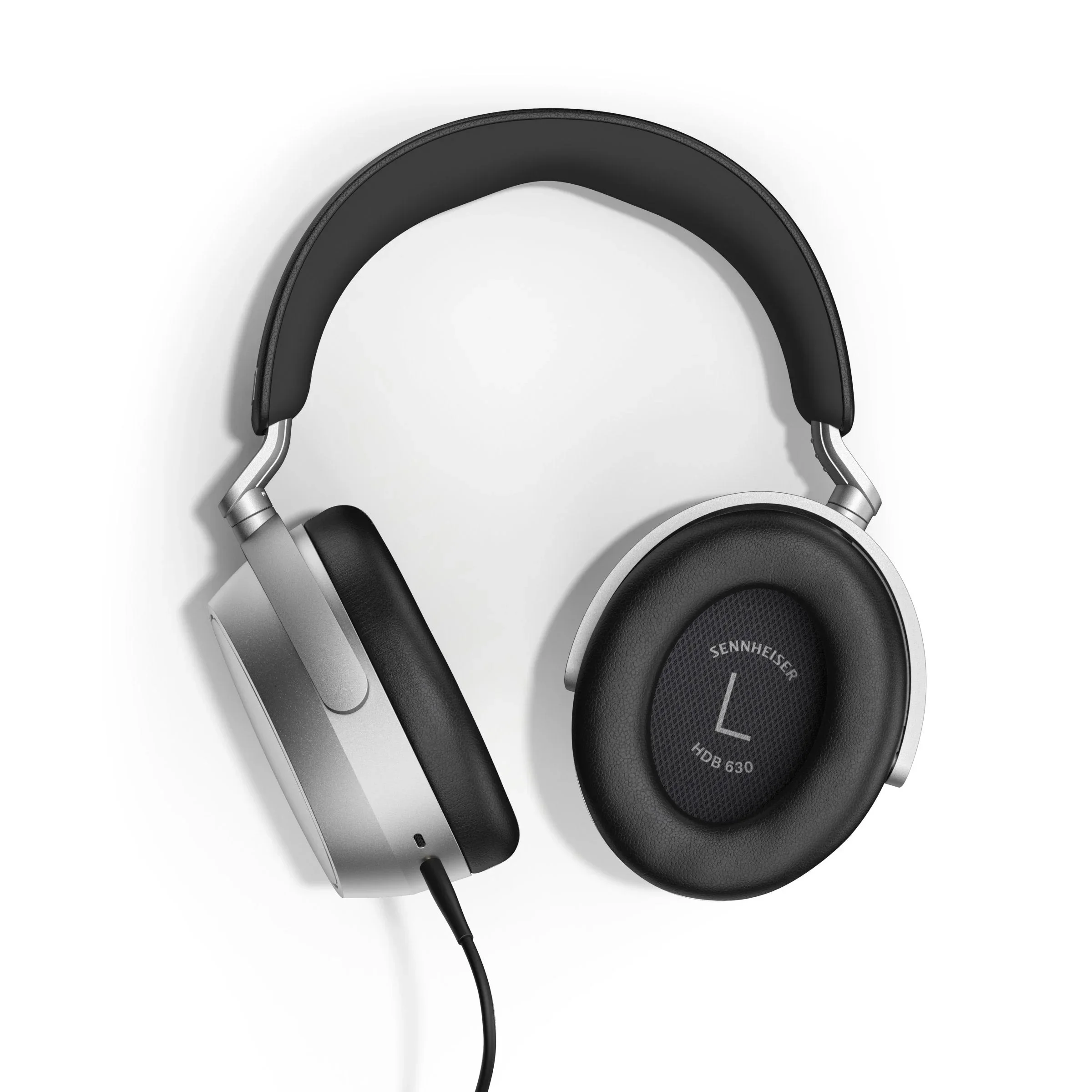
There is an important practical detail: the headphones still need to be switched on. Their internal processing helps establish the sound, including when using the analogue input. The cable therefore gives you another connection method, rather than a passive fallback once the battery is empty.
USB-C offers a separate wired route. Connect the supplied cable to a compatible computer or mobile device and the HDB 630 can accept digital audio at up to 24-bit/96kHz, using its own conversion and amplification. It can also charge while connected. For listening at a desk, that is a particularly convenient alternative, and it avoids Bluetooth audio compression.
My strongest listening impressions here concern the two wireless connections. The wired options broaden where and how the headphones can be used, rather than requiring an elaborate supporting system before you can enjoy them.
Living with the HDB 630
Over the course of using them, the HDB 630 became something I kept reaching for. I wore them while working, out walking the dog and during the less glamorous hours of parenting, including the occasional 3am wake-up with my daughter.
The combination of comfort and engaging sound made them fit naturally into all of those situations. The adaptive noise cancellation automatically adjusts to the noise around you, helping to reduce distractions and give the music a quieter backdrop. It is particularly effective against steady, low-frequency sounds such as fans and engine noise, while a separate wind-noise reduction setting is useful for listening outdoors.
Transparency mode brings outside sound back in through the microphones, allowing you to hear your surroundings or have a quick conversation without removing the headphones. A double tap on the right earcup switches between the two modes, and you can adjust how much outside sound comes through using the touch controls or Smart Control Plus app. It gives you useful control over how absorbed you want to become in your music.
Sennheiser quotes up to 60 hours of playback, or up to 45 hours using the BTD 700 with aptX Adaptive at 24-bit/96kHz. Those are manufacturer figures, with actual endurance depending on use and settings, but the allowance for hi-res listening is welcome.
At 3am, I can assure you that 45 hours sounds like a very long time indeed.
The verdict
The Sennheiser HDB 630 has been a pleasure to spend time with. Its comfort encourages long listening sessions, the app gives you meaningful control and the supplied accessories make it adaptable enough to accompany a working day or a trip away.
The BTD 700 was the standout part of my experience. Through my MacBook Pro, it brought an increase in openness and refinement that made familiar recordings especially rewarding. Ordinary Bluetooth listening was already enjoyable; taking the time to explore the dongle made the headphones more compelling still.
There are practical details to understand. High-resolution wireless playback needs the right configuration, and an analogue cable does not remove the need for battery power. Those are useful things to know before buying. Neither has diminished how much I have enjoyed using them.
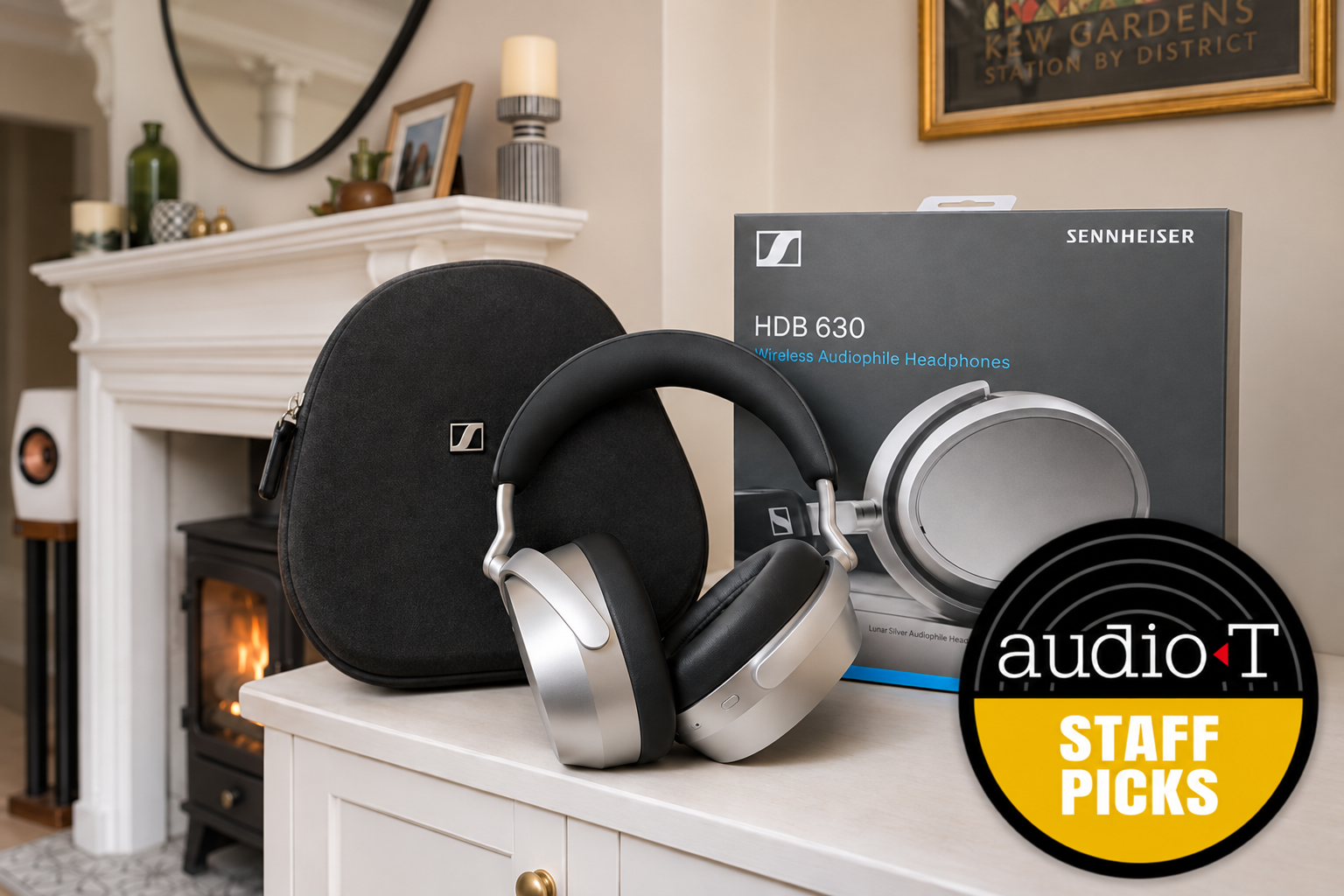
I’ve found it surprisingly difficult to put the HDB 630 down. For that reason, they earn a place among Audio T’s Staff Picks.
My old HD 600s would probably approve. Wherever they are.
Sennheiser headphones are available through all Audio T stores. To hear what they can bring to your own music, contact your local shop to arrange a demonstration.
Thanks for reading.
Brad Tyler
Head of Marketing at Audio T
If you’re considering a new pair of headphones, contact your local Audio T for friendly advice and the opportunity to arrange a demonstration.
If you’ve enjoyed this, why not read some more of our blogs and follow us on our social media channels below…
Sennheiser can be found at the following Audio T stores