
You want style, simplicity and performance? We’ve got it. The Hegel Music Systems H400 Integrated Amplifier
/We’ve been looking forward to this for a very long time. Bill of Auden Distribution (the UK importer of Hegel equipment) has been a chum of the store ever since his KEF days, twenty #cough# years ago, and has been hinting about Hegel at us since pre-Covid times. Happily for us (and, one imagines, Bill too), the powers that be have decided that the time is now right for us to stock some of Norway’s finest music replay electronica.

hello handsome.
In 1988 an engineering undergraduate called Holter wrote his thesis on overcoming distortion in transistors used for amplifiers. We are reliably informed that fighting distortion without affecting other areas of performance is no easy feat, and this task required designs that broke free of ‘classical’ schematics. The project became the basis for what is now known as Hegel’s ‘SoundEngine Technology’. Around the same time, Holter’s band, ‘The Hegel Band’, needed amplifiers for their gigs, and the industrious Mr Holter thought they should probably build their own. A completely natural thing to do, of course, when you’re an electronics designer. With help and funding from Telenor (a major player in Norwegian telecommunications), Hegel was able to achieve commercial success with their amplifiers in the early 1990s, which led to further success with DACs and CD players in the late 1990s, until they grew into the company we see today, exporting Hi-Fi to over 60 nations across the planet.
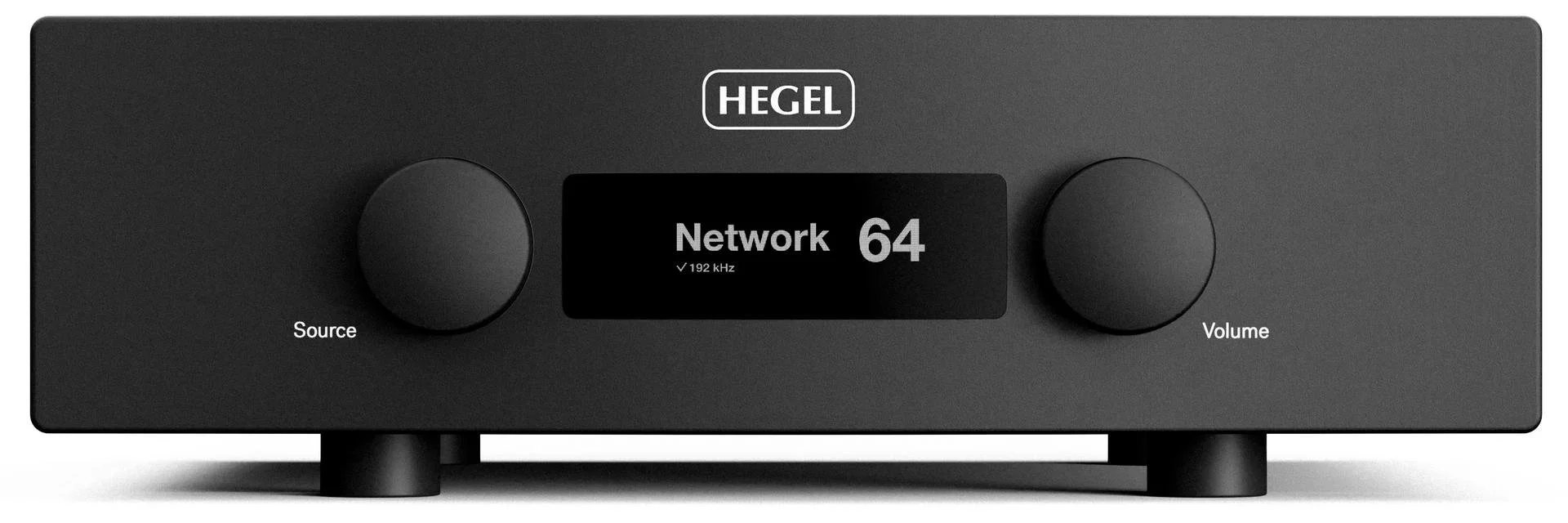
jolly neat work, fair play
Design
All of Hegel’s integrated amplifiers have in-built network audio players which allow for streaming of digital audio. The most basic facilitate AirPlay, UPnP and Spotify, whilst the units further up the range are Roon Ready and also provide Tidal Connect, Qobuz Connect and Google Cast. They are all controllable via the Hegel app, and the H400 is the one we’ll concentrate on today. The fascia is a Spartan Scandi affair, with just volume and source control knobs flanking an attractive pale-blue dot matrix display. These are the same controls as on the more expensive H600, and can be pressed in to activate the menus, mirroring the functions on the remote control. The power button is easily discovered underneath the front of the fascia and cycles between on and stand-by with a satisfying clunk.
User Experience
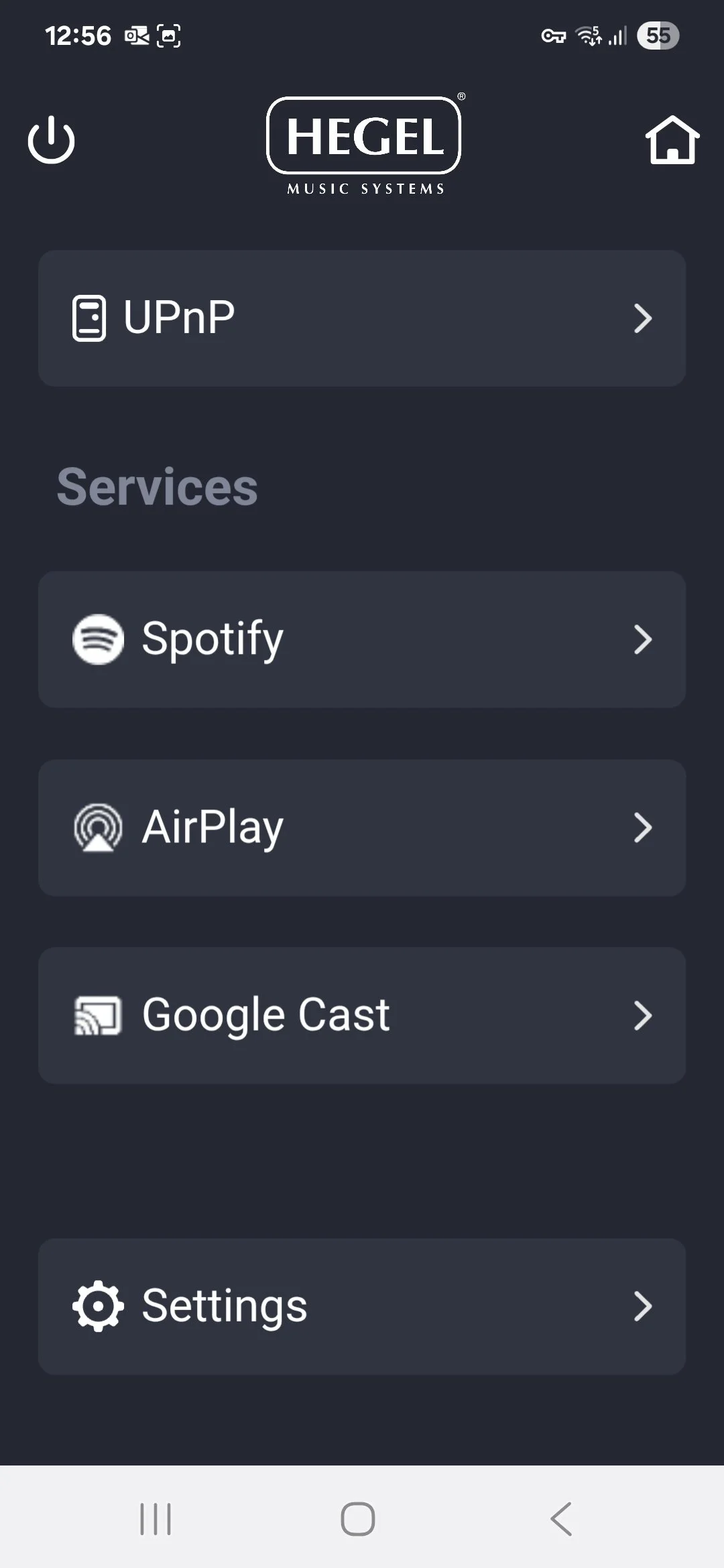
The business end of the hegel app
In response to demand for a more modern user interface, Hegel has done something they previously said they would never do, and created an app. Called Hegel Control, it’s free to download and works with both iOS and Android. The app only needs to be connected to the same network as the amplifier, and you can control playback, volume and settings from your mobile phone. It’s straightforward to use and so far has been very stable. (We are informed that the Hegel app replaces a web-based interface previously used on the predecessor H390 unit.) It has built-in radio and podcasts with Airable, and UPnP only. Accessing our store Innuos Zen music server with UPnP was an absolute doddle, lightning fast and sounded great. The amplifier can stream just about anything you want (especially now that it is equipped with Chromecast), but from outside of the Hegel app. We are told it keeps the app much more stable to arrange things this way and, in use, it’s straightforward enough and causes very little grumbling. This is the first time a Hegel product has used Google Cast (Chromecast), a feature that users have been (apparently) clamouring for, for years. The answer to “why now” is that this feature no longer requires a Bluetooth connection, which is where Hegel draws the line, because they believe it adds too much noise to the signal. Hegel went on to say that the new platform makes it much easier to expand the functionality and access more services in the future. Fair enough.
Development
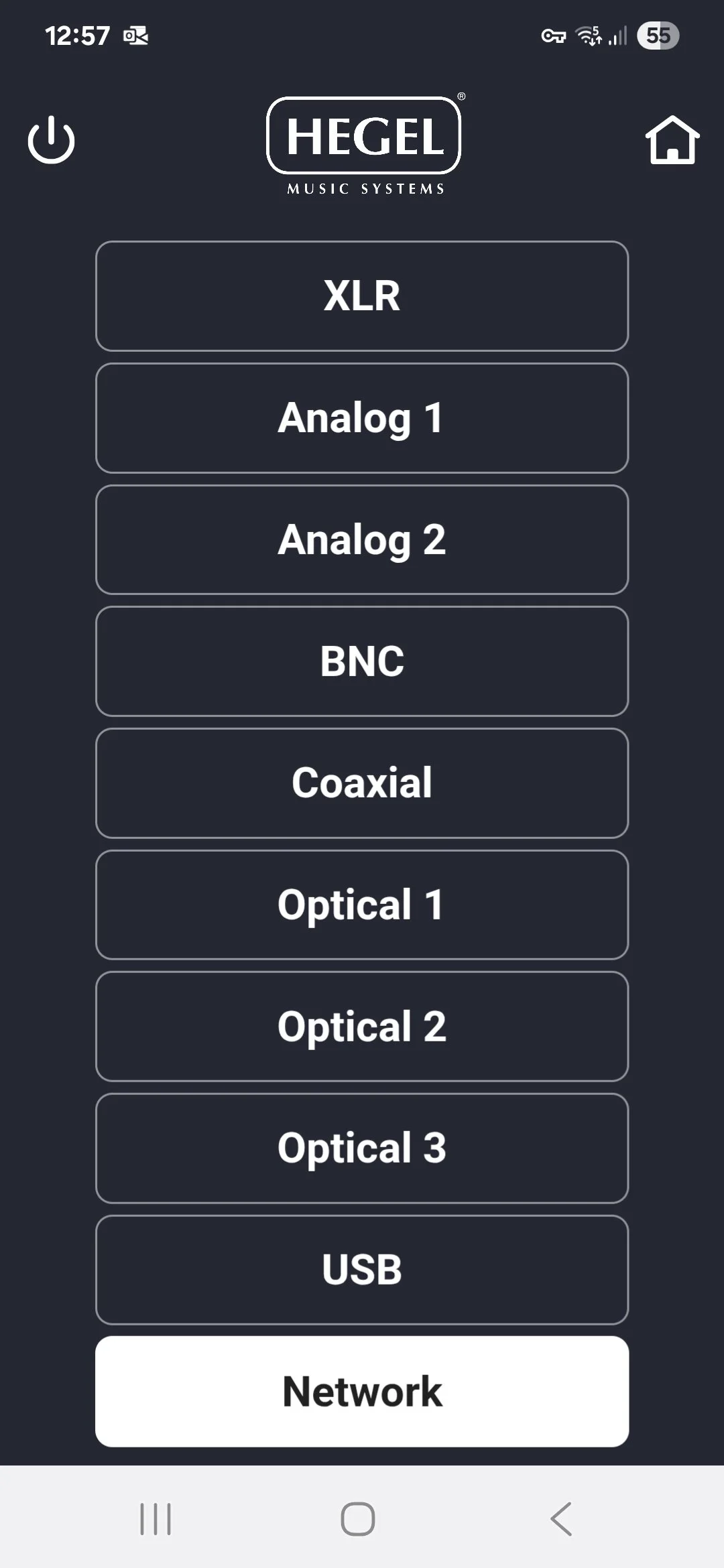
scrolling down reveals the rear panel inputs
Hegel says their engineers learned a lot during the development of their H600 variant and used this knowledge in the development of a new DAC for the H400. The chipset is new, an ESS 9038Q2M, which according to Hegel provides higher resolution and a particularly fluid musicality compared to the AKM AK4490 chip in the H390. Part of the explanation for Hegel’s move from AKM to ESS may well arise from the catastrophic AKM fire a few years ago, after which Hegel and many other manufacturers had to design new circuits adapted to competing DAC chips. A happy by-product is the ability to play high-resolution files. The H400 extends its range all the way to 32-bit/384 kHz. Although the selection of such files is currently thin, it’s considered prudent to be forward-thinking about such things. The fact that the new DAC has better MQA support than before doesn’t feel quite as relevant. Tidal, which was the only streaming service to really embrace MQA, has now officially dropped the format, although the word on the street is that Lenbrook of Canada (NAD & Bluesound) has acquired MQA and is planning to launch a Hi-Res-only music streaming service of their very own.
Setup and Ease of Use
Setting up the H400 is surprisingly easy. It connects to your network via Ethernet cable, and it automatically appears in the new Hegel Control app, which you will have installed on your smartphone or tablet. As mentioned earlier, the app gives you full control over volume, input selection, and various settings. Controlling internet radio and podcasts from Airable is a nice experience and it sounds very enjoyable, but the Chromecast integration is really cool. Not only is it easy, there’s absolutely nothing wrong with the sound quality! This, combined with support for Roon, Spotify Connect, Tidal Connect, Qobuz Connect and AirPlay 2, makes the H400 a true all-rounder when it comes to streaming. It has yet another trick up its sleeve, which is a new one on us. Hegel make an extremely capable DAC called the D50. Hegel owners who wish for a sound quality upgrade to the music streamer built into their amplifiers can use the BNC digital out socket on their H400 to connect to a D50 DAC for some seriously enhanced number-crunching. The signal is looped back into the H400 for amplification via its XLR sockets, once you have selected Hegel’s ‘DAC-loop’ feature. Very neat indeed, and preferable to buying an offboard streamer when you don’t have to. The rear panel features just about all the connections you could reasonably wish for (although there is no HDMI eARC socket, alas—but they bring their own qualitative and stability issues, we are reliably informed).
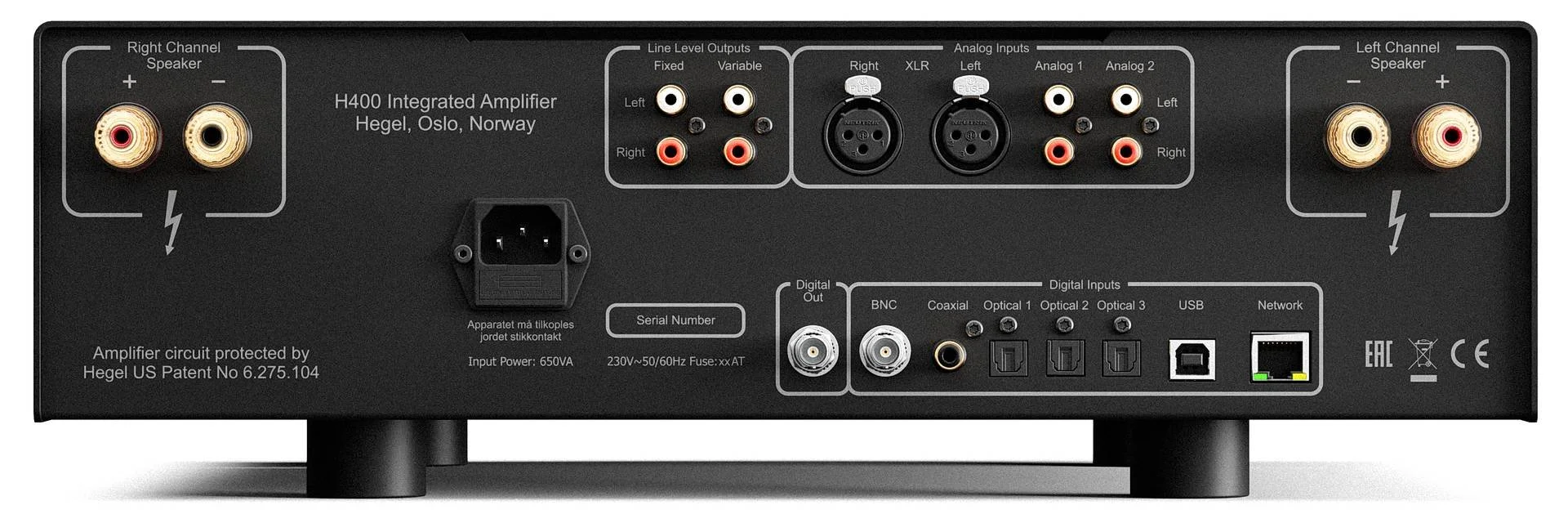
spartan looks once again, but generous enough for most of us. fixed analogue out is pretty unusual these days
Sparkling sound
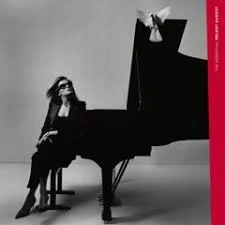
really rather wonderful. have someone pour you a manhattan and melt yourself into this

disco baby yeah!

for when ‘the man’ becomes simply insufferable
Connecting the H400 to our current favourite floorstanders – the ATC SCM40s – and seized by an urge to hear some Rage Against the Machine (I cannot fathom why), I play Killing in the Name from their eponymous debut album. Tom Morello’s infamous guitar riff 40 seconds in blazes away with enough gunpowder to spray your morning coffee up the walls. The instruments are separated very well, Brad Wilk’s frenetic drumming forming a solid wall of sound. His drums have plenty of room to unfold with a granite batholith of a soundstage that sees his kit sit back just enough to allow space for de la Rocha’s furious vocals to create a wonderfully menacing atmosphere. What a start to the day! A happier mood is created by the overlapping bass rhythms on Lizzo’s disco hit About Damn Time from her 2022 album Special. Clearly a very modern production, it’s as clean as a whistle, well-lit, never overly bright, and insistent that you put that Mai-Tai down right now, get up and shake that money-maker. This is enormous fun – you can only imagine what the effect will be, post that second Mai-Tai. Switching to Melody Gardot’s Deep Within the Corners of My Mind from her album Live in Europe, we find Ms Gardot’s prettily etched vocals floating in front of us, all the while underpinned by an extremely convincing double bass in an acre of space. You can feel the audience hold its collective breath, unwilling to make any noise at all, in case it disturbs the fragile poise of the performance.
Conclusion
The Hegel H400 is a smartly capable amplifier that will drive any speaker within its own price range and many that are well beyond it. This means you can enjoy fantastic sound, whether you favour playing loud or soft. There’s something about the control and calmness of the Hegel that is rather beguiling. That it has an excellent network audio player on board as well as a versatile DAC is almost an aside. If you want a modern, powerful amplifier approaching the high-end, it can hardly be done much better than this—and even then it’ll be the senior model, Hegel’s own H600. More about which in another blog...
Thanks for reading.
Words by Adrian, images by Hegel and Samsung (tea and biccies by Nic & Andy) – Audio T Swansea
Hegel can be found at the following Audio T stores
If you have any questions about any of the equipment featured in this article, or any other Hi-Fi or home cinema enquiries, be sure to Contact Us.
If you’ve enjoyed this, why not go ahead and read some more of our other blogs—and be sure to follow us on our social media channels below…